European Commission files objection to VMware’s takeover by Broadcom


News

The Commission said the deal could be directly harmful to market competition, leaving Broadcom’s hardware rivals with only limited access to crucial VMware software

VMware’s acquisition by Broadcom was first announced in May 2022, with the $61 billion megadeal immediately ringing alarm bells for various regulatory bodies.

By December that year, the European Commission was already signalling its disapproval, launching an in-depth investigation into the deal’s potential impact on market competition.

Now, the Commission has issued a formal statement outlining the results of this probe, suggesting that the deal could directly harm market competition for various hardware components.

“As a result of this in-depth investigation, the Commission is concerned that Broadcom may restrict competition in the global markets for the supply of FC HBAs [Fibre Channel Host-Bus Adapters] and storage adapters by foreclosing competitors’ hardware by delaying or degrading their access to VMware’s server virtualisation software,” said the Commission in a statement.

“Broadcom is the leading supplier of FC HBAs and storage adapters. The markets are very concentrated. If the competitors of Broadcom are hampered in their ability to compete in these markets, this could in turn lead to higher prices, lower quality and less innovation for business customers, and ultimately consumers.”

More specifically, the Commission said that the move could stifle the development of SmartNICs (Network Interface Cards) by Broadcom competitors.

They also fear that Broadcom could begin to bundle VMware software with its own, stopping to offer VMware software as a stand-alone product.

Despite these regulatory misgivings, Broadcom continues to be confident that regulators will eventually give the deal the green light, suggesting that they are aiming to close the deal in the 2023 fiscal year.

The Commission must make a final decision by 21 June 2023.

The European Commission is not the only regulatory hurdle the VMware–Broadcom deal will need to clear in the coming months to get this deal over the line.

Just last month the UK’s Competition and Markets Authority said that they were considering launching their own in-depth investigation into the deal, noting that the deal could not only drive up prices for UK businesses but also jeopardise commercially sensitive information from rival companies that have a pre-existing relationship with VMware.

The deal will also require approval from the US Federal Trade Commission, which is currently performing its own investigation into the deal.

Want to keep up with the latest international telecoms news? Sign up now to receive Total Telecom’s daily newsletter direct to your inbox

Also in the news:
Telkomsel to merge with Indonesia’s largest fixed broadband operator
French operators head to court seeking compensation for forced Huawei removal
US wireless operators move to allay 5G aviation fears

What makes a fibre optic cable? The big impact of tiny variables


Contributed Article

by UCL Swift

Fiber optics have paved the way for rapid data transmission across longer distances. The connection performance of fiber optic cables must be at its maximum in order to meet this demand. This requires extreme attention to detail, as connectivity issues can depend on very minute variances.

In this article, we will discuss bore diameter, core concentricity and circularity, including what they are and how they affect fiber optic power.

Bore Diameter

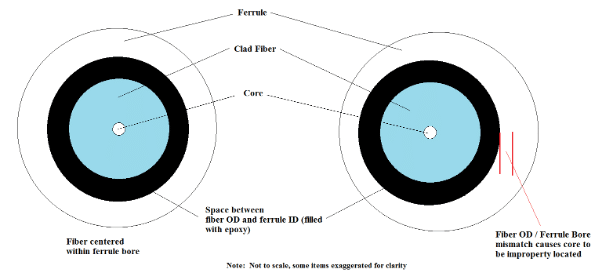
Ferrules come with varying bore diameters depending on the size of the optical fiber it will host. One reason for variance is that the diameter is purposefully slightly larger than normal from a “standard” fiber diameter to allow for differences in cladding. Cladding is defined as a layer of either glass or plastic that surrounds the inner core with a lower index of refraction. Through reflection, it confines light to the core to improve light transmission.

Ferrules are manufactured using injection-molded ceramic. After the initial molding step, the ferrules are put through a precision boring process and then polished to remove any machining marks, nicks or scratches.The ferrules then have the bore diameter measured and sorted into different “grades.” Matching the grade of the ferrule to the application and desired performance level is a key step in preparation, along with specifying a fiber with low variation of the cladding diameter.

Singlemode ferrules require the highest tolerance on bore diameter due to the high tolerances necessary to guarantee correct alignment of the fibers (dictated by the small size of the optical core, typically 9 microns in diameter). Even a tiny mismatch between two singlemode optical fibers can produce large losses in light transmission. Multimode ferrule terminations can be more forgiving due to larger core size (50 microns, 62.5 microns, or up to 100 microns) and are not as sensitive to mismatch.

Bore diameter is the first step in a quality termination. Unwanted variation in bore diameters will prevent the optical fibers from being fixed along the center axis due to variation in placement. This variation will contribute to a mismatch in core alignment, possibly increasing the connection loss.

The bore diameter depends on extremely precise and minute factors. Fiber optics is a technology that requires extreme accuracy and attention to detail. If this factor falls short to a tiny degree, then loss of light and data occurs. The greater the discrepancy, the lower the connectivity performance.

Ferrule Image

Click here to read the full article, including a detailed explanation of core concentricity and circularity

UCL Swift manufactures ferrules used to make splice-on-connectors and to make connectors for cable assemblies. After creating the ferrules and machining the various features, each ferrule is subjected to multiple measurements to ensure compliance to internal standards (Ilsintech typically uses a higher internal standard than what can be found in general specifications). Each ferrule is graded according to dimensional performance (including bore diameter) and identified for where it will be used, or potentially discarded if it does not meet UCL Swift standards for performance. We use the best of the best to make connectors. Contact UCL Swift today at 972-556-0916 for ordering information

Trooli quietly acquired by Agnar UK Infrastructure


News

After months of rumour, the UK altnet has seemingly a majority stake to newly formed Agnar UK Infrastructure Ltd

For months now, the future of UK fibre altnet Trooli has been uncertain. Rumours have suggested that numerous parties were potentially considering a takeover bid, including the including rivals Virgin Media O2 and Zzoomm, with analysts suggesting such a deal could be worth over £100 million.

More recently, at the end of last month, the Financial Times reported that two infrastructure firms, Vauban Infrastructure Partners and Axione, had entered into discussions with Trooli over a possible acquisition.

This week, however, it seems that the successful suitor will be none of the above. As reported by ISPreview, an update to Trooli’s Companies House records shows that the altnet is now over 75% owned by a newly formed company called Agnar UK Infrastructure Ltd.

This deal is not entirely out of left field; Agnar is recorded as having two French directors – Maxime Buisson and Elie Nammar – both of whom have ties to Vauban Infrastructure Partners.

In the same filing, it was also noted that all Trooli’s original UK directors have resigned.

It is unclear what this acquisition will mean for Trooli’s ongoing rollout, which is currently seeking to pass one million UK premises with fibre-to-the-premise by the end of 2024.

In the past year, Trooli had been seeking to raise an additional £200 million via an equity share release for their ongoing deployment, so this takeover could provide some much needed funds to keep the fibre reel turning.

More details about the deal will presumably be shared by Trooli and Agnar in due course.

How is the UK altnet landscape evolving in 2023? Join the ecosystem in discussion at next weeks Connected North conference live in Manchester

Also in the news:
Telkomsel to merge with Indonesia’s largest fixed broadband operator
French operators head to court seeking compensation for forced Huawei removal
US wireless operators move to allay 5G aviation fears

Vodafone Idea to roll out 5G ‘soon’ as rivals race ahead

Keep up-to-date with all the latest news, articles, event and product updates posted on Developing Telecoms.
Subscribe to our FREE weekly email newsletters for the latest telecom info in developing and emerging markets globally.

Sending occasional e-mail from 3rd parties about industry white papers, online and live events relevant to subscribers helps us fund this website and free weekly newsletter. We never sell your personal data. Click here to view our privacy policy.

Uswitch’s new digital divide analysis highlights UK’s North–South divide


News

Nine of the ten poorest scoring councils were located in the North of the UK, while all 10 of the highest scoring were situated in affluent parts of the South

This week, the UK government announced its new Wireless Infrastructure Strategy, promoting the use of the latest technology to turn the UK into a “digital superpower”. But, looming in the background of all this talk of 5G innovation and 6G progression, is the stark reality that connectivity is far from a given for many in the UK. The digital divide is very real and, according to new analysis from Uswitch.com, appears to largely mirror the North–South economic divide.

Using a composite ‘digital divide’ score derived from broadband speed and accessibility data combined with home working statistics, Uswitch’s latest analysis explores the digital divide as it relates to UK councils.

Perhaps unsurprisingly, the best performing councils – with the lowest digital divide score – are largely from the South of the UK, with Rugby council the only (arguably) Northern local authority to make it into the top 10.

Table 1: The ten councils with the smallest digital divide (smallest to greatest)

Council

Work from home (any)

Median download speed (Mbps)

Full fibre (% premises FTTP)

Digital divide score

Lambeth

53.8%

58.6

64.0%

6.6%

Hackney

53.2%

72.6

44.7%

6.7%

Wandsworth

52.4%

61.8

68.2%

6.7%

Thanet

53.3%

50.6

69.8%

7.8%

Cambridge

48.5%

78.9

69.4%

8.2%

St Albans

63.1%

65.2

59.8%

8.9%

Kensington and Chelsea

49.5%

74.5

61.2%

9.3%

Three Rivers

47.7%

72.1

70.10%

9.6%

Spelthorne

48.2%

58.2

68.40%

9.9%

Rugby

52.5%

69.5

48.70%

10.2%

By contrast, the ten highest scoring ‘digital divide’ councils are primarily from the North, Scotland, and Wales. Indeed, of the 25 most digitally divided regions recorded, 12 were in Scotland and Wales.

The city of Edinburgh (15.6%) and the Vale of Glamorgan (17.3%) were the only councils from Scotland and Wales, respectively, to make it into the top 25 least digitally divided regions.

The ten councils with the greatest digital divide (greatest to smallest)

Council

Work from home (any)

Median download speed (Mbps)

Full fibre (% premises FTTP)

Digital divide score

Argyll and Bute

18.0%

26.7

5.8%

97.9%

Highland

23.5%

29.7

31.9%

92.9%

Copeland

24.3%

27.8

3.4%

92.6%

Dumfries and Galloway

24.2%

30.1

24.4%

92.1%

Allerdale

25.0%

34.8

6.9%

91.7%

West Lindsey

23.8%

37.7

31.4%

89.9%

Moray

22.0%

35.8

47.3%

89.6%

Stirling

22.2%

26.7

55.4%

89.5%

Rochdale

20.0%

37.1

17.3%

87.2%

Neath Port Talbot

22.3%

38.0

17.6%

87.2%

The severity of the digital divide for some of these councils should not be underestimated. For the poorest performing council, Argyll and Bute, only 5.8% of premises have access to full fibre, the median download speed is 26.7Mbps, and less than a fifth (18%) of people work from home.

“Our digital divide report shows that regions with a poorer internet connection have less access to digital technology overall, with lower work from home rates and less reliable connections to the internet. Meanwhile, British councils with the smallest digital divide have higher percentages of their workforce able to work remotely,” said Uswitch.com fibre broadband expert Max Beckett.

“With the UK government recently committing £3.5 billion towards their ambition of becoming a scientific and technological superpower, including ‘levelling up’ more areas of the UK to foster better paid jobs and opportunities in these sectors, it is important to ensure people of all backgrounds will benefit from this investment in digital tech.

That the digital divide should closely correlate to the economic disparities in the UK should come as no surprise to anyone. Nonetheless, this analysis serves as a timely reminder that, even as major progress continues to be made in 5G and fibre, there are many parts of the country that are still woefully lacking quality connectivity.

Is the government doing enough to tackle the digital divide in the North of the UK? Join the connectivity industry in discussion live in Manchester next week at Connected North

Also in the news:
Telkomsel to merge with Indonesia’s largest fixed broadband operator
French operators head to court seeking compensation for forced Huawei removal
US wireless operators move to allay 5G aviation fears

M&A in US Telecom Infrastructure

This Industry Viewpoint was authored by J. Drew Mullin, Partner, ATLANTIC-ACM

Investment in US Telecom companies has been red-hot for 15 years and remains strong despite broader economic concerns. Infrastructure asset M&A is highly active, and multiples that were once 10-20 times EBITDA have risen to 20-30 times EBITDA. MetroConnect and PTC, two of the larger investment tradeshows in the telecom space, have grown significantly over the last 15 years to reach record attendance in 2023. 2022 saw declines in … [visit site to read more]

Huawei Forges Ahead in Revolutionizing 5G Connectivity for the Future


VIEWPOINT

With an average age of only 30.2, and explosive growth of unicorns, Asia Pacific has entered the golden time of digital economy and ICT infrastructure development, driven by sustained demand for ICT infrastructure and abundant digital content for consumers.

Meanwhile, the pandemic has sped up digitalization in Asia Pacific. Since the gradual opening up, major countries in the region are expected to maintain good recovery momentum in 2023, with GDP growth forecasts over 4%, leading to an upgrade in telecom consumption.

The communications industry is expanding at an incredible pace in the Asia-Pacific. The need for connectivity in ICT infrastructure is growing rapidly as businesses and industries advance their digital transformation initiatives and millions of devices become connected thanks to 5G. While this change has given businesses many new opportunities, it has also presented several challenges.

In certain 5G areas, where breakthroughs and deployments are showcasing increasingly fascinating application scenarios and metaverse applications, 5G development is gaining even greater traction. With the advent of 5G, telcos will have a tremendous opportunity to fully realize the promise of technologies like the Internet of Things (IoT) and Edge and develop new sources of revenue.

It becomes imperative that 5G networks continue to advance and evolve in order to meet this challenge because rapid development also places increasing demands on the network’s capabilities. Here, based on region-specific 5G network deployment stages, global telco solution supplier Huawei has been closely collaborating with the sector and assisting Asia-Pacific telcos in getting ready for a new era of connectivity.

Diverse deployments

The features offered by 5G enhance the secure remote execution of mission-critical communications (such as industrial automation and remote healthcare), high-speed video streaming and connecting a vast number of sensors. However, the challenge for telcos is all regions of Asia Pacific are at different stages of 5G deployments.

While some are working to increase 4G speeds and services, others have jumped into 5G deployments to expand coverage. There are many who, while waiting for favourable government policies and rising customer demand to build the 5G infrastructure, nevertheless wish to enhance 4G LTE capabilities.

“The challenge for the industry, is that various countries are at different stages of 5G deployment; some are further along than others. Some nations are still utilizing 4G technology and are working to increase the network’s capability. Although 5G is popular, operators must contend with varying levels of device penetration,” says Abel Deng, President, Carrier Business Group – Asia Pacific Region, Huawei. He was speaking in conversation as part of a roundtable at Mobile World Congress 2023.

Deng continues by stating that there are three ways to the 5G installations. Massive base station deployments for 5G are part of it, and other nations are still building 5G-ready networks and LTE, respectively.

Development of 5G and 5.5G

It is essential that 5G networks continue to develop and advance if they are to completely realize their potential and satisfy the continuously expanding connectivity needs of users. To completely improve network connectivity, switch from connectivity-based development to full-service enablement, and working with industry partners to transition to an intelligent society, Huawei has been actively working on the concept of 5.5G Core, which may significantly boost new application scenarios and services.

” broadband  speed acceleration and latency reduction are one of the important features of 5.5G.  5G and 5.5G will enable the industries digitalization. For example, to get the automation going, low latency is important, which need 5G or even 5.5G to get higher precise manufacturing; M2M requires high uploading rates, which 5.5G can perfectly meet this demand;” Deng says.

The evolution to 5.5G, which will be characterized by improvements in enhanced Mobile Broadband (eMBB), ultra-reliable low-latency communication (URLLC), and Massive Machine-Type Communications (MMTC), as well as new capabilities for sensing, passive IoT, positioning, and intelligence, is being driven by emerging 2C and 2B applications, which call for further advancements in 5G capabilities.

But is 5.5 G a whole new network? “The idea is to upgrade the existing network but will need to be done on a case-by-case basis,” Deng clarifies.

Improving the infrastructure for connectivity

Several cutting-edge products and services have been offered by Huawei (H) to the Asia Pacific region. It sets aside over 25.1% of its 2022 annual income for R&D. The company’s market-leading technologies, such as Blade AAU and META AAU, which have been used by some of its most significant clients, may increase customer satisfaction and capacity while reducing energy usage by up to 30%.

It is helping APAC telcos gradually evolve from traditional networks to “autonomous networks” to achieve high-quality 5G development and intelligent O&M (NSOC O&M Mode).

Huawei, one of the few in the market to offer a full suite of ICT solutions with ‘cloud-pipe-device’ synergy, combining the physical and digital worlds, has established more than 160 Smart Cities in more than 100 nations and regions. Particularly in the Asia Pacific, its solutions have assisted Pattaya in reducing traffic bottlenecks by more than 30%, increasing travellers by more than 10%, and boosting operators’ profits through high-value connections.

Another example for Asia-Pacific is its collaboration with SCG, a leading conglomerate that runs its operations in accordance with ESG criteria to create autonomous driving systems using 5G technology. The self-driving capability has helped SCG reduce energy consumption by more than 50% and improves transportation efficiency by 8%.

Deng asserts that utilizing digital technologies, especially 5G, is expanding prospects. The industry must always consider how things will be in ten years, and Huawei is taking steps to modernize our networks and embrace the chances. “We are working with various carriers to build amazing 5G application cases. ” says Deng.


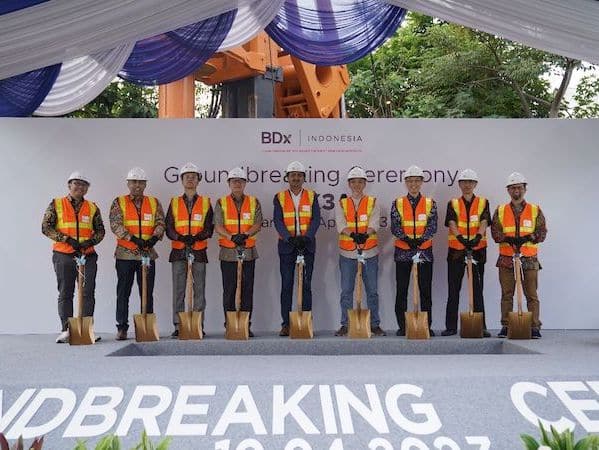
BDx Indonesia breaks ground on new Jakarta data centre

Keep up-to-date with all the latest news, articles, event and product updates posted on Developing Telecoms.
Subscribe to our FREE weekly email newsletters for the latest telecom info in developing and emerging markets globally.

Sending occasional e-mail from 3rd parties about industry white papers, online and live events relevant to subscribers helps us fund this website and free weekly newsletter. We never sell your personal data. Click here to view our privacy policy.