
By Matt McConnell, CEO of Intradiem
The current incarnation of AI is the biggest tech breakthrough since the Internet. So far, we’ve only seen the tip of the iceberg. … [visit site to read more]


By Matt McConnell, CEO of Intradiem
The current incarnation of AI is the biggest tech breakthrough since the Internet. So far, we’ve only seen the tip of the iceberg. … [visit site to read more]
BT, Britain’s largest broadband and mobile provider, has today published its half-year results, revealing revenues of £10.4 billion and profits of over £1 billion.
Adjusted EBITDA rose 6% to £4.1 billion (up 4% on a pro forma basis), and profit before tax increased 29 % to £1.1 billion.
The results also revealed an acceleration in BT’s fibre rollout across the UK, as its fibre-to-the-premises (FTTP) build rate accelerated to 66,000 premises per week, reaching a quarter record of 860,000 premises passed.
Openreach also saw strong customer demand for FTTP, with net additions of 364,000 in Q2, bringing take-up rate to 33%.
The news follows the launch of “new EE” in October, which comes after the UK incumbent announced in April last year that EE would gradually become the “flagship brand for consumer customers”, while BT would become the main brand for the Enterprise and Global units.
“We’ve strengthened our competitive position with the launch of both New EE and our renewed strategy in Business, and Openreach has now built full fibre broadband to more than a third of the UK’s homes and businesses with a growing connection rate,” said Phillip Jansen, BT CEO.
“Our transformation programme has now delivered £2.5bn in annualised savings, well on track to meet our £3bn savings target by FY25.”
It is important to note that BT increased prices by 14.4% in March this year, and put a stronger focus on cost-cutting, announcing that it will aim to cut roughly 55,000 jobs – around 40% of its current workforce – by the end of the decade, citing the need for more streamlined operations and digitalisation in today’s tough economic climate.
Jansen said that the growing role of AI would reduce the number of network engineers needed by around 10,000, with AI-related automation could replace an additional 10,000 jobs.
This time last year, the firm also increased their savings target from £2.5 billion to £3 billion by 2025.
“This was a decent set of results,” said Hargreaves Lansdown analyst Matt Britzman, speaking to Reuters. “Given the pressure shares have been under of late, investors should be relatively happy.”
Jansen’s tenure at BT is almost at an end, being replaced by Allison Kirby early next year. “BT Group has a bright future and I’m pleased to be handing the baton to Allison Kirkby early in the new year,” he added. “She knows the sector, she knows the company and she’s the right person to lead BT Group from this position of operational strength,” said Jansen.
Want to keep up to date with all of the latest UK telecoms news? Sign up for Total Telecom’s daily newsletter
Also in the news:
Samsung and Telefónica partner for German Open RAN trial
Colt acquires Lumen EMEA for $1.8 billion
Port of Tyne switches on 4G/5G private network

The Indian Space Research Organisation (ISRO) and the Mauritius Research and Innovation Council (MRIC) have signed a memorandum of understanding (MoU) to develop, launch, and operate an earth observation (EO) satellite for Mauritius.
The collaboration will span 15 months. It includes the training of MRIC engineers at ISRO’s facilities in India, where these engineers will work closely with ISRO experts to design and develop the satellite platform, as well as its associated systems and primary payload.
MRIC engineers will actively participate in various milestone reviews and assembly, integration and testing (AIT) activities. This will not only enhance their skills but also facilitate the in-orbit operations of the satellite once it is launched. MRIC’s ground station will be utilised for these operations, which will be jointly carried out by both agencies.
The payload for the satellite, a multispectral imager, can capture various frequency bands of light and, when processed using appropriate software, can provide valuable data for monitoring land and sea surfaces.
In addition to the development and operation of the satellite, ISRO and MRIC aim to register the EO satellite as a recognized space object with the United Nations Office for Outer Space Affairs (UNOOSA) space object registry. They also plan to register the satellite’s frequencies with the International Telecommunication Union (ITU).
MRIC is a corporate body set up in September 2019. It advises the Mauritian government on matters concerning applied research, innovation, and research and development issues.
ISRO is the space agency of India, involved in science, engineering and technology to harvest the benefits of outer space for India and mankind.
Colt and Lumen have completed their previously announced deal. For the price of $1.8B, Lumen’s business in Europe, Middle East, and Africa is now officially part of Colt. … [visit site to read more]
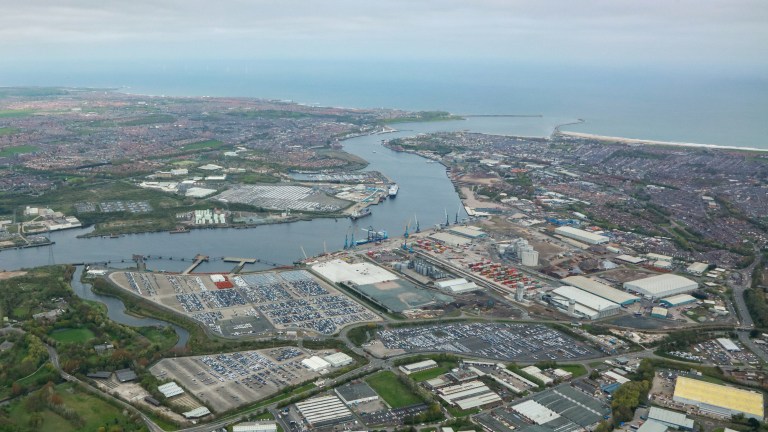
The Port of Tyne, one of the UK’s biggest and most important ports, has gone live with 4G and 5G private network connectivity, bringing together its vision to become a leading smart port that is a model of safety, efficiency and sustainability.
Together with partners BT and Ericsson, the Port has deployed a private network with coverage across the entire estate, making it the UK’s first site-wide deployment of 4G and 5G standalone connectivity for smart port applications. The infrastructure is built upon an Ericsson Private 5G solution and BT spectrum, whereby both 4G and 5G will operate simultaneously to support legacy devices as well as power new 5G applications in the port’s future transformation.
The first set of live use cases will begin in November, including video and sensors installed at each gate on the site to use automatic number plate recognition (ANPR) to securely manage and track vehicle access, as well as 5G-enabled cameras with a 360-degree view at the quayside combined with AI-driven software to provide automated container inspection and identification.
By deploying a private 5G wireless network, the port is positioning itself to integrate a series of future 5G applications and advanced technologies to support new customer requirements and enable the transition to a green smart port. These future applications include:
The Port of Tyne also has an ambitious vision to become a leader in 5G maritime innovation and provide an industry eco-system testbed to help build a future blueprint of 5G-enabled smart applications to automate manual tasks, improve decision-making and reduce CO2 emissions.
The future of maritime industry innovation will be further discussed by the Port of Tyne across three days from 7-9 November at Maritime Innovation Week 2023.
Matthew Beeton, Chief Executive Officer, Port of Tyne said: “I believe that 5G is going to play a crucial role in helping Port of Tyne achieve our goals. We can streamline our operations, improve safety and sustainability, and drive growth and innovation throughout the entire maritime industry and beyond. With seamless connectivity, we can link shipping companies, logistics providers, and regulatory bodies from around the world, enabling us to work together more effectively to address global challenges like climate change and cybersecurity threats.”
Ashish Gupta, MD, Corporate and Public Sector at BT, said: “What makes 5G so exciting is it allows innovative use cases which help businesses do things quicker, safer, smarter, better. At Port of Tyne, it’s about taking people out of harm’s way, where autonomous machines could instead be used in dangerous environments, and laying the digital foundations to introduce new technologies and improve efficiency at the port.”
Duncan Hawkins, VP Dedicated Networks & Enterprise Wireless Solutions, Ericsson, said: “Together with BT and the Port of Tyne we are turning the vision of a 5G port into a reality, and this deployment serves as a great model of maritime innovation for the UK and the world. 5G brings the essential characteristics such as coverage, speed and low latency to leverage new applications and use cases required to transform port operations, drive business efficiencies, and build a blueprint for sustainability success and future economic growth.”
Want to keep up to date with all of the latest international telecoms news? Get Total Telecom’s daily newsletter direct to your inbox
Also in the news:
Zegona agrees to buy Vodafone Spain for €5 billion
Ericsson launches 5G standalone software toolkit
Virgin Media O2 mulls tower sale

Keep up-to-date with all the latest news, articles, event and product updates posted on Developing Telecoms.
Subscribe to our FREE weekly email newsletters for the latest telecom info in developing and emerging markets globally.
Some fiber, some data center, some wireless, and some voice: … [visit site to read more]