FCC gives Starlink permission to upgrade its satellites


News

SpaceX says it will gradually replace its first-generation satellites with larger, more advanced alternatives

This week, the Federal Communications Commission (FCC) has confirmed that it will allow SpaceX to gradually replace its existing first-generation Starlink satellites with second-generation satellites.

SpaceX has roughly 6,281 Starlink satellites in orbit around the Earth, which are used to provide global coverage for communication services. The company currently has permission from the FCC to expand this total to 12,000 Starlink satellites, with its ultimate goal being to increase the scale of the constellation to roughly 42,000 devices.

However, having first been launched in 2019, some of these satellites are nearing the end of their five-year lifespan. As such, SpaceX has been applying to the FCC to be allowed to replace defunct satellites with newer models.

According to SpaceX, these new satellites will be equipped with “advanced beam-forming and digital processing technologies”, which will allow for “narrower beam capabilities to provide more targeted and robust coverage” of broadband services.

This new beamforming tech was a point of contention for satellite operator Dish Network, which said the tech could potentially cause interference with their existing services. However, the FCC dismissed these arguments, noting in its authorisation statement that it ‘disagreed’ that the technology would result “in SpaceX violating Commission and ITU EPFD (equivalent-power flux density) limits”.

SpaceX says it will replace existing satellites only when they reach the end of their commercial lifespan, which is typically around five years. Exactly how fast this means the entire existing constellation will be transitioned is unclear.

It is worth noting here that SpaceX is also in the process of launching satellites cable of direct-to-cell (DTC) connectivity, allowing customers to access their communication services directly via their normal smartphone, without the need for a Starlink terminal. So far, the company has launched over 100 of these DTC satellites, though it is forbidden to use them commercially until it receives approval from the FCC.

Unfortunately for SpaceX, the path to approval could be a difficult one, with both AT&T and Verizon this week writing to the FCC to again raise issues of potential service interference.

Keep up to date with the latest international telecoms news by subscribing to the Total Telecom daily newsletter  

Also in the news:
Meet our Top 20 Telco AI Champions!
Are AI and Sustainability Compatible?
Singtel partners with Bridge Alliance to boost GPUaaS offering


Nigeria plans to use data to support agricultural productivity

Nigeria’s Ministry of Agriculture and Food Security, in collaboration with the country’s National Identity Management Commission (NIMC), has launched a data-capturing scheme for Nigerian farmers.

The idea is that by capturing accurate data on farmers, government can better understand their needs and allocate resources, ensuring targeted support to farmers and enhancing agricultural productivity.

The initiative therefore aims to create a comprehensive database of farmers to facilitate effective agricultural planning and intervention. The Nairametrics news site says that the partnership will leverage NIMC’s expertise in identity management to create a robust and reliable database.

A technical working group (TWG), which includes directors from various technical departments and a representative from NIMC, has been established to oversee the implementation of the scheme.

The TWG will build a detailed work plan with clear timelines, roles and responsibilities and design robust data collection tools to capture essential farmer information, such as personal identification, farm size, and crop types. There will also be training programmes for field officers and data collectors to ensure data accuracy and consistency.

This isn’t the first time Nigeria’s federal government has used communications and IT for the benefit of the agricultural sector. In July it announced that it was developing a web application aimed at training farmers on best practices for different crops. The app will be available in major languages.

In March we reported that MTN Nigeria and the Nigerian Meteorological Agency had announced plans to disseminate weather and climate information to farmers and other users across Nigeria.

MORE ARTICLES YOU MAY BE INTERESTED IN…

Shanghai boosts chip fund by $1bn in drive for self-sufficiency  


News 

The Chinese government continues to funnel money into its domestic chip capabilities in order to reduce reliance on US technology 

The Shanghai Semiconductor Industry Investment Fund (SSIIF), managed by the local government to support the city’s chip industry, has doubled its size to around $2 billion after a recent funding round.  

The new funds were primarily contributed to by state-backed entities based in Shanghai, in the city’s strategic push to bolster its semiconductor industry amid ongoing US sanctions targeting China’s tech sector. 

This cash increase is expected to enhance the SSIIF’s ability to finance crucial semiconductor projects aimed making China less reliant on foreign technology.  

Since its establishment in 2016, the SSIIF has been instrumental in supporting major players in the local chip industry, including Semiconductor Manufacturing International Corporation (SMIC), China’s largest chip maker. 

The latest funding boost into the SSIIF comes on the heels of Shanghai’s launch of a new $6.2 billion Integrated Circuit Industry Parent Fund in July 2024. This fund , part of the Made in China 2025 plan, aims to bring China’s semiconductor industry up to international standards by 2030.  

The move underscores China’s intention to reduce its dependence on foreign technology, particularly after the export controls imposed by Washington. The US has imposed strict sanctions on China, restricting its access to advanced semiconductor technology, including chips, equipment, and software. These measures target Chinese firms like SMIC and block them from acquiring the critical US-made tech required to produce the most advanced chips. 

While China has certainly made rapid technical progress in semiconductors in recent years, the US government remains unphased. Earlier this year, the US secretary of Commerce Gina Raimondo dismissed Huawei’s latest chip technology breakthrough powering its latest smartphone, the Mate 60 Pro, describing it as “years behind what we have in the United States”. She also confirmed that the US would not trade with China on technologies that affect national security. 

Keep up to date with the latest international telecoms news by subscribing to the Total Telecom daily newsletter  

Also in the news:
TIM partners with Nokia to expand Brazilian 5G
Sky signs major broadband deal with CityFibre
Meet our Top 20 Telco AI Champions! 

Liquid and Globalstar partner for MEA 5G connectivity solutions

Keep up-to-date with all the latest news, articles, event and product updates posted on Developing Telecoms.
Subscribe to our FREE weekly email newsletters for the latest telecom info in developing and emerging markets globally.

Sending occasional e-mail from 3rd parties about industry white papers, online and live events relevant to subscribers helps us fund this website and free weekly newsletter. We never sell your personal data. Click here to view our privacy policy.

15,000 customers now connected to LilaConnect’s lightning-fast gigabit full fibre network

Retail ISP and specialist broadband provider, LilaConnect has announced it has surpassed 15,000 connected customers.

The milestone is another step forward in its vision, and commitment, to providing UK homes and businesses with best-in-class full fibre internet connectivity. This is in line with the UK government’s target to have full-fibre technology available nationwide by 2030.

Unlike other regular broadband connections, or ADSL, that use copper wires to transmit data, all LilaConnect services offer highly competitive internet speeds thanks to the ISP’s full Fibre to the Premises (FTTP) set up. FTTP will also help future-proof homes ahead of the nationwide copper switch off.

Over the past year, the retail ISP has increased new orders by 90 per cent and witnessed a 300 per cent growth in Active Subscribers. LilaConnect prides itself on its customer service –  with a customer-focused culture based on an authentic, collaborative and friendly approach to solve customer issues.

LilaConnect will not rest on its laurels, it has a razor sharp focus on further expanding its territory, made possible by the recent merger of VX UK and the Freedom Fibre Group. It will allow the retail ISP to tap into the alternative network provider’s innovative FTTP network that uses state-of-the-art XGS-PON technology. Alongside this LilaConnect will continue to commercialise its current footprint across Stoke-on-Trent, Bristol, Colchester, Wivenhoe, Crewe, Nantwich, Leek and Uttoxeter.

Jan Lange, Managing Director at LilaConnect commented: “At LilaConnect we understand the important part we play in helping to eliminate the digital divide by ensuring everyone in the community has access to fit for purpose and future proof connectivity. We’re proud to have hit the impressive milestone of our 15,000th customer.

He added: “Our work is certainly not done – the next step is to get even more homes and businesses across the UK connected to this essential full fibre network. Added to this, faster connectivity speeds are on the horizon to align with ever-evolving technological innovation and the exponentially increasing number of connected devices.”

Residents and businesses interested in connecting to the LilaConnect full fibre network can register their interest at www.lilaconnect.co.uk.

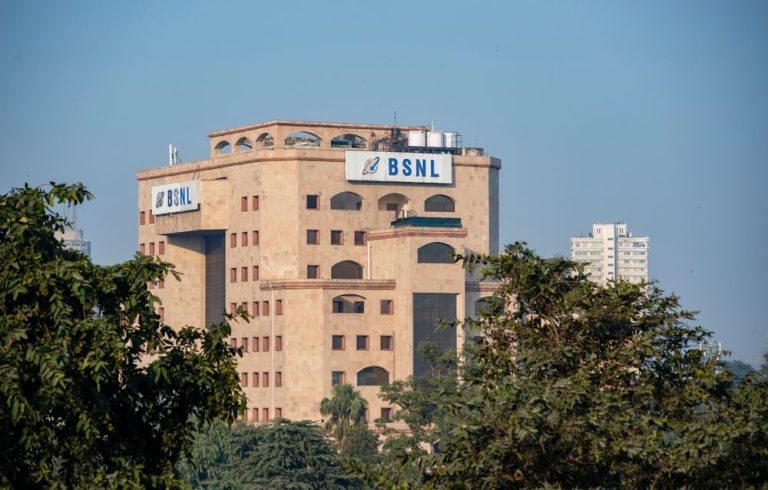
BSNL and MTNL forgo merger, sign 10-year service agreement  


News

The agreement will see BSNL take over the management of MTNL, with the former joining the latter as a management agency

For many years now, India’s state-owned telecoms firms Mahanagar Telephone Nigam Ltd (MTNL) and Bharat Sanchar Nigam Ltd (BSNL) have been haemorrhaging subscribers, struggling to compete effectively against the country’s two largest telcos, Reliance Jio and Bharti Airtel.

In an effort to make the companies (and, therefore, the national telecoms sector itself) more competitive, the government has been considering merging the two businesses since at least 2022. This, the government suggests, would generate valuable synergies, allow for considerable operational streamlining, and make the companies more attractive targets for investment.

However, the dire financial struggles of both companies have seen merger talks irretrievably bogged down in discussions of debt and regulatory roadblocks.

Instead, in recent months the government has leaned towards handing over control of MTNL’s operation to BSNL without formally merging the businesses. This, reports suggested, would remove some of the logistical hurdles related to a merger, such a having to de-list MTNL and buy back a certain number of shares.

This week, MTNL has announced it has approved just such a move, with the new deal seeing BSNL manage the operator for the following ten years. The deal can potentially be renewed by mutual agreement by both companies and can also be annulled by either party given six months’ notice.

This solution is not without its own headaches, however. The Department of Telecommunications (DoT) is currently exploring what such an agreement will mean when it comes to tax implications, saying they will not give the greenlight until they can be sure it will not result in unforeseen tax liabilities for the government.

Keep up to date with the latest international telecoms news by subscribing to the Total Telecom daily newsletter  

Also in the news:
LG and KT partner for 6G research
EE’s first 5G small cells go live, masts now deployed at 1,000+ locations across the UK
Optus clashes with AustralianSuper over slow tower build

Eutelsat adds Bayobab to list of OneWeb partners 


News 

The partnership will make use of Eutelsat’s 600 Low Earth Orbit (LEO) satellite constellation 

Eutelsat and Bayobab, a subsidiary of MTN Group, have entered a multi-year agreement to improve digital connectivity across Africa. The collaboration will use Eutelsat’s OneWebLEO satellite constellation to address the continent’s connectivity needs, particularly for enterprise and cellular network backhaul in remote areas. 

Bayobab, a key player in Africa’s digital infrastructure, will use Eutelsat’s OneWeb constellation to deliver reliable fixed connectivity services. These satellite solutions are designed to improve coverage in rural regions, offering high-quality, low-latency connectivity. The full rollout is expected by the end of the year, with services already available in four unspecified African countries. 

“This collaboration brings cutting-edge digital connectivity to even the most remote corners of the continent and reaffirms our promise of ‘Connecting Africa’ – a promise rooted in partnership and driven by a vision of a digitally inclusive future,” said Bayobab CEO Frédéric Schepens. 

“We are proud to count Bayobab and the broader MTN Group amongst Africa’s early adopters of the Eutelsat/OneWeb LEO constellation,” echoed Cyril Dujardin, co-president of Eutelsat’s business unit.  

“This partnership underscores the commitment of both Eutelsat and Bayobab to drive digital inclusion, and the pertinence of innovative satellite solutions to achieve this aim, notably the unique properties of ubiquitous, low latency LEO capacity,” he continued. 

Keep up to date with the latest international telecoms news by subscribing to the Total Telecom daily newsletter  

Also in the news: