HPE’s Juniper Networks takeover gets UK green light 


News 

The news follows from the European Union’s similar decision earlier this month 

This week, the UK Competition and Markets Authority (CMA) has given HPE’s proposed acquisition of Juniper Networks for $14 billion the go ahead. 

The CMA has not yet published the reasoning behind its decision, but released a statement saying the regulator had “cleared the anticipated acquisition by Hewlett Packard Enterprise Company of Juniper Network Inc.” 

The full text on the decision will be released “shortly”, we were told on Wednesday. 

The acquisition was first announced last January, as an all-cash deal of approximately $14 billion, equating to $40 per share. A CMA investigation was opened in June this year. In a statement, the regulator confirmed that phase one of the investigation would begin on 20 June this year, running until mid-August.  

With this approval now announced, , a second phase investigation will not be necessary. 

The deal was also given the go-ahead by the European Union earlier this month.  

“Based on its market investigation, the Commission found that the transaction, as notified, would not significantly reduce competition on such markets,” read the announcement. 

“HPE’s acquisition of Juniper represents an important inflection point in the industry and will change the dynamics in the networking market and provide customers and partners with a new alternative that meets their toughest demands,” said HPE President and CEO Antonio Neri in a press release following the EU’s approval 

After the acquisition, HPE estimates that its networking business will at least double, saying that the “explosion of AI and hybrid cloud-driven business is accelerating demand for secure, unified technology solutions.” 

The deal is expected to close late this year or early next year. 

Keep up to date with the latest international telecoms news by subscribing to the Total Telecom daily newsletter 

Also in the news: NTT to launch new AI company ‘NTT AI-CIX’
Thousands of kms of fibre could be left underutilised warns asset reuse specialist
IOH launches Southeast Asia’s largest digital intelligence operations centre 

HS2 project could boost rural broadband, new analysis reveals 


News 

The railway line could improve the connectivity for thousands of rural households 

The High-Speed 2 (HS2) railway project could significantly enhance broadband connectivity in rural areas, according to a new analysis released today from High Speed 2 Ltd, a non-departmental public body run by the UK Department for Transport. 

As part of the railway deployment plan for HS2, mobile and broadband providers would be offered access to spare capacity in the 2,000km of fibre cabling and 80 telecoms masts being constructed alongside the railway, which will connect London and Birmingham. Telecoms companies could reportedly access these resources as early as two years before the railway opens, which is expected between 2029 and 2033. 

The development could transform internet speeds for thousands of homes and businesses across 538 postcodes in rural areas, including Buckinghamshire, West Northamptonshire, Warwickshire, and Staffordshire. These regions have historically lagged behind in broadband speeds, due to the high cost of installing direct fibre connections in sparsely populated areas. 

Using HS2 infrastructure, broadband providers could offer ultrafast speeds of over 100Mbit/s to underserved areas, helping address the critical gap in digital connectivity. Notably, 209 postcodes currently lack even ‘decent’ broadband speeds (speeds of least 10Mbit/s). 

“Investment in our transport infrastructure can boost opportunities and drive economic growth in every part of our country. This scheme will have a positive impact on local areas for generations to come, providing connectivity that will create new opportunities for people and businesses to thrive,” said Rail Minister Lord Hendy.   

In addition to improving broadband, the initiative will also enhance mobile coverage, with around 80 telecoms masts being constructed to provide signalling for trains traveling at speeds up to 360km/h. This infrastructure could also address gaps in 5G coverage, further boosting connectivity for rural communities. 

“We’re [also] determined to ensure that we get the most value out of our new infrastructure and support the local community wherever possible,” said Tim Ward, HS2 Ltd’s Head of Telecoms Engineering. 

“That’s why we’re keen to work with mobile and broadband providers to help unlock better 5G connectivity and faster broadband for communities in more isolated areas along the railway,” he continued. 

 HS2 has faced numerous challenges and delays that have slowed its progress, mainly due to the escalating costs. The London to Birmingham line is now estimated to cost £66 billion, far in excess of the projects initial projections. With the UK Treasury having recently uncovered a “£22 billion black hole” in the nation’s finances, the extent to which HS2 will be prioritised remains to be seen. 

Join the conversation around the UK’s connectivity landscape at this year’s Connected Britain, 11-12 September in London. Get tickets here! 

Also in the news:
NTT to launch new AI company ‘NTT AI-CIX’
Thousands of kms of fibre could be left underutilised warns asset reuse specialist
IOH launches Southeast Asia’s largest digital intelligence operations centre


Vodafone Germany bolsters B2B unit, invests €250m


News

Alongside the fresh investment, the company says it will expand the business unit by 120 roles

In recent years, Vodafone Germany delivered lacklustre results for Vodafone Group, notably struggling to retain market share versus its major domestic rivals, Deutsch Telekom and Telefonica Deutschland.

A ray of light, however, has been their B2B business arm, which has grown considerably, now accounting for around 20% of the company’s total service revenue.

Now, it seems Vodafone Germany expects this growth to continue, announcing that will invest a further €250 million into its corporate consumer division. This investment, the company says, will allow it to expand and improve the range of digital products and services it can offer to customers.

Existing partnerships with supporting IT players, such as Microsoft, Google, AWS, Accenture, and Zscaler will also be expanded.

In addition to this increase in investment, Vodafone Germany will also grow the unit’s workforce by 120 jobs to facilitate this additional growth. This is part of Vodafone Group’s overall plan to expand its Vodafone Business workforce by 400 roles this financial year.

“Our customers already want more than just SIM cards and landline connections. Every second order we place is for one of our Beyond Connectivity services. And demand continues to rise. In order to provide our customers with the best possible support on their digitalization journey, we are therefore strengthening our Vodafone Business team,” explained Zoltan Bickel, interim head of Corporate Customers at Vodafone Germany. “After all, a successful digital transformation requires not only the best software, but also the best minds. And we have always had them on board.”

Bickel himself will be leaving the business in March next year, set to be replaced by long-time Telekom Deutschland exec Hagen Rickmann, who was announced to be taking over the role earlier this summer.

It is worth noting that the announcement of these new roles comes in stark contrast to the rest of the business, which has seen major staff cuts over the past year in an effort to streamline operations. Back in March, Vodafone Germany said had plans to cut its workforce by 2,000.

Vodafone currently employs around 15,000 people in Germany.

How is the enterprise market for German telcos changing in 2024? Join the operators in discussion at this year’s Connected Germany conference live in Munich

Also in the news:
NTT to launch new AI company ‘NTT AI-CIX’
Thousands of kms of fibre could be left underutilised warns asset reuse specialist
IOH launches Southeast Asia’s largest digital intelligence operations centre

The Interconnection of Artificial Intelligence (AI) and Structured Cabling

The Interconnection of Artificial Intelligence (AI) and Structured Cabling

This Industry Viewpoint was authored by Emily Dula of Bridge Cable

In the fast-paced landscape of technological innovation, artificial intelligence (AI) has emerged as a transformative force across various industries. One area where AI is making significant strides is in the realm of structured cabling systems. From design and installation, to maintenance and optimization, AI technologies are revolutionizing the way low voltage … [visit site to read more]

UK govt unveils £32m AI funding boost  


News 

The pledge comes just days after scrapping the Conservative party’s £1.3 billion AI investment 

The new Labour government has announced £32 million in funding for 98 AI projects designed to improve the UK’s productivity and public services. 

In a press release published yesterday, the government confirmed that AI companies working on solutions such as improve safety on construction sites, reduce time spent repairing the railways and cut emissions across supply chains, will receive a share of the £32 million funding. 

One such award company is Cambridge-based Monumo, part of a team who received £750,152 to improve the designs for motors in electric vehicles. 

“AI will deliver real change for working people across the UK – not only growing our economy but improving our public services,” said Minister for Digital Government and AI Feryal Clark. 

“We want technology to boost growth and deliver change right across the board, and I’m confident projects like these will help us realise that ambition,” she continued. 

It must be noted that the funding call for this investment follows on from the opening of the competition last October ahead of the AI Safety Summit, which was launched under Rishi Sunak’s government. 

Earlier this week, the government scrapped the £1.3 billion AI investment pledged by the Conservatives. The investments included £800 million to build a supercomputer at the University of Edinburgh, which would be able to complete one billion calculations each second, and £500 million to set up an AI Research Resource, which helps to fund computing power for AI. However, the recently launched AI action plan promises to put AI “at the heart of the government’s agenda”, and allowing AI in the UK to compete on the global stage.  

Join the conversation around AI in the UK at this year’s Connected Britain, 11-12 September in London. Get tickets here. 

MTN gets green light to dump Guinea-Bissau to Telecel

Keep up-to-date with all the latest news, articles, event and product updates posted on Developing Telecoms.
Subscribe to our FREE weekly email newsletters for the latest telecom info in developing and emerging markets globally.

Sending occasional e-mail from 3rd parties about industry white papers, online and live events relevant to subscribers helps us fund this website and free weekly newsletter. We never sell your personal data. Click here to view our privacy policy.

IOH launches Southeast Asia’s largest digital intelligence operations centre 


News 

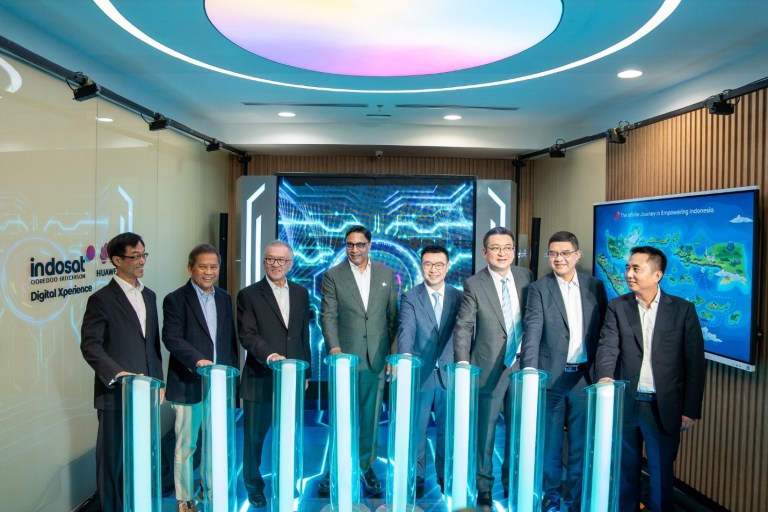
The facility is a collaboration between IOH and Huawei, and will act as the centre of the telco’s network operations, providing real-time insights and proactive service management, to ensure the reliability and optimal performance of the network

Indonesia-based telco Indosat Ooredoo Hutchison (IOH) has announced the launch of their Digital Intelligence Operations Center (DIOC).  

The DIOC will feature End-to-End Service Management of all its services, which will allow any customer issues to be quickly sorted. It will also integrate data analysis with “cutting-edge technologies,” which IOH says will enable “continuous, data driven innovation”. 

Back in February and Mobile World Congress Barcelona, the two companies signed a Memorandum of Understanding to work together on digital and AI development. 

The centre is a step forward in IOH’s mission for digital transformation, as it pledges to use AI to provide superior service to over 100 million customers across Indonesia and part of its wider commitment to “democratise digitalisation in Indonesia”. 

“Today marks a new chapter in Indosat Ooredoo Hutchison’s story as we inaugurate our Digital Intelligence Operations Centre. This facility embodies our ambition of becoming an Intelligence Native Telco, where cutting-edge technology and innovative solutions are at the core of our operations,” said Vikram Sinha, President Director and CEO of Indosat in a press release. 

“With the DIOC, we are not just improving network performance; we are redefining the way we serve our customers. Our collaboration with Huawei is pivotal in realizing our mission to connect and empower every Indonesian through digital connectivity,” he continued. 

The partnership has allowed Indosat to make significant strides in its digital transformation journey, improving network quality and user experience, and increasing its population coverage by 12.7 million people. Both companies continue to focus on enhancing network operations and infrastructure to propel Indonesia’s digital future forward. 

Keep up to date with the latest telecoms news by subscribing to the Total Telecom daily newsletter

Also in the news:
Vodafone kick-starts £430 million share buyback scheme
Google Search is an illegal monopoly, US court rules
Deutsche Telekom and Volkswagen leveraging 5G to manage automotive terminal