

Five interesting bits of news from around the world: … [visit site to read more]
20
Sep, 2024

Nokia launches sustainability calculator for private networks
Press Release
Nokia today announced the launch of a new sustainability calculator for private wireless networks for enterprises. This tool helps companies estimate the environmental and social benefits of using private wireless networks and the new Industry 4.0 applications they enable. Notable benefits include improved operations, reduced costs and carbon emissions, and fewer workplace accidents.
Nokia commissioned PwC UK to support the development of a Private Wireless Sustainability Calculator, based on Nokia’s extensive experience in deploying private wireless networks for more than 760 industrial customers worldwide. Nokia’s tool, initially created for mining, manufacturing and port industries, aids businesses in leveraging private wireless to reach their environmental and social objectives, catering to the growing demand from investors for transparency.
Digitalization is key to accelerating industry sustainability and enabling enterprises to achieve long-term growth. Private wireless networks provide high-performance connectivity for digitalization, enabling new applications such as drone inspections, digital twins, and real-time environmental monitoring. These applications, when combined with private networking and edge computing, improve operational efficiency and contribute to sustainability goals.
Industry 4.0 applications powered by private wireless networks offer significant improvements for businesses.
- Reduced Greenhouse Gas Emissions: A GlobalData and Nokia report found 79% of surveyed enterprises saw a 10% or greater reduction in emissions after deploying private wireless solutions like drones, Industrial Internet of Things (IIoT), and digital twins.
- Improved Worker Safety: Medium-sized chemical manufacturing plants utilizing private wireless networks can save approximately EUR 1.4 million in societal costs (assuming consistent production volumes) and witness an average 35% decrease, on average, in health and safety incidents. Societal costs refer to the economic and social burdens associated with accidents, injuries, and illnesses, including healthcare expenses, lost productivity, and the impact on families and communities. This is due to factors like remote machine control, which reduces worker exposure to hazardous environments.
- Improved Efficiency: Autonomous trucks powered by private wireless networks results in a 7% reduction in fuel consumption and wear and tear. Additionally, operations became 10% more efficient, leading to reduced energy consumption and improved worker safety.
The Nokia Private Wireless Sustainability Calculator draws on PwC UK’s expertise in measuring and valuing impacts, and its Total Impact Measurement and Management (TIMM) framework to develop the environmental and social impact methodologies for private wireless networks. TIMM is rooted in impact pathways, going one step further than most other methodologies to translate the costs and benefits to society in monetary terms.
The Nokia calculator uses data from multiple sources, including previous quantifications in other projects and network models to provide a comprehensive understanding of the private networks’ impact. From there, the model’s insights support users to identify opportunities to enhance business operations, including improving equipment lifecycles, reducing transportation downtime and fuel consumption, and improved worker health considerations. Through this process, the Nokia Private Wireless Sustainability Calculator offers enterprises vital findings and insights to improve their business – from improved operational efficiencies, worker health and safety, potential reductions in costs and environmental footprint.
Subho Mukherjee, Vice President of Sustainability at Nokia, said: “Many physical industries are heavy emitters of greenhouse gas and haven’t had the opportunity to reap the full potential of digital technologies yet. To reach our climate goals, we need to speed up their digital transformation through the power of networking, AI and cloud. Nokia is helping industries go digital to become smarter, more automated, sustainable, and efficient. Our new Private Wireless Sustainability Calculator is the first of its kind, showing our private wireless networks can help businesses be more environmentally friendly. It’s a strong step towards quantifying what Nokia believes in, that there is no green without digital.”
Mukherjee said the new Nokia tool underscores the company’s commitment to addressing climate change and resource efficiency in its value chain. Nokia has committed to reaching net zero greenhouse gas emissions by 2040, accelerating its previous target by 10 years. This places Nokia ahead of the Paris Agreement goal to reach net zero by 2050. This initiative is part of Nokia’s broader strategy to integrate sustainability benefits into its solutions for industries and develop Environmental, Social, and Governance (ESG) as a competitive advantage.
Tom Beagent, Sustainability Partner at PwC UK, said: “Technology has a huge role to play in tackling social and environmental challenges. It is great to see Nokia using its expertise to support its customers to see the potential of private wireless in tackling issues such as health and safety and carbon emissions. Monetizing impacts with frameworks like TIMM really help decision makers to understand the social and environmental return on investment and the role technology can play in delivering on their sustainability goals.”
Keep up to date with all of the latest telecoms news with Total Telecom’s daily newsletter
Also in the news:
Meta resumes use of UK user posts to train its AI models
Verizon’s 4,800 job cuts will cost over $1.9 billion
CMA questions Vodafone–Three merger after second probe
20
Sep, 2024
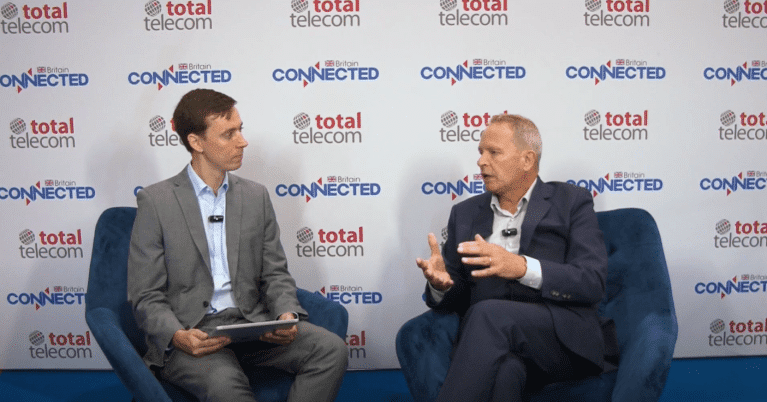
“A page has been turned”: VMO2 praises Labour’s approach to digital infrastructure
Interview
Is the new Labour government’s approach to digital infrastructure going to be effective?
In this Connected Britain interview, Simon Miller, Director of Public and Regional Affairs at Virgin Media O2, describes the “encouraging” discussions with government so far and how the UK’s digital infrastructure landscape is shifting in 2024.
Check out the full interview from the link below:
20
Sep, 2024

Free takes 5G standalone lead in France
News
The operator says it is the first in the country to launch 5G standalone (SA) on a “national scale”
This week, French mobile network operator Free, owned by telecoms giant Iliad Group, has announced the launch of 5G SA services.
“Today, Free is announcing that it has deployed 5G SA (Standalone Access) on the 3.5 GHz frequencies of its public network on a national scale. By doing this, it has become the first mobile operator in France to offer this technology to its subscribers,” reads the company’s translated press release.
More specifically, the operator says it has switched on 5G SA at 6,950 of its 20,000 5G sites across the country, with customers able to access the new technology on compatible devices at no extra cost.
The new SA architecture will provide customers with higher speeds and lower latency, as well as unlocking a host of potential new use cases, from extended reality to network slicing.
“5G SA is the final phase of the development of the 5G network, enabling faster speeds, lower latency, and higher reliability,” explained Free. “Its large-scale deployment will allow the full potential of 5G technology to be realized through the massive take-up of new services and 5G applications in many domains, ranging from industry, health, education, and entertainment through to smart cities.”
It should be noted that while the announcement claims the standalone deployment to be at a “national scale”, this is presumably not the same as ‘nationwide”. Free says its 20,000 5G sites provide coverage of coverage of roughly 95% of the French population, which would suggest that there are still many thousands of sites left to upgrade before truly national coverage can be achieved.
This is the second major 5G SA announcement this month, with EE (BT) having announced the launch of the new technology in 15 cities a few weeks ago. Interestingly, EE’ 5G SA network will only be available to customers via new premium packages and will not be accessible for customers on existing plans.
This is in contrast to rivals Virgin Media O2 and Vodafone, both of whom will allow existing users to access the new network at no additional cost.
Keep up to date with all of the latest telecoms news with Total Telecom’s daily newsletter
Also in the news:
Meta resumes use of UK user posts to train its AI models
Verizon’s 4,800 job cuts will cost over $1.9 billion
CMA questions Vodafone–Three merger after second probe
20
Sep, 2024

Axian Telecom reportedly in for triple-play provider in Kenya
Keep up-to-date with all the latest news, articles, event and product updates posted on Developing Telecoms.
Subscribe to our FREE weekly email newsletters for the latest telecom info in developing and emerging markets globally.
Sending occasional e-mail from 3rd parties about industry white papers, online and live events relevant to subscribers helps us fund this website and free weekly newsletter. We never sell your personal data. Click here to view our privacy policy.
20
Sep, 2024

THE UK’S SMARTPHONE THEFT CRISIS
 This Industry Viewpoint was authored by Dario Betti, CEO of the Mobile Ecosystem Forum
The UK government wants to crackdown on “snatch thefts” of smartphones; an estimated 78,000 Brits had their phones stolen on the streets in the year up to March 2024 – a rise of over 150% compared to the previous 12 months. The government wants a technology solution, but technology by itself might not be able to address the root cause. … [visit site to read more]
20
Sep, 2024

Safaricom adds Mastercard payment option for M-Pesa merchants
Safaricom and Mastercard announced on Thursday that they have signed a partnership to accelerate adoption of payment acceptance and cross-border remittance services in Kenya.
Under the terms of the partnership, Safaricom will embed Mastercard’s omnichannel acceptance solutions for the 636,000 merchants using Safaricom’s mobile money service M-Pesa.
Safaricom said that combining M-Pesa’s extensive merchant network and Mastercard’s global payment infrastructure will scale digital payments across Kenya by making more seamless, secure, and scalable payment solutions available to merchants. That in turn would also enable them to serve customers across global markets.
The partnership will also boost remittance services, streamlining cross-border transactions efficiently, said Safaricom’s chief financial services officer Esther Waititu.
“This collaboration with Mastercard unlocks new opportunities for M-Pesa merchants,” Waititu said in a statement. “By combining our expertise with Mastercard’s global acceptance network, we are enabling businesses to provide more efficient and frictionless payment solutions to their customers, both in Kenya and beyond.”
According to analyst firm GlobalData, Kenya’s mobile wallet payments market has grown at a rate of 12.7% CAGR between 2020 and 2024, driven by a rise in consumer spending and a high consumer preference for mobile-based payments. GlobalData is forecasting 5.7% growth in 2024 to reach KES8.4 trillion (US$60.1 billion).
The firm credits mobile wallet growth in Kenya to several factors, from the popularity of M-Pesa to the rising popularity of QR code-based payments, which itself has been helped along by the introduction of the Kenya Quick Response Code (KE-QR Code) Standard last year.
As of July 2024, M-Pesa had over 51 million customers.
MORE ARTICLES YOU MAY BE INTERESTED IN…
20
Sep, 2024
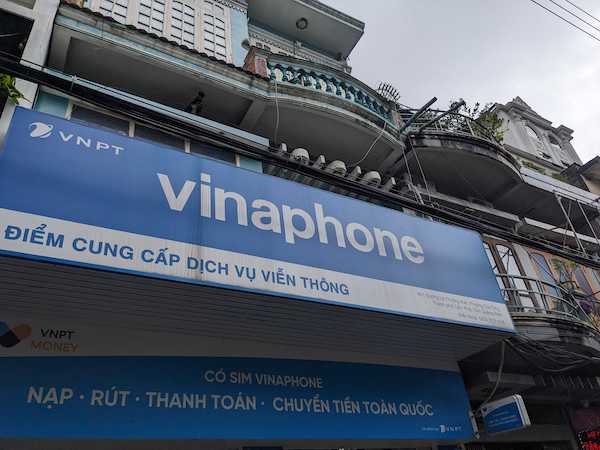
VNPT starts work on base station for Lang Nu resettlement area
Keep up-to-date with all the latest news, articles, event and product updates posted on Developing Telecoms.
Subscribe to our FREE weekly email newsletters for the latest telecom info in developing and emerging markets globally.
Sending occasional e-mail from 3rd parties about industry white papers, online and live events relevant to subscribers helps us fund this website and free weekly newsletter. We never sell your personal data. Click here to view our privacy policy.
19
Sep, 2024

Tata and ADI to explore semiconductor manufacturing opportunities in India
Keep up-to-date with all the latest news, articles, event and product updates posted on Developing Telecoms.
Subscribe to our FREE weekly email newsletters for the latest telecom info in developing and emerging markets globally.
Sending occasional e-mail from 3rd parties about industry white papers, online and live events relevant to subscribers helps us fund this website and free weekly newsletter. We never sell your personal data. Click here to view our privacy policy.
19
Sep, 2024

VMO2’s data centre cooling optimisation will save £1m a year
News
The savings come as part of a partnership with data centre software specialist EkkoSense
According to Virgin Media O2 (VMO2), working in partnership with EkkoSense across 20 of the company’s UK data centres has led to an average saving of 15% in data centre cooling energy usage.
In environmental terms, this means reducing the company’s carbon footprint by around 760 tonnes per year. In financial terms, it’s a reduction in energy bills of over £1 million a year.
These savings have been achieved through better understanding the data centres’ existing energy usage, leveraging various monitoring and analytics solutions from EkkoSense. These include using IoT sensors, AI analytics, and digital twin technology.
“With our software collecting thousands of data points every five minutes – adding to the millions of data points already collected, we’re able to continually refine the effectiveness of our machine learning algorithms for Virgin Media O2,” said Dean Boyle, EkkoSense’s CEO. “Having access to this level of real-time insight means that Virgin Media O2’s operations team are able to track how their data centres are performing from a cooling, power and capacity perspective. They are also able to identify further energy optimisation opportunities in terms of cooling energy usage and overall savings.”
This additional insight from EkkoSense has allowed VMO2 to adjust its energy usage in real-time to meet demand, enabling them to run more efficiently.
“In partnership with EkkoSense, we’ve optimised our data centres so they operate efficiently, using real-time data so we can make airflow and cooling improvements, resulting in significant cooling energy savings,” explained Adrian Lazenby, Head of Technical Site Engineering and Delivery at VMO2.
In recent years, the data centre industry has experienced a surge in growth, much of which is related to the ongoing boom in AI. However, providing energy – particularly renewable energy – for these power-hungry data centres, remains a major challenge. Indeed, we have even seen data centre projects rejected recently due to fears that the local energy grids could not support the additional demand.
Keep up to date with all of the latest telecoms news with Total Telecom’s daily newsletter
Also in the news:
Meta resumes use of UK user posts to train its AI models
Verizon’s 4,800 job cuts will cost over $1.9 billion
CMA questions Vodafone–Three merger after second probe