Brookfield Asset Management forms Indian tower giant

Data Infrastructure Trust (DIT) sealed the acquisition of American Tower-owned ATC India for INR210 billion (US$2.5 billion), making it the largest towerco in the nation, surpassing rival Indus Towers.

DIT, the tower arm of Brookfield Asset Management, stated that it had acquired around 76,000 sites from ATC India, expanding its portfolio to a total of approximately 257,000 telecom sites. This places it ahead of Indus Towers, which had a portfolio of 225,910 towers as of June 2024.

The Competition Commission of India approved the deal in August, and the terms and conditions of the buyout were finalised yesterday (September 12). The enterprise value of the acquisition stood at INR181.5 billion.

ATC India, incorporated in 2004, reported a turnover of INR121.6 billion for the full year 2023-24, an increase from INR87.6 billion year-on-year.

This deal marked Brookfield’s third acquisition in the Indian telecoms sector. In 2022, the asset management company acquired 6,300 indoor sites and small cells, and in 2020, it acquired 175,000 towers from Reliance Industrial Investments.

Arpit Agrawal, Brookfield Managing Partner and Head of Infrastructure for India and the Middle East, said: “Our expertise, rooted in our history as an owner and operator of high-quality businesses, is exemplified by our acquisition of ATC India. It complements our existing business and further strengthens our footprint, creating the largest tower portfolio in the country and one of the largest platforms globally.”

MORE ARTICLES YOU MAY BE INTERESTED IN…

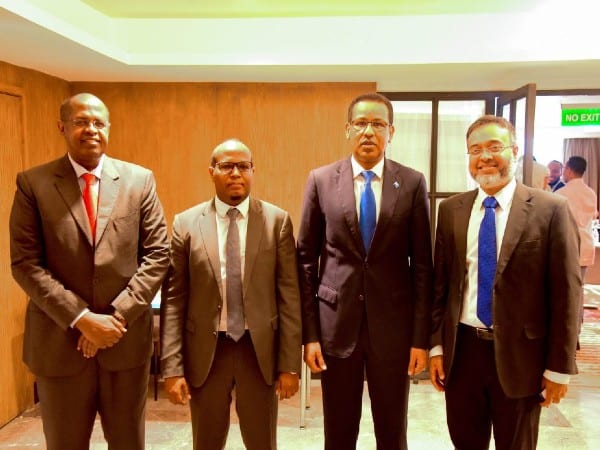
Somalia’s NCA, IFC to revamp submarine cable landings

Keep up-to-date with all the latest news, articles, event and product updates posted on Developing Telecoms.
Subscribe to our FREE weekly email newsletters for the latest telecom info in developing and emerging markets globally.

Sending occasional e-mail from 3rd parties about industry white papers, online and live events relevant to subscribers helps us fund this website and free weekly newsletter. We never sell your personal data. Click here to view our privacy policy.

India’s BSNL trials 5G; market leader Jio trials 5G network slicing

India’s state-owned operator BSNL has reportedly started 5G trials in the country ahead of its imminent launch of 4G. However, mobile market leader Reliance Jio is looking much further ahead – to business cases that could monetise its (already launched) 5G network.

BSNL is said to be working with India’s Centre for Development of Telecommunications (C-DoT) to test 5G technology. C-DoT is also providing the network core for BSNL’s 4G network, a core that can be used for 5G.

BSNL is still pushing to launch 4G services in India, with the technology set to go live next month and hopes that it will boost a market share estimated at a mere 7.4% (86.3 million customers) as of May. According to local news reports, delays in launching 4G rollout have adversely affected BSNL subscriber numbers. The government has reportedly given BSNL a subscriber market share target of 25% to reach by the end of 2025.

Meanwhile India’s race to introduce 5G has already been won by Reliance Jio and Bharti Airtel. Both carriers launched their networks in October 2022. Third-placed operator Vodafone Idea (Vi) is still working towards its own launch.

However, Reliance Jio is even further ahead, already loooking on new approaches to monetising 5G. It has been reported by the Indian press that premium smartphone maker OnePlus and Reliance Jio have conducted a successful demonstration of 5G network slicing technology at their 5G innovation lab in India.

Using the recently launched OnePlus Nord 4 Android smartphone with network slicing technology, the R&D teams are said to have demonstrated how different applications can get access to dedicated network slices for enhanced 5G experience.

5G network slicing divides a physical network into several virtual networks, each tailored to specific needs. These virtual networks can have distinct features such as speed, bandwidth, security, and reliability based on user needs. It is one of the business cases considered particularly relevant for 5G and areas like private networks.

Both companies will now work on finalising the details to prepare for commercial deployment in the coming months. How the other two private networks will respond we’ll no doubt find out soon. BSNL meanwhile needs to get 4G up and running.

MORE ARTICLES YOU MAY BE INTERESTED IN…

Sparkle supports capacity boost for India’s Airtel Business

Italian company Sparkle, an international telecoms service provider, has signed an agreement with Airtel Business, the B2B arm of Indian service provider Bharti Airtel, for additional capacity on a diversified low-latency route between Asia and Europe.

Under the agreement, Sparkle will provide capacity on the Blue and Raman submarine cable systems which will connect India to Italy. With this additional capacity Airtel will further diversify its global network across multiple international submarine cable systems to serve the growing demand for data services in India and neighbouring countries. 

The two companies will also work together on the development of new business opportunities and projects in the Indian subcontinent, leveraging their respective cable infrastructures.

Described as India’s leading and most trusted provider of ICT services, Airtel Business offers strategically located submarine cables, satellite networks and global networks across 50 countries and five continents. With more than 1,200 global carrier partnerships, the company says it enables its customers to connect across the world including hard-to-reach areas.

In India, Airtel Business offers a wide range of solutions that include secure connectivity, cloud and data centre services, cybersecurity, IoT and cloud-based communications to enterprises, governments, carriers, and small and medium businesses.

Vani Venkatesh, CEO of Global Business at Airtel Business, says: “We are happy to partner with Sparkle as we further consolidate our leadership in global connectivity. This partnership will further diversify our network with large integrated capacities to meet the ever-growing connectivity needs and data demand of our customers.”

MORE ARTICLES YOU MAY BE INTERESTED IN…

Connected Britain 2024: The Award Winners 


News 

The Connected Britain Awards took place last night after a busy first day of the event. Hundreds joined us for an evening of networking and highly anticipated winner announcements. We had a record-breaking number of entries this year, reflecting Britain’s ever-growing and rapidly evolving digital economy.  

Our shortlist this year represented a fantastic array of diverse organisations and individuals, with the traditional big players being joined by many organisations of varying sizes from all corners of Britain.  

The awards recognise the most significant and innovative organisations, solutions and programmes that are shaping Britain’s digital future.  It is a clear reflection of how the whole digital economy is now working towards the same goal of improving lives through connectivity.  


From the latest technological innovations to the most impactful community initiatives, the Connected Britain Awards strives to highlight excellence in every corner of the UK.   

A big thanks to all our award presenters, our generous sponsors and the excellent panel of judges, who spent the last number of months analysing entries for each of the 15 categories.  

Onto the awards… 


B2B Service Provider of the Year 

The winner in this category introduced a broad range of exciting new B2B solutions this year, as well as a new Partner Programme that has already welcomed over 100 registered partners.  

WINNER: PlatformX Communications (PXC) 

The finalists were: 

CovertSwarm 

Evolve B G Limited 

NETS International 

Texaport 

ZAYO – Fibre Backhaul 


Broadband Provider of the Year 

For this category, the judges were looking for a broadband provider that not only delivers excellent service to customers but goes the extra mile in helping them on their digital journey. The winner has done exactly that, helping to transform previously underserved locations in the UK. 

WINNER: Wildanet 

The finalists were:  

Brsk 

Fibrus Broadband 

Lightning Fibre 

Truespeed Communications 

Wessex Internet 

Zzoomm 


Digital Council of the Year 

Local councils have become a vital part of Connected Britain and the winner in this category has shown exceptional leadership. Their entry included a huge number of successful projects, from deploying 5G and fibre infrastructure to using drones to deliver medical equipment. 

WINNER: Coventry City Council 

The finalists were: 

Cornwall Council 

Glasgow City Council 

Kent County Council 

Norfolk County Council 


Digital Skills Award 

The lack of digital skills is becoming a major challenge in the UK, threatening to deepen the digital divide. 

The winning entry in this category brought together volunteers, partners, and council staff to tackle this issue head-on, with some very impressive results. 

WINNER: Wigan Council’s TechMate digital skills initiative 

The finalists were: 

Kent County Council – Digital Kent 

Norfolk County Council—Tech Skills for Life 

Three UK & Three Discovery, Power up the Possibilities 

Trafford Council 

We Are Group & Royal Borough of Kingston upon Thames 

Wigan Council’s TechMate digital skills initiative 


Enterprise Solution of the Year 

The winner in this category is helping the telecoms industry deliver on one of the most exciting initiatives in the UK, with huge implications for the market and for customers across the country. 

WINNER: SONALAKE, pivOTS 

The finalists were: 

Calix – Broadband Platform 

Colt – Intent-based Networking Optimisation 

Deepomatic – First Time Right Automation platform 

Digitalnauts & HoloPlan 

Evolve B G Limited 

SuLe – Sule Hub Limited 


Project Rollout Award 

The winner in this category needs no introduction, with its rollout continuing to go from strength to strength, even in the face of a challenging economic environment over the past year. 

WINNER: CityFibre 

The finalists were: 

4 Fibre Limited 

Freedom Fibre Ltd 

NETS International 

Openreach, Fibre Build plan 

“Virgin Media O2 & Deloitte – Smart Planning tool  


The Access Innovation Award 

The winner of this category is doing some amazing work across the country, including here in London. In fact, many of you may have used their infrastructure on your way to Connected Britain today… 

WINNER: Boldyn Networks 

The finalists were: 

ACOME Group’s Nanomodule ultra lightweight (ULW) fibre cable 

The AssetHUB Ltd 

Network on Wheels via the The One Word Project – Partnership between Worcestershire County Council, Virtuser and Telet 

Nokia – Corteca 

Openreach (Scotland’s Fair Isle) 

Pangea Connected, global cellular IoT connectivity solutions 


The Barrier Removal Award 

The winner in this category has taken an innovative approach to removing barriers for infrastructure deployment, creating a dedicated unit to spearhead public–private collaboration.  

WINNER: Glasgow City Council Telecoms Unit 

The finalists were: 

4 Fibre Limited 

Dalcour Maclaren – High Level Design review/ Land Rights Assessment 

Freedom Fibre Ltd 

MapAll, MapAll Blockages 

Swansea Bay City Deal Digital Infrastructure Programme and Local Authority Digital Champion Teams at Swansea Council, Carmarthenshire County Council, Pembrokeshire County Council and Neath Port Talbot Council 


The Community Improvement Award 

The idea that quality connectivity should benefit everyone in society is at the heart of this category’s winning entry. The winner showcased a wide range of initiatives to ensure no one is left behind on their digital journey.  

WINNER: Sunderland City Council’s Digital Inclusion Programme supported by Boldyn Networks 

The finalists were: 

BeFibre 

Cefnogi’ community engagement programme 

#CovConnects Coventry City Council 

Commsworld and SmartSTEMs: Inspiring The Next Generation 

Fibrus 


The Full Fibre ISP Innovation Award 

The winning ISP in this category has made great progress in the past year, expanding its customer base significantly thanks to great customer service and close collaboration with communities at all levels. 

WINNER: Brsk 

The finalists were: 

Gigabit IQ from Grayshott Gigabit Limited 

ITS Technology Group 

Ogi Pro 

Wifinity 

Zzoomm 


The Industrial Innovation Award 

High quality connectivity can play a huge role in health and safety in an industrial setting. The winner of this category showcased a wearable solution providing real-time data about workers and their environment, keeping everyone connected and protected.  

WINNER: Blackline Safety 

The finalists were: 

aql 

INNO Instrument 

Magdalene 


The Rising Star Award 

This was a highly competitive category, with many amazing entrants from across the industry. Our winner this year has had a huge impact on their organization, spearheading changes to the company’s operating model and helping to deliver savings of over £50 million. 

WINNER: Sophie Dunstan, Openreach 

The finalists were: 

Alan Cutler, Home Unity 

Jamie Sandles, V4 Cloud 

James Armstrong, National Grid 

Natalie Rowley, Truespeed Communications 

Ramona McGarry, Coventry City Council 


The Sustainability Award 

Sustainability has been a key them here at Connected Britain and the winner in this category is going to great lengths to reduce their carbon footprint and that of their entire supply chain. 

WINNER: Openreach Limited, Carbon Reduction Programme 

The finalists were: 

Cable and Things – Sustainable Draw Rope 

M Group Services’ Telecom Division 

Openreach Limited, Carbon Reduction Programme 

PlatformX Communications (PXC) 

STL – EcoLabelled Methodology in OFC manufacturing 

Technetix, in partnership with Virgin Media O2 

TXO 

Wildanet 


The Wireless Innovation Award 

Our final winner overcame major deployment challenges to deliver quality mobile connectivity to some of the UK’s most remote areas. The results exceeded their partner’s expectations, with the project being expanded as we go into 2025. 

WINNER: Blackspot Networks Ltd 

The finalists were: 

Iris-iot Solutions Ltd 

Mobile Private Network (MPN) by AWTG Ltd. 


The Startup of the Year Award 

WINNER: Connected 

The finalists were: 

Zim Connection

YWE Media

EV Mobiliti

Appella AI

Polaris Safety

Thinking Machine

Qomodo

HalleyX

Lumilinks 

One Touch Switch: An inflection point of opportunity


Viewpoint Article 

by Jarlath Finnegan is Group CEO of AllPoints Fibre Networks (APFN)

As the industry approached the launch of One Touch Switch (OTS) on 12 September, there was an increasing amount of commentary on its perceived faults and features. Regardless of which side of that debate we stand, at APFN, we see OTS as an inflection point which should give pause for thought to all of us involved in the industry.  

Over the past ten years, our backers have poured billions of pounds of private sector capital into brand new full fibre infrastructure, which is already benefiting millions of customers. Much delayed and under-publicised, it is a common hope across the industry, government, and the regulator that OTS will encourage more consumers to engage more deeply with the telecoms market. 

But we already know that OTS is not an industry cure-all. None of us should be under the impression that customer take-up of full fibre broadband will rocket from mid-September onwards. To make a more competitive marketplace a reality, we need the government and the regulators to step in. 

At the stroke of a pen, and without spending any money, they could do a lot to help. Ofcom’s new guidance on the use of the word ‘fibre’ in marketing comes into effect four days after the new OTS process goes live. Using the word ‘fibre’ without qualification will now be banned by Ofcom, and according to them, consumers should also be informed about the technology used to deliver their broadband. But the Advertising Standards Authority has declined to follow suit. So providers will be able to market their networks in one way on their websites, and an entirely different way on an advertising billboard. In no other industry would this be tolerable and the government and Ofcom needs to pressure the ASA to change its guidance immediately, as has happened in France and Ireland. 

Secondly, the government has failed to meaningfully support the industry to communicate the benefits of fibre. Successive administrations have overseen a remarkable success story in terms of the rollout. The availability of full fibre connections grew to over 60% in January 2024 according to Ofcom compared to 7% in January 2019. But we need consumers to switch and take advantage of this new technology. If consumers voluntarily move on to faster, more reliable connections, that benefits everyone: they get a better service; productivity increases; and the government can further digitise public services. The government should run a public information campaign to ‘make the switch’, just like it did for the digital tv and radio switchover. For those that need it, the government should also prioritise digital skills training, particularly for those adults who missed out when they were in school. We cannot unlock the full potential of the UK without it. 

Finally, we are approaching another inflection point when the copper networks are switched off and consumers are moved to full fibre networks by their ISPs. Like OTS, this has not received the publicity and scrutiny that it deserves. This is important for Openreach, as well as those that use their networks. There is no point in Openreach, the industry and consumers paying for the costs of running two networks, a 20th century part-copper network based on old landline technology and a modern fibre optic one. At the point of switch off, it is vital that consumers can make an informed choice of network, rather than having their contracts automatically rolled over to a full fibre one by their existing ISP. The government and the regulator should intervene on this now so that the rules are clear before the switch off takes place and we can inject much needed competition into the broadband market. Copper switch-off is a once in a generation opportunity to do it. 

Broadband isn’t generally argued about much in the chambers of Westminster because, for the most part, everyone agrees: it’s a fairly-priced daily essential that facilitates our lives. But there needs to be a healthy broadband market for that situation to continue, and for that, we need the government to get more involved.  

One Touch Switch is being introduced on Thursday 12 September! Get the latest reactions from the UK telecoms industry live at Connected Britain


Jarlath Finnegan is Group CEO of AllPoints Fibre Networks (APFN), which was created from the merger of Giganet, Swish Fibre, Jurassic Fibre and the existing AllPoints Fibre brands. Cuckoo Fibre is also part of the same group. His background is in telecoms and renewable energy infrastructure.

LINX Nairobi Network to be Extended to PAIX Data Centres

LINX Nairobi is a neutral, multi-site interconnection fabric providing peering services and more for networks wanting to improve performance, increase redundancy and lower latency.

Launched back in November 2023, the new Internet Exchange Point (IXP) is going from strength to strength with a strong community of local Internet Service Providers (ISPs), global content networks and strategic partners already interconnected, and traffic starting to build.

The team at LINX have spent a lot of time with the local engineering community and following interest from key networks located at PAIX it was decided that the infrastructure needed to grow – only 9 months after launch.

PAIX Nairobi NBO-1 is located at the Britam Tower in Upper Hill, Nairobi, the central business district and a known key financial hub for East and Central Africa.

Networks located at the PAIX facility in Nairobi are soon to be just a single cross connect away from peering opportunities with any network present at LINX Nairobi, from global content networks like Meta to local ISPs such as ICON Fiber, Mtaani Telecom, Mymanga Networks and PepeaNet.

LINX Nairobi has a fully interconnected and dual fibre infrastructure between the data centre sites for full resilience and redundancy. The addition of PAIX will enhance the LINX fabric to a 4-site interconnection hub and the installation work is being prepared and looking to go live in the coming weeks.

Emmanuel Makina, Sales Manager of PAIX Data Centres says:

“With our cloud- and carrier-neutral datacentre located in the centre of the business district, we host communities of interest for the financial and content industries, so that includes financial services, advertising, broadcasting, and entertainment companies. The customers that host their mission critical equipment in our facility have a requirement to be online 24×7 in today’s digital economy. They all benefit from being able to connect to multiple networks, easily scale their bandwidth, reduce their connectivity costs, and have the lowest latency to their partners…”

“Further, the PAIX facility is a natural communications hub for Nairobi: in a very central location in Upper Hill, and next to Britam Tower where our customers can colocate their antennas for wireless connectivity to all parts of the city.”

Jennifer Holmes, CCO for LINX comments:

“We didn’t expect to be expanding the LINX Nairobi network this soon, but we like to pride ourselves in our commitment to the local community. They said, we listened. By expanding the peering opportunities to the customers at PAIX we are adding value to the entire LINX Nairobi community and prospective new local and global networks who we are in talks with.”

Wouter van Hulten, CEO & Founder, says:

“PAIX Data Centres is fully committed to the development of Kenya’s digital infrastructure, with support for all the latest AI hardware and software. PAIX Data Centres is invested in by Africa50, a private equity fund in which the Republic of Kenya is a shareholder. We are building and operating the infrastructure to enable Africa’s digital economy, with local datacentres, local teams, and world class operations, all essential ingredients for the developments that lie ahead. We warmly welcome LINX to the PAIX Community in Kenya.”

First cables laid to bring fast, reliable broadband to South Wiltshire under government’s Project Gigabit

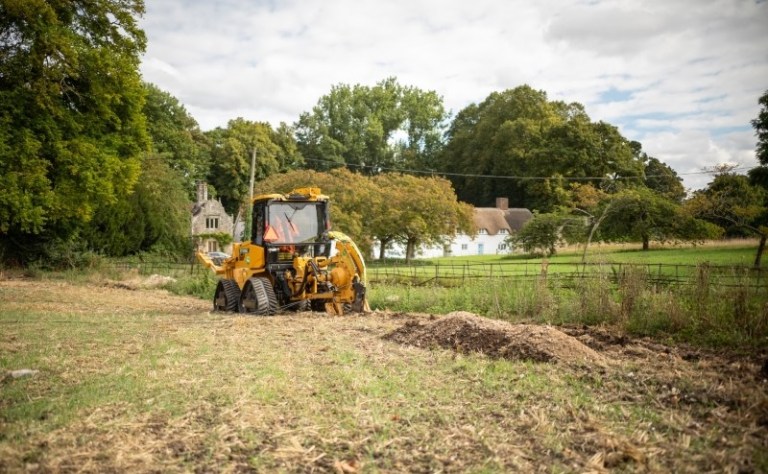
Mole ploughs broke the ground in Stapleford last week, as Wessex Internet began its physical work to deliver full fibre internet to 14,500 homes and businesses in South Wiltshire.

This work is part of Project Gigabit, a government-funded programme to enable hard-to-reach communities to get fast, reliable broadband. The contract is worth £18.8 million and will see Wessex Internet expanding its existing network in the Wylye Valley, going across the Salisbury Plain, connecting villages surrounding Amesbury, and going as far north as Chisbury and Little Bedwyn. The first communities to be connected will be Stapleford, Wylye and Bapton.

The contract was awarded by the government in March 2024 to be delivered over the next five years. The infrastructure work that started this week follows six months of detailed planning to design the network route, liaison with landowners and communities in the areas that will be connected, and the opening of a new construction base in Codford, where civils operatives delivering the project are based.

Meanwhile, as the network build gets underway to deliver one of Wessex Internet’s latest Project Gigabit contracts in South Somerset, the company has also just reached a significant milestone in delivering its first Project Gigabit project in the North Dorset area, with more than 50% of the properties in this contract now connected. Villages recently connected include Kington Magna, Buckland Newton and Holwell.

All the homes and businesses being connected across South Wiltshire and North Dorset will benefit from full fibre broadband, also known as Fibre to the Premises (FTTP). This means a fibre optic cable goes all the way to each building, rather than stopping at a cabinet down the road. This delivers connection speeds of up to 10Gbps, with far superior speeds and reliability compared to old copper telephone lines.

Minister of State for Telecoms Chris Bryant said:

“Connectivity is a vital part of modern life, for individuals, families, communities, businesses and government. I’m delighted that months of hard work are now paying dividends in South Wiltshire where villages that were once cut off will soon be able to access state of the art broadband.


“This will be a game-changer for residents, not only because it will provide them with faster internet, but because it will help create equal opportunities, boost rural businesses, and ensure our villages aren’t left behind in the digital age.”


Hector Gibson Fleming, CEO of Wessex Internet, said:

“Wessex Internet is determined to continue our mission delivering ultrafast broadband to rural communities that would otherwise be left behind by traditional providers. Supported by the government’s Project Gigabit, we continue this work at pace, and it’s exciting to see milestones being reached in both our first and one of our newest contract areas.

“This is great news for homes and businesses in the North Dorset and South Wiltshire, who will be able to access world-class connectivity and the many economic and social benefits it provides. We will continue working closely with the residents and businesses across these two contract areas, involving them in our planning process and informing them as soon as our future-proofed broadband is available in their communities.”

Wessex Internet’s rollout will continue over the next five years in South Wiltshire and complete within the next two years in Norh Dorset. It will target hard-to-reach rural areas that, without government investment, would have missed out on faster speeds. This gigabit-capable connectivity is being supported by the government to help expand opportunity, reduce inequality and drive economic growth, by making it easier for rural communities to access broadband that will meet people’s needs for decades.