Nigeria’s NCC introduces device management system to combat phone-related crime

Regulator the Nigerian Communications Commission (NCC) has introduced a device management system (DMS). The NCC DMS is described as a comprehensive central equipment identity register (CEIR) aimed at managing and regulating mobile devices accessing the country’s communication networks.

The initiative is designed to ensure stricter control over mobile devices, to enhance security, and to promote compliance with established regulatory standards.

It will act as a central database for tracking devices across all mobile network operators (MNOs) in Nigeria.

By registering and monitoring device access, the NCC says it seeks to curb the use of unapproved devices and prevent issues such as phone theft and fraudulent activities involving mobile devices.

The regulator explains that the NCC-DMS will acquire the international mobile equipment identity (IMEI) of all devices on the communication network and synchronise with international databases of IMEI repositories. Thus the NCC-DMS will maintain a registry of all communication devices available in the country.

All MNOs in the country are legally obliged to connect to the system. A registration fee structure will be applied to every device registered.

News resource Nairametrics says the NCC first announced plans to deploy the DMS in 2021. Among the reasons given were “to curtail the counterfeit mobile phone market, discourage mobile phone theft, enhance national security, protect consumer interest, increase revenue generation for the government, reduce the rate of kidnapping, mitigate the use of stolen phones for crime, and facilitate blocking or tracing of stolen mobile phones and other smart devices”.

Every reported IMEI for stolen and illegal mobile phones and other smart devices will be blacklisted and shared with all operators across all networks, meaning the blacklisted devices will not work in any Nigerian network.


MORE ARTICLES YOU MAY BE INTERESTED IN…

Kenya Pipeline Company joins leading ISP to boost intercity data capacity

Kenya Pipeline Company (KPC), a state corporation that transports, stores and delivers petroleum products to consumers, but that also has a network infrastructure license, says it has onboarded a leading Tier III internet service provider (ISP), Syokinet Solutions, to activate 1.6 terabits per second (Tbps) data capacity on KPC’s fibre optic cable which runs from Mombasa to Nairobi.

The new high-capacity fibre link will, it is claimed, bring fast gigabit internet speeds and unparalleled reliability to homes, businesses and community networks in Kenya’s two largest cities, representing a major advance in Kenya’s digital infrastructure and connectivity goals.

Managing Director Joe Sang says the launch « represents a new milestone for KPC as we strive to expand and upgrade our fibre optic cable in line with our long-term business diversification strategy”.

He suggests that the strategic partnership with Syokinet will unlock additional connectivity and offer high-speed internet services for homes and businesses between Nairobi and Mombasa.

Indeed, the partnership with Syokinet will provide increased backbone capacity on KPC’s fibre, with benefits that include faster gigabit connectivity to households as well as expanded reach for public Wi-Fi services through hotspot and community network growth.

The new fibre link will also see increased diversity and resilience for enterprise data centres, and greater bandwidth availability for local ISPs and community networks in both Mombasa and Nairobi.

The connectivity launch aligns with the Kenyan government’s Digital Superhighway Project via which it aims to increase broadband connectivity across the country through laying 100,000 kilometres of fibre optic cable, establishing 25,000 public Wi-Fi hotspots in market centres across Kenya, and creating 1,450 digital hubs in every ward.

KPC obtained a Network Facility Provider (NFP) – Tier 2 network infrastructure license in 2018 from regulator the Communications Authority of Kenya (CA) to lease fibre optic cable along its pipeline network in Kenya from Mombasa to Nairobi – Nakuru – Kisumu and Eldoret towns.

Over the years KPC says it has signed lease agreements with all the country’s leading operators and ISPs to use its fibre optic cable network.

MORE ARTICLES YOU MAY BE INTERESTED IN…

QoE specialist Aprecomm eyes the UK altnet market at Connected Britain


Interview

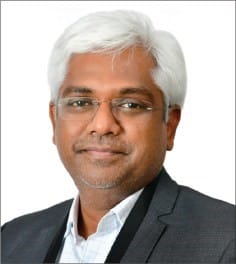
With Connected Britain just around the corner, Total Telecom caught up with Aprecomm Founder & CEO Pramod Gummaraj to discuss why now is the perfect time to expand into the UK and beyond

Aprecomm was founded in India by ex-Qualcomm employees back in 2016. At that time, the company was focused entirely on the enterprise segment, providing solutions to help service providers and businesses better understand the end-user experience on their networks. This included developing self-healing and self-organising tech to make networks more autonomous and easier to monitor.

“We saw consistent growth in the enterprise market,” said Pramod. “These were customers who really understood the value of having a more intelligent network, in terms of delivering a better user experience”.

But the scope of the company’s ambitions was set to change dramatically with the onset of the coronavirus pandemic in 2020.

“During the pandemic, almost every home also became a small office,” explained Pramod, noting that customers were now intimately aware of their network quality, especially with YouTube videos perpetually buffering and Zoom calls lagging.

“Consumers began holding CSPs to a higher standard,” said Pramod. “Making the shift to the residential side was natural for us and also crucial.”

Since then, the company’s client base has grown enormously, with Aprecomm’s customer experience (CX) suite managing 7+ million locations (homes and businesses combined) globally through more than 45 service providers. The company also partners with over 50 customer premise equipment (CPE) makers and over 180 individual CPE models have been integrated and certified for use with Aprecomm’s CX suite.

Quality of service as a differentiator

Explaining this rapid growth, Pramod explained that network quality and reliability had rapidly become a key differentiator for CSPs in a competitive market.

“Subscriber experience is increasingly a key element and to ensure a quality experience we need networks that can adapt in real-time,” he said. “Customers are willing to pay that extra dollar to ensure that they have a reliable connection.”

“India is a very cost-sensitive market. There are 2,000 to 3,000 Tier 2 CSPs in India, and it’s a similar story in Brazil where there are about 20,000. In these fracture markets, the only way they can compete is on customer service,” he continued.

Indeed, a customer study conducted by the company showed that using their end-to-end Wi-Fi QoE solution could massively decrease network issues for end users, with considerable benefits for the CSP as a result. The study, which examined a CSP with 400,000 customers over one year, saw a 62% truck roll reduction, a 35% improvement in first-call resolution, and a 30% reduction in call resolution time when the Aprecomm suite was used.

Even more crucially, this improved service significantly reduced churn by 20% in the first two months.

“The most important threat in all these markets is churn. There is a customer acquisition cost to gaining a customer, which takes months of revenue to recoup. So, it’s very expensive to lose customers, even if you’re replacing them with new ones. That’s what CSPs are worried about,” said Pramod.

The road to zero-touch

As AI, machine learning, and automation improve, there has long been a discussion about the journey towards zero-touch networks – networks that are entirely autonomous, able to optimise their services for customers and react to issues without human intervention.

For Pramod, the end is in sight.

“The biggest missing piece was understanding the customer experience on a technical level. Once you have that, teaching everything else becomes easier. We now can consider more network parameters on a more granular level, and that makes it easier to automate effectively,” he explained. “Physical damage to the networks will always need a physical response, but I think we’re pretty close to achieving zero-touch networks – a couple of years.”

Expansion plans

Having scaled considerably in India, plans are already in motion for Aprecomm to expand into the UK, the USA, and Latin America. All these markets feature many regional Tier 2 players fighting hard to attract and retain customers, where quality of service would be a key factor.

“The smaller players make up a significant portion of the addressable market, but they’re also a segment that’s been somewhat ignored,” said Aprecomm’s Head of Marketing Communications, Mark Goodburn. “Everyone tends to chase the big players and leave the smaller service providers largely untouched.”

This expansion process has already begun. Earlier this year, the company struck a partnership with Brazilian network solution provider OpenGlobe which is reselling Aprecomm’s CX suite in its territory. The partners hope to target the top 300 CSPs in Brazil.

This week, Aprecomm is turning its attention to the UK market at Connected Britain. The UK market is currently home to around 100 altnets, all of whom are facing a challenging economic environment and growing pressure from giants like Openreach and Virgin Media O2.

“We’ve got the scale and maturity now to expand into these new markets, at a time when there is more focus on customer experience by CSPs and chipset companies than ever,” said Pramod. “Lots of factors are coming together at the right time for us and we’re very excited to be looking at these new markets.”


Want to hear more from Pramod about in-home connectivity and the evolution of customer service? Join Aprecomm on stand #167 at Connected Britain on 11–12 September! Get your ticket today.

Introducing M Group Services’ Telecom Division: Delivering your network. Full lifecycle, first time, on time  


Contributed Article

by Mark Turner, Managing Director, M Group Services – Telecom Division

You might know us as Avonline Networks, Magdalene, Morrison Telecom Services or Waldon Telecom but did you know we’re all part of one business?  

Together, we are M Group Services’ Telecom Division. We use our expertise to deliver comprehensive end-to-end services to our clients, including VMO2, Openreach and National Grid.  

M Group Services is the leading essential Infrastructure service provider within water, energy, transport and telecommunications sectors across the UK and Ireland. Collectively, we have over 11,000 employees, 6,000 commercial vehicles, 12,000 items of plant and a turnover of £2bn.  

Our scale, breadth and depth open opportunities for collaboration, creating solutions which deliver efficiently and cost effectively against our client’s needs, and ensure a positive legacy in the communities in which we work.  

We are passionate about protecting our people, the public and the planet.  Alongside our leading safety record, we work to introduce industry-firsts. This has  included our multilingual Safe Working in Civils course, upgrading our fleet, which is led by EV and other sustainable fuels and rolling out comprehensive first aid training for our 2,000+ staff. 

Our Telecom Division provides expertise and services to Fixed, Mobile and Private clients.  

Fixed 

We are building and delivering full fibre networks to over one million premises per year, supporting our clients’ ambitious broadband rollout plans.  

By bringing fibre-to-the-premise (FTTP) to homes and businesses, we provide high-quality communications networks for our clients, supporting the wider socio-economic benefits that come with better connectivity for local communities. 

We also deliver repair and maintenance services, at scale, across the country, offering a cost-effective solution to our key clients.  

Many of our clients take advantage of our active technology services,  including core network services, covering switch sites, exchanges and data centres.   We also cover access networks, including cabinets to customer premises and complex business network installations. 

Mobile 

We provide a full end-to-end 5G upgrade capability for our Mobile Network Operator (MNO) and TowerCo clients. This includes site acquisition, design and construction (ADC), fibre backhaul, active equipment commissioning (DIC&I) and full lifecycle Notice to Quit (NTQ)The demand for network densification is growing, so we are installing increasing numbers of small cells for our clients across London and other major cities.   

As the market for Private 5G solutions continues to rise, we are providing a full turnkey service covering survey, design, installation, commissioning and operation.   This exciting new technology is being used in diverse locations such as ports, airports, sports stadia and heavy industry. 

We have a comprehensive high mast capability, with our specialist teams supporting both the onsite and offsite design and build.  Our tallest tower to date is at Bilsdale in North Yorkshire, standing at 308.5m high.  

There is huge importance in supporting our clients to manage the overall cost lifecycle of their networks and sites.  Our divisional nationwide platform provides 24/7 inspection, fault fix, repair and maintenance solutions.  

Private 

Our capital project delivery programmes enable our clients to meet their increasingly complex needs.   Programmes include transforming and upgrading connectivity platforms, extending the life of existing equipment, upgrading network security, improving monitoring and control of assets and moving towards net zero targets.  

Our Network Operations and Maintenance (NOAM) capability forms part of our divisional service platform, offering a comprehensive set of services including both shared and dedicated NOCs, as well as national 4-hour fault fix. 

Want to find out more? 

We’d love to tell you more about how we can help design, build, connect, operate and maintain your network! Come and visit us on stand 79 at Connected Britain on 11 and 12 September at London Excel.  

Lobby group files lawsuit to support Starlink’s access to Kenyan market

In a rather unusual turn of events, a Kenyan lobby group has apparently filed a lawsuit against operator Safaricom, along with regulator the Communications Authority of Kenya (CA), and Kenya’s Competition Authority, demanding that they allow satellite operator Starlink access to the Kenyan market.

We reported in late August that Safaricom had apparently written a letter to the Communications Authority of Kenya complaining that Starlink posed a threat to the telecoms market and should be required to partner with local operators rather than compete with them.

However, the lobby group, Kituo cha Sheria, had a different take on the move, suggesting that Safaricom’s allegations were unsubstantiated and that it is in fact apprehensive about the entry of Starlink into the market due to its competitive pricing which appears to undercut Safaricom’s internet service.

Kituo cha Sheria also suggests that that this move would block Kenyans from accessing faster internet speeds and maintain high costs.

Safaricom is said to charge KES6,000 (US$46.52) for its internet service; Starlink offers 50GB of internet for just KES1,800 (about US$14). Of course equipment also needs to be purchased for the Starlink service, although we noted recently that there is now a rental plan in Kenya for Starlink’s equipment.

Kituo Cha Sheria-Legal Advice Centre describes itself as a national non-governmental organisation established in 1973 to empower the poor and marginalised and to enhance equity and access to justice for all.

It is seeking a court declaration that Safaricom’s letter is unconstitutional and wants the court to affirm that internet access is a socio-economic right. The lobby group also requests a permanent injunction preventing the CA from acting against parent company SpaceX or restricting its devices in Kenya.

Further south, Starlink is having fewer problems. The company officially turned on service in Zimbabwe just before midnight, on 6 September 2 just a few days after neighbour Botswana also went live.

ITweb Africa reports that Starlink high-end kit’s one-time pricing of US$350 and monthly service fee of US$50 is far less than the charges offered by the country’s three main operators.

MORE ARTICLES YOU MAY BE INTERESTED IN…

Connected Britain 2024: Day 1 Keynote spotlight 


A Connected Britain Preview   

Connected Britain 2024 is just around the corner and, with just days left to go, it is only fitting that we highlight some of our amazing keynote sessions, featuring some of the biggest names in the UK telecoms industry.   

Day 1 – Wednesday 11 September 

CXO Interviews 

Intimate discussions with some of industry’s biggest names  

Marc Allera, CEO EE (08:50)  

Lutz Schüler, CEO, Virgin Media O2 (10:00)  

Katie Milligan, Chief Commercial Officer, Openreach; Rajiv Datta, CEO, nexfibre; Greg Mesch, Founder & CEO, CityFibre; Stephanie Liston, Chair of the Board, Jersey Competition Regulatory Authority & Chair, Digital Connectivity Forum (12:10) 


Panel Discussions 

Bringing together speakers from across the telecoms industry and beyond to tackle the sector’s biggest challenges 

Securing the UK’s position as a global tech leader (09:20) 

What are the barriers to success for the UK tech sector? What is needed from govt, industry and other key stakeholders to overcome these challenges? 

Speakers:  

Sasha Qadri, Moderator 

Paul Alexander, Head of Cloud Infrastructure Business, Europe, Nokia 

Julian David, CEO, techUK 

Iain Milligan, Chief Network Officer, Three UK 

Keri Gilder, CEO, Colt Technology Services 


The changing landscape of the UK fibre market (12:50) 

Exploring the past year’s developments in the fibre market and tackling major topics including investment, competition, regulation, and deployment strategy. 

Speakers: 

Stephanie Liston, Chair of the Board, Jersey Competition Regulatory Authority & Chair, Digital Connectivity Forum 

Rajiv Datta, CEO, nexfibre 

Rebecca Molyneux, Deputy Director, Broadband Regulation and Investment, DSIT 

Katie Milligan, Chief Commercial Officer, Openreach 

Greg Mesch, Founder & CEO, CityFibre 

Daren Baythorpe, CEO, ITS 


Digital Britain: Connecting our nation (17:40) 

Discussing technology, policy, and innovation in the UK telecoms industry and what impact these can have on wider society. 

Speakers: 

Duncan Golestani , Correspondent, ITN 

Jaynesh Patel, Head of Telecoms and Spectrum Policy, techUK 

Ian Smith, Head of UKTIN, UKTIN 

Gareth Elliott, Director of Policy and Communications, Mobile UK 


Presentations and Updates: 

Mission Critical is Relative (09:10) 

Paul Alexander, Head of Cloud Infrastructure Business, Europe, Nokia 

Innovation and imagination: helping our industries lead the world (10:15) 

Dame Melanie Dawes, Chief Executive, Ofcom 

Diamond Sponsor presentation: ITS (12:40) 

Daren Baythorpe, CEO, ITS 


Enabling a Digitally Connected Society: How Cornerstone Connects the Four Corners of the UK (17:20) 

Jamie Hayes, Chief Sales and Commercial Officer, Cornerstone 


Connected Britain 2024 promises to be bigger and better than ever before. It’s not too late to join us! Last minute tickets are available here