

One bit of M&A, one bit of federal dollars, some subsea fiber, and a new PoP: … [visit site to read more]

One bit of M&A, one bit of federal dollars, some subsea fiber, and a new PoP: … [visit site to read more]

A new Notice of Proposed Rulemaking adopted by the Federal Communications Commission (FCC) will begin a review of the regulations surrounding submarine cables.
The rulemaking notice, approved Nov. 21 by the FCC, will now seek public comment regarding how the commission can streamline the rules around submarine cables to ensure efficient deployment.
According to the FCC’s release following the vote, the agency has not conducted a major review of submarine cable rules since 2001.
“Oversight of submarine cables traces back even before the existence of the commission itself,” the FCC’s release following Thursday’s vote stated.
According to the release, there are currently a total of 84 FCC-licensed submarine cable systems.
As part of the rulemaking notice approved Thursday, the FCC will also seek comment on how the commission can improve security and protection of submarine-cable infrastructure.
“This proceeding will look to streamline the agency’s review process,” the release stated. “It proposes a three-year periodic reporting requirement for cable landing licenses and, in the alternative, seeks comment on shortening the current 25-year license term.”
As of Dec. 2022, the FCC reported that cable-landing licensees had more than 5.3 million Gbps of available capacity, with an additional 6.8 million Gbps in planned capacity this year alone.
“Today’s action continues the FCC’s recent efforts to support national security,” Thursday’s release continued. “The commission has proposed new rules that would require, for the first time, companies with international telecommunications authorizations to file renewal applications with the FCC.”
Join the submarine cable industry in discussion at Europe’s most important subsea connectivity event, Submarine Networks EMEA 2025

This Industry Viewpoint was authored by Riccardo Amati, The Mobile Ecosystem Forum (MEF)
2024 is the “year of elections,” and mobile messaging apps have become the dominant medium for political campaigns, revolutionising voter engagement. This shift is driven by the ubiquity of smartphones, declining trust in traditional media, and the powerful capabilities of AI, which have enabled more direct and personalised communication between candidates and voters. While this transformation offers more … [visit site to read more]
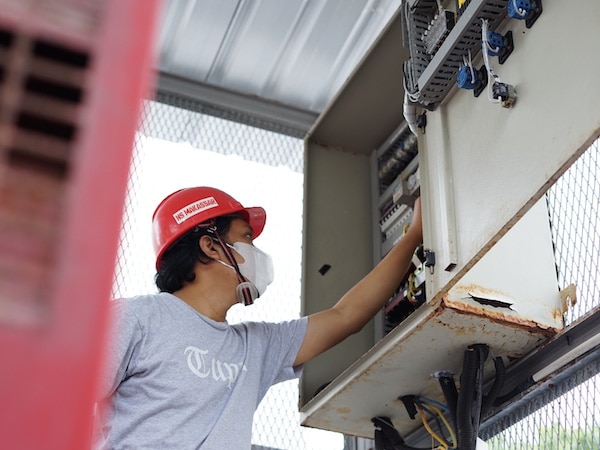
Indonesian telco Telkomsel said on Thursday it has teamed with ZTE to implement an AI-powered network solution in its 4G network to optimise base station performance after completing tests in Makassar and Kendari.
The “self-adaptive feedback solution” promises to optimize network performance without the need for additional hardware. The solution leverages AI and machine learning to automatically adjust network parameters such as speed and power control, for data-intensive apps such as video streaming and gaming.
Telkomsel said it has been testing the solution in more than 90 sites on its live network in Makassar and Kendari, covering 300,000 users. Results: video buffering was reduced by 15%, download speeds increased by 11%, web page loading times improved by almost 30%, and latency for gaming was reduced by 47%.
“By integrating artificial intelligence into the network, we are not only increasing efficiency, but also answering the increasing need to access high-quality digital content,” said Richard Liang, president director of ZTE Indonesia.
Telkomsel’s planning and transformation director Wong Soon Nam said that the self-adaptive feedback test is part of the telco’s “Hyper AI” strategy to utilise end-to-end AI and ML to improve the customer experience.
The self-adaptive feedback solution also improves energy efficiency, which translates into lower opex costs, Telkomsel said. By automatically switching the base station to low-power mode when traffic is low, the solution increased power efficiency by about 15% while lowering energy consumption by 8%.
With the tests in Makassar and Kendari complete, Telkomsel will deploy the solution across the rest of its network in Indonesia.
The collaboration between Telkomsel and ZTE is part of a strategic partnership agreement signed by both companies at the Mobile World Conference earlier this year. The agreement covers ZTE network solutions designed to boost network performance and the user experience, such as Network Edge AI, 5G-Advanced, and Intelligent Home Network.

AT&T will decommission it narrowband Internet of Things (NB-IoT) network, with IoT workloads to be shifted to alterative technologies like LTE-M early next year.
NB-IoT – a low-power wide-area network technology – was standardised by 3GPP in 2016. Designed specifically to handle low-power IoT devices, the technology was built to allow devices to be more energy and spectrum efficient.
AT&T subsequently began offering NB-IoT services in 2019 and, according to the company’s 2023 sustainability report, currently has more than 127 million connected devices on its network as of Q4.
Now, however, AT&T says that it is aiming to improve IoT services for business customers by moving devices to alterative technologies like LTE-M, which can handle higher data rates.
“We are improving our IoT services for business customers by moving from NB IoT to the LTE-M network. This change will provide more data capacity for both fixed and mobile devices. As a result, we’ve stopped the certification of new NB-IoT devices and the sale of data plans utilizing the NB-IoT network. We’re working closely with customers to make this process as seamless as possible,” said AT&T in a statement reported by RCR Wireless.
The operator says it hopes to have fully transitioned customer devices off of its NB-IoT network by Q1 next year.
In addition to LTE-M, AT&T is also exploring another promising IoT technology in the form of the newly released 5G Reduced Capacity (RedCap). While this technology is still in its infancy, it potentially represents the next step-up from LTE-M, offering even greater capabilities for IoT devices while reducing energy usage and spectrum usage.
But while AT&T seemingly feels its IoT infrastructure warrants an upgrade, its rivals Verizon and T-Mobile consider the issue much less pressing, with both confirming to Light Reading that they have no immediate plans to shut down their own NB-IoT networks.
Join the telecoms ecosystem in discussion over the industry’s biggest issues at Connected America 2025
Also in the news:
VMO2 launches UK’s first 5G standalone small cells in Birmingham
BT says Labour’s budget will cost company £100m
Vodafone Spain and Telefonica complete FibreCo deal

The US Department of Justice (DOJ) has proposed that Google sell its browser, Google Chrome, to address concerns about its dominance in the search and digital advertising markets.
The recommendation is part of a wider antitrust case following a court ruling in August that found Google had illegally maintained a monopoly over online search engines.
Back in 2020, the DOJ sued Google, accusing it of dominating the internet search market through anticompetitive contracts, exclusionary practices, and the preferential treatment of its own services. It highlighted Google’s agreements with other companies to make its search engine the default on devices and browsers, which the DOJ argued harmed competition.
The DOJ also separately suing Google, accusing the company of monopolising the adtech market.
As a result, the DOJ’s recommendations includes several measures aimed at create healthy competition in the search market. These include:
Google has responded to these proposals by arguing that such drastic steps could harm consumers and developers as a result of disrupting services and slowing innovation. The company also continues to claim that its dominance is the result of offering superior products, and not unfair practices.
If the court approves the DOJ’s recommendations, the impact could reach far beyond Google. Chrome is the most popular browser in the world, used by over 60% of internet users, and a forced sale would mark one of the most regulatory actions against a major tech company in many years.
The next court hearing is scheduled for April next year, with a final decision expected by August.
Join us at next year’s Connected America, 11-12 March in Dallas. Get discounted tickets here!
Also in the news:
Comcast to spin off raft of cable TV channels
Colt and RMZ form $1.7bn Indian data centre JV
Bharti Global becomes BT’s largest shareholder

Multiple interesting projects going on at the metro/regional level across the country: … [visit site to read more]

Ukraine’s telecoms regulator said it raked in UAH2.8 billion (US$67.7 million) during its spectrum auction on Tuesday, with Vodafone, Kyivstar and Lifecell buying five lots of spectrum in the 2100, 2300, and 2600-MHz bands.
According to a statement from the National Commission for State Regulation of Electronic Communications, Radio Frequency Spectrum, and Postal Services (NCEC), Kyivstar bought two lots of spectrum in the 1940-1945/2130-2135 MHz and 2355-2395 MHz bands, while Vodafone Ukraine also bought two lots in the 1945-1950/2135-2140 MHz and 2575-2610 MHz bands. Lifecell took the fifth lot for the 1935-1940/2125-2130 MHz bands.
Under the new licences, which are good for 15 years, the operators will install 1,500 new base stations within two years, including 500 in the first year, according to Ukrainian news site UNN. They are also tasked with rapid restoration of communications in de-occupied territories within six months, as well as increasing mobile coverage on national and international highways.
In a statement, Kyivstar’s parent company Veon said the auction result boosts its total spectrum holding from 152 MHz to 202 MHz. Veon also said Kyivstar will will invest UAH1.43 billion in the Ukrainian economy through the spectrum acquisition.
« We have consistently stated that the time to invest in Ukraine is now, and have committed US$1 billion in investments through 2027,” said Veon Group CEO Kaan Terzioglu. “We have an unwavering commitment to building Ukraine’s digital infrastructure, taking 4G connectivity across the nation, bolstering our network’s energy resilience to keep Ukraine connected, and investing in the digital services that Ukraine needs.”
The successful auction also signifies the Ukraine government’s determination to develop the country’s digital infrastructure even amid the ongoing war with Russia, which invaded Ukraine in February 2022. As we reported this week, the Ukrainian government has set a target to increase 4G coverage from 65% to 91% over the next three years, despite repeated attacks on critical infrastructure.
« Developing an industry during wartime is a challenge, but not a reason to put life on hold,” said Kyivstar CEO Oleksandr Komarov. “The auction for obtaining licenses for the use of the radio frequency spectrum is an important step in the development of Ukraine’s electronic communications industry and evidence that the war does not stop investments in state assets, and their effective management can bring significant funds to the budget.”

Dotlines UK, the latest venture from global tech company Dotlines, has officially launched with a mission to transform business solutions, digital security and connectivity across the UK.
Aiming to address key challenges in the UK telecoms industry, Dotlines UK sets out to deliver innovative, user-friendly solutions that empower telecommunication network providers, small businesses and households. Its approach centres on creating technology that makes life and business simpler.
Building on its rapid success in South and Southeast Asia, the UK launch is a strategic move for the company. Led by Jaki Chowdhury, former Product Director at TalkTalk, Dotlines UK aims to replicate its proven model here, blending local insights with global expertise.
Jaki Chowdhury, CEO of Dotlines UK, who has nearly two decades of experience in the telecoms industry, said: “We believe it’s time for a change. The telecoms industry has long grappled with issues such as legacy infrastructure and the need for more efficient, accessible services. With a focus on simplicity and user-centric design, our solutions aim to streamline operations, bridge connectivity gaps, and provide robust security measures for businesses and consumers alike.
“Dotlines UK isn’t just about selling products, it’s about building meaningful connections between people, processes and technology, with a focus on delivering simplicity through tech solutions. Our goal is to help businesses grow efficiently, in turn, allowing them to deliver value to their users.”
Dotlines UK will serve as the parent brand to a portfolio of technology solutions set to launch in early 2025. The products, designed for telecommunication operators, small businesses and consumers, will span business management, security and connectivity to meet modern demands.
Positioning itself as an “impact-driven” brand, Dotlines UK is dedicated to making a positive difference. A portion of profits will be directed toward charitable and environmental initiatives, including tree planting, carbon offsetting and not for profit partnerships, ensuring that the company’s success directly benefits communities and supports sustainability efforts.
For more information visit Dotlines UK.

A few interesting items from around the world at midweek: … [visit site to read more]