GDS acquires land from Amata for its US$1b data centre in Thailand

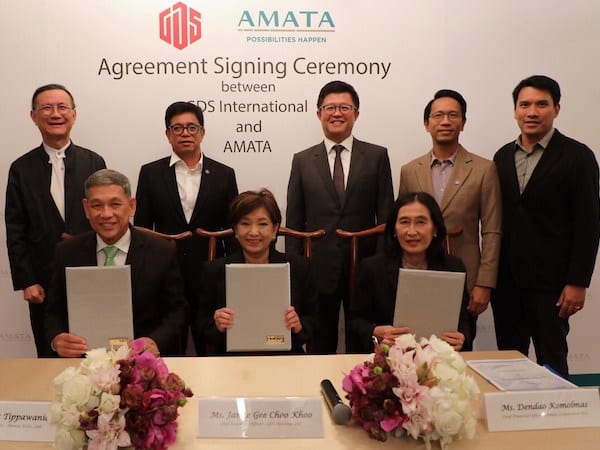
Following this week’s news that GDS International received approval to build a hyperscale data centre in Thailand, GDS officially announced on Tuesday it will invest up to US$1 billion over the next five years in the project, and has signed a partnership deal with real estate developer Amata for the site in Chonburi.

Last Friday, Thailand’s Board of Investment (BOI) approved 66.2 billion baht (US$1.96 billion) worth of investments for two new hyperscale data centre projects in Chonburi – one from Quartz Computing, a subsidiary of Google’s parent company Alphabet, and the other from Digitalland Services, a local subsidiary of GDS IDC Services.

During a meeting on Tuesday with Thai Prime Minister Paetongtarn Shinawatra in Bangkok, GDS International announced it had signed a comprehensive partnership agreement with Southeast Asian industrial real estate developer and operator Amata to acquire land at the Amata City Chonburi Industrial Estate, which also provides access to renewable energy such as floating solar power.

GDS CEO Jamie Khoo said the site is ideal for data centre development due to the presence of available zones, proximity to subsea cable landing stations, and secure location outside floodplains.

“We selected Amata as our strategic partner for its impressive scale – hosting around 800 factories and commercial outlets – and its reliable, comprehensive utilities and infrastructure that support diverse needs,” she said.

BOI secretary general Narit Therdsteerasukdi added that the Thai government is dedicated to advancing key areas, including the development of clean energy mechanisms.

“We are currently establishing a Direct Power Purchase Agreement (Direct PPA), specifically designed for data centers, and refining digital regulations to support advancements in AI technology,” he said.

Also at the PM meeting, GDS International chairman William Huang confirmed the company’s commitment to the project, saying the US$1 billion investment over five years represents a strategic expansion of its data centre portfolio across Asia-Pacific.

« Our investment in Thailand aligns with our vision of advancing the digital economy across Asia,” Huang said. “Our goal is to build a cutting-edge data centre park that not only meets Thailand’s cloud and AI infrastructure needs but also fosters a thriving data centre ecosystem.”

Khoo added that the US$1 billion investment would also create employment opportunities and support skill development.

“By collaborating with local industry players and educational institutions, we aim to equip the Thai workforce with essential digital skills for the future,” she said.

GDS has not yet revealed how much IT capacity the Chonburi data centre will offer. The company currently has 480MW of data centre capacity in service and under construction in Singapore, Malaysia, Indonesia, Hong Kong, and Japan, with an additional 590MW held for future development.
MORE ARTICLES YOU MAY BE INTERESTED IN…

Mobily and Telecom Egypt to deploy Red Sea submarine cable 


News 

The two companies first signed a Memorandum of Understanding on the cable in 2022 

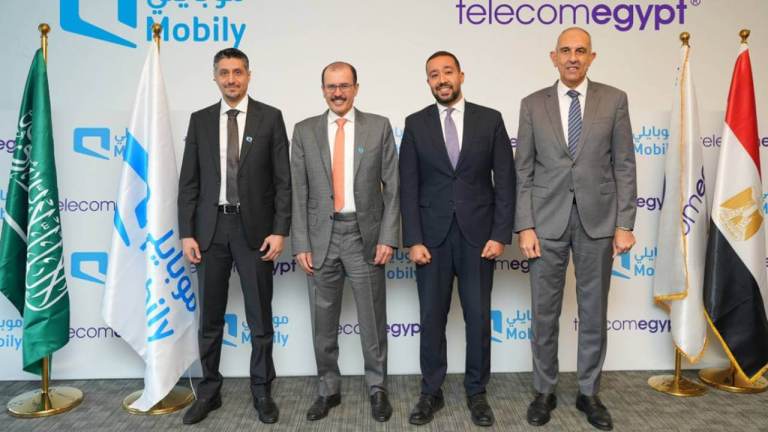
Saudi Arabian telco Mobily has partnered with Telecom Egypt to launch the first submarine cable connecting Saudi Arabia and Egypt through the Red Sea. The new cable, which will be wholly owned by Mobily, aims to improve connectivity and meet the growing demand for internet services in both countries. 

The cable will land at two stations: Sharm El Sheikh in Egypt and Duba in Saudi Arabia. The connection will allow Mobily to link the Arabian Gulf and neighbouring countries to Egypt, enhancing access to various international networks. 

“The new cable represents a significant milestone in strengthening Saudi Arabia’s position as a leading international hub for telecommunications services and data traffic, in alignment with the goals of Saudi Vision 2030,” said Salman Bin Abdulaziz Al-Badran, Mobily’s CEO. 

“Complementing the newly established landing station in Sharm El Sheikh, we are developing new crossing routes to connect Sharm El Sheikh to the Mediterranean Sea. Telecom Egypt is dedicated to advancing the international telecommunications infrastructure by enhancing the geographical diversity of the global subsea cable networks. We are confident that this commercial agreement will be a valuable addition to our ongoing efforts to support this critical sector and cater to the rising demand for capacity and connectivity,” added Mohamed Nasr, Managing Director and CEO at Telecom Egypt.

In October last year, the Red Sea saw a rise in paramilitary activities, with Yemeni Houthi forces attacking commercial vessels, reportedly in response to the ongoing conflict between Israel and Hamas.  

By February, the situation, dubbed the “Red Sea crisis,” escalated to a critical issue for global telecommunications as damage to submarine cables in the area severely disrupted data traffic across Europe, Africa, and Asia. It is unclear whether or not this damage was deliberate.  

A report from network service provider RETN last month, said that the cable cuts impacted up to 70% of Europe–Asia data traffic – far greater than the 25% previously estimated. 

Join us at next year’s Submarine Networks, 18-19 February in London. Get discounted tickets here!

Also in the news:
CMA set to approve Vodafone–Three merger
Event highlights: Broadband Communities Summit West
Freedom Fibre and Zen Internet ink network sharing deal 

Mastercard expands reach of digital wallets with Pay Local service

Mastercard announced on Tuesday it has launched Mastercard Pay Local, a new global service that enables digital wallet users in Asia-Pacific, Latin America, Eastern Europe, and the Middle East and Africa to pay locally when they travel.

The service enables international travellers to link their credit or debit cards to their digital wallet and immediately shop at any participating merchant that accepts digital wallet payments, without needing to set up or top up a prepaid account.

Announcing the service ahead of this week’s Singapore FinTech Festival, Mastercard namechecked wallets such as DANA in Indonesia, Touch ‘n Go in Malaysia, Bakong in Cambodia, and LankaPay in Sri Lanka, all of which will use Mastercard Pay Local to facilitate payments for consumers at the more than 35 million merchants in Asia-Pacific that accept these wallets.

Mastercard said the service enables residents and travellers alike to pay micro, small and medium enterprises (MSMEs) that don’t accept traditional card payments, which in turn gives those MSMEs more reach. Meanwhile, digital wallet service providers can extend their customer base to people who primarily use cards, while card issuers can provide more points of acceptance for their customers.

« Locals benefit from new payment options while tourists can use their cards as they do at home, making travel infinitely easier, with one less thing to worry about while on the road,” said Sandeep Malhotra, EVP of Products and Innovation, Asia Pacific, at Mastercard.

Mastercard added that the service builds on its existing collaborations with wallet providers such as Alipay and Weixin Pay in China, GrabPay in Southeast Asia, Maya in the Philippines, ShopBack in Singapore and TrueMoney in Thailand.

MORE ARTICLES YOU MAY BE INTERESTED IN…

Freedom Fibre and Zen Internet ink network sharing deal 


News 

The partnership will expand connectivity options for businesses in the North-West and West Midlands 

Freedom Fibre has teamed up with Zen Internet to deliver full-fibre ethernet to thousands of businesses across the North-West and West Midlands. Using Freedom Fibre’s XGS-PON network, Zen will be able to provide businesses with high-speed ethernet and broadband options. 

The partnership supports Freedom Fibre’s recent launch of business products as it aims to expand its customer base across a network now reaching over 315,000 locations. The collaboration also aligns with efforts to close the digital divide by increasing access to reliable, high-speed connectivity. 

Businesses can choose between options like FibrePlus, a flexible service designed to grow with business needs, and FibreDirect, a premium offering ideal for larger companies, with speeds up to 10Gb/s and a five-hour repair time. 

“We are the UK’s oldest ISP that still exists in its original form and also the best, according to the IT professional readership of PC Pro, who have voted Zen the UK’s best broadband provider every year since 2004 – 20 years and counting. I’m looking forward to launching our services shortly through Freedom Fibre’s first-class fibre network,” said Zen internet CEO Richard Tang in a press release. 

The partnership also reflects a commitment to sustainability and customer care. Zen, which holds a B-Corp certification and is a Which? Recommended Provider, shares Freedom Fibre’s focus on quality service and environmental responsibility, making the alliance a strong move for both companies and their customers, the companies said.

Keep up to date with the latest international telecoms news by subscribing to the Total Telecom daily newsletter 

Also in the news:
Nokia and Lenovo forge partnership to drive AI and automation in data centers
UK govt announces £22m investment in ‘smart data’
“We’re on track to close the loop”: Adtran talks data, AI, and network automation at Connected Britain

Industry Spotlight: BroadbandOne’s Eric Watko

Industry Spotlight: BroadbandOne’s Eric Watko

With all the focus on AI and FTTx and 5G, it’s easy to forget about the other side of the digital divide and the service providers who straddle it.  Fixed wireless services have long been with us, and the underlying technology continues to evolve.  New ways to connect more and more places are a key piece of the infrastructure puzzle, and that means opportunity for those with the spectrum and a fresh approach.  With us today to talk about the next generation of the fixed wireless opportunity is Eric Watko, CEO of BroadbandOne. … [visit site to read more]

MCMC picks U Mobile to be Malaysia’s second 5G operator

Malaysian operator U Mobile has won the rights to implement Malaysia’s second 5G network to compete with original 5G operator Digital Nasional Berhad (DNB), leaving rival contenders CelcomDigi and Maxis to rethink their 5G plans.

Under the Malaysian government’s dual-network model, only stakeholders in DNB were allowed to submit applications to establish a second 5G network operator. In August, U Mobile, CelcomDigi and Maxis – each of which own 16.28% of DNB as of June 2024submitted their applications to run the second network. YTL declined to participate, while Telekom Malaysia was disqualified after it dropped plans to take a stake in DNB in August.

The Malaysian Communications and Multimedia Commission (MCMC) broke the news on Friday that U Mobile was the winner. While the second 5G network will be run by a single operator (as opposed to DNB’s multi-stakeholder model), the MCMC said in a statement that U Mobile is allowed to collaborate with other telcos to roll out the network, “subject to the approval of MCMC”.

U Mobile said in a statement on Saturday that it is “excited to collaborate with various stakeholders, including MCMC and other telecommunications companies such as CelcomDigi and Telekom Malaysia to deliver world-class 5G-Advanced services to consumers.”

U Mobile also said it will reduce its foreign majority shareholding to 20%, “ensuring greater Malaysian control and inviting participation from local investors.” U Mobile’s biggest shareholder is Singapore-based Straits Mobile Investments (a subsidiary of ST Telemedia), which owns a 48.3% stake.

U Mobile will also have to sell its stake in DNB under the terms of its SSA in order to implement the second network.

The decision to go with U Mobile comes as a surprise to some industry observers who saw the telco as the underdog of the race. RHB Research and CIMB Securities issued statements in September rating Maxis as the likely front-runner for the second network.

Both CelcomDigi and Maxis issued statements on Sunday saying they will talk with various stakeholders to consider their next move. Both also reiterated that they thought their proposals should have won. Maxis went as far as to say it would “engage with MCMC to understand the rationale for their decision.”

CelcomDigi said that in the meantime, it will continue to focus on integrating its network, which it said is ahead of schedule and now 68% complete.

In any case, their respective 5G services will carry on as usual under the existing agreement with DNB. Both also have the option to buy U Mobile’s stake, although the MCMC has the final say on the outcome.

MORE ARTICLES YOU MAY BE INTERESTED IN…

Ericsson and MasOrange partner for 5G Open RAN network in Spain 


News 

The partnership aims to meet the rising demand for 5G while supporting sustainable, digital growth across Spain 

Ericsson has partnered with newly merged MasOrange, Spain’s largest telco, in a five-year project to upgrade its network with Open RAN technology. 

Announced this week, the collaboration aims to make MasOrange’s network one of Europe’s most modern and powerful 5G networks, the companies said. 

Under the deal, Ericsson will help integrate the networks of Orange Spain and Masmovil, creating a stronger, more efficient system. The network will use sustainable technology and energy-saving equipment from Ericsson to reduce costs and improve performance.  

Part of the plan includes rolling out 5G Standalone (5G SA) in rural areas of Spain, which will expanding high-speed internet access to more communities. 

The upgraded network will feature Ericsson’s advanced antennas and computing systems, which will boost data speeds and allow MasOrange to offer new, improved services. This includes the use of Massive MIMO technology, which uses multiple antennas to send and receive data faster and improve user experience. 

“This collaboration with Ericsson represents a decisive moment not only for MasOrange, but also for European telecommunications industry as a whole and for the Spanish market, as we lead the development of Open RAN and we lay the foundation for an open and programmable mobile infrastructure that will drive technological advances and sustainable growth,” said MasOrange’s CEO Meinrad Spenger in a press release. 

Want to keep up to date with all of the latest international telecoms news? Sign up for Total Telecom’s daily newsletter   

Also in the news: 


Hrvatski Telekom, Nokia partner to drive 5G app development

Croatian operator Hrvatski Telekom (HT) has partnered with Nokia to launch projects aimed at connecting developers to Nokia’s coding platform to foster the creation of new consumer and industrial 5G applications.

In a statement, Nokia explained that the goal is to enable developers to leverage and monetise HT’s 5G network assets, creating new consumer, enterprise, and industrial applications for Hrvatski Telekom customers in Croatia and across Europe.

Nokia highlighted that software-based 5G networks are programmable and monetisable beyond connectivity via Application Programming Interfaces (APIs). These APIs give developers standardised access to network functions without the need to navigate the complex underlying network technologies.

The company cited results from previous pilot projects to expand its network of API ecosystem partners, including global cloud communications company Infobip and teledriving firm Elmo, both of which use 5G and 4G networks to generate new revenue streams.

Boris Drilo, CTIO Hrvatski Telekom CTIO said: “Through collaboration on piloting projects, with Nokia and other partners, we are exploring the great opportunities that could arise from unlocking the full potential of connecting new platforms with 5G network capabilities. Ensuring high-performing networks, foundational for the launch of new use cases across industries and businesses not only Croatia but across the globe, is essential for developers in creating new game-changing applications.”

Shkumbin Hamiti, Nokia Head of Network Monetization Platform, Cloud and Network Services, added: “With Nokia’s Network as Code platform and open and growing ecosystem of API partners, Hrvatski Telekom will benefit from having more choice, flexibility, and extreme automation to create new value for its customers. As a B2B technology innovation leader, Nokia is driving the next evolution of networking to unlock new network applications with our platform.”

MORE ARTICLES YOU MAY BE INTERESTED IN…

CityFibre sells Lit Fibre ISP to co-founders  


News  

Lit Fibre customers will be unaffected by the change of ownership  

CityFibre, the UK’s largest independent full-fibre network provider, has sold its ISP subsidiary Lit Fibre consumer internet service back to its co-founders, Tom Williams and Ben Bresler.  

CityFibre, which initially acquired Lit Fibre in May 2024, aims to complete integration of Lit Fibre’s 10Gbps network by year-end, bringing up to 300,000 more premises onto its network. 

As a wholesaler, however, CityFIbre is seemingly uninterested in retaining the company’s ISP unit, hence the sale for an undisclosed sum. 

“Our strategy has always been to be the wholesale provider of choice, building a nationwide, full fibre network that enables all of our partners to access market-leading products, pricing and service and gives consumers a greater choice of full fibre ISPs. We are really pleased to see Lit Fibre continue with its co-founders, who are passionate about the business, and we look forward to continuing to partner with Lit Fibre across our network,” said Greg Mesch, City Fibre CEO in a press release. 

“As the nation’s third digital infrastructure platform, we continue to evaluate potential acquisition opportunities alongside accelerating CityFibre’s build to reach at least 8 million premises across the UK,” he continued. 

Catch CityFibre at next year’s Connected North, 23-24 April in Manchester. Get tickets here! 

Also in the news: