

Globe Telecom to manage Philippines landing of MYUS cable


News

The 19,000km cable system is set to connect Malaysia to the US

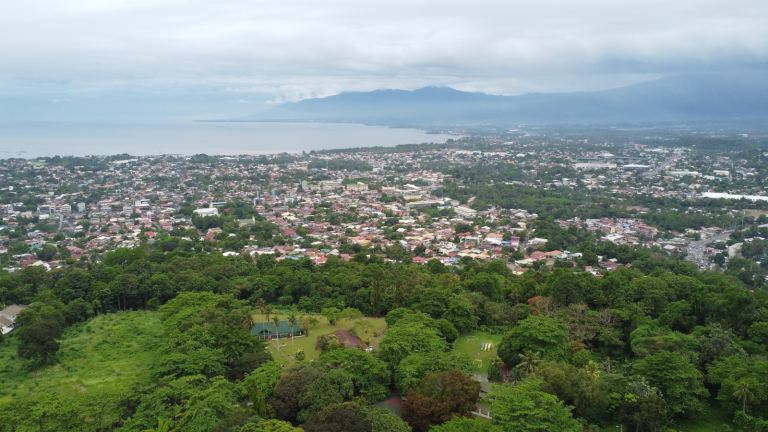
This week, Philippines operator Globe Telecom has announced that it has been selected to build and manage the local section of the MYUS cable system, including building a landing station at Davao City.

The $720 million MYUS cable system is set to span roughly 19,000km, heading from Sedili, Malaysia, to Florence, Oregon, USA, via the Philippines and Guam. Branching units will also link the cable to Indonesia at Batam, Jakarta, and Balikpapan.

The cable will have 16 fibre pairs, capable of delivering a minimum capacity of 15 Tbps.

According to Hexa, the company in charge of the cable project, Globe had been selected in part due to their experience with the Philippine Domestic Submarine Cable Network.

“Our cable landing facilities offer diverse route connectivity to global and regional carriers…Access to customers using our robust state-of-the-art network should give confidence to operators looking to interconnect with domestic and international constituents. Davao is a critical hub for subsea fiber optic cables, which are the backbone of today’s Internet,” said KD Dizon, head of Globe Business told the Manila Standard.

The submarine cable industry is evolving rapidly. Join the discussion at the world’s leading subsea cable conference, Submarine Networks EMEA

Also in the news:
Nokia and Lenovo forge partnership to drive AI and automation in data centers
UK govt announces £22m investment in ‘smart data’
“We’re on track to close the loop”: Adtran talks data, AI, and network automation at Connected Britain

El Salvador to enhance digital government services with IDB loan

El Salvador aims to enhance its digital government services with the help of a $60 million loan from the Inter-American Development Bank (IDB), which partners with the public sector in the Latin America and Caribbean region to design and provide innovative, high-impact solutions for sustainable and inclusive development.

The Programme for the Development of El Salvador’s Data Infrastructure, approved by the IDB’s Board of Executive Directors, will enable the country to expand its digital infrastructure and improve people’s skills in using this infrastructure and the state’s digital services.

This programme, says IDB, will benefit approximately 57 government institutions, 1,140 information technology workers, and 10,000 public employees. It will train around 2,000 women in advanced digital skills and 40,000 citizens in basic digital skills.

The initiative aims to provide all government institutions access to the state cloud, making online services more available and improving governance. As many as 6.3 million citizens and businesses in El Salvador will benefit from more accessible and efficient digital services.

Anderson Caputo, Chief of the IDB’s Connectivity, Finance and Markets Division, explains: « The Programme for the Development of El Salvador’s Data Infrastructure is designed to optimise and modernise the state’s data infrastructure, in line with how hybrid cloud computing models are being used globally. This will give the state greater control over sensitive information, boost interoperability, and help upgrade its technology, » 

The programme is structured around two components. The first will finance work to adapt and equip a building to operate a State Data Centre. This component will also focus on migrating digital services and strengthening connectivity for interoperability, among other activities. 

The second component centres on boosting digital skills by training specialists in digital government infrastructure, as well as information technology personnel at user institutions. It will also train citizens in digital skills, with a special focus on women, girls and people with disabilities through modules that build awareness about how important it is for these groups to access technologies.

MORE ARTICLES YOU MAY BE INTERESTED IN…