

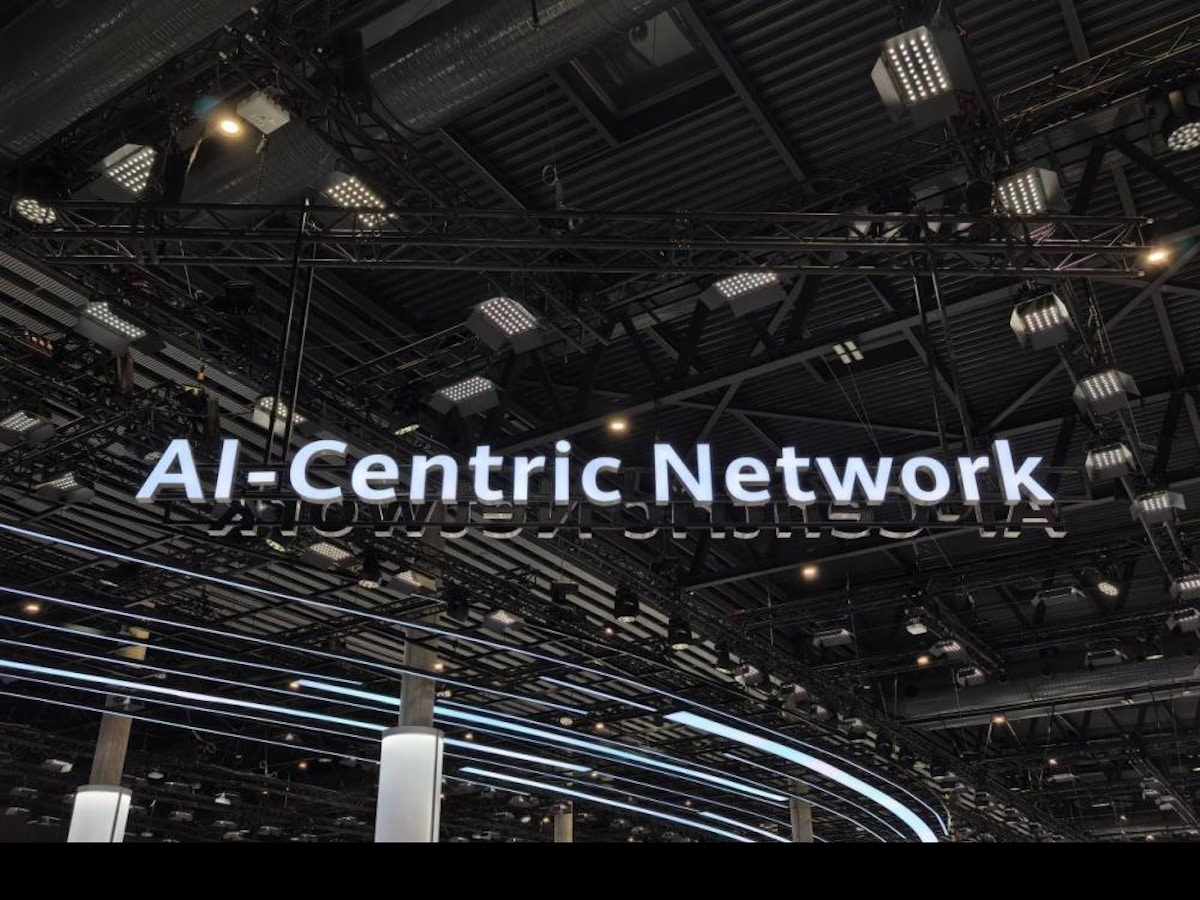
Huawei has urged telecom operators to embed artificial intelligence across networks and services as the industry moves beyond the mobile internet era into what it describes as the “Internet of Agents”.
Speaking at Mobile World Congress Barcelona, Richard Liu, Huawei President of ICT Marketing & Solution Sales, said AI will fundamentally reshape telecom networks, services and operations, creating new opportunities for operators to generate revenue and improve efficiency.
While telecom networks have expanded rapidly over the past decade, operators now face growing challenges including increasingly complex architectures, high operational costs and limited differentiation between services.
As AI evolves rapidly, we are shifting from the mobile internet to the Internet of Agents, and AI will increasingly be embedded across devices and applications, with trillions of intelligent agents expected to emerge.
Telecom operators are well positioned to take advantage of this shift because communications networks are already highly digitalised. It’s suggested that carriers could both apply AI internally to improve efficiency and provide AI-enabled infrastructure to support digital transformation across industries.
Huawei is positioning AI as a core component across three layers of telecom networks: services, network operations and network infrastructure.
At the service level, AI is moving from being optional to a necessity. Operators are increasingly integrating AI capabilities into core offerings such as voice, mobile data and home broadband services in order to create what Huawei calls “AI-native services”.
Huawei is developing multi-agent collaboration platforms designed to allow operators to deploy AI-powered agents for areas such as call handling, customer experience management and home broadband networks.
At the network level, AI is also being integrated into telecom infrastructure to enable greater automation. AI-driven networks are evolving from automation in specific operational and maintenance scenarios towards more advanced forms of autonomous networking that can optimise performance and manage resources across multiple domains.
These capabilities could help operators reduce operational costs while improving energy efficiency and enabling more personalised service experiences for users.
A key theme of Huawei’s strategy is “experience monetisation”, which focuses on charging for guaranteed network performance and service quality rather than simply providing connectivity.
Technologies such as 5G-Advanced, high-capacity fibre access and fibre-to-the-room deployments are enabling operators to deliver differentiated services to both mobile and fixed broadband customers.
For consumer markets, operators could offer guaranteed performance for high-value users in scenarios such as dense urban environments or high-speed mobility. In the home broadband segment, AI can be used to optimise network performance and provide automated troubleshooting capabilities.
Huawei also highlighted opportunities to enhance traditional telecom services with AI. AI-powered voice services could improve call clarity and introduce features such as real-time translation, automated meeting summaries and intelligent call assistants.
Similarly, AI-enabled broadband services could allow users to diagnose and repair home network problems through simple voice commands, while also enabling personalised content recommendations and enhanced video communication services.
Beyond consumer services, Huawei sees strong growth potential in the enterprise market, particularly among small and medium-sized businesses.
Operators could combine connectivity with computing, storage and AI capabilities to deliver integrated digital solutions for businesses such as retail stores, manufacturing firms and schools. These solutions could include applications such as video security systems, smart retail tools and AI-assisted education platforms.
Huawei also highlighted its ongoing work on autonomous networks, an industry initiative aimed at increasing network automation. The company said its technologies are already deployed on more than 130 networks worldwide to automate tasks such as fault management, network optimisation and energy efficiency improvements.
Huawei is working with industry organisations including the TM Forum to advance standards for autonomous networks as the industry works towards Level 4 autonomy, where networks can operate with minimal human intervention.
Additionally, Huawei continues to invest in AI-driven algorithms and infrastructure technologies across areas such as radio access networks, optical transport and AI computing platforms in order to support the next generation of intelligent telecom networks.