Revolutionising local authority digital transformation: An outcomes approach


Spotlight Series

In a rapidly evolving technological landscape, it’s crucial for local authorities to pivot from a technology-centric approach to one that prioritises outcomes.
This was the central theme of a discussion panel that I chaired at the Connected North conference in April 2024, where the panel underscored the need for technology to serve as a tool to achieve specific, community-oriented goals rather than being an end in itself.

Technology solutions searching for problems

Historically, the cycle of technology adoption has been led by the allure of innovation—every few years, a new wave of technology sweeps in, promising to revolutionise what we do and the way we live. For example, we now have local authorities dabbling in technologies such as Artificial Intelligence, 5G, Open RAN, and Edge Computing, to name a few without necessarily understanding their benefits or realising that alternative solutions might more effectively achieve their desired outcomes.

Although there is no doubt that technology innovation is highly important to demonstrate leadership and to stimulate economic activity, we often have advanced technology solutions searching for problems, creating unnecessary pressure on local authorities to adopt the latest technologies rather than addressing pre-existing needs or outcomes.

The insights from the panel discussion echoed this sentiment and noted a shift in approach moving from being technology-led to outcome-driven that we’ve also observed at Intelligens Consulting with our clients.

An outcomes-led approach to digital transformation

This shift emphasises the importance of understanding the specific needs and challenges of communities before deciding on technology solutions. It’s about identifying local authority objectives and key outcomes and then leveraging technology to meet these objectives. To this end, to maximise their impact local authorities need to adopt an outcomes-led approach to digital transformation.

Intelligens Consulting defines three strategic pillars that need to be considered as part of a local authority’s digital transformation as illustrated by the diagram and described below.

Figure 1 – Three strategic pillars that need to be considered as part of a local authority’s digital transformation. Source: Intelligens Consulting, 2024.

  1. Operational Excellence: This element focuses on optimising internal operations to enhance fiscal health through cost reduction, revenue enhancement, and improved workforce productivity. Well planned and implemented digital technologies can achieve operational excellence with great effect.

  2. Enhanced Public Services: This captures the direct benefits to businesses and citizens through improved and efficient delivery of essential services like health and social care, education, waste, security, and transportation. It emphasises the role of digital tools in enriching community life and accessibility.

  3. Societal Impact: Lastly, achieving societal goals ties the digital transformation efforts to broader objectives such as environmental sustainability, social, digital and financial equity, and economic impact. By aligning digital strategies with these goals, local authorities can ensure that their technological advancements contribute to significant and meaningful community benefits. This approach not only fosters a positive public perception but also supports long-term community development and resilience.

A structured digital transformation programme that delivers upon strategic goals

Recognising that local authorities often lack the necessary knowledge, skills, and breadth of expertise to enhance their digital transformation efforts Intelligens Consulting has launched a structured Digital Transformation Programme. Through active collaboration we pinpoint the unique challenges and priorities of local authorities. This approach allows for the creation of tailored strategies and technology roadmaps that are not only aligned with the client’s specific needs but are also supported by robust business cases and hands-on implementation support.

This approach ensures that the devised solutions are executed effectively and that the clients receive continuous guidance throughout their digital transformation journey. By focusing on practical outcomes and sustainable change, Intelligens Consulting empowers its clients to harness the full potential of digital technologies in a manner that directly contributes to their strategic goals.

Intelligens Consulting has successfully led several high-impact digital transformation projects across various local authorities, demonstrating significant outcomes in terms of multimillion pound investment in digital infrastructure, multi-year costs savings and providing strategic direction.

In closing, the move towards outcome-driven technology marks a pivotal shift for local authorities and public bodies. Embracing this approach is key to ensuring that future innovations are purposeful and impactful. It’s time to prioritise outcomes and rethink our approach to technology for the betterment of our communities.

About Intelligens Consulting

Intelligens Consulting is a multiple award-winning digital management consulting firm to investors, operators and the public sector. We provide strategic advice and practical assistance to client to leverage digital technologies to deliver identified outcomes. Contact us on info@IntelligensConsulting.com should you wish to find out more about our Digital Transformation Programme or anything else discussed in this article. Find us on You Tube | LinkedIn or on our website.

Oracle expands Italia footprint via TIM’s Turin data centre


News

The move marks Oracle second cloud region in Italy, aiming to meet the rapid growth in demand for cloud computing services

This week, cloud giant Oracle has announced a new deal with TIM Enterprise, the B2B unit of Italian incumbent operator Telecom Italia (TIM), to form a cloud region centred around TIM’s data centre in Turin.

The Oracle Cloud Turin Region will see private companies and public sector bodies access to a wide variety of cloud services, as well as leveraging big data, analytics, and AI.

Apps being made available to customers include Oracle Autonomous Database, MySQL HeatWave Database Service, Oracle Container Engine for Kubernetes, and Oracle Cloud VMware Solution.

In addition to hosting Oracle’s cloud infrastructure (OCI) for third party usage, TIM Enterprise will also incorporate OCI into its own operations, migrating some of the Group’s internal applications to the cloud.

“We are pleased to be working with Italy’s leading telecommunications provider to bring OCI to public and private sector organizations and support their migration to the cloud,” said Richard Smith, Oracle’s EVP and general manage of EMEA cloud infrastructure. “By adding OCI to its robust cloud service offerings, TIM Enterprise will be able to provide a cloud platform used by customers all over the world to run their most mission-critical workloads in the cloud.”

He continued: “With the upcoming second cloud region in Italy, we are reaffirming our commitment to helping Italian organizations of all sizes and industries accelerate the adoption of AI and other innovative technologies.”

Specific timelines related to deployment have not been announced.

This is the second cloud region Oracle has opened in Italy, having launched its first Milan back in 2021.

The data centre industry is seeing an enormous surge of investment in recent months, driven largely by the hype surrounding data-hungry generative AI technology. Just yesterday, Microsoft signed a new deal with Brookfield Asset Management, estimated to be worth around $10 billion, for the procurement of 10.5 gigawatts of renewable energy to power their rapidly expanding data centre presence around the world.

Keep up to date with all the latest telecoms news from around the world with Total Telecom’s daily newsletter

Also in the news:
T-Mobile and EQT form JV to buy Lumos
Korean Air shows off comprehensive urban air mobility system backed by 5G
Virgin Media O2 reaches plastic waste milestone

Malaysia partners with Ericsson, Intel for digital projects

Keep up-to-date with all the latest news, articles, event and product updates posted on Developing Telecoms.
Subscribe to our FREE weekly email newsletters for the latest telecom info in developing and emerging markets globally.

Sending occasional e-mail from 3rd parties about industry white papers, online and live events relevant to subscribers helps us fund this website and free weekly newsletter. We never sell your personal data. Click here to view our privacy policy.

Samsung and Telefonica partner for German vRAN site 


News 

After initial lab trials beginning in October, the site is now being opened commercially 

This week, Samsung and O2 Telefonica have announced the launch of their first German virtualised RAN (vRAN) and Open RAN commercial site in Landsberg am Lech, Bavaria. It is the first time that Samsung’s 5G vRAN has been used in a German commercial network. 

The launch follows their collaboration announced in October 2023, where the two companies pledged to test vRAN and Open RAN technologies. Now, following successful trials, they are‘re moving from lab testing in Munich to real-world deployment, with plans to expand to seven more sites in the area. 

The trial builds on more efficient and advanced RAN technology. Open RAN provides greater flexibility and choice when building mobile networks. It allows operators to mix and match components from different vendors, promoting innovation and a more diverse supply chain.  

Both vRAN and Open RAN aim to increase flexibility and enable innovation in mobile networks, and they both leverage virtualisation to promote a more open and interoperable network. But software-centric vRAN helps the adoption of cloud-native architecture, allowing network operators to better automate functions and introduce new technologies and services to their networks quickly and efficiently. This is important for accelerating network buildouts and adopting new 5G applications, such as augmented reality and use cases that require low latency. 

“On the way to the network of the future, we are integrating new network solutions to provide our customers with outstanding connectivity. Open RAN is a building block that can help us to automate our network, deploy new updates faster and use network components more flexibly,” said Mallik Rao, Chief Technology & Information Officer of O2 Telefonica in a statement. 

According to Samsung, the next steps for the two companies will include deploying Samsung’s intelligent network automation solutions to “control life cycle management”. This automation solution will accelerate software-based network updates by automating the process, impacting thousands of network sites simultaneously. 

Join us at this year’s Connected Germany event, 5-6 November in Munich. Get tickets here!

Also in the news:
T-Mobile and EQT form JV to buy Lumos
Korean Air shows off comprehensive urban air mobility system backed by 5G
Virgin Media O2 reaches plastic waste milestone

e& dismisses United Group acquisition

Keep up-to-date with all the latest news, articles, event and product updates posted on Developing Telecoms.
Subscribe to our FREE weekly email newsletters for the latest telecom info in developing and emerging markets globally.

Sending occasional e-mail from 3rd parties about industry white papers, online and live events relevant to subscribers helps us fund this website and free weekly newsletter. We never sell your personal data. Click here to view our privacy policy.

FCC tightening national security standards for device testing labs


News

A new proposal would bar entities that are “national security concerns” from receiving wireless equipment authorizations from the Federal Communications Commission (FCC)

By: Brad Randall, Broadband Communities

Republican and Democratic members of the FCC have announced bipartisan support for a Notice of Proposed Rulemaking that would hold impose strict national-security criteria to test labs and telecommunications certification bodies that approve wireless devices for the U.S. market.

The proposal, supported by FCC Chairwoman Jessica Rosenworcel, a Democrat, and FCC Commissioner Brendan Carr, a Republican, will be voted on at the FCC’s next open meeting, according to a May 1 release from the FCC Office of Media Relations.

Commissioner Carr called the proposal “another significant step in the FCC’s work to advance the security of America’s communications networks,” in comments included with the FCC’s release.

“It does so by proposing to ensure that the test labs and certification bodies that review electronic devices for compliance with FCC requirements are themselves trustworthy actors that the FCC can rely on,” Carr said.

The proposal would add another set of rules to the FCC’s equipment authorization program, which was adopted after the Secure Equipment Act of 2021 was implemented. According to the FCC’s announcement, the proposal would prohibit the equipment authorization program from working with any lab or certification body with that is either directly or indirectly controlled by an entity on the FCC’s “Covered List.”

Entities on the FCC’s Covered List “are deemed to pose an unacceptable risk to the national security of the United States or the security and safety of United States persons,” according to the FCC’s website.

The proposal, if adopted, would utilize a 10 percent ownership or control threshold, and a 5 percent reporting threshold to determine which telecommunications certification bodies and test labs are ineligible for use by the FCC’s equipment authorization program.

“Communications networks are a part of everything we do, and it’s why their security matters more than ever before,” Rosenworcel’s comments stated.  “So, we must ensure that our equipment authorization program and those entrusted with administering it can rise to the challenge posed by persistent and ever-changing security and supply chain threats.”

Entities on the FCC’s Covered List include Huawei Technologies Company, which last week had a test lab denied by the FCC for participation in the equipment authorization program, the FCC’s announcement stated.

“This new proceeding would permanently prohibit Huawei and other entities on the FCC’s Covered List from playing any role in the equipment authorization program while also providing the FCC and its national security partners the necessary tools to safeguard this important process,” the agency’s announcement read.

Huawei, which has been on the Covered List since March 2021, is a Chinese multinational communications conglomerate that produces smart devices and technology infrastructure. It is far from the only Chinese company on the FCC’s Covered List, which also includes firms like China Mobile International USA Inc., China Telecom (Americas) Corp., and China Unicom (Americas) Operations Limited, all of which were added to the list in 2022.


To get content like this delivered to your inbox, subscribe to the Broadband Communities newsletter

Unlocking the True Potential: Exploring Current and Future 5G Use Cases

This Industry Viewpoint was authored by Raj Radjassamy, Director, 5G and Wireless Segment at OmniOn Power

Through faster connectivity, lower latency, greater reliability, and enhanced security, 5G networks promise to transform current and emerging applications and services across a range of industries. So, what are the key use cases for 5G that network providers are focusing on? They include … [visit site to read more]

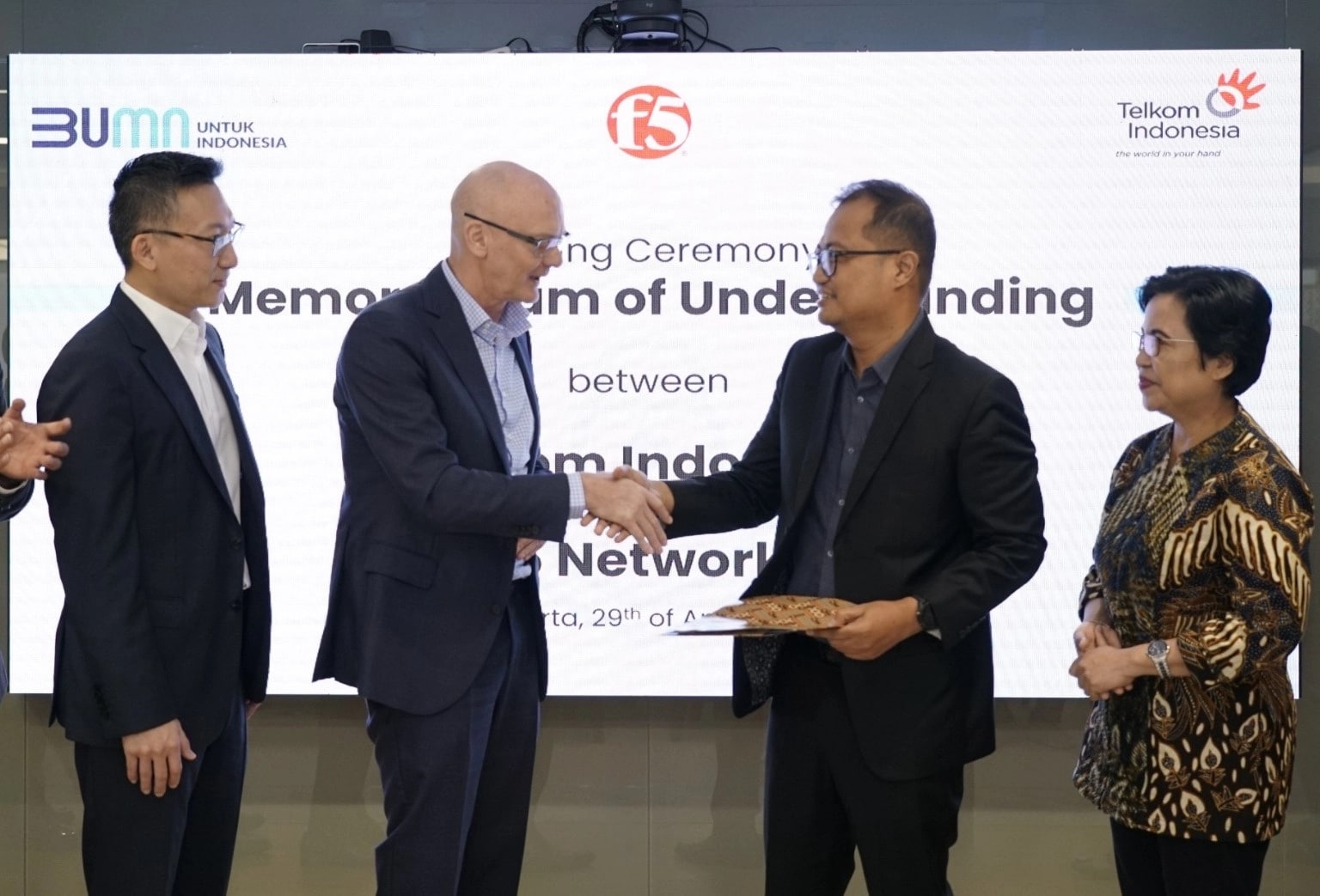
Telkom Indonesia collaborates with F5 on cybersecurity services

Telkom Indonesia announced on Thursday that it has signed a Memorandum of Understanding (MoU) with cybersecurity firm F5 to collaborate on cybersecurity services and strengthen Telkom’s own security capabilities.

Under the strategic collaboration deal, which was signed on Monday, Telkom Indonesia and F5 will work together to provide comprehensive cybersecurity services to organisations in Indonesia via Telkom’s B2B Digital IT Services arm.

Telkom’s strategic portfolio director Budi Setyawan Wijaya said the partnership aims to “strengthen Telkom Group’s capabilities as the main digital telco of choice in Indonesia, especially in the field of cyber security” and other digital offerings.

Adam Judd, senior VP for APCJ at F5, said the company’s experience with application and API security, as well as multicloud management, would help strengthen Telkom Group’s IT Services portfolio.

« With F5’s AI-based capabilities, our strategic partnership with Telkom not only answers current and future cybersecurity challenges, but also opens the way for new business models and revenue sources, » he said.

While cyber attacks in general are escalating around the world, Indonesia has seen a sharp rise in such attacks in the past year as its economy grows and its shift to a digital economy progresses. A recent analysis by Check Point found that Indonesia was the most popular target for cyberattacks in Southeast Asia in the first half of 2023, with an average of 3,300 cyberattacks every week.

The country has also suffered numerous high-profile data leaks. In January this year, a hacking group claimed to have stolen sensitive data from state-owned railway company Kereta Api Indonesia (KAI). In November 2023, a hacker leaked voter data records allegedly stolen from the General Elections Commission (KPU) ahead of the country’s general elections in February 2024. In July 2023, a hacker posted the data of over 34 million Indonesian passport holders.

« The need for cyber security in the future will increase rapidly as the digital transformation campaign in Indonesia becomes stronger and the Personal Data Protection Law will come into force in October 2024,” said FM Venusiana R, Telkom’s director of enterprise and business services.

Analyst firm IDC forecasts the cybersecurity market in Indonesia to reach IDR 6 trillion (US$372.6 million) in 2028, with a CAGR of 16.6% from 2022 to 2028.

MORE ARTICLES YOU MAY BE INTERESTED IN…