

A few international next-generation tech upgrades in the infrastructure world to catch up with: … [visit site to read more]

A few international next-generation tech upgrades in the infrastructure world to catch up with: … [visit site to read more]

Indonesia-based telco Indosat Ooredoo Hutchison (IOH) has announced the launch of their Digital Intelligence Operations Center (DIOC).
The DIOC will feature End-to-End Service Management of all its services, which will allow any customer issues to be quickly sorted. It will also integrate data analysis with “cutting-edge technologies,” which IOH says will enable “continuous, data driven innovation”.
Back in February and Mobile World Congress Barcelona, the two companies signed a Memorandum of Understanding to work together on digital and AI development.
The centre is a step forward in IOH’s mission for digital transformation, as it pledges to use AI to provide superior service to over 100 million customers across Indonesia and part of its wider commitment to “democratise digitalisation in Indonesia”.
“Today marks a new chapter in Indosat Ooredoo Hutchison’s story as we inaugurate our Digital Intelligence Operations Centre. This facility embodies our ambition of becoming an Intelligence Native Telco, where cutting-edge technology and innovative solutions are at the core of our operations,” said Vikram Sinha, President Director and CEO of Indosat in a press release.
“With the DIOC, we are not just improving network performance; we are redefining the way we serve our customers. Our collaboration with Huawei is pivotal in realizing our mission to connect and empower every Indonesian through digital connectivity,” he continued.
The partnership has allowed Indosat to make significant strides in its digital transformation journey, improving network quality and user experience, and increasing its population coverage by 12.7 million people. Both companies continue to focus on enhancing network operations and infrastructure to propel Indonesia’s digital future forward.
Keep up to date with the latest telecoms news by subscribing to the Total Telecom daily newsletter
Also in the news:
Vodafone kick-starts £430 million share buyback scheme
Google Search is an illegal monopoly, US court rules
Deutsche Telekom and Volkswagen leveraging 5G to manage automotive terminal
Some federal dollars, a couple new locations, some managed services, and a new partnership: … [visit site to read more]

Some federal dollars, a couple new locations, some managed services, and a new partnership: … [visit site to read more]
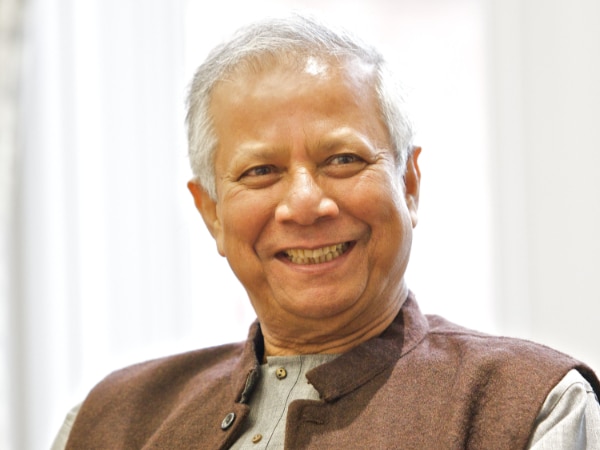
Grameen Telecom founder Muhammad Yunus has been named chief adviser of Bangladesh’s interim government following the resignation and flight of Prime Minister Sheikh Hasina.
Hasina fled Bangladesh on Monday following weeks of protests by student groups. The protests were initially organised in opposition to a government jobs quota system that allegedly favoured Hasina’s Awami League party. The focus shifted towards removing Hasina from office after her government organised a violent crackdown which resulted in around 300 protesters losing their lives.
Reuters reports that Yunus, who also founded microfinance group Grameen Bank, was appointed on Tuesday 6th August by Bangladesh President Mohammed Shahabuddin following meetings with student leaders and military chiefs.
Yunus is best known as the founder of microcredit lender Grameen Bank, which provides small loans of under $100 to Bangladesh’s low-income workers, particularly in rural areas. Yunus won the 2006 Nobel Peace Prize for his work with Grameen Bank. In the telecoms sector, he is known for establishing Grameen Telecom, a non-profit that delivers rural telephony services but is also a stakeholder in Grameenphone, Bangladesh’s largest mobile operator.
The leaders of the student protests requested Yunus, 84, as the chief advisor for the interim government. Yunus has expressed support for the protests and a dissatisfaction with the Hasina administration, and his spokesperson confirmed that he has agreed to the appointment.
Shahabuddin dissolved parliament on Tuesday in line with demands from student protest groups to allow the interim government to assume power ahead of new elections. His office has confirmed that Begum Khaleda Zia, former Bangladeshi Prime Minister and current leader of the opposition Bangladesh Nationalist Party, has been freed from house arrest.
In June, Yunus was indicted by a Bangladesh court on charges of embezzlement of around US$2 million from Grameen Telecom’s worker’s fund. Yunus has denied any wrongdoing; he is a well-known critic of Hasina and his supporters claim that the charges are politically motivated. In an interview with Reuters, Yunus described the allegations as “very flimsy, made-up stories », adding that Bangladesh had become a “one-party” state under Hasina. It is currently unclear whether the indictment has been dropped.
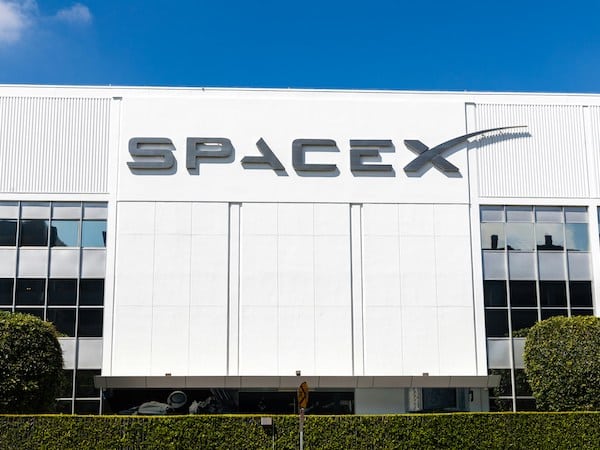
News reports from China indicate that a Chinese state-owned enterprise has this week launched the first batch of satellites in a major new constellation.
Reuters say the launch marks an important step in Beijing’s strategic goal of creating its own version of Starlink, the commercial broadband constellation that has launched close to 6,000 satellites via spacecraft manufacturer, launch service provider and satellite communications company SpaceX.
SpaceX started launching satellites for its constellation and internet service Starlink in 2019. The Starlink service is available in over 100 countries with a target user base of consumers, companies and government agencies, mainly in remote areas.
The Chinese launch, led by Shanghai Spacecom Satellite Technology (SSST), took place at Taiyuan Satellite Launch Centre, one of China’s main satellite and missile launch centres, located in the northern province of Shanxi, according to the China Securities Journal.
The eventual plan is to deploy more than 15,000 low Earth orbit (LEO) satellites. It’s a big number but many more of these are required than the higher-altitude geostationary (GEO) satellites to guarantee comprehensive coverage.
However, as Starlink has already demonstrated, they can be mass produced and, as they operate at altitudes of 300 kilometres to 2,000 kilometres, they have fewer issues with latency and offer higher throughput than GEO satellites.
However, China’s project is not just a commercial venture. The country is apparently worried about the use of Starlink in military contexts (such as its deployment in the war in Ukraine). As Reuters notes, the competition to occupy Earth’s lower orbits has military implications, with the potential to affect the balance of power between warring countries.
It says SSST’s plan is to launch 108 satellites this year, 648 satellites by the end of 2025, provide a « global network coverage » by 2027, and reach 15,000 satellites deployed before 2030.

US federal judge Amit P. Mehta has ruled that Google, owned by Alphabet, has maintained an illegal monopoly over online searches and search-related advertising.
Back in 2020, the US Department of Justice (DOJ) sued Google, accusing it of maintaining illegal monopolies through anticompetitive contracts, exclusionary practices, and the preferential treatment of its own services. It highlighted Google’s agreements with other companies to make its search engine the default on devices and browsers, which the DOJ argued harmed competition.
District Judge Amit Mehta noted that Google’s control of about 90% of the online search market was maintained through these payments. This meant the giant could push out rivals to increase its own advertising revenues.
In 2021, for example, the company paid out $26.3 billion to ensure that its search engine was the default on various smartphones and devices. Mehta described the default search engine position as “extremely valuable real estate”.
Separately, the DOJ also sued Google last year, accusing the company of monopolising the adtech market, which focused on the different aspects of Google’s business related to online advertising technologies.
“Americans deserve an internet that is free, fair, and open for competition,” said the White House press secretary, Karine Jean-Pierre.
Google disagrees with the ruling, saying it is being punished for outcompeting its opponents.
“This decision recognizes that Google offers the best search engine, but concludes that we shouldn’t be allowed to make it easily available,” said Kent Walker, Google’s president of global affairs.
Alphabet is expected to appeal the decision, indicating that the legal process will continue for some time. If the ruling is upheld, the court may impose remedies to address the antitrust violations. These could range from financial penalties to structural changes within Google’s business operations.
Regardless of whether a penalty is imposed, the ruling represents the increased scrutiny that governments are pushing on tech giants.
Keep up to date with the latest telecoms news by subscribing to the Total Telecom daily newsletter
Also in the news:
AST SpaceMobile prepares to launch first commercial satellites
nexfibre passes almost 1.3m homes with full fibre
Telstra joins UNESCO’s Business Council to promote ethical AI

It’s no secret that AI is driving more than a few infrastructure decisions here and there in the industry right now. Most of what we hear about is in the data center arena as companies build more high density colo in which to put all the necessary racks and servers to scale AI. But now we are starting too see the same AI demand drive new behavior in the fiber sector in order to properly connect it all. … [visit site to read more]

The newly formed Labour government has scrapped the £1.3 billion AI investment pledged by the Conservatives, despite newly appointed Science Secretary Peter Kyle promising to put “AI at the heart of the government’s agenda to boost growth and improve our public services” just last week.
The investments included £800 million to build a supercomputer at the University of Edinburgh, which would be able to complete one billion calculations each second, and £500 million to set up an AI Research Resource, which helps to fund computing power for AI.
However, these AI funding commitments by the Conservative government were “unfunded”, meaning that they were promised without any funds being formally allocated in the budget.
“The government is taking difficult and necessary spending decisions across all departments in the face of billions of pounds of unfunded commitments,” said the Department for Science, Innovation and Technology (DSIT). “This is essential to restore economic stability and deliver our national mission for growth.”
New Shadow Science Secretary Andrew Griffith has condemned the decision, saying “it is a terrible blow to the UK tech sector and could be just the start of Labour cuts”.
“During the election, Labour refused to commit to growing the amount the UK spends on research, yet that’s a core part of growing a modern economy. If DSIT can’t get the funds from the Treasury, this means university research can expect to be hit, too,” he continued.
The government has recently launched its new AI Opportunities Action Plan, which will seek ways to accelerate the use of AI to better everyday people’s lives. It will also help the UK’s burgeoning AI sector to “compete on the global stage”.
Speaking to Total Telecom, Lee Myall, CEO of UK telecoms provider Neos Networks, emphasised that the new government must “prioritise these investments to solidify its position as a global hub for AI technology and services, or risk losing ground to other more ambitious nations.”
Join the conversation around UK AI at this year’s Connected Britain, 11-12 September in London. Get your tickets now!
Also in the news:

One M&A move plus three other bits of infrastructure ecosystem teamwork of note from the end of last week: … [visit site to read more]