Starlink’s Indonesia pricing is not predatory: antimonopoly agency

The Indonesian Competition Commission (KPPU) has reportedly ruled that Starlink’s aggressive discounts on its VSAT terminal kits and subscriptions do not amount to predatory pricing.

According to government news agency Antara, Starlink – which officially began offering LEO satellite bradband services in Indonesia on May 19 – has been offering a 40% discount on its VSAT devices in Indonesia until June 10. The devices, which normally retail at IDR7.8 million (US$480), are being offered at IDR4.68 million.

The KPPU has been fielding allegations that this constitutes predatory pricing and unfair competition. According to media reports, the Indonesia Satellite Association (ISSA) has complained that Starlink’s VSAT pricing is negatively impacting players in both the enterprise and retail VSAT segments.

ISSA also claims Starlink’s monthly subscription packages are predatory. A monthly subscription to Starlink starts at IDR750,000 per month. While that’s more than twice the average amount Indonesians typically spend on consumer internet services, it’s far below unlimited VSAT service packages offered by existing players, which are in the ballpark of IDR 3.5 million, ISSA says.

However, following a closed-door focus group discussion on the matter on Wednesday, the antimonopoly watchdog said the VSAT prices were promotional, not predatory, the report said.

KPPU member Eugenia Mardanugraha told Antara that predatory pricing involves an active strategy to sell products below cost to eliminate competitors and establish a monopoly. « Predatory pricing is not just about low prices,” she said.

According to Indonesian national newspaper Kompas, KPPU Commissioner Hilman Pujana said it will continue to monitor Starlink’s activities in the market to ensure it plays by the rules.

MORE ARTICLES YOU MAY BE INTERESTED IN…

Mah Sing joins Malaysia’s data centre gold rush with BDC tie-up

Malaysian property developer Mah Sing Group threw its hat in the country’s increasingly crowded data centre ring on Thursday by launching a new site in Southville City and announcing Bridge Data Centres (BDC) as its first partner.

Mah Sing said it has earmarked 150 acres of land bank at Southville City – which sits 19 km from Kuala Lumpur City Centre – for further expansion into a data centre hub with planned capacity of up to 500MW. The collaboration with BDC will occupy an initial 17.55 acres of land for a data centre with planned capacity of up to 100MW.

The site, dubbed “Mah Sing DC Hub@ Southville City”, is envisioned as “a holistic digital infrastructure ecosystem” designed to accommodate the demands of hyperscale, retail, and enterprise service providers. Mah Sing also expects to draw a diverse clientele from tech corporations, telecoms players, and financial institutions by engineering its data centres to support AI computation and large-scale data storage.

Mah Sing said it selected Southville City for the hub partly because it’s a mature township with the necessary essential infrastructure to support the project, and partly because the site is around 20 km away from existing data centre hubs Cyberjaya and Bukit Jalil.

The planned DC hub is also less than 50km from Telekom Malaysia’s upcoming new cable landing station in Morib, Selangor for the SEA-ME-WE-6 submarine cable system. Once the landing station is completed (which is scheduled to be in the first quarter of 2025), Mah Sing said it will be able to provide dark fibre for the hub.

The announcement marks BDC’s fifth hyperscale data centre project in the country. BDC currently operates two data centres in Cyberjaya, one in Bukit Jalil and another in Johor.

“This initiative not only boosts our operational capabilities but also highlights Malaysia’s increasing significance as a digital hub in the Asia Pacific region,” said BDC president Eric Fan.

Mah Sing’s entry into Malaysia’s data centre business comes as just about everyone else is doing likewise. This week alone, Google announced plans to develop its first data centre in Malaysia, while Equinix officially opened its first two data centres in Johor and Kuala Lumpur.

Last week, Malaysian real estate firm Sime Darby Property made its first move into the data centre game via a partnership with Pearl Computing Malaysia to develop a hyperscale data center at its business park in Elmina, northwest of Kuala Lumpur.

In April, Malaysian property development firm Crescendo Corporation Berhad (CCB) said Microsoft had purchased a plot of land in Johor for a cash consideration of RM132.4 million (US$27.8 million). A few weeks later, Microsoft pledged to invest US$2.2 billion over the next four years in new cloud and AI infrastructure in the country.

ST Telemedia Global Data Centres (STT GDC) entered Malaysia in November 2023 via a JV with Basis Bay to build and operate green data centre projects in Kuala Lumpur and Cyberjaya. A week later, STT GDC said it would also build a data centre in Johor.

EdgeConneX entered the Malaysian market in September 2023 with plans to build data centres in Kuala Lumpur’s Central Business District, Bukit Jalil and Cyberjaya with a combined capacity of nearly 300 MW.

Local players are also busy chasing the DC dollar. YTL Power International is collaborating with GPU chip maker Nvidia to build an AI data centre in YTL’s 500-MW Green Data Center Park in Johor by the middle of next year. Telekom Malaysia is also said to be exploring plans to build a new hyperscale data centre to expand its capacity from the existing Klang Valley Data Centre (KVDC) and Iskandar Puteri Data Centre (IPDC).

At the start of this year, Malaysia’s Ministry of Investment, Trade and Industry (MITI) formed a strategic partnership with the Ministry of Investment of the United Arab Emirates (UAE) to develop data centres in Malaysia and boost its status as a regional data centre hub.

Mah Sing’s founder and group MD Leong Hoy Kum said the company is looking to diversify its revenue streams beyond property development, which currently covers high-rise residences, townships, offices, retail spaces and an increasing focus on industrial projects.

“Entering the data centre market allows the Group to establish recurring income, crucial for a more resilient financial foundation amidst market fluctuations,” he said in a statement.

Leong also said Mah Sing is looking at other sites for future data center projects. “Beyond Southville City, Mah Sing’s other landbanks, such as MSS Business Park in Sepang, Selangor, which is also close to TM’s upcoming new cable landing station in Morib, present potential for similar data centre collaborations.”

MORE ARTICLES YOU MAY BE INTERESTED IN…

Submarine Networks EMEA 2024: Supporting Africa’s growing ICT sector through infrastructure development 


News 

A key panel on day one of Submarine Networks EMEA in London delved into how infrastructure can assist the growth of Africa’s ICT sector

The session was moderated by Ed McCormack, Director of Mc Corporate Services, and consisted of:

Rosalind Thomas, Managing Director and CEO at SAEx International Management

Dylan Carver, Global Account Manager at Medusa Submarine Cable System

Mohammed Aliyu, Chief FiberCo Officer at Bayobab

Nikki Popoola, Director of Sales West Africa & DRC at WIOCC Group

Africa is home to 1/6 of the population and is the fastest growing population in the world. That sounds promising, but that does not mean the market is without challenges. 

An obvious big challenge are cable outages currently going on, such as in the  Red Sea or in West Africa. “This a major challenge,” said Nikki Popoola “I don’t recall a time when there have been so many cables down”. 

“But there’s so much opportunity in Africa,” she continued. “More than anything, we need to develop the terrestrial. That’s a big challenge”. 

Africa has a population 1.4 billion people, so there is a huge opportunity for expansion. “If you want to go fast you go alone, but if you want to go far, you go together,” said Mohammed Aliyu. Collaboration is vital for African growth.  

The challenges are also opportunity. “We are operating in a bipolar global economy with geopolitics impacting us. We can’t ignore that,” continued Rosalind. 

Power is a huge challenge in Africa, especially in South Africa, which has an issue with load shedding. Without power, you can’t have any of the advanced technologies such as data centres, so “Africa is paying catch up”. 

Rosalind notes that there’s also a problem with getting skilled people, which must be addressed collaboratively. Skills are a challenge everywhere, but it is more intense in Africa. In South Africa, there is 65% youth employment rate, who simply are not skilled enough to be able to work in a digital economy. In other countries on the continent, due to the problems in country, many of them leave for jobs elsewhere. 

Some answers to this could be visa free travel within Africa or driving pan African initiatives, because there’s less employment issues in Kenya, Nigeria etc. Youth employment is much lower in Kenya for example, 12.5%. In South Africa, there are 330,000 people filled by employees on critical skills visas in South Africa, and 77,000 jobs they cannot fill, but around 14 million unemployed youth. 

Because the industry is a global one, it attracts skills globally. There are not seeing enough people entering the subnets industry, and they go to the likes of meta or google related to the end user applications, not the submarine cables bit!  

Africa has built thousands of kilometres of cable in recent years. But what is different in the business plan for the development of new cables?  

There are now more players in the market with different interests. Collaboration must be seen one the ground, as people are far too protective of what they own, there need to be more of an open access model, the panel argues. In South Africa, there are more than 17 fibre providers duplicating fibre in the same areas, and its impacting on their Return on investments because they are not collaborating. “The idea of sharing is very important”, confirms Rosalind. 

The areas in need of investment 

It has been made clear that some cables will reach the end of their life in the next 10-15 years. The recent outages on the continent are shifting mentalities on how to address the next cable initiatives. 

The current problem with African cables is that they all follow the same routes, Rosalind argues. Last year, there were 9 cable cuts. Climate change will also be a factor in these cuts, because they have all been laid too close to the continent.  

“In the short term, because there have been many more data centres built in Africa. There must be a focus on domiciling content in Africa, so you don’t need to go out of Africa to get this continent,” says Mohammed. 

“We need to be able to connect the hubs in Africa: the three major ones are Kenya, Nigeria and South Africa,” he continues. Therefore, building terrestrial connectivity is equally important.  

Technology has leapfrogged the continent no end. The phone has become the way that we all work, live and play. It becomes your banking, source of information, everything. 

The panel concludes that there is ample opportunity for Africa to be better connected within the next five years. The growth potential in the market is great. Working together has been a key takeaway here – cross collaboration will be the pathway to success. 

Keep up to date with the latest international telecoms news by subscribing to the Total Telecom daily newsletter

Also in the news:
Digi set to buy OTE’s Telekom Romania
Billionaire Xavier Neil ponders Millicom acquisition
EU-funded Global Gateways projects on show at Submarine Networks EMEA 2024


Google plans US$2 billion cloud hub and data centre investment in Malaysia

Keep up-to-date with all the latest news, articles, event and product updates posted on Developing Telecoms.
Subscribe to our FREE weekly email newsletters for the latest telecom info in developing and emerging markets globally.

Sending occasional e-mail from 3rd parties about industry white papers, online and live events relevant to subscribers helps us fund this website and free weekly newsletter. We never sell your personal data. Click here to view our privacy policy.

IOEMA announces new North Sea submarine cable 


News

The company was founded in 2023 after four years of project development 

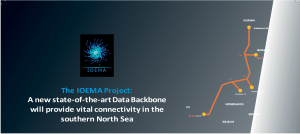
On day one of the Submarine Networks EMEA Conference in London, IOEMA Fibre unveiled its new submarine cable connecting Northern Europe. 

The 1400km long repeatered cable will span across five key markets in Northern Europe: the UK, The Netherlands, Germany, Denmark and Norway. It will be made up of a trunk route that connects Dumpton Gap in the UK with Kristiansand in Norway, and three branches connecting Eemshaven in The Netherlands, Wilhelmshaven in Germany, and Blaabjerg in Denmark. 

It is multi-core with 48 fibre pairs, giving 27-29 Terabits per fibre pair, and an overall minimum capacity of 1.3 Pb/s. 

Arelion has been selected as the infrastructure on Denmark shores, and will expand connectivity towards Esbjerg and Copenhagen through their network. EWE TEL and Relined Fiber Network are joint landing partners in Germany, and both companies will provide backhaul routes to Hamburg, Berlin and eventually further. 

Eurofiber and QTS are the landing parties in Eemshaven, The Netherlands and will reuse the existing infrastructure of the former TGN Northern Europe cable. Eurofiber will provide redundant backhaul connectivity to Groningen, Amsterdam, Frankfurt, Hamburg, Rotterdam and Brussels through its fibre network. 

Colt Technology Services will accommodate the IOEMA cable at its landing point in Dumpton Gap. 

“After 5 years of development and observing the market in Northern Europe, it became evident that diverse routes are needed to provide the redundancy for the increasing data demand in the Nordics,” said Eckhard Bruckschen, CTO of IOEMA Fibre Ltd. 

“We are proud to start this project together with our landing partners and provide further connectivity across Europe and beyond,” he continued.

“By increasing capacity, performance, and resilience across Northern Europe, the IOEMA project will have a profound impact on digital connectivity for this region and beyond. We’re excited and honoured to be playing a key role in bringing this ambitious vision to reality.” said Annette Murphy, Chief Commercial Officer at Colt. 

It’s not too late to get tickets for day 2 of Submarine Networks EMEA in London – get them here! 

Also in the news:
Digi set to buy OTE’s Telekom Romania
Billionaire Xavier Neil ponders Millicom acquisition
EU-funded Global Gateways projects on show at Submarine Networks EMEA 2024
  

Industry players unite to spread 5G in Ghana

Reliance Industries-owned Radisys, Nokia and Tech Mahindra united with the Ghanian government to launch a shared infrastructure JV to spread affordable 5G across the West African nation.

In a joint statement, other partners of the JV were detailed including telecom solutions provider K-NET, along with mobile network operators AT Ghana and Telecel.

The companies have partnered to form JV company Next-Gen InfraCo (NGIC). The Ghanian government awarded 5G licences to NGIC, and it is expected to launch 5G services across Ghana in the next six months, with scope to expand to other parts of Africa.

NGIC will build a nationwide 4G/5G network and stakeholders claimed it will be the first 5G mobile broadband shared infrastructure entity to build one.

MNO partners such as AT Ghana and Telecel, will work with NGIC to launch affordable 4G/5G fixed wireless access customer premise equipment and smartphones this year.

Uptake of 5G can enhance the daily lives of Ghanaians through digital services education, healthcare and mobile finance, which is the aim of the NGIC.

Inspired by India

Ursula Owusu-Ekuful, Minister for Communications and Digitalization for the Republic of Ghana, said: “The creation of a shared 5G Mobile Broadband Infrastructure is critical for delivering affordable, high-speed data access to the people of Ghana and help achieve our Digital Ghana vision.

“The creation of NGIC as a neutral, shared platform, accessible to all mobile network operators and tower companies, will help to expand 5G services rapidly across the country. We are inspired by India’s digital infrastructure and low-cost mobile data usage and keen to replicate it in Ghana.”

Mikko Lavanti, Nokia SVP of Middle East and Africa, added: “Ghana holds immense potential for mobile broadband growth on the back of an unmet demand for connectivity. Establishing an Open Access Network like NGIC will foster innovation and create numerous opportunities across various sectors.”

MORE ARTICLES YOU MAY BE INTERESTED IN…

Graystone Strategy advises Coop Mobile in its historic MVNO licence bid

Graystone Strategy, specialist consultants in mobile and virtual mobile networks, announces today that it is acting as the principal advisor to The Channel Island Cooperative (Coop) and its proposed launch of Coop Mobile. As Sure progresses the purchase of Vodafone Airtel, the launch of a new MVNO is part of a remedial plan to ensure consumer choice is protected in the Channel Island’s mobile market.

Acting as the principal strategic and commercial advisor to the Coop, Graystone Strategy has helped Coop secure its wholesale contract with Sure and leverage the capabilities of its mobile network infrastructure, manage the regulatory process, develop the detailed business and investment case, and formulate the initial customer propositions.

The Jersey Competition Regulatory Authority will now initiate a public consultation about the merger and the proposed MVNO. Provided the consultation concludes favourably, and the Guernsey Competition Regulatory Authority provides approval, it’s intended that Coop Mobile will launch 12 months later. If awarded the licence, Coop Mobile will provide residents in the Channel Islands with a third choice for competitive mobile deals and give those who are also Coop members a multitude of perks when they shop in retail stores.

Graystone was selected as special advisor because the team has extensive knowledge of launching and running retail MVNOs, particularly those used to stabilise markets following a significant merger.

Mark Cox, CEO of Channel Islands Coop, said the advice from Graystone Strategy was invaluable as it negotiated its strategic deal with Sure: “Our strategic agreement with Sure represents a significant alliance, providing us with a low-risk, cost-effective way to enter the local mobile market. It was therefore imperative we had a compelling proposition and the right commercial terms in place to make it a success for our members and the wider market.”

“Graystone’s in-depth knowledge in launching MVNOs has underpinned our approach to bidding for a licence. Thanks to their involvement, we have developed an offer that enhances our commitment to giving loyal members great value for money and leverages our existing membership and retail footprint.”

Globally, retail MVNOs have seen remarkable success, with notable examples from the UK’s leading supermarkets. James Gray, managing director of Graystone Strategy, believes there is huge scope to replicate the success in the Channel Islands: “We’re very excited to be working with the team at the Coop on what will be an historic move for the industry. I believe this is a superb opportunity to bring innovative and competitive mobile deals to the Channel Islands.”

“As a team, we’ve worked with most of the UK’s major supermarkets on their MVNO offers and several of us have launched and run MVNOs. We have used our collective experience and expertise to guide the Coop to a credible business case that’s built around the customer. I wish them every success with their MVNO strategy,” he adds.

More information about the proposed MVNO can be found here https://www.sure.com/jersey/latest-news/2024/sure-and-channel-islands-coop-agreement-paves-way-for-mobile-revolution/

LATAM sees third quarter of smartphone growth

Smartphone shipments in Latin America surged 23.3% year-on-year in Q1 due to retailers moving to clear inventory, and Chinese vendors pushing aggressively.

Counterpoint Research did not disclose exact figures but claimed that this was a third consecutive quarter of YoY growth in the region, a “strong sign of market recovery”.

Senior Research Analyst, Tina Lu said: “Part of the growth was due to the sell-in declining in most markets in Q1 2023 to clear inventory, while in Q1 2024, operators and retailers were building inventory for Mother’s Day.

“Demand for smartphones was also fuelled by the Chinese OEMs increasingly getting aggressive with their promotions for 4G models and price discounts. All this defied the traditional seasonality and showed that the region’s sales channels were confident enough about the demand to build some inventory.

Growth in Mexico and Venezuela led the charge in LATAM but most markets saw double digit YoY growth. Argentina was noted to see a plunge in shipments by 62% due to its ongoing economic crisis. Counterpoint predicted that the Argentinian market will “continue to be soft” in Q2 and Q3.

“This will principally affect Samsung and Motorola. The grey market in the region continued to grow, fuelled by high import duties in many countries,” said Lu.

Rankings

Samsung saw an 8.5% decline YoY due to competition from Xiaomi and Honor, but remained LATAM market leader with 31% share particularly in the US$100-US$249 price bracket.

Motorola placed second with 21% share a slight increase YoY from 20%. Third was Xiaomi with 14% (up by 2%) and other vendors collectively made up 34% of the market (up from 26%).

Honor was noted to rank in the top five shipping vendors for three quarters consecutively despite entering LATAM only two years ago.

MORE ARTICLES YOU MAY BE INTERESTED IN…