e& dismisses United Group acquisition

Keep up-to-date with all the latest news, articles, event and product updates posted on Developing Telecoms.
Subscribe to our FREE weekly email newsletters for the latest telecom info in developing and emerging markets globally.

Sending occasional e-mail from 3rd parties about industry white papers, online and live events relevant to subscribers helps us fund this website and free weekly newsletter. We never sell your personal data. Click here to view our privacy policy.

FCC tightening national security standards for device testing labs


News

A new proposal would bar entities that are “national security concerns” from receiving wireless equipment authorizations from the Federal Communications Commission (FCC)

By: Brad Randall, Broadband Communities

Republican and Democratic members of the FCC have announced bipartisan support for a Notice of Proposed Rulemaking that would hold impose strict national-security criteria to test labs and telecommunications certification bodies that approve wireless devices for the U.S. market.

The proposal, supported by FCC Chairwoman Jessica Rosenworcel, a Democrat, and FCC Commissioner Brendan Carr, a Republican, will be voted on at the FCC’s next open meeting, according to a May 1 release from the FCC Office of Media Relations.

Commissioner Carr called the proposal “another significant step in the FCC’s work to advance the security of America’s communications networks,” in comments included with the FCC’s release.

“It does so by proposing to ensure that the test labs and certification bodies that review electronic devices for compliance with FCC requirements are themselves trustworthy actors that the FCC can rely on,” Carr said.

The proposal would add another set of rules to the FCC’s equipment authorization program, which was adopted after the Secure Equipment Act of 2021 was implemented. According to the FCC’s announcement, the proposal would prohibit the equipment authorization program from working with any lab or certification body with that is either directly or indirectly controlled by an entity on the FCC’s “Covered List.”

Entities on the FCC’s Covered List “are deemed to pose an unacceptable risk to the national security of the United States or the security and safety of United States persons,” according to the FCC’s website.

The proposal, if adopted, would utilize a 10 percent ownership or control threshold, and a 5 percent reporting threshold to determine which telecommunications certification bodies and test labs are ineligible for use by the FCC’s equipment authorization program.

“Communications networks are a part of everything we do, and it’s why their security matters more than ever before,” Rosenworcel’s comments stated.  “So, we must ensure that our equipment authorization program and those entrusted with administering it can rise to the challenge posed by persistent and ever-changing security and supply chain threats.”

Entities on the FCC’s Covered List include Huawei Technologies Company, which last week had a test lab denied by the FCC for participation in the equipment authorization program, the FCC’s announcement stated.

“This new proceeding would permanently prohibit Huawei and other entities on the FCC’s Covered List from playing any role in the equipment authorization program while also providing the FCC and its national security partners the necessary tools to safeguard this important process,” the agency’s announcement read.

Huawei, which has been on the Covered List since March 2021, is a Chinese multinational communications conglomerate that produces smart devices and technology infrastructure. It is far from the only Chinese company on the FCC’s Covered List, which also includes firms like China Mobile International USA Inc., China Telecom (Americas) Corp., and China Unicom (Americas) Operations Limited, all of which were added to the list in 2022.



To get content like this delivered to your inbox, subscribe to the Broadband Communities newsletter

Unlocking the True Potential: Exploring Current and Future 5G Use Cases

This Industry Viewpoint was authored by Raj Radjassamy, Director, 5G and Wireless Segment at OmniOn Power

Through faster connectivity, lower latency, greater reliability, and enhanced security, 5G networks promise to transform current and emerging applications and services across a range of industries. So, what are the key use cases for 5G that network providers are focusing on? They include … [visit site to read more]

Telkom Indonesia collaborates with F5 on cybersecurity services

Telkom Indonesia announced on Thursday that it has signed a Memorandum of Understanding (MoU) with cybersecurity firm F5 to collaborate on cybersecurity services and strengthen Telkom’s own security capabilities.

Under the strategic collaboration deal, which was signed on Monday, Telkom Indonesia and F5 will work together to provide comprehensive cybersecurity services to organisations in Indonesia via Telkom’s B2B Digital IT Services arm.

Telkom’s strategic portfolio director Budi Setyawan Wijaya said the partnership aims to “strengthen Telkom Group’s capabilities as the main digital telco of choice in Indonesia, especially in the field of cyber security” and other digital offerings.

Adam Judd, senior VP for APCJ at F5, said the company’s experience with application and API security, as well as multicloud management, would help strengthen Telkom Group’s IT Services portfolio.

« With F5’s AI-based capabilities, our strategic partnership with Telkom not only answers current and future cybersecurity challenges, but also opens the way for new business models and revenue sources, » he said.

While cyber attacks in general are escalating around the world, Indonesia has seen a sharp rise in such attacks in the past year as its economy grows and its shift to a digital economy progresses. A recent analysis by Check Point found that Indonesia was the most popular target for cyberattacks in Southeast Asia in the first half of 2023, with an average of 3,300 cyberattacks every week.

The country has also suffered numerous high-profile data leaks. In January this year, a hacking group claimed to have stolen sensitive data from state-owned railway company Kereta Api Indonesia (KAI). In November 2023, a hacker leaked voter data records allegedly stolen from the General Elections Commission (KPU) ahead of the country’s general elections in February 2024. In July 2023, a hacker posted the data of over 34 million Indonesian passport holders.

« The need for cyber security in the future will increase rapidly as the digital transformation campaign in Indonesia becomes stronger and the Personal Data Protection Law will come into force in October 2024,” said FM Venusiana R, Telkom’s director of enterprise and business services.

Analyst firm IDC forecasts the cybersecurity market in Indonesia to reach IDR 6 trillion (US$372.6 million) in 2028, with a CAGR of 16.6% from 2022 to 2028.

MORE ARTICLES YOU MAY BE INTERESTED IN…

Indosat Ooredoo Hutchison posts surge in profit

Keep up-to-date with all the latest news, articles, event and product updates posted on Developing Telecoms.
Subscribe to our FREE weekly email newsletters for the latest telecom info in developing and emerging markets globally.

Sending occasional e-mail from 3rd parties about industry white papers, online and live events relevant to subscribers helps us fund this website and free weekly newsletter. We never sell your personal data. Click here to view our privacy policy.

AT&T launches Turbo boost


News

AT&T Turbo will offer customers the opportunity to purchase enhanced mobile data.

Beginning May 2, AT&T will launch AT&T Turbo, a new service that will enhance wireless connectivity, for $7 per month.

In a press release, the operator stated that the service “allows users the choice to optimize their network when they want by adding additional network resources to their mobile data connection”.

The service is touted as ideal for mobile applications such as gaming, video broadcasting and video conferencing. When every millisecond counts, the new Turbo service can offer less freezing and lower latency.

The Turbo add-on will increase a customer’s level of “priority” on the network. Networks offer various “Quality of Service Class Identifiers” (QCIs)  which determine which users get priority access and faster speeds. A lower number is a better QCI.

With AT&T Turbo, the operator will exercise their ability to adjust a user’s QCI and bump Turbo customers’ service up a notch. Turbo customers will get QCI 7, while other plans sit at QCI 8. An AT&T official noted that “setting QCI levels is not like changing a radio channel. It includes advanced and complex technologies”.

AT&T customers can easily enable or remove the add-on. By using the company’s app or online, customers can add Turbo to eligible plans and remove it when they don’t want it. Once Turbo is enabled, the higher priority service will be available immediately. The service will not use standalone (SA) 5G technology, but will require users to have a 5G-capable phone.

The press release announcing the Turbo launch made explicit reference to the Federal Communications Commission’s (FCC) newly re-instated net neutrality rules. The statement specifies that “consistent with open Internet principles, once turned on the boost applies to a customer’s data regardless of the Internet content, applications and services being used”.

AT&T has gone further to clarify that Turbo will not run afoul of net neutrality rules. A spokesperson stated that network slicing is not involved. Ahead of the FCC’s net neutrality vote, AT&T and other wireless providers had requested the agency to avoid rules that might prevent services like network slicing.

Network slicing allows operators to offer varied service tiers over dedicated portions of their networks. This requires SA 5G technology and is in the early stages of being rolled out by some operators. In the FCC’s final net neutrality rules, there was no specific mention of network slicing.

Despite the lack of clarity about the future of network slicing, AT&T has already hinted that it has big plans for enhancing customer experience. While this may not necessarily involve network slicing, the operator stated that it plans to “continue to advance and evolve AT&T Turbo”.

Cox Communications had launched a similar  “Elite Gamer” service in 2020. This add-on also cost $7 per month and offered customers the opportunity to improve the connection between their home internet service and video game servers by up to 32%. Cox discontinued the service in late 2023, citing lower than expected demand.

Given the potential for changes to internet regulation after the 2024 presidential election, and the failure of Cox’s service booster add-on, there is some uncertainty about AT&T Turbo’s future.

Keep up to date with all the latest telecoms news from around the world with Total Telecom’s daily newsletter.

Also in the news:
T-Mobile and EQT form JV to buy Lumos
Korean Air shows off comprehensive urban air mobility system backed by 5G
Virgin Media O2 reaches plastic waste milestone

BT begins EV charging pilot scheme 


News 

The group announced the trial in July last year 

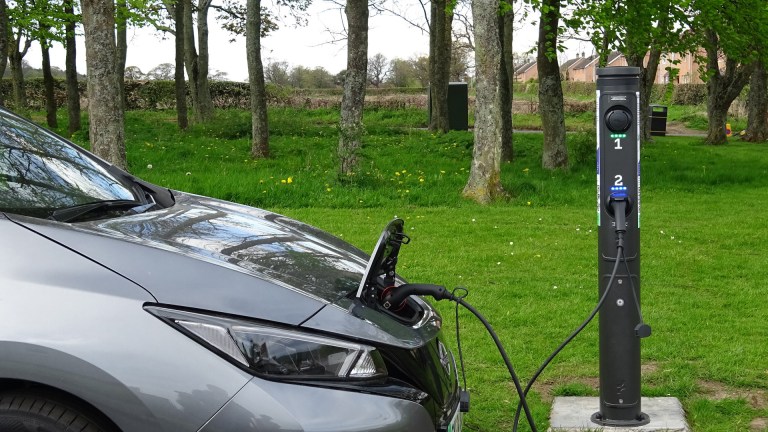
BT Group’s startup incubation arm, Etc., has upcycled a now obsolete BT street cabinet in East Lothian, Scotland, into an electric vehicle (EV) charging point.  

This is the first installation as part of a wider initiative aiming to explore the feasibility of using BT Group’s existing street cabinets for EV charging, helping to address the country’s shortage of vehicle charging infrastructure. 

The charger in East Lothian has been deployed as part of an initial pilot scheme allowing residents to use the charger for free until the end of the month.  

The pilot program is set to expand West Yorkshire in the near future, with plans to ultimately test 600 sites across the UK. 

EV drivers can access the charging point via an app, which allows drivers to find available charging points, monitor charging sessions, and view charging history. 

In Scotland specifically, there are only 5,052 EV chargers, an amount which, according to BT, is unable to meet the current demand. The repurposing of street cabinets could provide up to 4,800 additional chargers in Scotland, nearly doubling the available infrastructure.  

Consumer adoption of EVs is that being greatly hindered by this lack of charging infrastructure, with BT noting that 78% of petrol and diesel car drivers see not being able to easily charge an EV as a barrier to purchase.  

The UK government aims to increase EV charging points in the UK from 53,000 to 300,000 by 2030, a plan they say will cost the country £1.6 billion. In 2022, when this aim was announced, this tied in with the government’s decision to ban the sale of internal combustion engine vehicles by 2030, although this has now been pushed back five years. 

“It’s critical that we start looking at existing infrastructure to drive innovation at speed,” said Tom Guy, Managing Director at Etc. in a press release.  

“These trials present a unique opportunity to tap into existing assets to drive the important transition to electrification in the UK, and we’re proud to be working with local councils in East Lothian and more widely across the UK at this critical stage to play our part,” he continued. 

Join us at this year’s Connected Germany event, 5-6 November in Munich. Get tickets here!

Also in the news:
Transpacific Honomoana cable to be extended to New Zealand
SES to buy Intelsat for $3.1bn
Generation Hack: Breaking the telecom innovation age code 

Telxius opens Dominican Republic to Puerto Rico cable route

Keep up-to-date with all the latest news, articles, event and product updates posted on Developing Telecoms.
Subscribe to our FREE weekly email newsletters for the latest telecom info in developing and emerging markets globally.

Sending occasional e-mail from 3rd parties about industry white papers, online and live events relevant to subscribers helps us fund this website and free weekly newsletter. We never sell your personal data. Click here to view our privacy policy.