TFL announces full 4G coverage on London’s Elizabeth Line 


News 

The milestone means passengers traveling through central London stations can enjoy reliable 4G coverage on their journeys 

Transport for London (TFL) and neutral host provider Boldyn Networks have completed the rollout of high-speed mobile coverage across the entire Elizabeth Line. This marks another step in TfL’s ongoing efforts to improve connectivity across London’s transport system. 

All UK mobile network operators — Three UK, EE, Vodafone, and Virgin Media O2 — are participating in the project, allowing all UK mobile customers access to connectivity on the Tube 

Back in May, TfL and Boldyn announced that 4G coverage had been deployed at all stations on the Elizabeth Line; today’s announcement means that the coverage is now delivered inside the tunnels too.  

The work extends coverage to tunnels serving central London stations such as Whitechapel, Stratford, Canary Wharf, Custom House, and Woolwich.  

“This is yet another step towards ensuring Londoners and visitors can stay connected on our transport network. It means customers can access the latest travel information and keep in touch with colleagues, friends, and family throughout their journey on the Elizabeth line,” said Mayor of London Sadiq Khan in a press release. 

For commuters, this means the ability to stay online throughout their journey. The expanded network also benefits TfL staff, improving communications and bolstering safety by supporting the Emergency Services Network (ESN). Once fully operational, the ESN will provide frontline responders with access to real-time data and critical information during emergencies. 

The Elizabeth Line milestone is part of a broader effort from TFL and Boldyn Networks to bring mobile coverage to the entire London Underground, Docklands Light Railway (DLR), and London Overground Windrush line. 

Progression includes: 

– Northern Line: Coverage expansion towards Morden and between King’s Cross St Pancras and Moorgate, expected by early next year. 

– Bakerloo Line: Tunnel sections between Piccadilly Circus and Embankment will go live in the coming weeks, with additional stations to follow. 

– Piccadilly and Victoria Lines: Further connectivity is planned for these lines in the coming months. 

Keep up to date with the latest international telecoms news by subscribing to the Total Telecom daily newsletter 

Also in the news:
Vodafone to sell off last remnant of Indus Towers stake
China Mobile makes $1bn offer for HKBN
EE airdrops mobile tower into Isle of Skye


Safaricom targets SMEs with revamped 5G business offering

Kenyan telco Safaricom has reportedly revamped its “5G for Businesses” offering with new packages aimed specifically at small and medium enterprises (SMEs) that promise to support their digital transformation plans with faster and more reliable connectivity.

According to various media reports, the upgraded service offers speeds five times higher than previous offerings, which Safaricom says will provide not only better connectivity, bus also a better customer experience, and an improvement in overall business operations.

Safaricom CEO Peter Ndegwa said on Friday that the new 5G for Business offering will give SMEs more affordable access to enterprise-grade internet performance.

“This will empower them to enhance productivity, improve customer interactions, and scale operations efficiently in today’s increasingly connected marketplace,” Ndegwa said in a statement.

To sweeten the deal in terms of cost, Safaricom is also offering a 25% discount for all 5G plans for SMEs that sign up between now and the end of this month.

According to a June 2024 report from Safaricom and Financial Sector Deepening Kenya (FSD Kenya), there are around 7.4 million micro, small and medium enterprises (MSMEs) in Kenya, although only 21% are licenced. Most of the unlicenced MSMEs are micro-sized businesses operating at the household level.

MSMEs also account for around 98% of all business, create 30% of jobs annually and contribute 40% to the country’s GDP, the Safaricom/FSD Kenya report said.

In October, Safaricom established a partnership with Cloudflare to reduce the costs of integrated cybersecurity services for MSMEs.

Safaricom launched 5G services in Kenya in October 2022. In August 2024, the telco revealed its 5G network was available in all 47 counties in the country, although it only covered 14% of the population.

MORE ARTICLES YOU MAY BE INTERESTED IN…

US-China trade war flares as both sides introduce new chip tech restrictions


News

New US export controls on semiconductor technology this week have been met immediately by retaliatory measures from China

This week has seen the US Department of Commerce’s Bureau of Industry and Security (BIS) ramp up controls on its tech exports to China, particularly those related to the manufacture of semiconductors.

The additional restrictions cover 24 types of semiconductor manufacturing equipment and three types of software tools for developing or producing semiconductors. It also includes High-Bandwidth Memory (HBM), a computer memory interface at the heart of AI chip technology.

In addition to these restrictions, the update added 140 companies to the US’s infamous Entity List, 136 of which were Chinese. US companies looking to sell restricted items to entities designated on this list are required to acquire a specialised export licence from BIS, which is seldom granted. Companies to the list in this most recent batch include semiconductor fabs, tool companies, and investment companies that the US claims have links to the Chinese government.

These new measures, BIS says, are designed to slow China’s ability to “indigenise the production of advanced technologies” that may pose a threat to US national security. In particular, this includes the creation of advanced-node integrated circuits, which are used for advanced AI and military applications.

“They’re the strongest controls ever enacted by the US to degrade the PRC’s ability to make the most advanced chips that they’re using in their military modernization,” said Secretary of Commerce Gina Raimondo.

China has responded quickly to the new sanctions, banning shipments to the US of several ‘dual-use’ metals used to make semiconductors and military applications. This includes export bans on gallium, germanium, antimony and superhard materials, with stricter rules also to be put in place for graphite products.

“The US preaches one thing while practicing another, excessively broadening the concept of national security, abusing export control measures, and engaging in unilateral bullying actions. China firmly opposes such actions,” said China’s Commerce Ministry in a statement.

These retaliatory sanctions are effective immediately.

This trade dispute represents the latest sparks in the ever-increasing geopolitical clash for technology dominance between the US and China. Both nations are currently supporting multibillion-dollar state subsidy programmes to bolster domestic semiconductor production, aiming to reduce their reliance on the global supply chain.

In other chip-related news, this week saw the shock retirement of Intel CEO Patrick Gelsinger.

Intel has been struggling to remain competitive in recent years against the likes of TSMC and AMD, despite substantial internal restructuring and the laying off of 15,000 staff. In its most recent quarterly report, the company reported losses of $1.6 billion.

The US telecoms industry is changing rapidly. Join the heart of the discussion at Connected America 2025 live in Dallas, Texas!

Also in the news:
Deutsche Telekom replaces Huawei kit in new Nokia deal
BT secures £1.29bn contract for UK emergency services network
UK govt looks to satellite to solve rural connectivity woes 

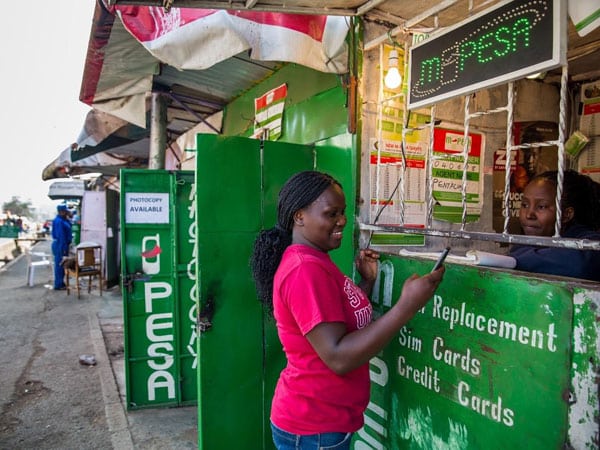
M-Pesa Africa and Thunes to enable M-Pesa payments in China

Keep up-to-date with all the latest news, articles, event and product updates posted on Developing Telecoms.
Subscribe to our FREE weekly email newsletters for the latest telecom info in developing and emerging markets globally.

Sending occasional e-mail from 3rd parties about industry white papers, online and live events relevant to subscribers helps us fund this website and free weekly newsletter. We never sell your personal data. Click here to view our privacy policy.

Telefónica’s sale of Peruvian fibre network to KKR collapses 


News 

The formation of the joint venture had been under discussion for over a year 

Telefónica’s proposed sale of its Peruvian fibre optic network to private equity firm KKR and Chilean telecom operator Entel has collapsed, representing a major setback in the Spanish telecom giant’s efforts to streamline operations and reduce debt.  

The deal, announced in July last year, would have seen KKR and Entel acquire a 54% and 10% stake in the network, respectively, valuing the business at approximately €550 million, including debt, according to reports. The newly created joint venture, dubbed On Net Fibra de Peru, would become Peru’s first open first independent open access wholesale fiber optic network, with KKR aiming to more than double the network’s coverage to 5.2 million by the end of 2026. 

The deal was cleared by the Peruvian competition regulator in September, leaving the way seemingly clear for the deal to go ahead. 

Last week, however, Entel disclosed the breakdown of negotiations in a Peruvian regulatory filing, citing unfulfilled closing conditions.  

“Pangea has communicated that, due to the failure to comply with certain closing conditions stipulated in the SSA (in reference to the agreement), related to a parallel transaction between KKR and Telefónica Hispam regarding Pangea that will not materialize, Telefónica Hispam has expressed its intention to formally document the termination of the SSA. To date, the parties to the SSA are in discussions regarding the terms and conditions of said termination,” explained Entel in a statement. 

Telefonica had planned to use the sale proceeds to cut its debt by €200 million, aligning with its broader strategy to divest non-core assets and focus on key markets like Spain, Brazil, and Germany. 

Telefónica has been actively selling off assets in recent years, including its tower businesses and shares in fibre ventures across Europe and Latin America. These moves are aimed at tackling its €26 billion debt burden and free up capital to investment in 5G and digital infrastructure in key markets. 

KKR has a history of investments in critical telecom infrastructure – including most recently in Telecom Italia – has partnered with Telefónica in other fibre-related ventures, including acquiring its Chilean wholesale fibre optic network in 2021. 

Keep up to date with the latest international telecoms news by subscribing to the Total Telecom daily newsletter 

Also in the news:

Vodacom launches first 4G base station in Thathe Vondo

South African telco Vodacom says it has launched the first 4G base station in the village of Thathe Vondo in Thohoyandou, Thulamela Municipality in Limpopo province as part of its effort to expand rural coverage in the country.

The new 4G site, located in Thathe Vondo’s Tshivhase Nature Reserve, will serve thousands of households in the area that up to now had no mobile coverage at all, Vodacom said in a release issued Thursday.

Vodacom said the site in Thathe Vondo is part of the telco’s Rural Coverage Network Expansion Programme, which aims to expand network coverage for people who live in deep rural areas of South Africa.

Vodacom said it has invested over R750 million in network rollout and capacity upgrades in the past two years across Limpopo province. In the past financial year alone, Vodacom Limpopo has deployed 14 new base station sites in Thohoyandou.

Earlier this month, Vodacom Limpopo said it had activated ten new base station sites, including two 5G and eight 4G LTE sites, connecting people in Malamulela, Polokwane, Lebowakgomo, Burgersfort and Hoedspruit.

Omphile Mosegedi, executive head of operations for Vodacom Limpopo, said the base station in Thathe Vondo will empower communities there to gain access to digital services and the economic benefits therein.

“As a result of this deployment, school-going kids can now access the internet for the first time and have the option of using online learning platforms, whilst those who are actively looking for jobs can now use their smartphones to access jobs portals that are zero-rated for Vodacom subscribers,” he said in a statement. “Crucially, community members who previously had to travel long distances to make calls and do banking will be doing this on their devices from the comfort of their homes without incurring and save on travelling costs.”

MORE ARTICLES YOU MAY BE INTERESTED IN…

Isocel Telecom plans fibre expansion to connect half a million homes

Benin-based broadband provider Isocel Telecom has announced ambitious plans to expand its network to reach up to half a million households, emphasising that fibre is still essential to fill the gaps that mobile connectivity cannot yet address.

Speaking to Developing Telecoms at the Africa Tech Festival in Cape Town, Isocel Telecom’s Founder and CEO, Robert Aouad (pictured), revealed that the company has already connected 100,000 households with 80,000 serviceable plugs and is now entering the second phase of its deployment. This next phase will increase the number of active plugs from 20,000 to 80,000, supported by €20 million in funding. The expansion aims to improve service quality and enable the launch of new offerings, such as on-demand Internet Protocol Television (IPTV).

Aouad explained that the first phase of Isocel’s rollout focused on densely populated urban areas, resulting in the provider now serving between 8,000 and 10,000 subscribers. The company also offers Fixed Wireless Access (FWA) services for areas not yet covered by its fibre network. FWA accounts for 10% of Isocel’s subscribers, catering to customers in regions without broadband infrastructure.

Reflecting on the journey, Aouad highlighted a significant reduction in the cost of internet access, which now stands at $25 per month—down from hundreds of dollars a decade ago. A key factor in achieving this affordability, he noted, was Isocel’s access to international bandwidth through its participation in cable consortiums, including the Africa Coast to Europe (ACE) submarine cable system. “That helped a lot because we’re not buying IP on the market. Also, because we own the network, we can reduce costs, and our return-on-investment model focuses on the mid- to long-term rather than the short term,” Aouad explained.

The CEO also echoed calls from telecom executives across Africa for lower taxes on the sector, arguing that such reductions are critical to financing costly network expansions. High tariffs imposed by governments seeking to fund public services have posed challenges to operators, he added.

MORE ARTICLES YOU MAY BE INTERESTED IN…