ZOI and Zong partner to boost Middle East and Pakistan interconnect

Zain Omantel International (ZOI), an international carrier that delivers a unified, AI-ready network across the Middle East and beyond, and Zong, a leading mobile network operator in Pakistan, have partnered to expand voice interconnect and roaming services between the Middle East and Pakistan.

The partnership builds on an existing interconnect relationship where ZOI carries Zain Group and Omantel retail Pakistan traffic for Zong. The two companies say they will grow their cooperation across voice and mobility services and move towards consolidating roaming under a single group framework to simplify operations and strengthen commercial alignment across the corridor.

As the partners explain, Pakistan is one of South Asia’s largest telecommunications markets, with more than 200 million mobile subscribers nationwide. 

Zong serves over 53 million subscribers and operates one of Pakistan’s most extensive 4G networks. Its parent company, China Mobile, is the world’s largest mobile operator by subscriber base, operating one of the industry’s most expansive international network infrastructures.

ZOI is an international carrier that provides unified, AI-ready digital infrastructure in MENA and across the world. It provides international voice, roaming, IP and capacity services to carriers, hyperscalers, mobile network operators, neoscalers and a range of network-centric businesses.

ZOI carries more than 10 billion international voice minutes across 200 roaming countries. It has the number one ranked ASN IP network in the Middle East and investments in more than 22 subsea cable systems globally.

As Sohail Qadir, Chief Executive Officer at ZOI points out: “Pakistan is a strategically important market for the Gulf region. By aligning with Zong and the wider China Mobile ecosystem, we are strengthening service quality, simplifying governance and creating a scalable model for voice and mobility services across one of the region’s highest-volume routes.” 

Traffic between the Middle East and Pakistan continues to grow, driven by retail demand and cross-border mobility. ZOI and Zong say they will standardise how they manage voice and roaming traffic across the Middle East–Pakistan route. They aim to simplify interconnect processes, align roaming governance, and improve service stability as volumes continue to grow.

O2 deploys Europe’s first pre-assembled mobile mast in Kent

Press Release

O2 installed Europe’s first pre-assembled mobile site in Sandwich, Kent, introducing an innovative new approach to building mobile infrastructure that significantly speeds up deployment and minimises issues on site, meaning reliable connectivity can be delivered to customers more quickly and efficiently.

Traditionally, engineers installing antennas, radios and cabling would have to connect and configure hundreds of connections on site, often working at height and exposed to the elements. Using technology developed by Vecta Labs, these components are now fully assembled and tested before they ever reach the tower, dramatically simplifying installation while improving quality control.

Each unit is pre-assembled and validated in a controlled testing environment using specialist equipment, including anechoic chambers that allow engineers to precisely measure radio performance. They are then subjected to simulated wind conditions to replicate real-world stresses before they leave the factory, ensuring every mast meets the same exacting standard on arrival.

Passive radio frequency components such as antennas, cables and connectors are also tested for Passive Intermodulation (PIM), a common source of interference that can degrade network performance. By identifying and resolving these issues before deployment, O2 can ensure consistent mobile network performance from the moment a site goes live.

The approach also dramatically simplifies installation, reducing the number of connections engineers must complete on site from around 100 cables to just six, helping save time and minimising the risk of errors. The first European deployment was completed in Sandwich, Kent, where the pre-assembled equipment was installed in four hours, reducing time on site by up to 75 per cent compared with traditional deployments.

For O2 customers, this means new and upgraded sites can be installed faster with less network downtime, helping to improve coverage and boost capacity so they can stream, browse and stay connected on the move. O2 plans to go deploy 100 of these pre-assembled sites across the UK this year as part of its £700m Mobile Transformation Plan.

Steven Verigotta, Director of Mobile Delivery at O2, said: “Moving one of the most complex parts of building a mobile mast into the factory is a real step forward for our network. It allows us to install sites faster, improve quality control and ensure customers benefit from stronger, more reliable connectivity from the moment the site goes live. This is just one of the improvements we’re making as part of our £700m Mobile Transformation Plan which is helping to create the biggest and most reliable network in the UK.”

John Bonello, Director and Founding Member at Vecta Labs, said: “We’re proud to see Europe’s first Vecta Labs deployment delivered with O2. This approach combines pre-assembly, precision RF testing and simplified installation to help operators deploy infrastructure faster while maintaining the highest standards of performance.”

O2 was recently recognised as the most improved mobile network across Europe in Umlaut Connect’s Mobile Network Test, an independent and comprehensive benchmarking report. It was also awarded Best Mobile Network Coverage at the Uswitch Telecoms Awards for the second year in a row, which recognised the scale, reach and reliability of O2’s mobile network.

Keep up to date with all the latest telecoms news with the Total Telecom newsletter

Also in the news
World Communication Award Winners 2025
Ofcom clears the way for satellite-to-smartphone services
LG Uplus’s AI voice call app glitch leaks user data

Sama X launches Starlink in Kuwait following regulatory approval

Kuwaiti conglomerate Alghanim Industries announced on Tuesday that its tech venture Sama X is officially reselling Starlink’s LEO satellite broadband services in Kuwait, a day after the country’s regulator granted Starlink an operating licence.

Sama X – which is authorized by SpaceX to resell Starlink products globally – said it will offer a range of subscription plans with download speeds exceeding 300 Mbps, along with delivery, professional installation, and local support, including a 24/7 bilingual call centre.

Alghanim Industries executive chairman Kutayba Y. Alghanim said the launch of Starlink in Kuwait is a key step in strengthening the country’s digital infrastructure.

« At a time when reliable connectivity has become essential for business continuity and the effective functioning of key sectors, this technology provides advanced connectivity that helps organizations, governments, and communities stay connected wherever they operate — from remote worksites to critical sectors such as healthcare and education,” he said in a statement.

Sama X’s Starlink launch follows an announcement on Monday by Kuwait’s Communications and Information Technology Regulatory Authority (CITRA) that it had granted Starlink a license to provide satellite internet services in the country.

CITRA said in a statement to the Kuwait News Agency that Starlink met all regulatory and technical requirements, ensuring compliance with national telecoms laws and frequency spectrum regulations.

Sama X – which is headquartered in Dubai – was established by Alghanim Industries last year as part of the group’s broader expansion into technology and advanced connectivity solutions across the region. The company offers tailored connectivity solutions for enterprises, small businesses, and professional consumers.

Comcast to test Edge AI apps using NVIDIA GPUs

Press Release

Comcast today announced a groundbreaking initiative to bring AI processing, using NVIDIA GPUs, closer to customers than ever before to accelerate the development of next-generation AI applications across America. The first-of-its-kind collaboration will test the performance of AI workloads running directly at the edge of Comcast’s network – in regional facilities closer to where customers live and work.
The field trial takes advantage of Comcast’s nationwide, deeply distributed architecture that reaches 65 million homes and businesses and is purpose-built for low-latency, high-bandwidth performance. The goal: show how running AI at the network edge can unlock faster, smarter, more responsive experiences. For consumers and businesses, that translates to quicker apps, more relevant recommendations, smoother gaming, and AI-powered tools that respond instantly.
Comcast’s Edge Architecture: Built for AI
Comcast’s network is designed to put more computing power physically closer to customers, creating one of the largest and most capable platforms in the U.S. for delivering real-time AI inference with significantly reduced latency, power consumption, and cost. With advanced DOCSIS 4.0 FDX nodes, smart amplifiers, and intelligent gateways across its footprint, Comcast can support real-time AI inference at scale – something traditional centralized, fiber-only, or wireless networks cannot match.
As more AI workloads move from distant data centers to local edge locations, Comcast’s architecture positions the company as a key contributor to the emerging AI Grid – a nationwide foundation of distributed compute resources powering the next generation of AI-driven services accelerated by NVIDIA.
Delivering the Next Generation of AI at the Network Edge
Comcast will initially focus on three use cases designed to showcase the benefits of running AI workloads at the network’s edge:
  • Personalized Advertising Agent  An advanced ad-delivery engine powered by Decart real-time AI video models. Decart’s technology is capable of customizing video advertisements down to the household level using attributes such as language, content preferences, household size, or other non-sensitive demographic categories – enabling hyper-relevant experiences for viewers while improving efficiency for advertisers.
  • Small Business Concierge Agent  Leveraging Personal AI’s small language model (SLM) and memory platform deployed on HPE ProLiant servers to deliver an AI-powered “front desk” service capable of greeting customers, managing appointments, answering questions, and supporting day-today-day operations for small businesses.
  • Reducing Latency for Gaming – Delivering ultra-low latency streaming for online gaming, the AI Grid brings GPU resources physically closer to players. This can dramatically improve responsiveness and overall gameplay quality, building on the impact of the low-latency technology Comcast rolled out for NVIDIA GeForce NOW and other applications last year.
Initial testing of these applications demonstrated strong performance in the lab and the field trials now will validate latency improvements, power and cost efficiencies, resiliency, scalability across Comcast’s footprint, and user experience benefits in a live environment.
“The industry is shifting towards a more distributed AI infrastructure and Comcast operates a network that supports it today,” said Elad Nafshi, Chief Network Officer, Comcast. “NVIDIA AI Grid vision requires intelligent infrastructure that reaches all the way to the customer’s doorstep. By bringing NVIDIA GPUs directly into our edge cloud, we can explore what becomes possible when AI inference happens only milliseconds from end users.”
“Distributed AI Grid is the next big opportunity for the telecommunications industry, and Comcast’s nationwide, deeply distributed network is a perfect match for building it,” said Ronnie Vasishta, SVP, AI and Telecoms, NVIDIA. “By bringing intelligent AI inference to the network edge, Comcast can unlock inherent cost efficiencies, while delivering deterministic, low‑latency experiences for customers at massively concurrent scale. This collaboration is powering the next era of hyper personalized experiences that run just milliseconds from users.”
The companies will also explore future opportunities for AI-enhanced advertising, new small-business solutions, premium low-latency gaming tiers, and potential third-party edge compute services.

War in Iran sees 2Africa’s Pearls extension paused

News

Work on the Middle Eastern portion of the 2Africa Pearls subsea cable has been suspended after Alcatel Submarine Networks (ASN) invoked force majeure, saying continuing operations in the Persian Gulf is unsafe amid the widening US–Israel–Iran conflict.

According to Bloomberg , ASN informed customers the cable‑laying vessel is currently stranded in Dammam, Saudi Arabia, and deployment through the Strait of Hormuz has been paused.

The paused segment was intended to link Oman, the United Arab Emirates, Qatar, Bahrain, Kuwait, and Iraq by routing through the Persian Gulf, a corridor that has become increasingly exposed as Iranian forces and other actors have targeted shipping in the area.

Industry analysts have told Bloomberg that several other projects planned to transit the Gulf, including the SEA‑ME‑WE 6 consortium effort and Ooredoo’s Fibre In Gulf initiative, have similarly been put on hold.

While much of the 2Africa Pearls infrastructure had already been laid, several landing stations remained unconnected when operations stopped, delaying an expectation that the extension would enter service this year. The broader 2Africa programme , the continent‑spanning system intended to bolster capacity between Africa, Europe and Asia , completed its core loop earlier this year but continues to see staggered rollouts for regional branches.

Beyond the Persian Gulf, the Red Sea corridor has also proved fragile. Work on the 2Africa route through the Red Sea was previously paused in late 2025 amid a mix of permit hurdles and attacks on vessels by Iran‑aligned Houthi forces. The disruption also impacted the Google‑backed Blue‑Raman cable. Those incidents have underscored how geopolitical violence along key chokepoints can ripple through the subsea industry.

Consortium membership and landing partnerships underline the scale and commercial importance of the Pearls extension. Backers include China Mobile International, Meta, Bayobab, Orange, center3, Telecom Egypt, Vodafone, and WIOCC. Regional landing partners announced earlier, such as Bharti Airtel in India and local operators in the UAE and Oman, were positioned to take significant capacity on the system: Bharti Airtel’s role is expected to bring more than 100Tbps of international capacity to India.

Ultimately, the halt continues to illustrate the vulnerability of undersea infrastructure to geopolitical shocks and creates immediate operational and commercial questions for consortium members and customers awaiting connectivity. The interruption may push consortia members to reassess routing strategies, insurance arrangements, and contingency plans for alternative landings to preserve traffic resilience across Europe, the Middle East, Africa and South Asia.

Keep up to date with all the latest telecoms news with the Total Telecom newsletter

Also in the news
World Communication Award Winners 2025
Ofcom clears the way for satellite-to-smartphone services
LG Uplus’s AI voice call app glitch leaks user data

Orange targets 75 million users for Max It super app as Africa growth accelerates

Orange Group Middle East and Africa CEO Yasser Shaker said he is aiming to triple the number of users of the Max It super app to 75 million as part of a broader strategy to sustain growth across the operator’s African footprint.

Speaking at Mobile World Congress Barcelona, Shaker said the app currently has around 25 million users and integrates services including mobile finance, streaming, gaming and telecom offerings.

Shaker said the push to expand Max It forms part of the wider group’s “Trust the Future” strategy, which identifies innovation as a key pillar for growth.

The company aims to reach 75 million users by the end of 2028, a goal Shaker described as deliberately ambitious to drive internal momentum.

“A super app means people can go there for everything – marketplace, TV streaming, gaming and payments,” he said, adding that Orange Money currently acts as the main payment platform within the app.

Growth beyond connectivity

Shaker said Orange’s Middle East and Africa business is expanding across multiple segments rather than relying solely on traditional connectivity services.

Data and connectivity remain the core growth engine, with revenue in this segment increasing by around 18%. Mobile financial services are also growing rapidly, with Orange Money recording roughly 18% growth over the past year.

The platform processes around €20 billion in transfers every month and has a customer base of approximately 47 million users, highlighting the increasing role of financial services within telecom ecosystems.

Enterprise services are also gaining traction. Although still relatively small, Orange’s ICT business is expanding quickly, while the wider B2B segment is growing by about 10%.

Overall, the Middle East and Africa division delivered its strongest performance yet in 2025, with revenue rising more than 12% and EBITDA increasing by nearly 14%, bringing margins close to 40%.

Africa’s demographic advantage

Shaker emphasised that Africa’s demographic and economic dynamics continue to make it one of the most promising regions for telecom growth.

The continent has a population exceeding 1.5 billion people and one of the youngest demographics globally, with an average age of around 20. Combined with steady population growth and a mobile-first culture, this creates strong demand for digital services.

Orange currently operates in 18 markets across Africa and the Middle East, with a deliberately diversified footprint. No single country accounts for more than 10% of the regional business, a structure Shaker said helps mitigate geopolitical and currency risks.

AI and digital skills

Artificial intelligence is playing an increasing role in the operator’s strategy, particularly in network management and customer analytics. In Africa’s largely prepaid markets, operators must analyse customer behaviour in real time as users can easily switch between providers.

AI is also helping accelerate the development of platforms such as Max It, enabling faster software design and updates.

Shaker added that localisation will be important for digital services in Africa due to the continent’s linguistic diversity and varying literacy levels. The company is experimenting with AI tools that support local languages to improve accessibility.

Alongside commercial initiatives, Orange is investing in digital education through its network of Orange Digital Centres, which have trained more than 1.3 million people. The company is also partnering with universities and technology firms to deliver free training programmes.

5G and connectivity expansion

Orange is continuing to expand 5G coverage across the region, with deployments underway in several markets including Egypt, Morocco, Botswana, Senegal and Tunisia.

In many cases, the technology is being used to support fixed wireless access services, providing broadband connectivity in areas where fibre networks are limited.

Shaker said fibre remains focused on dense urban areas, while 5G offers a more practical solution for expanding broadband coverage in less populated regions.

The operator competes with major regional players including MTN Group, Airtel Africa and Vodacom across many markets.

Despite growing competition from fintech companies and neobanks, Shaker said Orange remains confident in its position provided that all players operate under the same regulatory conditions.

Indosat and Safaricom pool AI and fintech chops for better CX

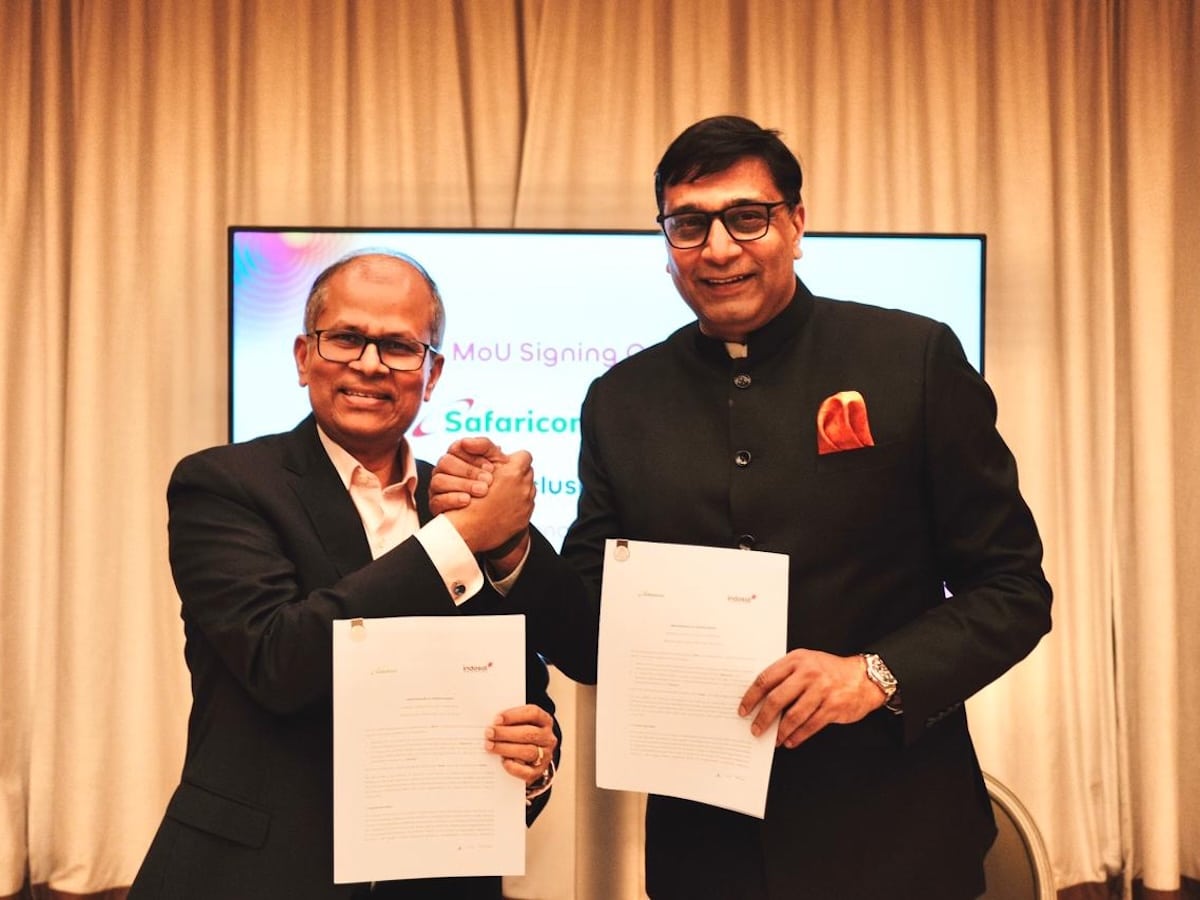
Indosat Ooredoo Hutchison and Safaricom revealed on Friday they have signed an agreement to combine their collective experience in AI and fintech to co-develop better customer experiences within their respective digital ecosystems.

The partnership deal will see Indosat and Safaricom develop practical use cases that leverage AI-driven decision-making to enable proactive and hyper-personalized customer engagement.

That includes things like predictive care that spots and resolves network issues before they impact customers, relevant product recommendations for prepaid users, and conversational AI experiences for customer support.

Meanwhile, Indosat will tap into Safaricom’s deep operational expertise in mobile financial services with its M-Pesa service to strengthen resilience, security and personalization of digital financial services.

That aspect will focus on areas like AI-powered fraud and risk management, improving payment reliability during peak moments, expanding merchant and ecosystem capabilities, and enabling more tailored financial offerings based on customer behaviour.

“By combining Indosat’s AI-Native ambitions with Safaricom’s proven fintech and ecosystem expertise, we are focused on delivering innovations that customers can genuinely feel from smarter networks and safer digital transactions to more personal and intuitive experiences,” said Indosat’s president director and CEO Vikram Sinha.

“From smarter networks and safer transactions to more intuitive digital experiences, this collaboration goes beyond innovation; it is about shaping inclusive digital economies where individuals, businesses, and communities can thrive,” said Safaricom CEO Peter Ndegwa.

Indosat and Safaricom said they will also explore smart-capex models and AI-led insights to sharpen how both telcos plan and invest in their networks so that network investments are more precise, demand-driven and impactful – particularly in high-growth and underserved areas.

The partnership agreement also includes a skillsets component, with both telcos committing to establish joint initiatives that focus on “building AI-fluent executives, developing business–AI translator roles, and enabling cross-organizational learning journeys and short-term secondments to accelerate capability transfer and institutional learning.”