Beyond Unicast: Rearchitecting Connectivity for the Frontier Edge

Beyond Unicast: Rearchitecting Connectivity for the Frontier Edge

This Industry Viewpoint was authored by Apoorva Jain, Chief Product Officer at EdgeBeam Wireless

The telecommunications industry has relied on a relatively stable definition of “the Edge” for decades. We’ve treated it as a manageable extension of the cloud or the perimeter of a corporate network, essentially a gateway where a router connects to a local line or a fiber hookup. However, this definition is quickly failing as we move deeper into 2026. We’re no longer managing the “Edge” — we’ve entered the era of the “Frontier Edge.” … [visit site to read more]

Turkcell adds 10 Gbps package to fibre broadband service

Turkcell announced that it has added a 10 Gbps option for its Superonline fibre broadband service, which it says makes it the first such broadband offer in Turkey.

As of Wednesday, Superonline UltraFiber now offer home broadband connectivity packages of 2 Gbps, 5 Gbps and 10 Gbps.

“We take the 1000 Mbps experience, which was previously the highest speed in home internet, to the next level,” said Turkcell GM Dr. Ali Taha Koç in a statement. “For the first time in Turkey, we offer a much stronger and more efficient connection experience by bringing speeds of up to 10 Gbps together with homes.”

The service is supported by UltraFiber’s Wi-Fi 7 Premium modem, launched by Turkcell last year, which supports upload speeds of up to 1 Gbps.

Turkcell said its UltraFiber service combined with Wi-Fi 7 offers a powerful connection infrastructure in cloud-based workflows, live broadcasts and home environments where a large number of devices are connected to the Internet at the same time.

Earlier this month, Turkcell said in its full-year financial results for 2025 that its gained 119,000 net fibre broadband subscribers last year, bringing its total fixed broadband subscriber base to 2.6 million. The operator also said it added 405,000 new households during the year, increasing its total fibre coverage to 6.3 million homes.

Turkcell also reported a fibre take-up ratio of 42%, while its residential fibre ARPU grew 10.3% year on year.

Bridging the Digital Divide: 5G Drives Rural Revitalization in Guangxi, China

Press Release

[Chongzuo, China, March 26, 2026] In the karst terrain of Guangxi Zhuang Autonomous Region, Buhua Village, once a remote and economically underdeveloped community, has been transformed into a popular tourist attraction thanks to a 5G information superhighway co-built by China Mobile and Huawei. This digital leap has established the village as a model of rural revitalization, generating over CNY500,000 in annual collective village income and boosting per capita annual earnings by CNY18,000. 

Chongzuo is characterized by impressive karst landforms with peak clusters and peak forests. This breathtaking terrain presents huge challenges for communications network buildout. To overcome these geographic barriers, China Mobile and Huawei have collaborated on technological innovations in a bid to achieve comprehensive network coverage. Today, all administrative villages in Chongzuo have access to 5G networks, while 99% of its natural villages have 4G coverage and 94% have 5G coverage. 

Buhua Village is within the jurisdiction of Chongzuo City. The village upgraded its networks from 4G to 5G as early as 2021, offering residents digital services on par with those seen in major cities. The deployment of advanced communications networks has catalyzed the growth of Buhua’s distinctive local industries. 

In Xinhe Town, where the village is situated, a digital e-commerce ecosystem has been established, featuring 65 product stores on platforms like JD.com and Douyin, which are collectively owned by the village. Furthermore, a live-streaming incubation base has been established, nurturing 27 local live streamers. These stores secure over CNY300,000 in revenue each year by selling local specialties like Buhua brown sugar. This is a handcrafted product that is recognized as intangible cultural heritage, with a 150% price premium over normal brown sugar. It is sold to tier-1 cities in China, like Beijing, Shanghai, and Guangzhou, and is even exported overseas, including to Japan and South Korea. 

Digital technology is also driving the upgrade of the local tourism industry. China Mobile has established an intelligent ticketing system at the Heishui River, which is Buhua Village’s most popular scenic spot where activities like rafting, boat tours, and paddleboarding are available for tourists. This system has reduced the average time for tourists to purchase tickets from 20 minutes to just 3 minutes, with online purchases now accounting for 30% of the total. Accommodation can also be booked through the system, which has increased the booking rate of local homestays by 30%. 

Digitalization has further expanded to the ecological protection field. A safety monitoring and IT system project for modern irrigation engineering along the Heishui River has been launched, with investment totaling CNY100 million. Supported by the Bianjiang Zhizhou open AI platform, the digital monitoring system is set to cover 13 towns across four counties/districts in Chongzuo. Once up and running, it will enable the integrated, real-time monitoring of water quality and other ecological parameters of the Heishui River, and intelligently issue early warnings to guarantee safe water irrigation across 60,000 hectares of farmland in the river basin. 

Digitalization has helped Buhua Village make the jump from poverty to prosperity. In 2025, the village’s annual collective economic income (generated from assets, land, or enterprises owned by the village community rather than individuals) exceeded CNY500,000. The average income of every household reached over CNY80,000, three times the average income from traditional sugarcane farming. The annual per capita income of villagers increased by CNY18,000. As a result, an increasing number of young people have chosen to return to the village and develop their careers. 

Zhou Peng, General Manager of China Mobile Guangxi’s Chongzuo Branch, said, “By bridging the digital divide, we are helping remote villages like Buhua develop digital trade alongside traditional agriculture. This is transforming resources that were not fully used in the past due to geographical limitations into strong momentum for economic growth in the digital age.” 

Tian Yongsheng, Deputy General Manager of Huawei Guangxi, noted, “Huawei is supporting China Mobile in building a solid digital foundation for Chongzuo with innovative solutions. We look forward to seeing technology overcome geographical limitations and enable more remote villages to achieve leapfrog development in the 5G and AI era.” 

FCC places foreign made consumer-grade routers on US ban list


News

Consumer-grade routers manufactured in foreign countries are now on the FCC’s list of products considered to be national security threats.

By Brad Randall, Broadband Communities

The Federal Communications Commission (FCC) in the United States has taken a step to heed President Donald Trump’s call to close security gaps in the United States by placing foreign made routers on the FCC’s list of products deemed to pose unacceptable security risks.

As a result of the move, foreign-made consumer grade routers will now be prohibited from receiving FCC authorization, in line with the Secure and Trusted Communications Networks Act.

“Following President Trump’s leadership, the FCC will continue do our part in making sure that U.S. cyberspace, critical infrastructure, and supply chains are safe and secure,” Chairman Brendan Carr said in a statement included with the FCC’s release.

An exemption for routers granted conditional approval by the Department of Defense and the Department of Homeland Security was also included in the FCC’s decision.

Existing routers not impacted by the decision

Meanwhile, the FCC also urged producers of foreign made routers to submit conditional approval applications.

“As outlined below, today’s action does not impact a consumer’s continued use of routers they previously acquired. Nor does it prevent retailers from continuing to sell, import, or market router models approved previously through the FCC’s equipment authorization process,” the FCC’s release stated. “By operation of the FCC’s Covered List rules, the restrictions imposed today apply to new device models.”

The move is being billed as in line with the president’s strategy for national security, announced in 2025.

“The United States must never be dependent on any outside power for core components—from raw materials to parts to finished
products—necessary to the nation’s defense or economy,” the strategy stated.

A full list of companies and products featured on the FCC’s list of products covered under the Secure and Trusted Communications Networks Act can be found online at the FCC’s website.

Get US telecom news in your inbox. Subscribe to the Broadband Communities newsletter!

Veon bets on “AI 1440” future as telcos race beyond connectivity

Veon is making an increasingly bold claim about the future of telecoms: the industry’s next battleground is not networks or even digital services, but intelligence itself.

In an interview with Developing Telecoms, Lasha Tabidze (pictured, left), Chief Digital Operations Officer at Veon, and Ilya Polshakov (pictured, right), Director of New Business Development at Kyivstar, outlined how the group is evolving from a traditional operator into what it calls an “AI-native” service provider – one aiming to be relevant to customers every minute of the day.

From digital telco to “AI 1440”

Veon’s transformation began with its “Digital Operator 1440” strategy – named after the number of minutes in a day – designed to shift the company away from selling connectivity bundles towards embedding itself into customers’ daily lives.

That meant building services across four core verticals: financial services, healthcare, education and entertainment. Crucially, these were not positioned as add-ons, but as standalone businesses with their own value propositions.

The results, according to Tabidze, are already visible. By the third quarter of 2025, Veon’s digital monthly active users surpassed its traditional telecom user base for the first time. The company now counts more than 45 million super app users, alongside tens of millions using its fintech, health and entertainment platforms.

But the group is already moving beyond that phase.

“Now we are shifting from digital services to intelligent services,” Tabidze said. “For us, AI is not artificial – it is augmented intelligence.”

Sovereign AI as telecom infrastructure

At the core of Veon’s next phase is what it calls “AI 1440” – embedding augmented intelligence across its ecosystem while building locally trained large language models (LLMs) in each market.

This is not just a technology play, but a strategic positioning around sovereignty.

Rather than relying solely on global models from players like Google or Meta, Veon is developing proprietary layers trained on local languages, dialects and datasets, often in partnership with governments and institutions.

The rationale is twofold: relevance and trust.

“These models must be trained locally, governed locally and aligned with national priorities,” Tabidze said. “That creates digital confidence.”

Polshakov added that telecom operators are uniquely positioned to deliver this, thanks to their existing infrastructure footprint. Data centres, fibre networks and low-latency environments – traditionally used for connectivity – are becoming critical for AI inference and deployment.

“AI infrastructure is complementary to telecom infrastructure,” he said. “We already have the backbone.”

Super apps, satellite and scale

Veon’s ecosystem approach is also being reinforced by its super app strategy, which aggregates services into a single interface while supporting a wider partner ecosystem.

While super apps have struggled to gain traction in Western markets, Veon sees strong adoption across its footprint in Asia and Eastern Europe, where smartphones are often the primary – and sometimes only – digital access point.

This is being combined with expanded connectivity models, including satellite partnerships such as direct-to-cell initiatives with Starlink.

In Ukraine, Kyivstar has already registered up to five million users on its direct-to-cell service within months of launch, using it to extend coverage and ensure service continuity during outages.

“Even if terrestrial networks are disrupted, customers can still access digital services, payments and emergency tools,” Polshakov said.

Ukraine as a testbed for resilience

Nowhere is Veon’s strategy being tested more intensely than in Ukraine, where Kyivstar continues to operate under wartime conditions.

The operator has invested heavily in energy resilience – deploying thousands of batteries and generators to keep base stations running amid infrastructure attacks – while accelerating its push into non-terrestrial connectivity.

But beyond connectivity, the crisis has reinforced the importance of digital services.

“With only a few hours of electricity per day, people still need access to healthcare, payments and information,” Polshakov said. “This is where the digital ecosystem becomes critical.”

Kyivstar is also expanding into enterprise and government services, including data analytics, agricultural technologies and real-time positioning systems, positioning itself as a broader digital infrastructure provider.

Growth markets, not “challenging” ones

Veon’s geographic footprint – spanning countries such as Pakistan, Bangladesh and Uzbekistan – is often described as complex or high-risk. Tabidze rejects that framing.

“These are not just challenging markets – they are exciting markets,” he said, pointing to their scale, young populations and high levels of digital demand.

In many of these regions, smartphones serve as the primary gateway to the internet, creating an opportunity for telecom operators to play a central role in economic and social development.

This is particularly evident in fintech. Veon’s JazzCash platform in Pakistan now processes transactions equivalent to more than 10% of the country’s GDP, while enabling microcredit for everyday needs – from small business inputs to daily fuel costs.

The next three years: scale and integration

Looking ahead, Veon expects its digital ecosystem to continue growing at over 30% annually, with a goal of at least doubling its user base within two to three years.

But executives emphasise that long-term targets are secondary to immediate execution – particularly in volatile markets like Ukraine.

“We don’t know what will happen in three years,” Polshakov said. “We invest now. We build resilience now.”

For Veon, the direction of travel is clear: telecom operators are no longer just connectivity providers or even digital platforms. They are becoming orchestrators of national-scale digital ecosystems – layered with AI, anchored in local infrastructure, and increasingly intertwined with government and economic development.

If that vision holds, the industry’s future may not be defined by faster networks, but by smarter ones.


‘Innovation has no ZIP code’: Azercell talks AI leadership


Interview 

At MWC 2026, we caught up with George Held, CTIO of Azercell, on how the company’s infrastructure is turning Azerbaijan into a regional digital hub 

“We were able to switch the traffic automatically from one place to another,” he said. “This delivered unprecedented experience to our customers.” 

Speaking to Total Telecom at the WinWin studio, Held explained how Azercell’s infrastructure backbone was a key foundation for the nation’s future growth. 

“In our part of the world, we have a saying: if you want happiness and prosperity, you build a road […] In our world nowadays, it’s building a digital road,” he explained. 

In recent years, Azercell has focused on nationwide fibre deployment, including upgrading to the latest GPON technology. 

“At first, we built just a normal GPON network, and now we’re bringing it to GPON with speeds of 50gbps,” said Held. 

This powerful network, Held said, holds the keys to capitalising on Azerbaijan’s strategic geographic position as a transit corridor linking Asia, Europe, and beyond. 

“The role which we play is just absolutely unbelievable because we are connecting East and West, North and South. And by doing this, we are making life so much better for people in our countries. We’re bringing employment. We’re bringing opportunities. And, at the same time, we’re bringing the global economy together,” he said. 

Embracing the AI era 

Beyond deploying high quality infrastructure itself, Azercell is also implementing AI within network management, with a strong focus on developing autonomous, self-healing networks aligned with TM Forum frameworks. These systems dynamically reroute traffic and optimise performance in real time. 

“With autonomous networks we will be able not only to connect people, but give different experiences, different speeds of connectivity. And some elements like low latency bring absolutely different experiences,” said Held. “We’re putting lots of elements on the network just to make sure that the experience for users is absolutely uninterrupted.” 

Held pointed to major live events as proof points of this technology’s effectiveness, including the Azerbaijan Formula One Grand Prix and a recent Justin Timberlake concert in Baku.  

The same capabilities apply to environmental disruptions, including the harsh weather conditions faced in part of the country’s most mountainous regions. 

“Huge winds, huge amounts of snow, rain — they all impact day to day operations,” said Held. “Self-healing networks address this by optimising traffic, bringing the capacity to the places where it really matters.” 

From network performance to commercial growth 

With a more optimised and resilient AI-powered network, opportunities for revenue growth are myriad.  

“Commercial impact is fully related to the customer experience,” said Held, highlighting the importance of network reliability over pure speeds. “If we provided uninterrupted service, the volume of traffic would really see growth.” 

Low latency is also becoming a key differentiator, particularly for cross-border traffic and AI applications. 

“Latency […] is starting to play a really important role,” he said, noting its importance for emerging enterprise services and emerging use cases. “With low latency, all AI advanced applications and all the automatic processing is done in a much more elegant way.” 

In addition to better customer experience across a raft of new services, AI serving as a leveller, allowing junior engineers to learn more quickly and compete with senior colleagues that have many years more experience. 

“Our young engineers came up with a really cool AI tool where all the documents [about the network] are actually installed into one database and they can use natural language processing to pull any of the documents, and the system gives you a response on the network,” Held explained. “It gives a chance for young kids out of the university to deliver quality of service and compete with somebody who has been doing the job for 20 years.” 

More than this, it gives Azerbaijan an opportunity to compete on a global level. 

“Innovation has no ZIP code,” said Held. “AI for us is not just a gimmick. It’s not something which is invented in Cupertino or Mountain View. It can be invented in Baku. It works in Baku and makes lives better for our people.” 


Digicel Samoa connects MyCash mobile wallets to Ria network

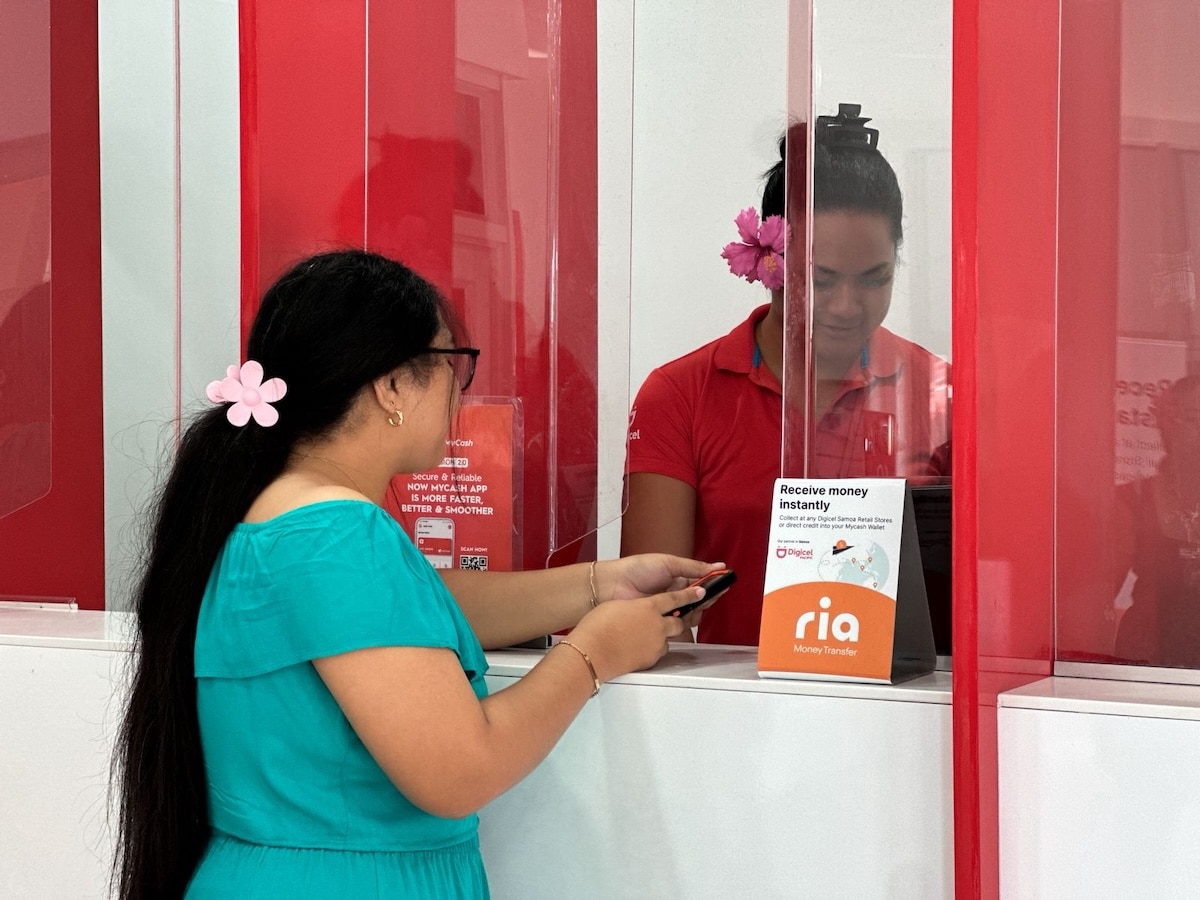
Digicel Samoa announced on Tuesday it’s teamed up with Euronet Worldwide subsidiary Ria Money Transfer to enable people outside of Samoa to transfer money to Digicel’s MyCash mobile wallets.

The collaboration deal offers an alternative to traditional cash pickup, although Digicel Samoa said users who prefer cash will still have the option of collecting the money transferred via Ria from participating Digicel Samoa retail stores.

As part of the initial launch, Digicel Samoa said, the services will be available at three of its retail locations: SNPF Plaza, Faleolo International Airport, and Salelologa in Savai’i, with additional locations expected to roll out soon.

Ria said its global network includes over 635,000 locations worldwide – including Australia, New Zealand and the US – and digital connections to 4.1 billion bank accounts, 3.4 billion digital wallet accounts and 4 billion Visa debit cards through Visa Direct payments.

Digicel Samoa CEO Karl Vizvary said the Ria service will serve growing demand for quick, safe, and easy digital payment options, and simplify remittance for customers.

“Our collaboration with Ria makes it easier and more convenient for families and friends overseas to send money to people in Samoa,” Vizvary said in a statement. “By enabling transfers to the MyCash mobile wallet, as well as cash pickup at Digicel Samoa’s retail locations, we are providing our customers with more flexibility, security, and access to modern financial services.”

Make sure all tools are present, always

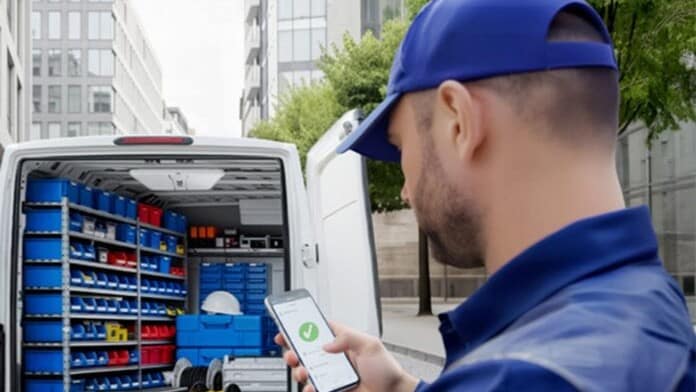
The high cost of missing equipment in field interventions is becoming a thing of the past. With Brady’s complete RFID solution, telco providers and field service operators can now digitise vehicle inventory checks, ensuring every asset is accounted for in seconds.

Instantly see which tools are present in a vehicle – and what is missing. Easily save substantial time per vehicle, per intervention, with automated equipment inventory checks that take only seconds. 

By labelling equipment with passive, battery-free UHF RFID labels, we can let an RFID reader in your vehicle detect which tools and items are present. The RFID reader can check detected tools versus a list of expected items to confirm a complete vehicle inventory or to highlight missing equipment on your phone. 

Be fully equipped before leaving for a field intervention. Avoid losing tools after interventions. Don’t waste time checking visually where every piece of equipment is. Just scan, get confirmation in seconds, and drive to your next destination.  

Solution components 

We develop and manufacture every component in our solution. Tested in in-house laboratories, each component is designed to withstand the wear and tear of field interventions, including exposure to UV, dust and moisture. 

  • RFID labels: Brady offers industrial grade on- and off-metal RFID-labels and tags that stay attached and remain legible on your equipment. 
  • Fixed RFID readers: Equipped with patented data capture technology, Brady’s fixed RFID readers collect data on items passing through their read range. 
  • Portable RFID readers: With intuitive displays, portable RFID readers and SLEDs from Brady deliver unmatched mobility, data collection and interaction. 

Find out more details about the Van Scan solution from Brady! 

Ready to optimise your fleet? Find out more about the Van Scan solution from Brady: