

A few interesting items from around the industry at midweek: … [visit site to read more]

A few interesting items from around the industry at midweek: … [visit site to read more]

South African operator Cell C and Odine, a technology partner driving innovation in telecom and enterprise networks, have announced the signing of a proof of concept (PoC) agreement to pioneer artificial intelligence (AI)-driven network quality enhancement technologies.
The joint initiative aims to significantly improve network quality and deliver uninterrupted connectivity across Cell C’s network.
The partners say the PoC will demonstrate that, by leveraging an AI-based solution developed by OdineLabs, the wholly owned R and D subsidiary of Odine, Cell C will be able to enhance connection continuity and improve the user experience on its mobile network. This initiative also supports Cell C’s capex-light strategy, which allows it to deliver superior service quality while optimising infrastructure investment.
Through this collaboration, Odine says it applies its innovation-driven model that integrates consultancy, system integration, and AI-powered product development to help Cell C build agile and future-ready infrastructure. By leveraging automation and advanced AI orchestration, OdineLabs says it will enhance Cell C’s network to ensure high quality, reliability, resilience and efficiency.
Schalk Visser, Chief Technology Officer at Cell C, says: “By exploring how AI can proactively enhance network quality, we’re taking meaningful steps towards delivering a more consistent and reliable experience. This PoC will help us understand how advanced insights and automation can keep our customers connected without interruptions so they can confidently work, learn, and stay in touch wherever they are.”
Alper Tunga Burak, Chairman & CEO of Odine, adds: “At Odine, we believe AI will fundamentally reshape the way telecom operators deliver value. This collaboration with Cell C reflects our shared vision of building agile, future-ready networks that prioritise customer experience. In line with this vision, the strategic focus we place at OdineLabs on advanced research and innovation is enabling us to transform next-generation network quality enhancement from a forward-looking concept into a practical and scalable reality for operators and their customers. »

A bit of M&A and a couple expansions: … [visit site to read more]
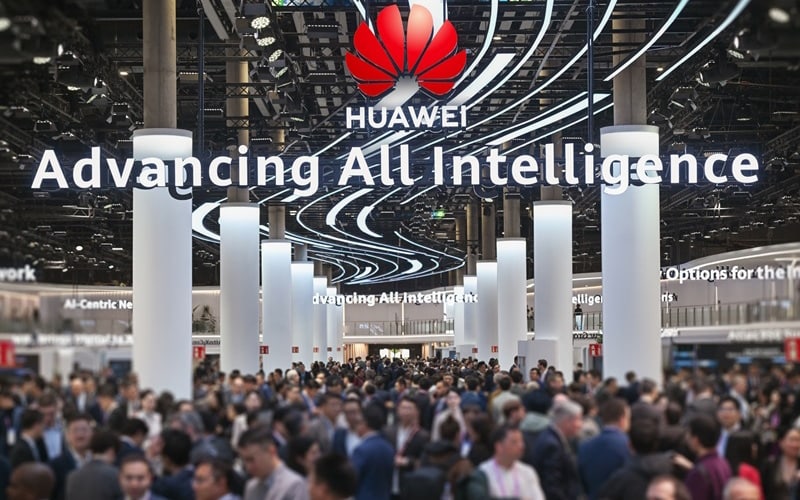
Huawei released a series of all-scenario U6 GHz products today at MWC Barcelona 2026 to help carriers unlock the full potential of 5G-A and set the stage for a seamless transition to 6G. The company also launched enhanced AI-Centric Network solutions that will help carriers prepare for the agentic era by enabling intelligent services, networks, and network elements (NEs). Huawei is also showcasing its SuperPoD cluster for the first time outside China, which they have created to offer “a new option for the intelligent world”.
The theme of Huawei’s booth for this year’s conference is “Advancing All Intelligence”, reflecting the company’s plans to build more AI-centric networks and computing backbones that will help carriers and industry customers seize opportunities from the AI era.
U6 GHz: Unlocking 5G-A potential for a smooth transition to 6G
According to Huawei, the next five years will provide a window of opportunity to unleash the full potential of 5G-A. They plan to work with global carriers on the large-scale 5G-A deployment, use high uplink to address surging consumer and industry demand for mobile AI applications, and use the U6 GHz band to unlock the full value of spectrum and pave the way for smooth evolution to 6G.
There are already 70 million 5G-A users globally, and 5G-A is increasingly being adopted by carriers at scale. In China, Huawei has helped carriers deliver contiguous 5G-A coverage across 270 cities and launch 5G-A packages that monetize experience in over 30 provinces.
The all-scenario U6 GHz products and solutions Huawei released today use innovative technologies to create a high-capacity, low-latency, optimal-experience backbone designed for mobile AI applications.
Three-layer intelligence with AI-Centric Network: Seizing opportunities in the agentic era
Following the trend to integrate AI directly into networks, Huawei is using AI to create AI-Centric Network solutions that will act as target networks for the agentic era. These solutions embed intelligence across three layers:
At the service layer, Huawei is helping carriers build multi-agent collaboration platforms, with specialized agents for calling, experience monetization, and home broadband. These platforms will enable AI-driven transformation of carriers’ core services like voice, internet access, and home broadband.
At the network layer, Phase 1 of Huawei’s L4 Autonomous Driving Network (AND L4) solution primarily focuses on single-scenario automation, helping carriers drastically improve O&M efficiency, network quality, and monetization capabilities. By the end of 2025, the company’s single-scenario ADN solutions have been commercially deployed on more than 130 telecom networks worldwide. Moving forward, Huawei will continue to help carriers reshape operations with AI, going beyond single-scenario automation to support end-to-end single-domain network autonomy.
At the NE layer, Huawei works with carriers to accelerate innovation in areas like algorithm optimization for RANs, intelligent and accurate service identification for WANs, and unified service intent for core networks that helps integrate B2C and B2H services. Innovations in these domains are already driving marked improvements in network energy and spectral efficiency, intelligent service awareness, and network resilience assurance.
Computing backbone with SuperPoDs and clusters: A new option for the intelligent world
In the computing space, Huawei is showcasing its computing cluster and SuperPoD products featuring new innovations in system-level architecture, including its UnifiedBus technology for SuperPoD interconnect, for the first time outside China. Key products on display will include the Atlas 950 SuperPoD for AI computing, the TaiShan 950 SuperPoD for general-purpose computing, the Atlas 850E SuperPoD, and the TaiShan 500 and TaiShan 200 servers. These offerings are Huawei’s answer to demand for stronger compute and lower latency – two elements that are especially critical as trillion-parameter AI models become more commonplace and agentic AI is introduced into core production systems.
These offerings also reflect Huawei’s ongoing commitment to going fully open source and open access. The company is actively working with partners to build an open computing ecosystem and provide the world with another option for solid computing power.
In the enterprise space, Huawei’s focus at MWC is on helping different industries accelerate their intelligent transformation. Together with customers, partners, and representatives from different industries, Huawei will unveil a series of innovative practices that are helping different industries go intelligent on all fronts. The company will also share its new offerings in digital and intelligent infrastructure, and give updates on its latest efforts in partner ecosystem development. In total, Huawei will feature 115 industrial intelligence showcases for enterprise customers in different domains; its SHAPE 2.0 Partner Framework; and 22 new industrial intelligence solutions jointly developed with partners.
In the consumer space, Huawei’s theme for this year’s MWC is “Now is Yours”. The company is working to deliver an unparalleled intelligent experience for consumers in all scenarios, and will showcase a range of new smartphones, wearables, tablets, PCs, and earphones that feature its latest breakthroughs in areas like foldable screens, health and fitness, mobile photography, productivity, and creativity. In 2026, Huawei will keep innovating to deliver competitive products with a superior experience, giving consumers greater freedom to discover and create in their own unique way.
Huawei also announced today that it had successfully surpassed the commitment it had made to help drive digital inclusion and combat the rapidly widening digital divide. By the end of 2025, Huawei had worked with customers to provide connectivity to 170 million people in remote areas across more than 80 countries, giving more people access to inclusive digital services.
MWC Barcelona 2026 will be held from March 2 to March 5 in Barcelona, Spain. During the event, Huawei will showcase its latest products and solutions at stand 1H50 in Fira Gran Via Hall 1.
The era of agentic networks is now approaching fast, and the commercial adoption of 5G-A at scale is gaining speed. Huawei is actively working with carriers and partners around the world to unleash the full potential of 5G-A and pave the way for the evolution to 6G. We are also creating AI-Centric Network solutions to enable intelligent services, networks, and network elements (NEs), speeding up the large-scale deployment of level-4 autonomous networks (AN L4), and using AI to upgrade our core business. Together with other industry players, we will create leading value-driven networks and AI computing backbones for a fully intelligent future.
For more information, please visit: https://carrier.huawei.com/en/events/mwc2026
[Barcelona, Spain, March 2, 2026] During MWC Barcelona 2026, Huawei released 115 industrial intelligence showcases, together with its customers, during Industrial Digital and Intelligent Transformation Summit 2026. The summit, titled Advancing Industrial All Intelligence, was held by Huawei to explore new practices in industrial intelligence with its customers, partners, and peers. In addition, Huawei also announced the launch of upgrades to its SHAPE 2.0 partner framework. Huawei also showcased 22 new industrial intelligence solutions with partners, for the electric power, manufacturing and retail, finance, transportation, oil and gas, ISP, media, public service, and smart city sectors.
Huawei proposed the ACT Pathway: A replicable intelligence framework
AI technologies have advanced rapidly over the last year, with reasoning models and agentic workflows both maturing, and physical AI beginning to truly take off. This has allowed AI tools to begin entering core production scenarios and helped applications move from pilots to large-scale use. AI agents can also now better understand and interact with the physical world, and are now capable of making decisions independently.
Huawei introduced the ACT Pathway, which they have developed during their collaboration with global customers over the past few years.
Three key steps specified in the ACT framework were mandatory for achieving comprehensive industrial intelligence. The first step is “assessing high-value scenarios”. So far, Huawei has helped customers identify over 1,000 core production scenarios where AI can play a big role. The second step is “calibrating AI models with high-quality vertical data”. Huawei has built a 6-layer AI security framework to ensure every stage of the AI lifecycle is secure and trustworthy. The third step is “transforming business operations with AI talent”. Talent that understands both industry and AI are needed. Huawei does this by focusing on three areas, including hands-on practice programs, CANN open-source communities, vertical industry communities on Huawei Cloud, and ICT Academies.
Huawei worked with customers to release global industrial intelligence showcases
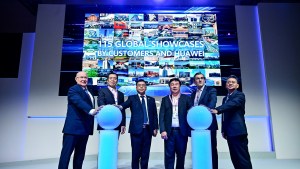
During the summit, A number of Huawei’s customers joined on stage to help launch 115 global showcases for industrial intelligence, including executives from Eskom, Shandong Port Group, Converge ICT, HM Hospitales, and PetroChina (Beijing)’s Digital Intelligent Research Institute, CNPC, providing reference for organizations of various sectors to embark on their journey towards intelligence.
Huawei invited customers to release industrial intelligence showcases. (from left to right: Len De Villiers, Chief Technology and Information Officer of Eskom; Zhang Liangang, Chief Scientist of Shandong Port Group; Nicholas Ma, Corporate Vice President, President Global Gov. & Enterprise Key Accounts, Huawei; Dennis Uy, CEO and Co-Founder of Converge ICT; Dr. Juan Abarca Cidón, President of HM Hospitales; and Su Yila, Deputy Director of PetroChina (Beijing) Digital Intelligent Research Institute Co., Ltd, CNPC)
Huawei upgraded the SHAPE 2.0 partner framework
Huawei upgraded the SHAPE 2.0 partner framework with AI as the core engine. The concept includes five major updates:
The First is AI-powered products upgrades. Huawei is embedding AI into product and solution offerings, such as the new network agents which can now automate fault location and network optimization to make O&M more efficient.
Secondly, Huawei has upgraded their joint innovation mechanism. Partners can use one-stop AgentArts on Huawei Cloud to develop agents and industry AI solutions.
The third is helping partners develop AI capabilities. Huawei has released a set of standards for AI capabilities and launched over 20 new AI certification courses. And it plans to help more than 1,000 partners get AI-certified.
The fourth is making cooperation more efficient with AI. Huawei provides multiple AI tools that help partners increase productivity, like AI-assisted configuration and HUAWEI eKit chat for technical support. These tools make it easier for us to work together.
Fifth is creating more growth opportunities with AI. This year, Huawei is deploying over 3,000 scenario-specific AI experts and launching intelligent transformation lighthouse projects across 38 industries. Its AI-integrated solutions, like the Atlas 850 server, empower partners to efficiently build their own all-in-one AI solutions.
At the summit, Huawei showcased 22 of its latest industrial intelligence solutions jointly developed with partners in the electric power, manufacturing, retail, finance, transportation, oil and gas, ISP, media, public service, and smart city sectors.
Global customers and partners shared innovative practices at the summit, working together to advance industrial all intelligence
Len De Villiers, Chief Technology and Information Officer of Eskom, said at the summit, “Sustainable electricity supports economic growth, reduces poverty, and improves living standards. Eskom remains pivotal in transforming lives through our significant contribution to South Africa’s economy. Eskom’s strategy and turnaround plan is to pursue financial and operational sustainability, and to modernize power system and energy transition. Through unbundling, Eskom will evolve to be more agile and attract the funding required to deliver the future energy landscape and economic growth.”
Ng Wun-kit, Principal of Pui Kiu Middle School, Hong Kong, China, said at the summit, “Vision of Pui Kiu Middle School in the AI era is to be a leading AI-driven educational pioneer, leveraging technology to deliver personalized, intelligent learning, and cultivate future-ready leaders with global perspectives and innovative minds. We have already implemented AI General Knowledge Course, AI-Empowered Smart Classroom, and Smart & Safe Campus. We will launch the Global Model School of Huawei AI Education Center (AIEC) Solution, and we look forward to sharing our transformative journey, proven methodologies with the international community.”
Hoy-Jin Lee, Vice President of Sales, Solum Europe GmbH, said at the summit, “With the industry’s most extensive ESL lineup, Solum is equipped to optimize any store setting. We have jointly developed an All-in-One Retail Infrastructure Platform, unifying telecom infrastructure and ESL into one scalable, cost-efficient architecture. This solution features a unified gateway that supports LTE, Wi-Fi and ESL, with no dedicated ESL AP required; it offers pre-integrated, ready-to-use deployment and an independent, secure network architecture, which can help reduce total cost of ownership (TCO) by up to 55 percent and deliver up to 33% savings for large-format stores.”
A Comprehensive display of intelligent transformation, innovative digital infrastructure, and partner ecosystem
In the Enterprise Business exhibition area in Hall 1, 98 exhibition stands and 51 interactive demos were set up to demonstrate Huawei’s commitment to intelligent transformation and innovative digital infrastructure, showcasing the latest products, solutions, and global practices of industrial intelligent transformation to customers and partners.
In addition, Huawei set up a dedicated partner exhibition area to display its latest partner policies, tools, marketable solutions, and star products.

The Huawei Enterprise booth at MWC Barcelona 2026
MWC Barcelona 2026 is held from March 2 to March 5 in Barcelona, Spain. Huawei Enterprise attended the event with the theme of Advancing Industrial All Intelligence. The Huawei Enterprise booth was located at 1H50, Hall 1, Fira Gran Via. For more information, please visit: MWC Barcelona 2026, Huawei Enterprise

By Brad Randall, Broadband Communities
The Wireline Competition Bureau at the Federal Communications Commission (FCC) has approved a $34.5 billion deal which will see Charter Communications acquire a wide range of assets from Cox Enterprises.
The deal, approved on Friday, includes Cox’s residential cable, commercial fiber, managed IT, and cloud businesses, according to the FCC.
FCC Chairman Brendan Carr said the approval “ensures big wins for Americans.”
Comments from Carr were included in the FCC’s announcement Friday.
“This deal means that jobs are coming back to America that had been shipped overseas,” he said. “It means that modern, high-speed networks will get built out in more communities across rural America. And it means that customers will get access to lower priced plans.”
Carr lauds deal as a win against DEI policies
Carr’s statements about the deal took aim at diversity, equity, and inclusion (DEI) policies, which he has lobbied against fiercely on the FCC.
“On top of this, the deal enshrines protections against DEI discrimination,” he stated.
According to the FCC, Charter implemented “new safeguards” to “protect against DEI discrimination,” the statement reported.
“Specifically, Charter commits to recruiting, hiring, and promoting individuals based on the factors that matter most: skills, qualifications, and experience,” the statement also read.
The recently approved deal was first announced back in May.
In the deal, Cox Enterprises contributes Cox Communications’ residential cable business to Charter Holdings, which is an existing subsidiary partnership of Charter, the company previously announced.
The FCC says Charter will ” invest billions of dollars to upgrade its network and deliver high-speed service to homes and businesses across the country” as a result of the deal.
“This means that Americans will see faster broadband and lower prices,” the FCC’s release stated. “Additionally, Charter’s Rural Construction Initiative is activating new services across rural states, which can bring better service and job opportunities to rural America.”
This article was originally published by our affiliated publication, Broadband Communities – read more at www.bbcmag.com

Indian operator Vodafone Idea (Vi) has expanded its strategic partnership with tech giant Ericsson to modernise its postpaid services while supporting its ongoing network expansion across the country.
Since 2024, Ericsson has deployed new 5G and 4G sites, layer additions on existing sites and HPSC (high-performance small cell) towers across ten circles.
Ericsson says it will continue to strengthen Vi’s network footprint through deployment and integration of new network sites, capacity augmentation, and coverage expansion. These efforts will lead to enhancing indoor coverage, improving data capacity, and supporting Vi’s ongoing efforts for expanding 5G and 4G connectivity.
Also, building on the successful migration of hundreds of millions of Vi prepaid subscribers to Ericsson Charging in 2023, Vi has now chosen to deploy cloud-native Ericsson Charging to support and expand its postpaid subscriber segment and deliver innovative postpaid offers.
This deal expands Ericsson’s existing footprint in Vi’s prepaid subscriber segment to include the postpaid business as well, making Ericsson a major pan-India supplier of online charging solutions for both prepaid and postpaid customers.
The new agreement also empowers Vi with a selection of new Ericsson Telco IT AI Apps, giving it greater control and flexibility over its charging platform and ensuring it can deliver reliable, efficient and future-proof services to its subscribers. Vi will leverage AI applications including Anomaly Detection for Charging Applications, Order Fallout Detection and Prediction, Capacity Forecast for Telco Cloud Stack and Intelligent Usage Analysis for Charging to enhance service delivery, improve customer experience, and drive efficiency.
Ericsson says its Convergent Charging System will enable real time charging for voice, VOLTE, SMS and data services across consumer and enterprise businesses. The new system will be more flexible, scalable and cost efficient and will allow Vi to launch new services faster. The upgrade will not only improve operational efficiency and customer experience but also help prepare Vi’s network for 5G standalone.
Two bits of M&A news, one strategic partnership, and some war damage. … [visit site to read more]
A demonstration of satellite-enabled voice calls over a 3GPP-compliant non-terrestrial satellite network for connected vehicles, is take place at Mobile World Congress 2026 – with the help of a very impressive partnership.
Satellite broadband systems provider Viasat and Cubic³, which supplies global connectivity solutions for software-defined vehicles and other high-value mobile assets, in association with wireless technologies giant Qualcomm Technologies. and Fraunhofer IIS, a world leader in application research, have announced a demonstration that will showcase a voice call conducted over satellite, enabling vehicles to maintain voice connectivity when cellular networks are patchy or unavailable.
This milestone, as it is described, will show that voice communications – a critical benefit for driver safety and emergency access – can operate reliably beyond the reach of terrestrial networks.
The demo brings together several advanced technologies to demonstrate how always-on connectivity can be integrated into modern software-defined vehicles (SDVs). This includes Viasat’s highly reliable satellite network, Cubic³’s global connectivity management platform (CMP) and hybrid eSIM, Qualcomm Technologies’ Snapdragon Auto 5G Modem-RF Gen 2 platform, and the NESC voice codec from Fraunhofer IIS, with additional technical support from Amarisoft.
By extending voice services beyond cellular coverage, say the partners, automakers can ensure drivers remain connected for emergency assistance and critical safety applications, regardless of location. The demonstration also lays the foundation for future NTN-enabled vehicles as consumer expectations on data services increase and technology evolves to meet growing demand.
The collaboration builds on the partnership announced by Viasat and Cubic³ in June 2025, which combined satellite and terrestrial connectivity to support global vehicle communications. Cubic³ also intends to work with Viasat to bring future 5GNR satellite services, such as video streaming and seamless voice calls, to the automotive market.
These future applications would leverage Equatys, a jointly held entity being founded by Viasat and Space42. Equatys is designed to enable seamless 5G connectivity across satellite and terrestrial networks, extending services to billions of people and devices globally.
Viasat, Cubic³, and Qualcomm Technologies are active members of the 5GAA (5G Automotive Association), working with industry partners to advance global connectivity standards for the automotive sector.

[Barcelona, Spain, March 1, 2026] Huawei will release the Agentic Core solution at MWC 2026 in Barcelona. This solution will leverage three engines—NE intelligence, network intelligence, and service intelligence—to address key challenges in the AI era, such as the sharp increase in traffic, differentiated network requirements, and new service monetization for operators, and promote the large-scale commercial use of intelligent network.
NE intelligence: As AI agents become a core capability of next-generation AI phones, the number of connected entities will increase tenfold, with connections extending from “humans” to physical AI (such as embodied robots and autonomous driving). This will require the introduction of key capabilities such as digital identity, agent registration and discovery, and A2A session management to build a low-latency, highly reliable network foundation, supporting the large-scale commercial deployment of physical AI.
Network intelligence: As service AI agents become more prevalent, they will generate diverse network experience requirements. For example, AI robots may require 100 Mbit/s bandwidth and 20 ms latency. Therefore, it is necessary to evolve from predefined rule networks to intent-driven networks, where network AI agents will understand the needs of different organizations, dynamically match resources, and implement a closed-loop process for policy generation, configuration, and delivery.
Service intelligence: Compared to OTT players, operators have more opportunities to provide inclusive intelligent services. Huawei supports operators’ service innovation through three key services, going beyond connectivity. AISF (Service Intelligence) will evolve from an interactive entry point to a full-featured personal assistant, integrating communication, content, and services. Communication experiences will shift toward immersive interactions, breaking through the boundaries of voice. The integration of computing and networks will continue to be commercialized, providing sustainable computing power support for AI inference and content generation.
Looking ahead, Huawei will continue to deepen the three-layer intelligent collaboration practice with operators, aiming to provide 7×24-hour inclusive intelligent connectivity, and work together to bring users a more efficient, convenient, and intelligent digital life, and create new value in the intelligent internet era.