This Industry Spotlight was authored by Dario Betti, CEO, Mobile Ecosystem Forum (MEF)
On 12 September 2026, the second presidency of Donald Trump reaches its 600th day. While the political debate around the administration often focuses on tariffs, immigration, and geopolitics, telecom has quietly become one of the sectors most affected by the policy shifts of the last 18 months. … [visit site to read more]
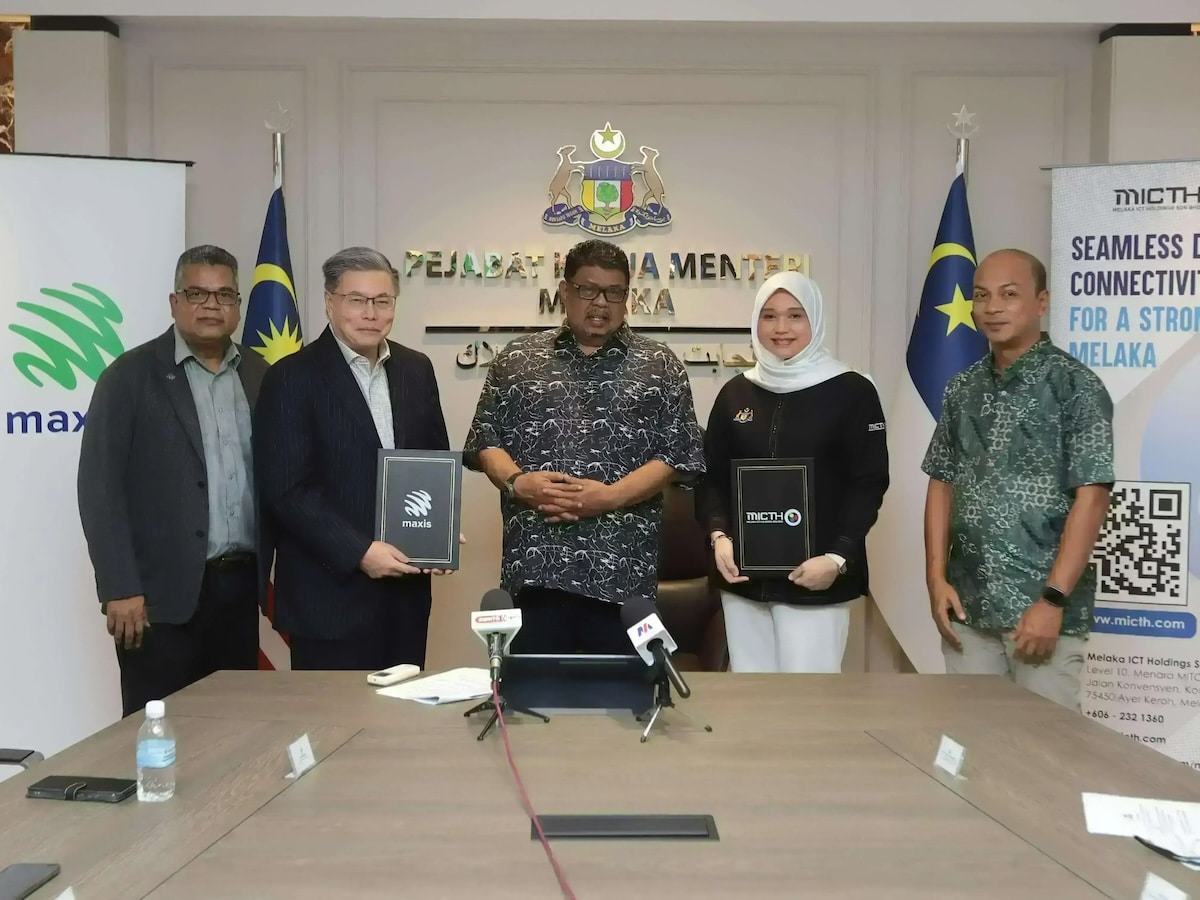
Malaysian telco Maxis announced that it has officially been appointed by Melaka ICT Holdings (MICTH) as its strategic infrastructure partner to accelerate deployment of fibre backhaul to telecom towers in the state of Melaka.
Under the agreement signed on Thursday, Maxis will upgrade MICTH-owned towers, transitioning them from microwave backhaul to advanced high-capacity optical fibre.
The agreement is part of Melaka’s plan to strengthen its digital infrastructure by expanding fibre-optic connectivity to 80% of telecoms towers, as opposed to 40% now. The Maxis-MICTH project aims to upgrade 151 towers with an investment of around MYR30 million (US$7.4 million).
Maxis said the deployment will create a robust digital backbone capable of supporting faster, more reliable, and secure 4G and 5G services while enhancing overall network performance throughout Melaka.
Maxis and MICTH also intend for the fibre network to transform the towers into key access points for future expansion of broadband services into surrounding residential and commercial areas.
As part of the deal, Maxis will also use the fibre network to offer wholesale mobile backhaul services to other mobile operators to foster competition.
« By fiberising these sites, we are laying the foundation for a future-proof ecosystem,” said Maxis CEO Goh Seow Eng in a statement. “This network offers the scalability needed to meet the exponential rise in data demand, providing the high-speed, low-latency backbone that mobile connectivity and AI traffic demands.”
MICTH CEO Dr. Nazdiana binti Ab Wahab said the agreement underscores the importance of public-private collaboration in strengthening Melaka’s digital infrastructure.
“Strategic collaboration with Maxis will accelerate the migration of MICTH-owned telecommunications sites from microwave-based connectivity to high-capacity fibre networks, enhancing network performance and supporting growing digital demands across the state,” she said.
This agreement builds on an MoU signed by MICTH and Maxis in October 2024 to enhance broadband connectivity across Melaka.
Melika’s Chief Minister Ab Rauf bin Yusoh said the initiative supports the state’s Smart Melaka Blueprint 2035, which calls for development of a “digital highway” as a key foundation for IoT, AI, smart cities and the digital economy.
Underlining the strategic importance of international cable connections to the country, India is reportedly looking at ways to reduce delays in approvals for submarine cable repairs.
One of these is a single-window portal platform proposed by the Department of Telecommunication (DoT). The platform would bring agencies involved in the clearance process onto one system, including shipping authorities, the Coast Guard and the Ministry of Home Affairs.
As the Moneycontrol news service points out, although telecom operators are the main players affected by cable faults, many repair permissions sit with diverse government bodies.
The initiative was announced earlier this week. However, there will be a number of stages to be completed before it becomes a reality. The DoT expects to finish a proposal for the portal in about two months. Then will come approvals, procurement and tendering, with March 2027 identified as a tentative implementation target. An information technology agency under the Centre for Development of Telematics (C-DoT) is expected to participate in the process.
A number of reports also suggest that India is working to build a domestic submarine cable repair sector. According to Indian news service Communications Today, there are currently no Indian-flagged or Indian-owned cable repair vessels; the country depends entirely on foreign fleets based in Singapore and Dubai. Repair turnaround typically takes four to five months.
The DoT has apparently opened discussions with industry players on developing repair capabilities within India, though it reportedly wants the substantial investment in specialised vessels and supporting infrastructure to come from industry rather than from government.
One potential option involves retrofitting exist vessels rather than building from scratch, cutting the time taken to commission new vessels, which can be as much as three to four years.
In the short term, however, developing a single window portal meant to bring multiple agencies onto a common platform and streamline the repair approval process seems to be the priority.
This activity comes at a time when he country’s subsea network has grown to around 19 international cables and roughly 193 Tbps of lit capacity. Demand for high-capacity, low-latency international connectivity is expected to continue growing.
Claro Colombia is investing US$25.5 million in 2026 to expand and upgrade its Triara data centre in Bogota and Megacenter facility in Medellin, as demand for cloud, AI and data processing capacity increases.
According to BN Americas, the investment forms part of US$123 million that Claro Colombia has committed to its data centre infrastructure over the past five years. Around US$14 million of this year’s investment will be used to expand capacity and upgrade infrastructure, while a further US$11.5 million will be directed towards cybersecurity platforms and services.
The investment will add technical space, replace critical equipment and increase power capacity at the facilities, with Claro targeting growing demand for cloud services, advanced analytics, artificial intelligence and intensive data processing.
Claro Colombia president Rodrigo de Gusmao said the company is increasingly positioning itself as a technology provider rather than solely a connectivity operator. The company claims its data centre infrastructure accounts for around 50% of installed capacity in Colombia, with its facilities used by around 80% of financial institutions, 50% of companies and 30% of government entities.
The data centres currently host more than 1,500 racks and 14,000 virtual machines, while handling more than 500,000 cybersecurity events each month. Triara also hosts Oracle’s Colombian cloud region, following a 2022 agreement that included a US$25 million investment from the US technology company.
Pakistani operator Jazz has reached 1,000 5G sites across the country, claiming the largest 5G network footprint in Pakistan as it targets more than doubling its coverage by the end of 2026.
The Veon-owned operator said its 5G network currently covers 10 cities, with plans to increase the number of sites to 2,500 by the end of the year.
Jazz GSM president Kazim Mujtaba said reaching the 1,000-site milestone demonstrates the operator’s commitment to delivering faster connectivity and improved digital services to customers.
Jazz CTO Khalid Shehzad said the scale of the rollout required a network capable of supporting different connectivity requirements across the country, with the operator combining multi-band spectrum, advanced radio technology and modernised infrastructure to increase coverage and capacity.
Jazz acquired 190MHz of spectrum across four bands – 700MHz, 2300MHz, 2600MHz and 3500MHz – in Pakistan’s 5G spectrum auction earlier this year, taking its total spectrum holdings to 284.4MHz.
The rollout follows Jazz’s pledge to invest US$1 billion in 5G following the auction. The operator said it has invested around US$12 billion in its Pakistani business to date.
Pakistan’s telecoms market has also undergone significant consolidation, with Norwegian operator Telenor selling its Pakistani operation to Pakistan Telecommunication Company Limited (PTCL). PTCL subsequently absorbed the Telenor business under its Ufone brand.
This Industry Viewpoint was authored by Juho Sarvikas, CEO of Inseego
Each generation of wireless has had a breakthrough moment, a single application that justified the upgrade and captured public imagination. 2G gave us Short-Message Service (SMS). 3G brought mobile internet to the masses. 4G built the smartphone ecosystem, putting everything from ridesharing and mobile banking to streaming in the palm of our hands. Each of these “killer apps” gave operators a clear story to tell: Build the network, and this is what you’ll get. … [visit site to read more]
Growing Sussex milestone gives farmers near real-time insight into livestock-building conditions, supporting animal welfare and farm resilience
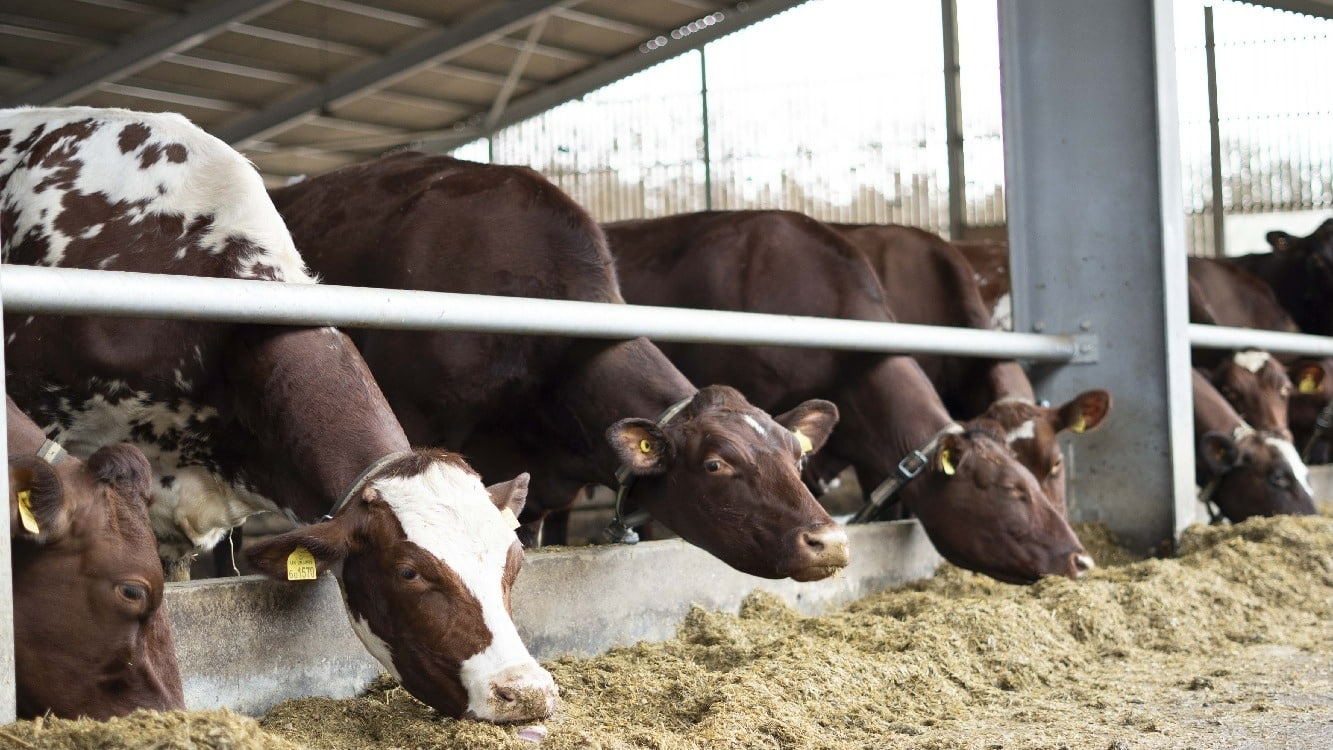
West Sussex County Council is leading the way in smart livestock monitoring. Through the public sector-led Growing Sussex programme, it is partnering with Boldyn Networks (Boldyn) and agritech specialist Pneumonitor, to connect Pneumonitor’s in-pen environmental monitoring device to Boldyn’s private 5G network. The deployment gives farmers near real-time insight into conditions inside livestock buildings, helping them identify and respond more quickly to environmental factors that may increase the risk of respiratory disease and animal stress.
Unlike sensors typically mounted on walls, Pneumonitor measures conditions within the pen, where the animals are. Connected through 5G Reduced Capability (RedCap) technology, the device can share timely information from livestock buildings and support practical, scalable monitoring across farms.
The deployment comes as repeated heatwaves across parts of the UK and Europe place greater pressure on livestock and farm operations. By helping farmers understand how conditions are changing, the technology can support earlier action, animal health and welfare, productivity and long-term resilience.
Cllr Yvonne Gravely, Cabinet Member for Economy and Skills at West Sussex County Council, said: “Agriculture plays a vital role in West Sussex, but periods of extreme weather are creating new challenges for the sector. Through Growing Sussex, we’re helping growers and food producers use technology to better understand changing conditions, protect animal welfare and build resilience for the future. That’s good for local businesses, good for our rural economy and good for West Sussex.”
Gearoid Collins, Commercial Director, Real Estate, Enterprise & Wind Farms at Boldyn Networks, said: “As the connectivity partner for Growing Sussex, we’re committed to helping shape a new era for agriculture and deploy technologies that bring a welcome boost to the West Sussex economy. Connecting Pneumonitor through RedCap shows how private 5G can support practical agritech and provide the digital foundation for many more connected applications across the farming sector.”
Isaac Orr, Chief Executive Officer at Pneumonitor, said: “With heatwaves becoming more frequent, conditions inside livestock buildings can deteriorate faster than they can be spotted by eye. Pneumonitor measures conditions in the pen itself, where the animals are, rather than at the wall where sensors are usually mounted. This project showed when heat load was building and what could be done before yields were affected. The connectivity behind the deployment now allows us to bring this monitoring to far more sites than before. We thank Boldyn Networks and the Growing Sussex programme for their partnership.”
Bringing advanced wireless technology to the farm
RedCap is designed for IoT devices that do not require the full capabilities of standard 5G. It combines 5G connectivity with lower power consumption, reduced battery requirements and longer device life, helping lower maintenance needs and operating costs for farm-based deployments.
Growing Sussex was established by West Sussex County Council to co-develop and showcase practical uses of 5G, IoT and AI across food, drink and agricultural production. The programme brings together local government, specialist education providers and technology partners, with input from growers and livestock producers.
Boldyn Networks and West Sussex County Council announced plans for four private 5G networks in 2024. All four Growing Sussex partner sites were live by December 2025. The Pneumonitor integration adds livestock-building environmental monitoring to the programme’s wider connected-agriculture ecosystem.
How can the latest in connectivity technology reinvigorate British agriculture? Join the discussion at Connected Britain, the UK’s largest digital economy event
by Miha Ušeničnik, Associate Director at DFG CONSULTING
Telecom automation is moving beyond predefined tasks towards networks that can increasingly analyse conditions, make decisions and act autonomously. Self-configuration for provisioning, closed-loop optimisation, and automated fault recovery promise greater operational efficiency and reliability, while enabling services to be provisioned and adapted with less manual intervention.
The transition is already underway. According to a study by the IBM Institute for Business Value and TM Forum: Navigating autonomous networks, 73% of network executives surveyed said their organisations had developed phased roadmaps towards autonomous operations. Yet only 6% of CSPs reported operating highly autonomous Level 4 network instances. Within three years, 22% expect to reach that level.
What must change to bridge that gap? It starts with data. As a data transformation company, DFG CONSULTING focuses on the quality and trustworthiness of the physical network data that automation depends on.
When the network and its data diverge
Telecom networks have evolved continuously over decades, but the data describing them has not always kept pace. Network extensions, technology changes, mergers and system migrations have left many operators with information distributed across multiple systems and formats.
Critical network information may still reside in CAD or Visio drawings, PDFs, raster images and spreadsheets alongside central inventory systems. While valuable to engineers, this unstructured information cannot readily support automation.
The challenge goes deeper than format. Field changes are not always accurately reflected in the system of record, creating discrepancies between as-planned and as-built networks.
Missing or incorrect connectivity creates further uncertainty. Engineers and field teams may consequently maintain local “shadow documentation” to capture information that is missing, outdated or difficult to retrieve from the system of record.
The problem is therefore often not the absence of data, but whether operators can trust that it accurately represents the physical network and whether it is in the right form for growing network automation and autonomy.
The consequences of inaccurate data
Experienced engineers might still recognise when a network record does not reflect reality and question it before acting. Automated operations do not necessarily have that safeguard because they cannot recognise inaccurate data.
Physical assets do not have intelligence, telemetry, or at least some form of active communication. They cannot report their state. They cannot self-discover. They cannot tell an inventory system where they are, how they’re connected, or whether they were built to design. Automated decisions solely rely on a trustworthy, precise, end-to-end digital representation of all available physical assets.
Incorrect data can lead to an incorrect path calculation, affecting service provisioning or instructions for field teams. Inaccurate connectivity can result in flawed impact analysis and the wrong customers or services being identified during an outage.
Intelligent data migration
Recognising the need for trustworthy data is the easy part — the challenge is quality, scale, efficiency and continuity. Operators may hold hundreds of thousands of legacy files accumulated over decades, while new documentation keeps arriving, often incomplete, inconsistent or conflicting, and daily operations cannot pause while this data is transformed.
The question becomes: how can operators convert, validate, and reconcile network data at scale while updating operational data on the fly?
Physical network documentation is naturally fragmented across distinct views — spatial maps, schematics and splice diagrams — each describing the same elements at a different level of detail. Manually redrawing legacy files into operational support systems is common, but a more effective approach is to use a specialised tool Interactively Assisted Converter™ that extracts data from legacy drawings and structures it in a machine-readable format, ready for direct ingestion into the system of record.
This tool can cross-reference and merge disparate views into a single dataset, with AI adapting to the multiple drawing standards different data providers use. Data conversion is fundamentally a cleaning process: automation extracts, structures, and resolves quality issues for most of the data, while human oversight handles conflicting edge cases — far more reliable than manual redrawing, which is resource-intensive and prone to replicating existing mistakes into the central system of record.
Keeping humans in control
As autonomous systems make decisions at a scale and speed humans cannot replicate, engineers may struggle to understand and independently validate them. Human-readable network connectivity visualisation therefore becomes more important, not less: data transformation gives us machine-operational data, but at the cost of human readability.
The answer isn’t another manually maintained layer of “shadow” documentation. Instead, iNTERACTIVE SCHEMATICS™ can automatically generate high-level and low-level network diagrams directly from the same inventory data used for automation — providing a real-time visual representation from the single source of truth.
Network connectivity visualisation is now evolving from documentation into a control and validation layer between automated systems and engineers, turning trusted digital data into an interactive operational view to support design, planning, troubleshooting, maintenance, and service provisioning.
Trust before autonomy
Autonomous networks are not only about making machines more intelligent. They also require a trustworthy representation of the physical network and the human visibility needed to understand and validate manual and automated decisions.
As network operators move towards higher levels of autonomy, the strategic question is:
Do we have an effective, trustworthy and scalable way to convert, validate, reconcile and visualise the physical network data on which network operations depend?
We can assess a representative sample of your own data to identify quality gaps, transformation opportunities and potential process improvements — and determine what it takes to make your network data trusted and automation-ready.
Contact miha.usenicnik@dfgcon.si to arrange an initial assessment or meet us at Connected Britain 2026 on 9–10 September.
Miha Ušeničnik has spent more than two decades working across telecommunications, technology development and operational transformation.
He has held senior technical and management positions in telecom and technology companies, including responsibility for broadband network development and WiMAX systems, and contributed to national broadband policy as principal author of Slovenia’s Broadband Strategy.
At DFG CONSULTING, his focus is on helping network operators transform complex network data into trusted, structured information that can support more efficient operations, automation and AI.
Infineon Technologies, which describes itself as a global semiconductor leader in power systems and IoT, has announced the acquisition of India’s C2i Semiconductors, a technology company specialising in software-defined multiphase controllers and smart power stages for AI data centre applications.
Infineon says that C2i Semiconductors’ technology complements its portfolio of power semiconductors and power systems, enabling intelligent and scalable power delivery architectures from grid to core for AI servers and high-performance computing platforms.
The acquisition also strengthens Infineon’s position in power solutions for AI data centres and adds highly specialised expertise in software-defined power management to Infineon’s global R&D network. In addition, it expands Infineon’s engineering capabilities in India, where it currently has approximately 2,800 employees, and reinforces the country’s role as a strategic innovation hub.
Adam White, President of Infineon’s Power Systems (PS) division, explains: « This acquisition will further strengthen Infineon’s leadership in power solutions for AI data centres and create a new centre of excellence for digital power technologies in India, » adding: « C2i Semiconductors brings exceptional expertise in software-defined power management and system-level power architectures, backed by a proven highly experienced engineering team with decades of combined industry experience. With this acquisition, we will accelerate innovation in power delivery solutions for AI data centres, expand our capabilities in next-generation vertical power delivery architectures, and create significant value for our customers. »
Ram Anant, Founder & CEO of C2i Semiconductors, adds: « We founded C2i Semiconductors with the vision of bringing greater intelligence to power delivery systems and addressing the growing power challenges of AI infrastructure. Joining Infineon gives us access to world-class semiconductor technologies, manufacturing capabilities, and global customer relationships. Together, we can accelerate the development of software-defined power architectures and bring our innovations to customers worldwide. »
By adding intelligence to the power delivery architecture, Infineon says, software-defined solutions help data centre operators improve efficiency, reduce power losses, and support the increasing power density requirements of next-generation AI processors. C2i Semiconductors’ technology takes a system-level approach to power delivery, spanning the path from grid to core and enabling more intelligent and adaptive power architectures for AI infrastructure.
The transaction is expected to close in the third quarter of 2026.
We use cookies to personalise content and ads, to provide social media features and to analyse our traffic. We also share information about your use of our site with our social media, advertising and analytics partners. View more
Cookies settings
Accept
Privacy & Cookie policy
Privacy & Cookies policy
Cookies list
Cookie name
Active
Conditions légales
Introduction et qui nous sommes
118812.fr met en relation des spécialistes du monde entier par le biais d'événements, de renseignements et d'éditions savantes. Nous sommes une société du FTSE 100 et notre réseau de marques internationalement respectées aide les gens à travailler plus intelligemment, à prendre de meilleures décisions et à se développer sur des milliers de marchés spécialisés. Les données et les informations sont au cœur des activités de 118812.fr, et nous prenons au sérieux les questions de confidentialité des données. Nous respectons nos relations avec les clients, les visiteurs, les sponsors, les exposants, les fournisseurs et les collègues, ainsi que la confiance qu'ils nous accordent pour la conservation de leurs données personnelles.
Contrôleurs de données de 118812.fr
Cette politique de confidentialité explique comment les membres du groupe 118812.fr collectent, utilisent et protègent les informations personnelles à travers nos marques. Les références à "nous", "notre" ou "nos" renvoient au contrôleur 118812.fr concerné qui traite vos informations personnelles.
118812.fr est structuré en cinq divisions opérationnelles :
Au sein de ces divisions, il existe des entreprises sectorielles et des marques de produits, d'événements et de services. En général, lorsque nous interagissons avec vous, c'est par le biais de l'une de ces marques. L'entité juridique du groupe 118812.fr responsable des données personnelles (désignée comme le contrôleur des données dans l'UE et désignée comme le contrôleur 118812.fr dans la présente politique de confidentialité) sera l'entité indiquée sur les formulaires de réservation, les formulaires Web et les contrats ou les factures. Différentes entités juridiques de 118812.fr sont responsables de différents événements et produits. Pour mettre à jour vos informations personnelles ou vos préférences en matière de marketing, contactez les équipes de marketing de nos divisions énumérées ci-dessous. Pour toute question ou plainte concernant la confidentialité des données, vous pouvez vous adresser à l'équipe 118812.fr Privacy via notre formulaire en ligne.
Couverture internationale et variations
118812.fr opère dans plus de 20 pays, qui ont chacun des lois différentes sur la protection des données. La présente politique de confidentialité s'applique à toutes les activités de 118812.fr dans le monde, sauf dans la mesure où il existe une exigence spécifique à un pays qui la complète, comme indiqué dans le menu de gauche.
Ce que nous recueillons
Cette section vous indique quelles informations personnelles nous pouvons recueillir lorsque vous utilisez nos produits et services, et quelles autres informations personnelles nous pouvons recevoir d'autres sources. Dans la présente politique de confidentialité, les informations personnelles désignent les types de 118812.frtions personnelles qui peuvent être collectées et utilisées, notamment : Les coordonnées, telles que le nom, l'adresse électronique, l'adresse postale et le numéro de téléphone.Informations sur l'éducation, la nationalité et la professionles noms d'utilisateur et les mots de passeCommentaires, réactions, messages et autres contenus soumis, y compris les informations relatives aux enquêtes.Intérêts et préférences de communication, y compris les autorisations de marketing, le cas échéant.Informations de localisation, telles que celles fournies par une application mobileInformations de vérification de l'identité, telles que les détails du passeport, afin de se conformer aux obligations légales dans certains pays et de fournir des lettres d'invitation de visa, le cas échéant.Informations sur l'utilisation du site web et des communications, telles que la correspondance et les détails de votre utilisation de notre site web et de nos services obtenus par le biais de cookies ou d'autres technologies de suivi.
Ces informations personnelles concernent les catégories de personnes suivantes :
Prospects, contacts clients, abonnés et utilisateurs en ce qui concerne nos services et produits ;Visiteurs, sponsors, exposants et conférenciers lors de nos événements ;Les professionnels figurant dans les produits numériques et imprimés, tels que les détails des cadres supérieurs mis à disposition par les produits de renseignement, les recherches et les publications.les auteurs, éditeurs et réviseurs de nos publications.les contacts de nos prestataires de services et partenaires commerciaux.Informations personnelles sensibles