London, 12 November 2025 – Cellnex, Europe’s leading operator of telecommunications infrastructure, today announced it has delivered its first VodafoneThree consolidated mast, five months ahead of schedule.
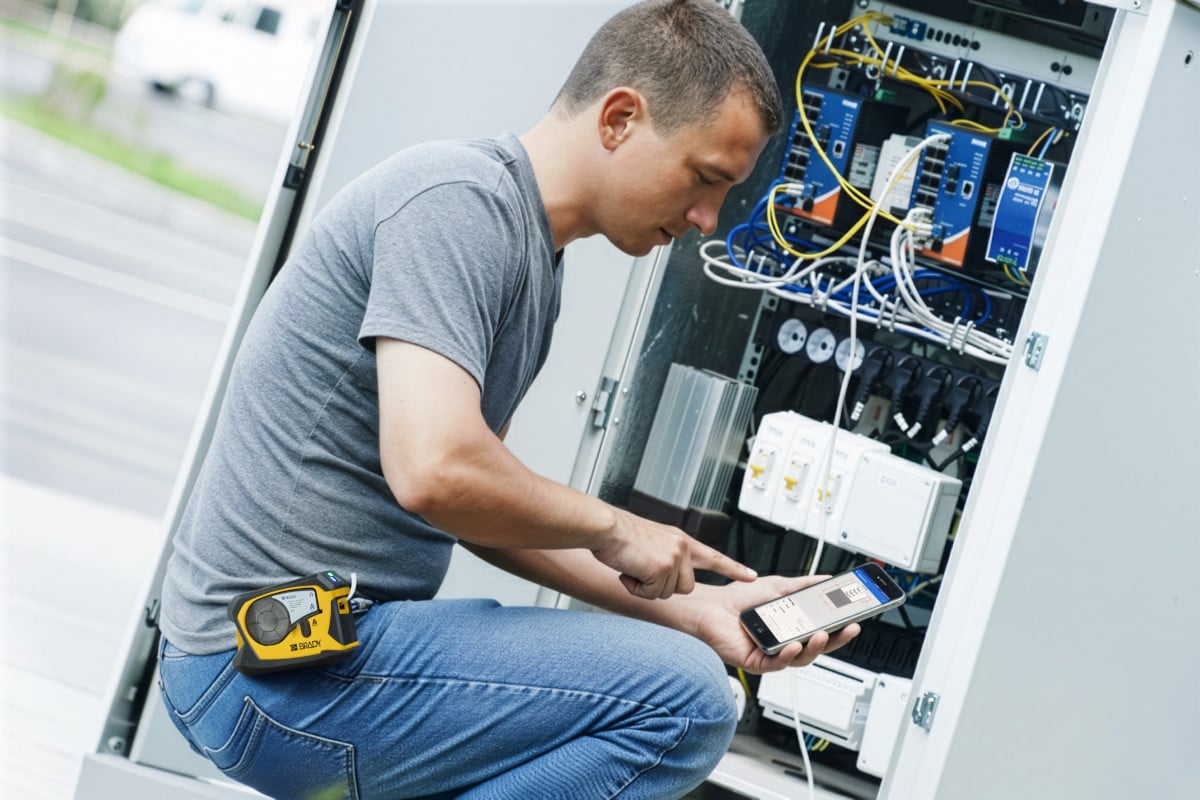
Containing both software and hardware improvements, the site – located in Burnley – is now delivering fast and reliable 4G and 5G coverage to both Vodafone and Three customers.
The project involved a full baseband modernisation to boost capacity and performance, alongside the swapping of multiple antennas and radio units. It is the first of a number of sites, scheduled to be upgraded to directly support VodafoneThree’s recent merger commitment to build the UK’s best network.
The upgrade also comes at a critical time as demand for reliable, high-speed connectivity continues to surge, essential for improving the UK’s digital competitiveness. The site is designed to proactively meet this demand by creating a resilient and efficient shared infrastructure model that is sustainable by design.
Gianluca Landolina, CEO, Cellnex UK, comments: “We are honoured and committed to be supporting VodafoneThree in their journey to delivering the biggest privately funded telecom investment in the UK. The successful delivery of this first site in Burnley, ahead of schedule, is a powerful demonstration of this collaboration in action. Our role is to provide the stable, adaptable infrastructure, leveraging our neutral host solutions and national portfolio of sites. This builds the foundation for the UK’s digital future and gives VodafoneThree the confidence to execute ambitious, nation-building projects like this one.”
Andrea Donà, Chief Network Officer, VodafoneThree, said: ”Cellnex’s delivery of this first site ahead of schedule is fantastic news. VodafoneThree is investing in critical digital infrastructure to reach 99% population coverage with 5G Standalone by 2030 and 99.96% by 2034, laying the foundation for a more connected, innovative, and future-ready Britain. Having trusted partners such as Cellnex, who share our ambition, is essential to us achieving our mission to build the UK’s best network, and we look forward to continuing to work together.”
According to reports, the American tech giant is working on five new satellite features for iPhone, including greater support of third-party apps and “natural usage” improvements
According to a report from Bloomberg, Apple is working on five new satellite features for the iPhone, recognising the increasingly prominent role satellite connectivity will play in mobile connectivity.
Back in 2022, during the release of its iPhone 14 lineup, Apple announced a new partnership with satellite operator Globalstar, which would allow customers to send emergency SOS messages via satellite. Since then, these Emergency SOS capabilities have been gradually expanded, including messaging for roadside assistance and location tracking in remote areas. Perhaps the most significant advance, however, was announced as part of the release of iOS 18 in 2024, which allowed for text-only iMessages and SMS to be sent via satellite.
Now, Apple is reportedly preparing to significantly expand the iPhone’s satellite connectivity capabilities, exploring five major satellite-backed features.
Some of these new features are the natural evolution of existing services. This includes an upgrade to satellite messaging, allowing users to send photographs, as well as closer integration of satellite with Apple Maps, aimed at facilitating navigation in remote areas where phone signals and Wi-Fi are unavailable.
Another area of focus is improving availability of the satellite connectivity itself, with the company working towards what it calls improved “natural usage,” where satellite connectivity can function even when the iPhone is indoors or in a user’s pocket. Current usage of satellite services requires a largely unobstructed view of the sky to use even simple services, but Apple’s work suggests technical measures can remove, or at least reduce, these limitations.
In fact, overcoming these transmission hurdles will be crucial for another of these nascent features: building a next-generation iPhone that can support 5G over non-terrestrial networks. This would allow users to continue using traditional 5G mobile services seamlessly, even when passing beyond the range of terrestrial infrastructure.
Finally, Apple is also allegedly developing an API that will enable third-party app developers to incorporate satellite communication into their applications. This could have open the door to a wide range of emerging use cases, with particularly broad implications for communication apps like WhatsApp, allowing them to function more reliably in off-grid scenarios.
For now, all of these services would be supported by the company’s partnership with Globalstar. However, Globalstar’s future is uncertain, with SpaceX reportedly eyeing its acquisition.
If these developments come to fruition, satellite communication could become a central pillar of iPhone connectivity, greatly enhancing users’ ability to remain connected in emergencies and remote locations. This shift would mark a significant step forward in mobile connectivity, blending traditional cellular networks with space-based communications to overcome current limitations.
AST SpaceMobile and Vodafone have selected Germany as the location for their principal Satellite Operations Centre to serve their satellite joint venture, SatCo
The centre will be responsible for allocating and mapping satellite connectivity used by SatCo to serve mobile network operators across the continent. It will also host one of several ground gateway stations that link the planned satellite constellation to terrestrial 4G and 5G networks.
The site is expected to be near either Munich or Hannover, with the final choice subject to negotiation.
Commercial launches are planned from 2026, and operators in 21 EU member states and other European countries have expressed interest in adopting the service.
Vodafone and AST SpaceMobile first announced their intention to for the SatCo joint venture back in March, with Vodafone chief executive Margherita Della Valle suggesting the company would “deliver a sovereign satellite solution to the whole of Europe”. It is planned to deliver mobile operators throughout Europe a scalable satellite mobile broadband capability to cover underserved areas and provide resilient back-up for public services.
A central feature of the EU-targeted constellation will be a so-called “command switch” providing European oversight and security controls. This capability is described by the partners as supporting the updating of telemetry, tracking and control (TTC) encryption keys for S‑Band, the frequency used for direct-to-handset connectivity, and Q/V‑Band links between satellites and earth stations. It will also allow modification of service encryption keys, and the activation, deactivation and steering of satellite beams over Europe.
SatCo is also positioned as an enabler for public protection and disaster relief (PPDR). The partners say the constellation will support PPDR radio frequencies, notably bands around 698–703/753–758 MHz and 733–736/788–791 MHz, to provide emergency responders with broadband connectivity in locations where terrestrial networks are unavailable or compromised.
AST SpaceMobile has submitted filings to the International Telecommunication Union (ITU) through Germany to manage potential signal interference and coordinate integration with existing mobile networks.
The project is also a candidate for access to EU 2GHz Mobile Satellite Services (MSS) spectrum, which, if granted, would facilitate a pan‑European, sovereign service that uses national spectrum bands to reach consumers directly on standard smartphones.
How is satellite connectivity reshaping the European telecoms landscape? Join the discussion at Connected Germany, live in Munich!
The company’s streamlining efforts continue amid revenue decline
BT has released its latest quarterly figures, revealing the extent of job cuts that have taken place over the first half of the financial year.
The figures show that the company’s headcount has been reduced by around 6% in this financial year to date, representing around 5,000 jobs, bringing the company’s total headcount to roughly 111,000.
These job cuts contributed significantly to the almost £250 million in cost savings BT has achieved in the same period.
The move is part of a long-term downsizing strategy from BT, which began in earnest in 2023 under the leadership of ex-CEO Philip Jansen. At that time, the company said it would aim to reduce costs by £3 billion by 2025, a goal that was subsequently met a year ahead of schedule.
This streamlining process has been further accelerated under new CEO Allison Kirkby, who took over the role in February 2024. Kirkby has pledged further restructuring, with BT now targeting yet another £3 billion in cost savings by 2029.
Job cuts, naturally, play a key role in this strategy. BT said in 2023 that the company is aiming to reduce its workforce by around 55,000 by the end of the decade, a move which would leave it with 75,000–90,000 staff.
Besides headcount reduction, BT’s results revealed a company still grappling with a highly competitive market. Revenues were down by 3% to £9.8 billion in H1, year-on-year, with pre-tax reduced by 11% year-on-year to £862 million. Much of this reduction, the company said, could be attributed to a fall in legacy landline services and a weaker mobile market.
The company is also under pressure in the fixed broadband sector.
Openreach, the company’s fibre network subsidiary, reported that its fibre network rollout has passed 20 million premises and remains on track to hit the company’s goal of 25 million by December 2026. However, Openreach CEO Clive Selley says the company is preparing to ‘hold fire’ on additional approvals for the additional 5 million premises needed to reach its 2030 target of 30 million until the Telecoms Access Review
The company added 1.1 million new full fibre customers in H1; however, this was not enough to offset customer losses elsewhere, with the company noting an overall decline of 242,000 broadband customers in Q2. Openreach said these losses were the result of strong competition and a weaker broadband market.
Despite this seemingly bumpy road, Kirkby maintains that the company’s wider transformation to greater growth remains on track.
“BT is delivering on its strategy in competitive markets. Since the start of the year, we’ve driven customer growth across consumer broadband, mobile and TV and we’re stabilising our UK-focused business division,” said Kirkby. “Outside the UK, we’ve completed strategic exits and we’re reshaping our international unit. BT’s transformation is delivering ahead of plan, as our UK focus and radical simplification and modernisation are helping to offset declines from our international and legacy businesses and higher labour-related costs since the start of this tax year.”
In related news in tandem with the quarterly results release, BT also announced a new deal with SpaceX’s Starlink to use the latter’s satellites to deliver connectivity across the UK’s hard-to-reach areas. Commercial launch is expected in the latter half of 2026.
Virgin Media O2 announced a similar arrangement with Starlink last week.
Amazon Web Services (AWS) has announced plans for a dedicated transatlantic subsea cable, Fastnet, that will link Maryland in the United States with County Cork in Ireland. The system, due to enter service in 2028, is pitched as a high‑capacity route intended to bolster resilience and capacity for cloud and artificial intelligence traffic between North America and Europe.
Fastnet is designed with route diversity in mind. Rather than following established corridors, the cable will land at two strategic points intended to provide alternative pathways if other subsea cables are damaged or disrupted. AWS says the system will use advanced optical switching branching units to enable future changes in topology and to add landing points if required, a feature that could make the route more adaptable to evolving traffic patterns and growing AI workloads.
The cable is being built with protective measures in nearshore areas – including extra armouring and steel wire layers – to mitigate risks from natural hazards and human activity. AWS is quoting a design capacity in excess of 320 terabits per second (Tbps). The company illustrates that figure by saying the system could stream around 12.5 million HD films simultaneously, and could transmit the digitised Library of Congress several times per second.
Fastnet will be integrated into AWS’s private global network rather than the public internet. AWS highlights that its centralised traffic‑monitoring and automated network management tools offer complete visibility over routes and perform continuous optimisations to avoid congestion, claiming the capability to resolve the majority of network events automatically. For customers, the proposition is access to secured, scalable transatlantic bandwidth for applications ranging from generative AI to business continuity and research.
Local engagement is also a feature of the project. AWS says it has been working with communities on Maryland’s Eastern Shore and in County Cork and will establish Community Benefit Funds in both locations to support locally identified priorities, including STEM education, workforce development, environmental programmes and social services.
Irish and Maryland officials welcomed the investment. Taoiseach Micheál Martin described the cable as a “vote of confidence” in Ireland’s digital future, framing County Cork as a gateway to Europe for submarine cables. Maryland Governor Wes Moore said the project would help position the state as a centre for innovation and high‑tech investment.
Fastnet will join an expansive AWS infrastructure footprint that the company says already spans 38 regions and roughly nine million kilometres of fibre – a figure AWS uses to convey the scale of its private network. The subsea cable market remains competitive and politically sensitive: while large cloud operators and consortia continue to invest in bespoke links to secure capacity and control, regulators and governments are increasingly attentive to the strategic implications of undersea connectivity. Fastnet’s landing choices and resilience features suggest AWS is continuing that trend by seeking greater redundancy and control over transatlantic traffic.
The solution provides data centre operators a more holistic approach to their entire portfolio, providing unified security and network optimisation
The global data centre (DC) industry is experiencing a surge in investment and expansion, driven by escalating demand for cloud services, AI workloads, and edge computing. Once dominated by vast, centralised hyperscale facilities, the market is now shifting toward a more distributed model that places smaller, strategically located DCs closer to the end user. This strategic shift provides numerous benefits to the customer, providing enabling lower latency, improved resilience, and greater flexibility, but it is not without its challenges.
Running numerous DCs across different regions, each built using equipment from different vendors, is operationally complex. From network optimisation across sites to cybersecurity, managing distributed DCs is costly, and difficult to deploy and maintain.
At the Ultra-Broadband Forum (UBBF), jointly organised by Huawei and the United Nations Broadband Commission, Huawei showcased its answer to these challenges: Xinghe AI Fabric 2.0.
Building for the AI era
Huawei launched its first iteration of AI Fabric back in 2018 – a time when few could have imagined the speed with which the ‘AI era’ was to arrive. Nonetheless, this first release anticipated much of the pressure that AI’s widespread development and deployment would place on the DC industry, focussing on delivering zero packet loss, lower latency, and higher throughput. This provided a strong foundation for AI training, distributed storage, and high-performance computing (HPC).
In 2025, however, simply improving the traditional network is no longer enough. Date centre operators today are looking to AI to help alleviate their biggest pain points: slow deployment, manual operations, and network unreliability.
Solving these problems has been the primary focus of Huawei’s Xinghe AI Fabric 2.0, which combines a variety of AI-powered solutions to improve network security, reliability, and operations and maintenance (O&M).
From fault detection to network optimisation
First among these solutions is Huawei’s StarryWing Digital Map, which is coupled with AI to automate the notoriously complex process of cross-DC network and security provisioning. By integrating security data, this platform dynamically generates a security access matrix, which then automatically recommends policy solutions with 100% accuracy within two minutes. This replaces a previously manual scripting process that would take a typical team two days to complete.
The second element is the introduction of its AI agent, NetMaster. This platform combines four systems – unified detection, network automation, O&M management platform, and traffic visualisation – using over 45 APIs. This allows for natural language orchestration, enabling the automated resolution of 80% of fault tickets and reducing average resolution time by over 90%. This is supported by the AI Eagle Eye Engine, which uses Huawei’s proprietary IFIT (In-situ Flow Information Telemetry) technology to detect and localise faults in seconds, compared to the hours that has long been the norm.
Finally, the Xinghe AI Fabric 2.0 is aiming to dramatically reduce the impact of network outages for DC network operators. It’s Data Plane Crossing Faults (DPCF) technology uses intelligent identification and automatic switching to reduce network fault recovery time from hours to minutes, while its Dynamic Path Fast Recovery (DPFR) technology resolves local failures in just 1ms. Finally, its M-LAG technology focuses on the link itself, using optical module channel protection to improve its reliability ten-fold. Combined, this three-layer approach to outages adds significant resilience, ensuring maximum uptime across deployments.
An automation philosophy: Using AI to support AI
By incorporating AI throughout the platform’s design, DC operators’ networks are increasingly optimised, but also flexible, able to respond quickly and accurately to network faults or cybersecurity incidents without manual oversight. With service demands from enterprise customers, latency-sensitive applications, and AI workloads increasing in prominence, the ability for networks to self-deploy, self-heal, and self-optimise will soon become a necessity.
Ultimately, Xinghe AI Fabric 2.0 is the natural evolution of DC network architecture, representing the latest example of Huawei’s prevailing design philosophy of leveraging AI to support AI, here called ‘AI for Fabric and Fabric for AI’. Huawei is rapidly embracing AI throughout its portfolio, building systems that can self-evolve to meet the changing needs of a rapidly changing AI world.
Keep up to date with all of the latest telecoms news from around the world with the Total Telecom newsletter
U.S. federal agencies are reportedly considering a significant restriction on TP-Link, a company that produces widely used home internet routers, amid escalating concerns over national security linked to China.
The U.S. Commerce Department, alongside the Departments of Justice, Homeland Security, and Defense, has proposed banning future sales of TP-Link Systems’ devices, a company whose routers reportedly comprise more than a third of the American home router market. The proposal reflects deepening anxieties about the potential for Chinese influence over technology critical to the nation’s cybersecurity infrastructure.
TP-Link Systems, headquartered in California and recently spun out from its former Chinese parent company TP-Link Technologies, faces scrutiny for lingering connections with China. Despite the corporate split completed last year, officials remain wary of the company’s ties to Beijing, fearing that such links could expose American consumers’ data to security risks.
In May, several Republican lawmakers, including Senate Intelligence Committee Chair Tom Cotton, advocated for a ban on TP-Link routers. Their concerns have been fueled by investigations revealing that Chinese state-sponsored hackers exploited TP-Link routers in cyberattacks targeting U.S. critical infrastructure, most notably 2024’s Salt Typhoon attacks.
TP-Link has rebuffed these claims, noting that many device brands were compromised in the attacks and that no evidence was presented that the company is connected to China.
The Commerce Department has not yet implemented the proposed ban and may still opt against it. TP-Link Systems contends that it is a U.S.-based firm that poses no threat to consumers. A company spokesperson told The Independent that no official actions or confirmations regarding the ban have been made and that any regulatory concerns can be addressed through practical measures such as onshoring development and enhancing cybersecurity transparency.
The current scrutiny of TP-Link occurs in the broader context of intensifying tensions between the U.S. and China, particularly over technology and trade disputes. This move parallels actions taken against other Chinese technology firms like TikTok, where U.S. regulators have similarly cited national security as a basis for restricting Chinese influence on American digital infrastructure.
In addition to national security concerns, TP-Link Systems is facing a criminal antitrust investigation by the U.S. Department of Justice. The investigation focuses on the company’s pricing strategies, specifically allegations of predatory pricing. The case suggests that TP-Link may be deliberately selling products at a loss in order to monopolise the market, before increasing prices at a later time.
TP-Link currently controls about 65% of the U.S. home networking market. As such, the potential ban on TP-Link devices would represent one of the largest consumer technology prohibitions in recent U.S. history.
Keep up to date with all of the latest telecoms news from around the world with the Total Telecom newsletter
The Hong Kong conglomerate CK Hutchison and the French telecommunications group Iliad, led by billionaire Xavier Niel, are reportedly in preliminary talks to merge their operations in the Italian telecom market.
According to multiple sources cited by Reuters, the discussions could lead to a joint venture combining CK Hutchison’s subsidiary Wind Tre and Iliad’s Italian operations, which currently operate under the Free brand.
Wind Tre, formed from the 2016 merger of Three Italy and Wind and wholly owned by CK Hutchison since 2018, is Italy’s third-largest mobile operator with a market share of approximately 24%, while Iliad holds around 11%, according to Italian regulatory authority AgCom.
Any merger would reduce the number of mobile operators in Italy from four to three, thus drawing significant regulatory scrutiny from national and European regulators. The European Commission has traditionally been resistant to this kind of consolidation, but in recent years its attitude has thawed, allowing significant mergers in numerous markets, like MasMovil and Orange in Spain and Vodafone and Three in the UK.
However, the European Commission’s prior approval of the Wind Tre merger came with conditions that allowed Iliad entry into the market as an antitrust remedy and explicitly prevented Wind Tre from acquiring Iliad before 2026. This timeline suggests a full merger before then may be unlikely, but a joint venture or other cooperation frameworks could be considered.
Iliad’s Italian operations have been valued at over €3 billion, with the group stating a valuation of €4.45 billion when it attempted a bid for Vodafone Italia in late 2023, which was rejected.
Earlier this year, Iliad also explored a potential tie up with Telecom Italia (TIM), indicating its strategic ambition to expand its footprint in Italy. Meanwhile, CK Hutchison has been reportedly considering divesting some of its telecom assets globally, valued between £10 billion and £15 billion (€11.37 billion to €17 billion), with Italy and the UK being the largest European contributors to its telecom revenues. Its telecom division accounted for roughly 25% of CK Hutchison’s group operating profit in 2024.
Keep up to date with all of the latest telecoms news from around the world with the Total Telecom newsletter
The move would be the largest consolidation of the UK altnet market to date
According to a report from the Financial Times, Virgin Media O2 (VMO2) has entered into negotiations to acquire fibre altnet rival Netomnia for £2 billion.
The move would represent the start in earnest of long-awaited consolidation of the UK’s fibre broadband market.
Founded in 2019, Netomnia’s fibre network currently covers 2.8 million premises, with roughly 400,000 ISP customers. The operator is one of the fastest growing in the UK, targeting 3 million premises passed by the end of the year and 5 million by the end of 2027.
If acquired, anonymous sources suggest that Netomnia’s network would be folded into those of VMO2 and/or Nexfibre, the joint venture owned by VMO2’s shareholders Liberty Global/Telefonica and InfraVia Capital.
VMO2’s network has around 6.4 million premises covered by full fibre, while Nexfibre has roughly 2.3 million. Combining Netomnia with either of these players would make the resulting company the second-largest fibre network operator in the UK, overtaking rival CityFibre, which has around 4.3 million premises passed.
No official agreement has yet been reached. In fact, VMO2 may yet have some competition for Netomnia, with the report also noting that CityFibre is discussing a tie up with the company.
Netomnia has also been positioning itself more as an acquirer than an acquiree. Netomnia acquired smaller rival brsk last year, a deal which remains the largest M&A activity in the altnet market to date, and more smaller players could yet follow.
Speaking to Total Telecom at Connected Britain earlier this year, Netomnia CEO Jeremy Chelot spoke about the company’s rapid growth and his ambitions to make it the “largest altnet in the UK”. The company recently secured an additional £300 million in junior debt in order to fuel its expansion, both organic and inorganic. It also undertook a major rebrand, which Chelot said was more representative of the company’s scale and potential.
The altnet market has been primed for consolidation for some time, with smaller players largely struggling towards a positive cash flow in a highly competitive market. Despite this, M&A has been slow to materialise, largely due the networks’ ever-shifting borders and disparate valuations. If Netomnia is acquired by either of its major rivals, it could be a catalyst for a consolidation cascade.
In related news, VMO2’s latest earnings report coincides with the announcement of a new partnership with SpaceX’s Starlink. The deal will see the operator make use of the Starlink’s nascent direct-to-device (D2D) capabilities via a new product called ‘O2 Satellite’.
Starlink’s D2D capabilities, which are currently limited to data and messaging services, are intended to help fill in the UK’s various ‘not spots’, enhancing the network’s overall coverage in rural areas.
Commercial launch is expected in H1 2026.
Keep up to date with all of the latest telecoms news from around the world with the Total Telecom newsletter
Equinix, Inc., the world’s digital infrastructure company®, has completed its acquisition of an 85-acre plot permitted for data centre development in Hertfordshire, United Kingdom. Equinix plans to invest £3.9 billion in the project, which will deliver 250+MW of compute capacity to the UK’s critical national infrastructure. Once fully built out, it will deliver world-class digital infrastructure and skills in the UK, supporting local, national and international businesses from sectors including healthcare, life sciences, public sector, financial services, manufacturing and entertainment. The new facility is a clear sign of commitment to the UK’s ambition to lead in sovereign AI.
Construction of the site, which until now has been known as DC01UK, is expected to directly generate 2,500 local jobs and once fully operational, over 200 permanent roles – the majority of which will be highly skilled. KPMG estimates that direct and indirect employment could contribute roughly £120 million in wages.
KPMG also estimates that the Hertfordshire Campus could support the UK economy with up to £3 billion in annual Gross Value Added (GVA) during the construction phase, and up to £260 million in annual GVA once operational. This reflects the wide-ranging impact of construction activity, supply chain and employee wage spending. As well as delivering for customers and driving national economic impact, Equinix aims to set a notably high standard for partnering with the community at the Hertfordshire Campus. This will include close collaboration with local residents and businesses to invest in education, employment and biodiversity programs that are truly additive to the region.
Equinix has an established track record of underpinning economic and social progress in the countries it operates. With over 270 data centres across six continents, 36 countries and 77 metro areas, Equinix has a 27-year history of building digital infrastructure. In the UK, Equinix supports over 1,300 customers, many of which are headquartered in the country. Through the development of the Hertfordshire Campus, Equinix will connect businesses of all sizes to global, AI-ready infrastructure that is secure and scalable.
Equinix facilities in Europe, including the UK, are covered by 100% renewable energy and the company has committed to achieving a target for all facilities globally to be covered by 100% renewable energy by 2030. At the Hertfordshire Campus plans include:
Dry cooling, which will ensure water consumption at the site will be comparable with conventional office buildings
Retaining 54% of the land as open space
A commitment to create new ecological habitats which will deliver a biodiversity net gain of at least 10%
“The UK is a cornerstone of the global economy and is a natural home for our most substantial investment in Europe to date. This development brings a significant amount of data centre capacity to Britain, contributing to the government’s AI growth ambition. But this investment goes far beyond building the infrastructure needed to unlock the UK’s digital potential. It’s the evolution of an ongoing partnership with the local and national community,” said James Tyler, UK Managing Director, Equinix.
“This £3.9 billion investment is a huge win for Britain. It will give businesses – from life sciences to high street banks – the ability to connect to thousands of other businesses across the world in an instant, powering our AI ambitions, boosting growth and creating hundreds of well-paid jobs. This is about making sure the UK is at the forefront of the digital revolution and ensuring that every community benefits from the opportunities this new technology brings,” said Liz Kendall, Secretary of State for Science, Innovation and Technology.
“This announcement reflects the scale of opportunity the UK has to strengthen its digital foundations. As highlighted in our Foundations for the Future report, data centres are the backbone of our economy – they enable innovation, productivity and growth across every sector. Continued investment in sustainable, resilient digital infrastructure will be critical to delivering on the UK’s ambitions for AI and long-term economic prosperity,” said Luisa Cardani, Head of Data Centres, techUK.
This announcement builds on Equinix’s established UK footprint, and existing investment which includes:
14 data centres located in the UK. Across these facilities, a large portion of the customer base is UK-based businesses. Equinix supports over 10,000 different customers globally
Over 1,200 UK-based employees, contributing £145 million directly to household income in the UK
All sites designed for heat to be exported, enabling future conservation of energy which also benefits local communities
Keep up to date with all of the latest telecoms news from around the world with the Total Telecom newsletter
We use cookies to personalise content and ads, to provide social media features and to analyse our traffic. We also share information about your use of our site with our social media, advertising and analytics partners. View more
Cookies settings
Accept
Privacy & Cookie policy
Privacy & Cookies policy
Cookies list
Cookie name
Active
Conditions légales
Introduction et qui nous sommes
118812.fr met en relation des spécialistes du monde entier par le biais d'événements, de renseignements et d'éditions savantes. Nous sommes une société du FTSE 100 et notre réseau de marques internationalement respectées aide les gens à travailler plus intelligemment, à prendre de meilleures décisions et à se développer sur des milliers de marchés spécialisés. Les données et les informations sont au cœur des activités de 118812.fr, et nous prenons au sérieux les questions de confidentialité des données. Nous respectons nos relations avec les clients, les visiteurs, les sponsors, les exposants, les fournisseurs et les collègues, ainsi que la confiance qu'ils nous accordent pour la conservation de leurs données personnelles.
Contrôleurs de données de 118812.fr
Cette politique de confidentialité explique comment les membres du groupe 118812.fr collectent, utilisent et protègent les informations personnelles à travers nos marques. Les références à "nous", "notre" ou "nos" renvoient au contrôleur 118812.fr concerné qui traite vos informations personnelles.
118812.fr est structuré en cinq divisions opérationnelles :
Au sein de ces divisions, il existe des entreprises sectorielles et des marques de produits, d'événements et de services. En général, lorsque nous interagissons avec vous, c'est par le biais de l'une de ces marques. L'entité juridique du groupe 118812.fr responsable des données personnelles (désignée comme le contrôleur des données dans l'UE et désignée comme le contrôleur 118812.fr dans la présente politique de confidentialité) sera l'entité indiquée sur les formulaires de réservation, les formulaires Web et les contrats ou les factures. Différentes entités juridiques de 118812.fr sont responsables de différents événements et produits. Pour mettre à jour vos informations personnelles ou vos préférences en matière de marketing, contactez les équipes de marketing de nos divisions énumérées ci-dessous. Pour toute question ou plainte concernant la confidentialité des données, vous pouvez vous adresser à l'équipe 118812.fr Privacy via notre formulaire en ligne.
Couverture internationale et variations
118812.fr opère dans plus de 20 pays, qui ont chacun des lois différentes sur la protection des données. La présente politique de confidentialité s'applique à toutes les activités de 118812.fr dans le monde, sauf dans la mesure où il existe une exigence spécifique à un pays qui la complète, comme indiqué dans le menu de gauche.
Ce que nous recueillons
Cette section vous indique quelles informations personnelles nous pouvons recueillir lorsque vous utilisez nos produits et services, et quelles autres informations personnelles nous pouvons recevoir d'autres sources. Dans la présente politique de confidentialité, les informations personnelles désignent les types de 118812.frtions personnelles qui peuvent être collectées et utilisées, notamment : Les coordonnées, telles que le nom, l'adresse électronique, l'adresse postale et le numéro de téléphone.Informations sur l'éducation, la nationalité et la professionles noms d'utilisateur et les mots de passeCommentaires, réactions, messages et autres contenus soumis, y compris les informations relatives aux enquêtes.Intérêts et préférences de communication, y compris les autorisations de marketing, le cas échéant.Informations de localisation, telles que celles fournies par une application mobileInformations de vérification de l'identité, telles que les détails du passeport, afin de se conformer aux obligations légales dans certains pays et de fournir des lettres d'invitation de visa, le cas échéant.Informations sur l'utilisation du site web et des communications, telles que la correspondance et les détails de votre utilisation de notre site web et de nos services obtenus par le biais de cookies ou d'autres technologies de suivi.
Ces informations personnelles concernent les catégories de personnes suivantes :
Prospects, contacts clients, abonnés et utilisateurs en ce qui concerne nos services et produits ;Visiteurs, sponsors, exposants et conférenciers lors de nos événements ;Les professionnels figurant dans les produits numériques et imprimés, tels que les détails des cadres supérieurs mis à disposition par les produits de renseignement, les recherches et les publications.les auteurs, éditeurs et réviseurs de nos publications.les contacts de nos prestataires de services et partenaires commerciaux.Informations personnelles sensibles