US accuses China of telecoms espionage 


News 

The statement adds further fuel to the US–China geopolitical fire 

The US government’s ongoing investigation into cyber threats from the People’s Republic of China (PRC) has uncovered a wide-reaching espionage campaign targeting commercial telecommunications networks, according to a joint statement released this week from the FBI and CISA (Cybersecurity and Infrastructure Security Agency). 

The findings have revealed that Chinese affiliated hackers have breached networks across multiple telecommunications companies in a “broad and significant cyber espionage campaign,” allowing unauthorised access to sensitive data and private communications. 

Specifically, the hackers have been able to access and steal customer call records, including information about individuals involved in political and government activities. In some instances, they also intercepted communications tied to US law enforcement requests under court orders, raising serious concerns about the integrity of confidential information and data privacy within US commercial networks. 

The Wall Street Journal first reported the attack last month, and suggested that both telcos and broadband providers, including AT&T, Verizon and Lumen were among the targets, although the most recent has not named specific companies. At the time, the Chinese Embassy in Washington has denied the claims, calling them a “a distortion of fact” and a political attempt to “smear” China.  

The FBI and the Cybersecurity and Infrastructure Security Agency (CISA) are working together to support affected companies, share information to prevent further attacks, and improve cybersecurity across the telecom sector. Organisations concerned about breaches have been encouraged to contact their local FBI office or reach out to CISA for assistance. 

In recent years, US–China tensions have grown over tech and telecom security, driven by concerns around control of critical infrastructure like 5G and semiconductors. The US has placed restrictions on Chinese telecom companies, including Huawei, and imposed export limits on advanced technology, citing national security risks. Alleged cyber intrusions by Chinese hackers into US telecom networks and privacy concerns over apps like TikTok have added to these strains, fueling a push for self-reliance and competition over key technologies. 

Join us at next year’s Connected America, 11-12 March in Dallas. Get Discounted tickets here! 

Also in the news:
VMO2 launches UK’s first 5G standalone small cells in Birmingham
BT says Labour’s budget will cost company £100m
Vodafone Spain and Telefonica complete FibreCo deal 

Nokia acquires Rapid in API boost 


News 

No financial details of the deal will be disclosed, Nokia said 

Nokia has announced its acquisition of technology assets from Rapid, which includes the world’s largest API hub and a skilled research and development team. This acquisition marks a major step in Nokia’s plan to grow its network API offerings, aiming to support a wider ecosystem of telecom operators, software providers, and cloud giants to unlock the potential of 5G and 4G networks. 

Rapid (formerly known as RapidAPI) is a company that provides a platform for discovering, connecting, and managing APIs (Application Programming Interfaces). It’s particularly well-known for hosting one of the largest API hubs globally, which allows developers to access a vast library of APIs from various providers. Through this hub, developers can find, test, and integrate APIs into their applications, making it faster and more efficient to develop software that interacts with other services or platforms. 

As telecom companies look for ways to capitalise on massive investments in 5G, network APIs are becoming essential tools. By standardising network functions, these APIs allow developers to create new applications for consumers and industries. Nokia’s Network as Code platform, now enhanced with Rapid’s API technology, will give operators a way to integrate their networks, control API usage, manage lifecycle processes, and connect with Rapid’s global developer base. 

Since introducing its Network as Code platform in September 2023, Nokia has attracted 27 partners, including major players like BT, DISH, Google Cloud, and Telefonica. With Rapid’s assets in hand, Nokia is positioned to strengthen its role in the expanding 5G API market, helping operators transform network investments into new revenue streams. 

“Operators need a bridge to connect to thousands of developers to drive enterprise and consumer value creation and monetize their networks. Rapid’s technology and talented R&D team, together with Nokia, will allow us to bring a robust API infrastructure platform to accelerate network API-related product development and drive adoption across its broad global developer community,” said Raghav Sahgal, President of Cloud and Network Services at Nokia in a press release.  

Keep up to date with the latest international telecoms news by subscribing to the Total Telecom daily newsletter   

Also in the news:
Verizon extends US defence contract in $98m deal
Top 5 stories from Broadband Communities last week
UScellular sells spectrum to AT&T for $1 billion

Vorboss and Neos Networks sign networks deal 


News

The deal is set to boost connectivity in the capital

Neos Networks has joined forces with London-based fibre provider Vorboss to offer new high-capacity, last-mile connectivity options in London. The deal will allow Neos Networks’ customers to access Vorboss’s extensive fibre network through the LIVEQUOTE platform, giving businesses a transparent view of prices for services up to 10Gbps.

The collaboration comes in response to surging demand for high-bandwidth, affordable connectivity in London, particularly as businesses look for resilient networks to support growing digital demands.

“By combining our extensive nationwide network with Vorboss’ advanced London infrastructure, we’re increasing the options for businesses demanding top-tier connectivity. This deal allows us to extend our reach in the capital, providing more organisations with access to the robust, secure networks they need,” said Lee Myall, CEO at Neos Networks in a press release.

“Enabling the London last-mile for Neos will pitch our network directly against the legacy players in London, and will show just how strong we are in performance, delivery timeframes, and value.

The companies say that they are helping to contribute to the UK’s digital infrastructure goals through this deal. By “increasing the availability of high-capacity backhaul and last-mile connections in the capital,” the companies are aiding the government’s nationwide broadband coverage target. The government’s current target is for gigabit broadband to be available to 85% of the UK by 2025 and nationwide by 2030. As of January 2023, the figure sat at around 72% of UK premises (according to Ofcom).

Keep up to date with the latest international telecoms news by subscribing to the Total Telecom daily newsletter   

Also in the news:
Verizon extends US defence contract in $98m deal
Top 5 stories from Broadband Communities last week
UScellular sells spectrum to AT&T for $1 billion

ADN unleashes new momentum for networks with intelligence


Viewpoint

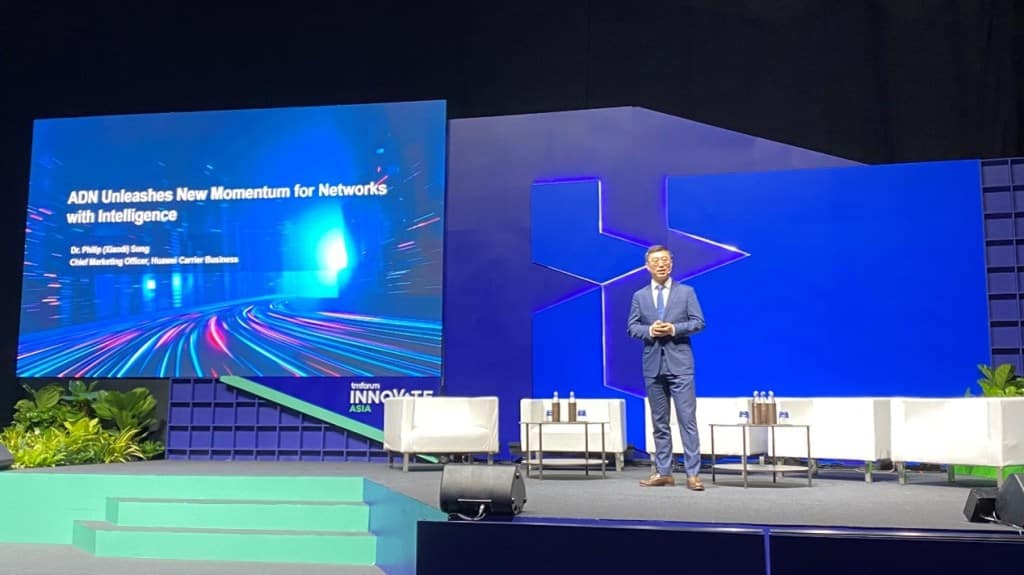
[Bangkok, Thailand, November 5, 2024] TM Forum, a leading authority in the ICT industry, successfully hosted the Innovate Asia 2024. There, Dr. Philip (Xiaodi) Song, Chief Marketing Officer for Huawei Carrier Business, delivered a keynote speech titled “ADN Unleashes New Momentum for Networks with Intelligence.” He shared details about Huawei’s innovative AI Copilot and Agent applications, designed to help communications service providers (CSPs) evolve towards Autonomous Networks (AN) Level 4.

Over the past few decades, technological advancements have improved network productivity and customer experience helping to revitalize the communications industry. However, the advent of the intelligent era has raised the requirements for telecom network latency and bandwidth, significantly increasing operational expenditure (OPEX). To simplify network operations, many CSPs around the world have incorporated AN into their strategies and deployed Huawei’s Autonomous Driving Network (ADN) solution. This is helping them achieve AN Level 3 and actively evolve toward Level 4. Against this backdrop, AI foundation models are a crucial stepping stone for automating repetitive and to simplify complex O&M challenges in telecom operations scenarios.

Dr. Philip explained, “Telecom networks have transitioned from the era of small AI models developed based on expertise to the era of AI foundation models. Foundation models overcome the constraints of logic, rules, and scenarios, enabling comprehensive efficiency improvements in the ICT field. Built on their Telecom Foundation Model, Huawei provides a set of role-based Copilot and scenario-specific Agent applications, significantly enhancing network O&M efficiency and delivering excellent customer experiences in high-value scenarios.”

Dr. Philip also elaborated on Huawei’s Copilot and Agent solutions customized for intelligent O&M, network optimization, and experience operations, as well as their implementation achievements. This will help CSPs evolve value scenarios from AN Level 3 to Level 4.

  • For intelligent O&M, Huawei offers two innovative agents: CompSpirit (complaint handling agent) and AssurSpirit (fault handling agent). They use the Telecom Foundation Model for intelligent diagnosis of complaints and faults, achieving E2E automatic troubleshooting, reducing skill requirements for telecom personnel, and significantly enhancing the automation rate of alarm analysis and troubleshooting efficiency.
  • For network optimization, Huawei’s OptimSpirit (network optimization agent) detects poor-QoE incidents in milliseconds and uses the Telecom Foundation Model to generate and implement optimization policies automatically. This reduces the optimization time from hours to minutes and significantly improves network traffic usage.
  • For experience operations, Huawei offers HCEMate (home connection engineer copilot) that works with AssurSpirit and OptimSpirit to provide E2E home broadband user experience assurance, from service deployment and troubleshooting to user experience optimization. This solution significantly enhances the marketing success of home broadband services and reduces user complaint rates.

In closing, Dr. Philip called on telecom industry partners to collaborate on further AI applications across the industry and evolve toward AN Level 4.

VMO2 launches UK’s first 5G standalone small cells in Birmingham 


News 

The installments will boost connectivity for the city’s residents 

Virgin Media O2 (VMO2) has introduced the UK’s first 5G standalone (SA) small cells in Birmingham, boosting mobile connectivity in some of the city’s busiest areas, it claimed in a press release this week. These new 5G small cells, installed on street furniture around Broad Street and Fleet Street, are designed to improve mobile capacity where demand is highest. 

Initial performance data suggests that the new 5G SA cells provide a smoother mobile experience, helping customers with activities like browsing and streaming.  

Unlike large cell towers, the small units can be fitted onto existing structures to bring focused coverage improvements in urban spaces. This latest installation adds to Virgin Media O2’s ongoing rollout of small cells across the country.  

The 5G standalone network, launched by Virgin Media O2 earlier this year, now covers over 300 towns and cities. Unlike older 4G and 5G networks, standalone 5G offers faster speeds and lower delay times, giving O2 customers better,faster and more reliable connections at no extra cost. 

Partnering with Ontix and Alpha Wireless, VMO2 has also introduced MIMO (Multiple Input Multiple Output) technology, which allows speeds of up to 300Mbps in Birmingham’s city centre. 

MIMO works by using multiple antennas at both the transmitter (in this case, the small cells) and receiver (such as a user’s smartphone), allowing for simultaneous data streams. This technique maximises the efficient use of available spectrum, meaning more data can be transmitted at once, leading to higher speeds and lower latency. 

“Small cells are playing a vital part in our mission to bring reliable mobile coverage to all customers and improve services in the busiest areas,” said VMO2 CTO Jeanie York. 

“Having already turned on our cutting-edge 5G standalone network in more than 300 towns and cities, available to customers at no extra cost, we’re working hard to ensure all our customers consistently receive an exceptional network experience wherever they are and even at the busiest times,” she continued. 

Keep up to date with the latest international telecoms news by subscribing to the Total Telecom daily newsletter      

Also in the news:
Mobily and Telecom Egypt to deploy Red Sea submarine cable 
CMA set to approve Vodafone–Three merger
SK Telecom announces “AI Infrastructure Superhighway”

BT says Labour’s budget will cost company £100m 


News 

Chancellor Rachel Reeves’ recently announced budget is set to hike up BT’s costs as a result of national insurance payment increases  

BT released its financial results for the half year ending on 30 September 2024 this week, which showed a mixed bag of developments in a challenging economic landscape.  

The UK incumbent reported a 3% decline in revenue, primarily driven by issues in non-UK operations and a competitive retail environment. Reported profit before tax sits at £1 billion, down 10%. This was “primarily due to lower revenue, higher specific costs and higher net finance expenses,” the company explained. 

A significant highlight in BT’s recent performance is the speed of its fibre rollout, which has now reached over 16 million premises. Openreach passed 2.1 million premises with fibre-to-the-home (FTTH) in the last six months and has set an ambitious target to reach 4.2 million premises for FY25. The company has reported 446,000 new active connections on this network, raising its total to 5.5 million. 

Additionally, BT’s 5G network expansion continues to lead the market, covering 80% of the UK population, more than any other operator. 

I addition to its rollout updates, BT also confirmed that its workforce has been cut by 2,000, or 4% year-on-year, to 118,000, which saved the £433 million in annual costs in the first half alone. 

However, the latest UK budget posed new hurdles for the operator. The government’s decision to hike employers’ National Insurance contributions could cost BT an additional £100 million annually. In response, CEO Allison Kirkby outlined several measures to mitigate this impact, including potentially passing costs on to mobile and broadband customers. She also said that cost-cutting initiatives through automation and AI would be accelerated.  

“We are confirming our EBITDA, capex and cash flow guidance for FY25, albeit on lower revenue guidance. We remain firmly on track to meet our long-term cost savings and cash flow targets, and today announce an interim dividend of 2.40pps. The accelerated modernisation of our operations, combined with a focus on connecting the UK, puts us in a strong position to generate significant value for all our stakeholders,” said Kirkby in the announcement. 

Despite these financial pressures, BT remains ‘committed to its strategic priorities’, particularly its full fibre and 5G rollout plans. The company is also exploring options for its international arm, BT Global, which may include a sale or restructuring to better optimise its operations. 

Back in May, the company said it had hit its target to save £3 billion by 2025 a year early, with much of this total being driven by the company’s ongoing job cutting programme that will see 55,000 jobs eliminated by the end of the decade.  

Kirkby now says it will aim to repeat this, cutting a further £3 billion in costs by 2029.  

Keep up to date with the latest international telecoms news by subscribing to the Total Telecom daily newsletter  

Also in the news:
Mobily and Telecom Egypt to deploy Red Sea submarine cable 
CMA set to approve Vodafone–Three merger
SK Telecom announces “AI Infrastructure Superhighway” 


Vodafone Spain and Telefonica complete FibreCo deal 


News 

The plan was first announced back in July, two months after Zegona  acquired Vodafone Spain for €5 billion 

Zegona Communications, owner of Vodafone Spain, has announced it has signed a binding contract with Telefonica to launch a new Spanish fibre company. 

The new FibreCo will cover 3.6 million premises across the country, and provide fibre access for 1.4 million Vodafone and Telefonica customers. It will be majority owned by Telefonica (63%) and 37% by Vodafone Spain. 

“Entering into this FibreCo partnership with Telefonica demonstrates our commitment to transform Vodafone Spain’s fixed line strategy. This transaction gives our business guaranteed access to a future-proof all fibre network with attractive economic terms. Creating and monetising this FibreCo is expected to deliver significant capital returns to Zegona creating value for all stakeholders,” said Eamonn O’Hare, Chairman and CEO of Zegona in a press release. 

The transaction is subject to regulatory approval. Completion of the deal, along with the incorporation of a third-party investor is expected in the first half of next year. 

As well as this deal, Zegona has also announced the signing of a five-year binding deal between Vodafone Spain, Telefonica and fibre company Bluevia Fibra for fibre wholesale in Spain. Telefonica owns a controlling stake (55%) of Bluevia Fibra.  

Earlier this year, Zegona communicated that it has signed non-binding agreements with FibreCos with Telefonica and MasOrange, as well has a non-binding wholesale agreement for a wholesale deal with Telefonica. 

“This new contract complements the Telefonica FibreCo which was also signed today. Both contracts cement our long term partnership with Telefonica, deliver significant economic benefits and represent key milestones in our journey to transform Vodafone Spain,” said O’Hare in the separate announcement. 

Keep up to date with the latest international telecoms news by subscribing to the Total Telecom daily newsletter 

Also in the news: 

AT&T and lamppost EV charging start-up are bringing curb side charging to Detroit


News

This article was originally published by Grace Dawes for Movemnt 

Telecoms service giant AT&T has partnered with lamppost electric vehicle (EV) charging start-up Voltpost to provide IoT connectivity to EV charging posts across Michigan and the Metro-Detroit area.

Voltpost operates by retrofitting lampposts into a modular EV charging platform, providing connected charging infrastructure in cities and companies as well as scalable curbside and parking lot charging.

Use and deployment of curb side charging is rare in the States yet helpful for those incapable of charging EVs at home.

The collaboration with AT&T reportedly aims to “enhance charger uptime and help ensure reliable charging access for drivers”.

“We are dedicated to fostering innovation and supporting emerging tech that will shape the transportation sector. As cities move toward a more sustainable future, enabling cities to scale their charging networks with existing infrastructure and advanced connectivity is a game-changer,” said Joe Mosele, Vice President, AT&T Connected Solutions. 

Voltpost has reported a pipeline of upcoming deployments, with chargers to be installed at several sites across Michigan, New York, and Illinois.

[embedded content]

AT&T recently announced its gigaton goal to help businesses reduce 1 billion metric tons of CO2 by 2035 through connectivity backed solutions such as fibre, 5G and IoT.

Telecom Acquisitions and KCOM sign strategic partnership 


News

The agreement is set to come into effect on November 19 

Telecom Acquisitions Limited (TAL) has announced the signing of a wholesale partnership with KCOM, the main broadband provider in Hull, East Yorkshire, and North Lincolnshire. Through the deal, TAL’s Eclipse Broadband brand will now offer services on KCOM’s expanded fibre network in these areas. 

Eclipse, originally a KCOM brand acquired by TAL in 2021, will complement KCOM’s services, enhancing customer choice, the companies said. 

“This project has been some time in the making, but we’ve always had a great working relationship with the KCOM team which has made this exciting opportunity possible. This offering will state ‘powered by KCOM’ and is supported by the TAL brands combined Trustpilot Rating 4.4 “Excellent” with the support of over 15,000 reviews,” said TAL’s CEO Nigel Barnett in a press release. 

“The agreement reinforces his group’s presence in the Hull, East Yorkshire and North Lincolnshire area following the acquisition of bases developed by ISP’s Open Fibre, Link Broadband, Infinics Broadband and Zybre,” he continued. 

“KCOM’s full fibre network powers thousands of homes and businesses across Hull, East Yorkshire and North Lincolnshire. This new deal with TAL means that more customers in our expansion areas can access the benefits of our fast, secure and reliable network via the Eclipse broadband brand,” echoed Jan Collins, the MD of KCOM Enterprise. 

Join the conversation about connectivity in the North of the UK by attending Connected North, 23-24 April in Manchester. Get discounted tickets here! 

Also in the news:
Nokia and Lenovo forge partnership to drive AI and automation in data centers
UK govt announces £22m investment in ‘smart data’
“We’re on track to close the loop”: Adtran talks data, AI, and network automation at Connected Britain

Mobily and Telecom Egypt to deploy Red Sea submarine cable 


News 

The two companies first signed a Memorandum of Understanding on the cable in 2022 

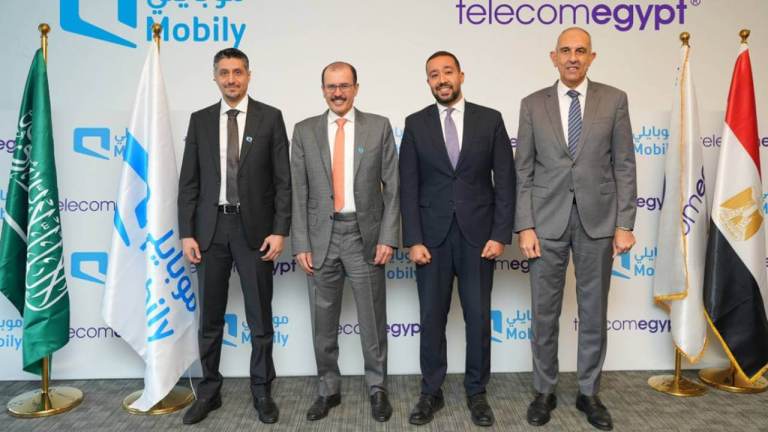
Saudi Arabian telco Mobily has partnered with Telecom Egypt to launch the first submarine cable connecting Saudi Arabia and Egypt through the Red Sea. The new cable, which will be wholly owned by Mobily, aims to improve connectivity and meet the growing demand for internet services in both countries. 

The cable will land at two stations: Sharm El Sheikh in Egypt and Duba in Saudi Arabia. The connection will allow Mobily to link the Arabian Gulf and neighbouring countries to Egypt, enhancing access to various international networks. 

“The new cable represents a significant milestone in strengthening Saudi Arabia’s position as a leading international hub for telecommunications services and data traffic, in alignment with the goals of Saudi Vision 2030,” said Salman Bin Abdulaziz Al-Badran, Mobily’s CEO. 

“Complementing the newly established landing station in Sharm El Sheikh, we are developing new crossing routes to connect Sharm El Sheikh to the Mediterranean Sea. Telecom Egypt is dedicated to advancing the international telecommunications infrastructure by enhancing the geographical diversity of the global subsea cable networks. We are confident that this commercial agreement will be a valuable addition to our ongoing efforts to support this critical sector and cater to the rising demand for capacity and connectivity,” added Mohamed Nasr, Managing Director and CEO at Telecom Egypt.

In October last year, the Red Sea saw a rise in paramilitary activities, with Yemeni Houthi forces attacking commercial vessels, reportedly in response to the ongoing conflict between Israel and Hamas.  

By February, the situation, dubbed the “Red Sea crisis,” escalated to a critical issue for global telecommunications as damage to submarine cables in the area severely disrupted data traffic across Europe, Africa, and Asia. It is unclear whether or not this damage was deliberate.  

A report from network service provider RETN last month, said that the cable cuts impacted up to 70% of Europe–Asia data traffic – far greater than the 25% previously estimated. 

Join us at next year’s Submarine Networks, 18-19 February in London. Get discounted tickets here!

Also in the news:
CMA set to approve Vodafone–Three merger
Event highlights: Broadband Communities Summit West
Freedom Fibre and Zen Internet ink network sharing deal