
South Africa’s broadcasters agree to vacate key spectrum bands

In what could prove to be a highly significant development for mobile operators, a number of South Africa’s broadcasters have agreed to the newest deadline to vacate the so-called ‘digital dividend’ bands.

Communications minister Mondli Gungubele has said that the date to complete the migration from analogue to digital terrestrial television is now 31 December 2024. Two previous deadlines were not met by his predecessor, Khumbudzo Ntshavheni.

As the TechCentral website points out, this time the minister has the backing of a number of broadcasters.

Gungubele published a notice in the Government Gazette this week saying all analogue broadcasters using bands above 694MHz must vacate those frequencies by no later than 31 July.

This is important for mobile operators which, in theory, were given access to those frequency bands during last year’s spectrum auctions but still can’t make full use of the spectrum.

Those broadcasters occupying the bands above 694MHz must move to lower frequencies at the end of July. All remaining analogue broadcasting services should temporarily be accommodated in lower frequencies, which seems to be acceptable to big broadcasters SABC and e.tv. Digital broadcasting services operating above 694MHz must go to frequencies below 694MHz to free up the 694-862Mhz frequency bands.

All analogue signals are to be switched off no later than 31 December 2024, by which time, it is hoped, the millions of households now relying on analogue broadcasts will have converted to digital services.

As we mentioned in February 2021, like a number of countries in Africa, South Africa missed the original deadline set by the International Telecommunication Union for completion of the switchover process, which was meant to happen in June 2015.

MORE ARTICLES YOU MAY BE INTERESTED IN…

Angola satcoms-supported connectivity project unveiled

State-owned service provider Angola Telecom has this week announced the launch of a new service called Conecta Angola, whose aim is to reach the most remote areas of the country where, previously, none of the country’s mobile operators had been active.

The Conecta Angola project was formally unveiled at the opening of Angotic 2023 in Luanda, a three-day event held from 12 to 14 June, which acts as a platform for discussing and addressing challenges related to ICT. It was attended by a number of top-level government officials.

The initiative has a strong social angle, notably targeting communities where schools, hospitals and municipal administrations have limited access to operators, to create more digital inclusion.

The sales director of Angola Telecom, Eusébio Santos, suggested that the first phase of the project would involve taking the service to previously internet-excluded populations. In a second phase of the project, he said, « we will be able to start thinking about how to integrate small and medium-sized companies » that operate in these areas.

He also noted that a pilot project is already underway in Bela Vista, in the province of Bié , where students and other users at the local Academic Centre of Excellence can use new internet facilities free of charge.

Conecta Angola developed from a partnership between Infrasat, a provider of satellite communications and backhauling solutions and owner of the only low-cost rural comunications network, and the country’s National Space Programme Management Office (GGPEN).

Indeed, according to TeleGeography’s CommsUpdate, Angola Telecom has said that the aim of connecting some of the most remote areas of the country with free internet services will be supported by the Angosat-2 communications satellite. 

However, the cost of rollout, not to mention a timescale, do not appear to have been revealed.

MORE ARTICLES YOU MAY BE INTERESTED IN…

Hyperoptic announces plans to cut 110 jobs


News

The full fibre operator is the latest in a string of telecoms firms to announce job cuts against the backdrop of the UK’s struggling economy

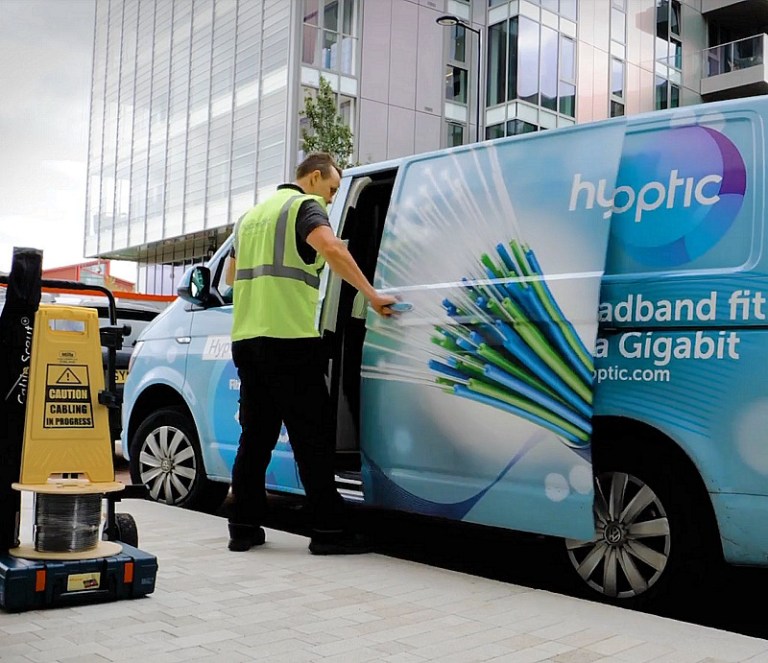
Today, one of the UK’s leading fibre altnets, Hyperoptic, has revealed that it plans to lay off over 100 members of staff.

The majority of affected staff will be network engineers working in Scotland and North West England, regions in which Hyperoptic’s network build is largely complete.

Around 40 network build engineers could be redeployed to customer build and customer connections teams.

The operator will also remove a layer of management from its infrastructure division.

“In support of our continued growth at Hyperoptic, we have refocused around 40 employees on customer-facing engineering roles, and are proposing to make around 110 redundancies in the UK as we increase our focus on areas that offer us the greatest customer reach,” said CEO Dana Tobak. “Where necessary for the customer-centric roles, we will provide support and training to help keep our people in Hyperoptic – building on their skills, experience and expertise. For those employees that do move on from Hyperoptic, we will ensure the support they receive reflects the great work they have delivered for this company.”

Hyperoptic is not alone in the telecoms sector when it comes to announcing job cuts this year. Rival altnets Zzoomm and CitFibre have both revealed plans to lay off hundreds of workers, citing macroeconomic pressures. BT, meanwhile, says it plans to shrink its workforce by 40% – around 55,000 jobs – by the end of the decade, suggesting that many existing roles could be ultimately be performed AI.

In recent years, the UK’s fibre market has been flush with investment, creating a vibrant community of altnets battling with incumbent operator Openreach to deploy full fibre throughout the country. However, with Openreach’s rollout advancing faster than initially expected and the UK’s challenging economic environment over the last year, the bubble is beginning to burst and altnets are clearly beginning to feel the squeeze.

It appears consolidation will soon become unavoidable, but who, when, where, and how remains to be determined.

How is the UK’s altnet ecosystem evolving in 2023? Join the operators in discussion at this year’s Connected Britain event

Also in the news:
Final bids for TIM’s fibre network expected tomorrow
Let’s talk about the symbiotic relationship between data centers and submarine cables
Mexico’s high 5G spectrum price could see Telcel the only bidder in latest auction

MTN warns that Cameroon asset freeze is impacting operations

Keep up-to-date with all the latest news, articles, event and product updates posted on Developing Telecoms.
Subscribe to our FREE weekly email newsletters for the latest telecom info in developing and emerging markets globally.

Sending occasional e-mail from 3rd parties about industry white papers, online and live events relevant to subscribers helps us fund this website and free weekly newsletter. We never sell your personal data. Click here to view our privacy policy.

CEF Digital programme highlights Global Gateways projects at Submarine Networks EMEA 2023


News

At this year’s Submarine Networks EMEA event, the European Health and Digital Executive Agency (HaDEA) showcased many of the projects funded by the first round of its Connecting Europe Facility (CEF) Digital programme, as well as sharing guidance on how potential applicants can apply for funding

First announced back in 2021, the European Commission’s Connecting Europe Facility (CEF) Digital Programme aims to leverage both private and public funding to support the digital infrastructure projects across the bloc.

CEF Digital will improve, secure, and nurture innovation via numerous connectivity infrastructure projects, spanning from gigabit-capable fixed networks to 5G mobile networks, and even submarine cable systems across Europe. These actions will receive more than €1 billion in funding between 2021 and 2023, with HaDEA managing more than €710 million.

The first set of calls for proposals was launched in January 2022 with a total budget of €258 million earmarked for five calls. Under the call on Backbone connectivity for Digital Global Gateways, HaDEA manages the following projects:

Works (Total EU contribution: €64.4 million)

Studies (Total EU contribution: €17.6 million)

The conference saw the European Commission’s Head of Unit, Investment in High-Capacity Networks, DG Connect, Franco Accordino explore some of these projects in a News in Brief session. He also later spoke on a panel session focussed on funding subsea infrastructure through public-private partnerships.

If you want to learn more about these projects and how to apply for EU funding, click here

Also in the news:
Tusass: Connecting Greenland’s remote communities
Watchdog hits Eir with €2.45m fine for overcharging customers
SENSE: Nokia and Citymesh launch national drone network in Belgium

New advertising guidelines push for clarity over contract price hikes


News

The guidelines aim to provide more transparency for customers when they sign up to mobile or broadband contracts, making it clearer that prices could increase and by how much

At the start of this year, following the publication of Office of National Statistics inflation data, most of the UK’s mobile and broadband operators confirmed that they would be increasing their contract prices in line with inflation – at average of 14.4%.

This announcement sparked Ofcom to launch a review of inflation-linked mid-contract telecoms price rises, with the regulator’s initial studies showing that around a third of mobile and broadband customers were unaware that their provider could change the price of their contract.

In addition, the study showed that, even amongst those that knew prices could be increased, only around half understood how this would be calculated. Indeed, among all customers, less than half understood what metrics like CPI (Consumer Price Index) and RPI (Retail Price Index) actually measure.

Now, following its own consultation, the Committee of Advertising Practice (CAP), part of the Advertising Standards Agency (ASA), has published new guidance on the matter of pricing transparency, hoping to stop consumers being stung by these unanticipated and misunderstood price increases.

The primary focus of these guidelines is on the ways in which telcos communicate with their customers, calling on them to display the price increase information more clearly rather than burying it in the fine print.

More specifically, the guidelines call for ads to use plain language and to display the possibility of a price rise with equal prominence as the price claim. For example, using an asterisk to include this information more than one ‘step’ below the pricing claim, or linking to a separate web page to explain this possibility, is unlikely to comply with these new guidelines.

The full guidelines can be found here.

If service providers fall afoul of these guidelines, they could face legal ramifications from the ASA.

The new guidance will take affect from December 15 2023, allowing the service providers a six-month grace period to comply.

Most of the telecoms industry moved forward with the planned price hikes in April, with some notable exceptions such as Hyperoptic.

Are operators being transparent enough when it comes to consumer contract pricing? Join the telecoms ecosystem in discussion at this year’s Connected Britain event

Also in the news:
Final bids for TIM’s fibre network expected tomorrow
Let’s talk about the symbiotic relationship between data centers and submarine cables
Mexico’s high 5G spectrum price could see Telcel the only bidder in latest auction

Strategies for Overcoming Today’s Telecom Industry Obstacles to Achieve a Circular Supply Chain

This Industry Viewpoint was authored by Josh Tsui CEO of Floship

Manufacturers, businesses, and all organizations in the telecom supply chain have had to constantly develop groundbreaking solutions to maintain the production of high-quality goods due to rising costs and limited access to raw materials, especially since the onset of the pandemic. As a result, traditional linear supply chain strategies have given way to new ones that offer optimized operation flow, green options, and a smooth delivery experience with reduced cost. A new kind of supply chain known as circular supply chain has begun to benefit … [visit site to read more]

China Mobile favours Huawei for 2023 5G deployment plans

Keep up-to-date with all the latest news, articles, event and product updates posted on Developing Telecoms.
Subscribe to our FREE weekly email newsletters for the latest telecom info in developing and emerging markets globally.

Sending occasional e-mail from 3rd parties about industry white papers, online and live events relevant to subscribers helps us fund this website and free weekly newsletter. We never sell your personal data. Click here to view our privacy policy.

Allera touts EE’s ‘strong position’ at launch of new retail strategy


News

EE has unveiled a new look for its flagship store, located in Westfield London, White City.

‘The EE Studio’ is a 4,230-square-foot retail space and is the first of EE’s new “Experience” stores. Three more ‘Experience’ stores will also be opening in the coming months in Cardiff, Manchester Trafford Centre, and Bluewater.

The launch of ‘The EE Studio’ is a key part of the company’s new retail strategy. Bridget Lea, Managing Director of Commercial, EE described the new store as the “antithesis of the traditional mobile store”.

The retail space includes experience zones including the Welcome Zone, a dynamic shopfront with a changeable digital window canvas; a Digital Spa, aimed to show customers how to better balance their technology use; a Gaming Zone; a Stage which will host events, pop-ups, and skills workshops; and a Tech area for showcasing new devices and products. There are also various room sets displaying technology applications in kitchen, children’s bedroom, and home office settings.

The store has been designed to be inclusive and “welcoming for all”, explained Lea. She also added that EE are working with partners to make the space accessible to the local community.

Speaking at the new store this morning, BT Group’s CEO Consumer, Marc Allera described the store as “a glimpse into the new world of EE” and the company’s renewed brand identity. EE’s new strategy will see the company focus on more than just delivering the best connectivity for customers and will see the brand focus on supporting customers to better understand how to navigate an increasingly complex digital world.

When asked about yesterday’s announcement of a planned merger between Vodafone and Three in the UK, Allera was confident about the strength of EE’s brand commenting: “We’re treading our own path and our own plan. The great thing is that we’re many years into an integration and they’re very hard things to execute. When you have big brands, big customer bases, IT, cultures, everything is different. What you’re starting to see now is the fruits of many years of hard work to pull those capabilities together to create something that’s stronger than when we were apart…Our belief is that we’re in a really strong position if you think of our assets; we’ve got the best fixed network, the best mobile network and when you think about the experiences you can create with bringing mobile and fixed networks together, we get really excited about that”.