Keep up-to-date with all the latest news, articles, event and product updates posted on Developing Telecoms.
Subscribe to our FREE weekly email newsletters for the latest telecom info in developing and emerging markets globally.

Keep up-to-date with all the latest news, articles, event and product updates posted on Developing Telecoms.
Subscribe to our FREE weekly email newsletters for the latest telecom info in developing and emerging markets globally.
The Spanish government is set to acquire a 10% stake in Telefónica through the state holding company Sociedad Estatal de Participaciones Industriales (SEP)I, following Saudi Arabia based STC group’s acquisition of a large stake earlier this year.
Back in September, STC group acquired a 9.9% stake in Telefonica which was worth €2.1 billion, then becoming the company’s largest shareholder. The deal includes the acquisition of 4.9% of Telefonica’s shares, with the remaining 5% stake derived from various financial instruments. However, a stake of this size is subject to government approval, which is expected to happen early next year.
At the time, STC confirmed that they do not intend to acquire a majority stake in Telefónica, but instead see the move as a “compelling investment opportunity to use our strong balance sheet whilst maintaining our dividend policy,” according to a statement by STC CEO Olayan Alwetaid.
Spain’s ministry of economy, commerce and business stated that the acquisition would give “stability to the company and the development of its plans in our country.”
Yesterday, Spain’s deputy Prime Minister Nadia Calviño said that the purchase was “in line with other large European countries, such as France and Germany, which have and are increasing their shareholdings in big and strategic telecommunications operators”.
Indeed, the move represents a partial renationalisation of the Telefónica, which has been a fully private company since 1997.
Upon the news, Telefónica shares were up 3.6%.
Want to keep up to date with all of the latest international telecoms news? Sign up for Total Telecom’s daily newsletter
Also in the news:
Vivendi takes legal action over TIM sale
Gigaclear secures £1.5bn in fresh financing
Scotland to receive £450m in Gigabit Broadband Upgrade

STC Group subsidiary centre3 is acquiring CMC Networks, a global service provider offering networking solutions across Africa and the Middle East.
CMC Networks operates across more than 110 service locations with a cost-effective, scalable, and resilient data communications network. It services 51 out of 54 countries in Africa and 12 countries in the Middle East, plus regional hubs in key interconnect locations across Europe, the Americas, and Asia Pacific.
The acquisition aligns with center3’s strategic vision for growth and expansion in the Middle East and African markets. It represents a significant step in the company’s journey to extend its market presence and enhance its offerings in this dynamic and rapidly growing region.
CMC Networks is being acquired from the Carlyle Sub-Saharan Africa Fund (CSSAF). In 2020, the CSSAF team formed a separate private equity firm, Alterra Capital Partners, which continues to advise CSSAF’s investments including CMC Networks.
Fahad Alhajeri, CEO at center3, said: « CMC’s enviable global footprint, high value customer base and portfolio of capabilities is very complementary to center3’s digital infrastructure and connectivity assets. This acquisition exemplifies our strategic commitment to enter key markets with significant growth potential. Our previous investment in 2Africa Cable, coupled with this acquisition, underscores our conviction in Africa’s essential role in center3’s future growth.”
Marisa Trisolino, Group CEO of CMC Networks, said: « This acquisition will bring together the strengths of both companies, fostering innovation, enhancing customer service, and providing new opportunities for growth in the African and the Middle East market.”
The acquisition is subject to customary conditions and approvals.
The four stations, Bond Street, Tottenham Court Road, Farringdon and Liverpool Street have all now been equipped with high speed mobile coverage from the ticket halls to the platforms.
All four mobile network operators – Three UK, EE, Vodafone, and Virgin Media O2 (VMO2) – are taking part in the rollout, which has so far delivered 4G on sections of the Jubilee, Northern and Central lines.
Boldyn Networks, who are working on the rollout as part of a 25 year-long strategic partnership with TFL, claim that by the end of spring next year, the whole 73 of the Elizabeth line will have mobile coverage. Boldyn Networks were formerly known as BAI Communications up until they rebranded in June this year. The company’s partnership with TFL was signed in 2021, and is worth £2.2 billion.
“The new mobile coverage at these stations will be a major boost for those travelling around London – connecting key business centres and some of the popular parts of Central London and the West End,” said London Mayor Sadiq Khan.
“This is another important milestone in our mission to deploy a new digital infrastructure across London that connects businesses and people, and helps to make the city a safer and smarter place to live, work and travel,” said Billy D’Arcy CEO of of UK & Ireland at Boldyn Networks.
Want to keep up to date with all of the latest international telecoms news? Sign up for Total Telecom’s daily newsletter
Also in the news:
Vivendi takes legal action over TIM sale
Gigaclear secures £1.5bn in fresh financing
Scotland to receive £450m in Gigabit Broadband Upgrade
Three interesting bits of vendor activity from three very different corners of the globe to keep up with: … [visit site to read more]

Africa’s smartphone market has shown resilience with a second consecutive quarter of strong recovery in Q3 2023, according to analysis from Canalys.
Shipments hit 17.9 million units, growing 12% year-on-year despite numerous macroeconomic issues, restrictions on imports, and fluctuations in currency value across several major markets.
Tecno Mobile’s parent firm Transsion held onto the top spot with a 48% share of the market, achieving 9% growth. Canalys noted that the firm is expanding its footprint strategically in emerging markets, aiming for the sub-US$100 price bracket.
Samsung saw a year-on-year decline of 13% but held on to second place with a market share of 26%, with mid and high end devices taking a hit while its A-series performed well. Chinese manufacturers Xiaomi and Oppo invested heavily in several markets and were repaid with respective growth rates of 100% and 259%, while realme clocked growth of 11%.
Canalys Senior Consultant, Manish Pravinkumar, said: “Despite rapid currency devaluation, South Africa’s smartphone market exhibited a remarkable growth of 20%. This surge was fuelled by the demand for entry-level devices, particularly catering to the extensive pre-paid segment. Additionally, mid-tier devices experienced heightened demand, the prevalence of load-shedding contributed to this trend, as people increasingly prioritize smartphones with quality screens and robust battery life to keep them entertained during power outages.”
“Nigeria’s smartphone market expanded substantially, with Transsion playing a pivotal role by offering entry-level devices and Xiaomi successfully positioning itself as an aspirational brand for many consumers…a strategy also successful for Xiaomi in North African countries such as Egypt and Morocco. Egypt experienced double-digit 19% growth in smartphone shipments, signalling vendors have successfully addressed the challenges posed by strict import restrictions in the previous year.”
Pravinkumar noted that Canalys expected single-digit growth in 2024, with challenges such as currency devaluation, increased import taxes, and government initiatives promoting local production potentially leading to cost and price hikes. The next few years will likely see 2G plateau in Africa, while 4G and 5G are expected to grow.
“Africa’s smartphone market narrative unfolds as a compelling story of overcoming challenges with resilience and capitalising on opportunities through strategic partnerships, channel dynamics, and a transforming consumer landscape. As the market evolves, vendors must navigate these complexities with agility and foresight to secure a pivotal position in this burgeoning market”, concluded Pravinkumar.
The report found that 78% of the UK is now covered by gigabit-capable broadband, which is an 8% increase on last year, when there was 70% coverage.
The number of premises without access to what Ofcom class as “decent” broadband is just 61,000, or 0.2% of the UK. Additionally, it was found that 57%, or 17.1 million premises have access to a full-fibre network, which is a huge increase of 4.6 million premises, or 15 percentage points on last year. Northern Ireland takes the lead in terms of full-fibre, with 91% of homes having access. However, according to broadband expert at Broadband Genies Alex Tofts, this figure means the UK is lagging behind other European countries such as Portugal, Spain, Sweden, Norway and France.
For clarification, Ofcom defines “decent” broadband as 10Mbps+, “Superfast” as 30Mbps+ and “Gigabit” equates to 1Gbps+.
In the mobile category, in the case of outdoor 5G coverage provided by at least one Mobile Network Operator (MNO), this rose from 67-78% in 2022, to 85-93% this year. However, 81% of all mobile traffic is still carried by 4G. Meanwhile, many MNOs have begun the switch off of their 3G networks, which carry less that 3% of all mobile data traffic.
“The rapid rise in availability of full-fibre broadband is good news for people and businesses across the UK, with millions more able to benefit from fast, reliable and future-proof internet,” said Lindsay Fussel, Ofcom’s Network and Communications Group Director.
“When the time comes to take out a new broadband contract, we encourage people to shop around and find out what options are available to make sure they are on the best package for their needs,” she continued.
In addition to the report, Ofcom released their interactive International Broadband Scorecard for 2023, which compares the UK to other nations in relation to broadband availability. For example, out of eleven key global markets, the UK ranks sixth in terms of the percentage of households with access to gigabit speeds.
The full Connected Nations report can be found here.
Want to keep up to date with all of the latest international telecoms news? Sign up for Total Telecom’s daily newsletter
Also in the news:
Vivendi takes legal action over TIM sale
Gigaclear secures £1.5bn in fresh financing
Scotland to receive £450m in Gigabit Broadband Upgrade


Emirates National Oil Company (Enoc) Group, a leading global energy player, says it has centralised its IT infrastructure on Nutanix, a leader in hybrid multicloud computing, for retail expansion and to deliver what is described as a slick digitally driven customer experience.
Serving thousands of customers across 60 markets, Enoc employs a workforce of over 12,000 employees.
At the core of Enoc’s business are its service stations. However, says Nutanix, siloed IT infrastructure was deployed at each of these service stations to deliver the digital services needed. The lack of redundancy and centralised management contributed to significant IT overheads and risk as the company rapidly scaled its retail operations.
Backed by the expertise of Nutanix’s local team, Enoc has deploy Nutanix Cloud Infrastructure (NCI) a complete software stack that unifies hybrid cloud infrastructure including compute, storage and network, hypervisors, and containers, in public, managed, and on-premises private clouds – as well as Nutanix Unified Storage (NUS) and the vendor’s disaster recovery solution.
Furthermore, the new partnership will include implementation of Nutanix Cloud Manager System (NCM), which will minimise any IT related issues, given the high demand of requests.
Following the upgrade, Nutanix’s unified infrastructure eliminated the siloed IT infrastructure at each of Enoc’s retail outlets. The centralised management, made possible by NCM, has delivered a claimed 80% reduction in IT operation costs across the 400-plus sites that are now served by Nutanix’s solution.
The high availability and impressive levels of redundancy and resilience made possible by Nutanix mean that Enoc’s service stations can now operate around the clock without disruption to the services they deliver.
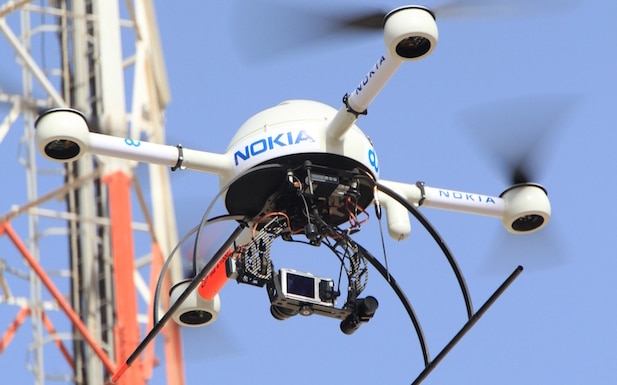
Espoo, Finland – Nokia today announced the extension of a Drones-as-a-Service partner program with existing private wireless partners to provide Nokia Drone Networks benefits to industries in North America. Through this collaboration, enterprises and service providers will be able to rapidly realize the capabilities of drones, in a way that meets the needs of their business as well as benefit from new use cases and revenue streams.
Enterprises can opt to purchase the Nokia Drone Networks industrial grade drone-in-a-box solution or minimise upfront capital expense by leasing, sharing or simply hiring drones for one-off or regularly scheduled flights. Nokia and the members of its partner program will offer bundled service packages tailored to the needs of enterprises, including managing data analytics or drone maintenance. The companies will also manage flight scheduling, working with relevant spectrum and airspace regulators to gain approvals, where required.
Drone service providers will benefit from being able to diversify their offering to more industries and realise new revenue streams. This is made possible through Nokia’s commitment to collaborating with industry partners, allowing users to customise the payloads, to meet their business needs.
Companies that choose to deploy or lease Nokia Drone Networks will benefit from an end-to-end solution, which has recently received certification from the Federal Communications Commission (FCC) for operation in North America.
Nokia Drone Networks uses public and private 4G/LTE and 5G network connectivity for the greatest reliability and safety of Beyond Visual Line of Sight (BVLOS) operations. Operated remotely for one-off or scheduled flights, the solution benefits from a highly ruggedised docking station that doubles as a recharging station. This makes it possible for enterprises to rely on the solution to realise new efficiencies and capabilities such as surveillance at remote facilities, environmental or stockpile monitoring at a mine, managing inspections in hazardous locations or for public safety search and rescue operations.
Deployed in conjunction with Nokia Digital Automation Cloud (DAC) and Nokia MX Industrial Edge at their campus network, enterprises will be able to leverage robust, reliable connectivity, service predictability and the ability to process data obtained from the drones in real-time, on-premises to open the door to an array of innovative use cases and accelerate their return on investment.
Stephan Litjens, Vice President of Enterprise Campus Edge Solutions at Nokia, says: “We are pleased to leverage our existing private wireless partnerships, such as the one with DXC Technology to offer Drones-as-a-Service to the North American market. This allows us to offer our innovative solution in a way that meets the complex needs of any enterprise or industry. Through our work with partners across all regions, we’ll maintain a strong collaboration with spectrum and airspace regulators and the ecosystem to ensure we balance innovation with safety for customer flights.”
While visiting Nokia in Espoo, to witness the Drone use cases firsthand, the DXC Team stated: “We want our customers to book a drone flight with the simplicity of hailing a ride-share. Enterprises will benefit from simplicity, leveraging a complete FCC certified drone-in-a-box solution provided by a single vendor without headaches as we manage the flight approval for them working with the relevant authorities. They can adopt drones however it makes sense for their business. And those that choose to deploy the drone-in-a-box solution alongside Nokia DAC private wireless will leverage the greatest capabilities, unlocking new use cases for the fastest return on investment.”
Resources and additional information