Huawei knocks on the door of Audi and Mercedes for smart automobile investment 


News 

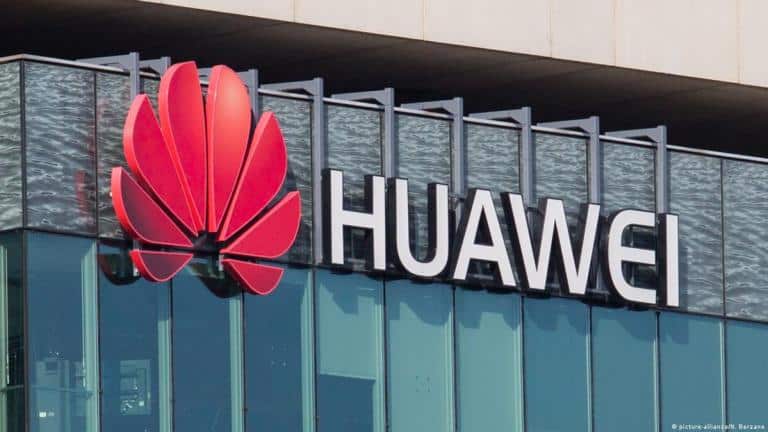
According to a Reuters exclusive, Huawei is seeking to sell a stake in its four-year-old smart vehicle software and components to automobile manufacturers Mercedes Benz and Volkswagen’s Audi, partly to make it more resilient to US sanctions  

The news comes as the Chinese tech giant looks to expand its brand partnerships outside of China, after being the target of US sanctions over the last four years. 

The company’s Intelligent Automotive Solution (IAS) business unit is aiming to become the largest supplier of software and components for smart electric vehicles (EVs) and is worth $250 billion Yuan ($34.67 billion), according to the company. 

According to the article, Mercedes Benz were offered a 3–5% stake in the business, but preferred to retain control of its software instead of outsourcing it. 

Confidential sources also confirmed that although Audi’s interest could not be determined immediately, the two firms are planning a partnership to co-develop Audi’s autonomous driving technologies, which would be used in the Chinese market from 2025. 

In 2019, Huawei faced significant sanctions from US following an Executive Order signed by President Donald Trump. Since then, many European countries such as Germany, UK, France, and Italy, have also imposed sanctions of various degrees on the company, forcing the Chinese firm to diversify into new markets, from automotive software to AI-powered pig farming solutions. 

As such, according to at least one of Reuters sources, it is hoped that attracting investment from the German automotive players will protect the firm from being embroiled in further geopolitical tension. 

A large proportion of Huawei’s revenue comes from patents, which last year stood at $560 million through almost 200 bilateral patent licenses. Both Mercedes-Benz and Audi are currently entered into patent agreements with the company. 

Both Mercedes and Audi declined to comment. 

Keep up to date with the latest international telecoms news by subscribing to the Total Telecom daily newsletter

Also in the news:
It’s time for action: COP28 and keeping 1.5°C alive
Mitratel snaps up 803 telecoms towers for $113m
Sateliot partners with t42 to sign 5G IoT Maritime deal

Blue Label moves to take over South Africa’s Cell C 

Keep up-to-date with all the latest news, articles, event and product updates posted on Developing Telecoms.
Subscribe to our FREE weekly email newsletters for the latest telecom info in developing and emerging markets globally.

Sending occasional e-mail from 3rd parties about industry white papers, online and live events relevant to subscribers helps us fund this website and free weekly newsletter. We never sell your personal data. Click here to view our privacy policy.

Nepal threatens Axiata with day in court

Keep up-to-date with all the latest news, articles, event and product updates posted on Developing Telecoms.
Subscribe to our FREE weekly email newsletters for the latest telecom info in developing and emerging markets globally.

Sending occasional e-mail from 3rd parties about industry white papers, online and live events relevant to subscribers helps us fund this website and free weekly newsletter. We never sell your personal data. Click here to view our privacy policy.

IHS raises bid in challenge to ATC tower deal with MTN Nigeria

The apparent award of an enormous tower leasing deal to American Tower Corporation (ATC) by operator MTN Nigeria is facing a challenge from ousted rival bidder IHS Holding.

In early September we reported that MTN Nigeria had confirmed that, after a bidding process, ATC was to take over MTN’s Nigerian tower operations from IHS in 2025 after the leasing on 2,500 sites expired.

The mobile network operator suggested at the time that the deal would diversify its towers portfolio and unlock significant network cost efficiencies.

It seems that the story is not over yet, however. Reuters says IHS has now offered improved commercial terms to MTN Nigeria for the lease of the 2,500 towers. According to IHS, the move will prevent network disruption in Nigeria – presumably, though this is not made clear, because it would involve no changeover.

So what has inspired this move? MTN Nigeria has other tower contracts coming up for renewal, which may be part of the reason. Reuters says IHS owns 16,000 towers in Nigeria, of which 14,600 are leased by MTN. About 13% of MTN’s portfolio is with ATC, and 80% with IHS.

Also IHS is trying to manage a number of shareholder disputes over governance issues that haven’t been helped by the ATC deal. In fact we reported in September that the leadership of IHS had come under fire from investment firm Blackwells Capital after MTN’s decision to transfer the operation of its towers in Nigeria from IHS to ATC. Further complicating matters is that MTN Group is the largest shareholder in IHS and among the groups in dispute with the company.

As for this new bid on the 2,500 towers, the terms do not seem to have been revealed. In any case MTN has apparently said that the agreement with ATC is final. 

MORE ARTICLES YOU MAY BE INTERESTED IN…

Data centre development continues apace


News

In the last few days billions of dollars of data centre development have been announced adding to an already bumper year which was recently estimated by Synergy Research Group as being up around 13% estimate from the previous year.

The most recent announcement is from Microsoft, pledging its largest ever investment in the UK, £2.5 billion to expand AI data centre infrastructure.

The money, which was welcomed by the UK government, will be invested over the next three years to expand its next generation AI data centre infrastructure in London and Cardiff and will occur alongside a huge commitment from Microsoft to train one million people with the skills they need to work with AI or move into a career in AI.

Microsoft vice chair and President Brad Smith said, “Microsoft is committed as a company to ensuring that the UK as a country has world-leading AI infrastructure, easy access to the skills people need, and broad protections for safety and security,”

Also, this week, the UK has seen Kao Data announce its first data centre in the north of England with a proposal to invest £350million on a data centre on a vacant industrial site in Stockport, Cheshire, whilst outside of the UK, Frankfurt, Paris, and Northern Virginia will benefit from a Digital Realty – Blackstone joint venture.

The $7 billion project will see the construction of 10 data centres with load capacity coming online through 2025 and 2026.

Finally, in China, the proposed Hainan Undersea Data Center is touting the environmental credentials of using seawater acts as a natural coolant and saving an estimated 122 million kilowatt-hours of electricity every year.

The approach is innovative, but not without precedent – Microsoft tried something similar back in 2016.

Data centres are one of the 9 key themes tackled by Submarine Networks EMEA which takes place in London on 29th – 30th May 2024. Find out more at totaltele.com/subnets

For environmentally aware live streaming, ask for MAUD


Press Release

BT Group has unveiled a pioneering new technology, designed to be a more reliable, quality-focused and sustainable way of delivering live content over the internet. Multicast-Assisted Unicast Delivery (MAUD) technology is aimed at improving viewer experiences and increasing the efficiency of the complex journey that content takes to reach them. Major broadcasters, including the BBC, will be involved in evaluating and potentially trialling the technology to support a range of live content.

Unlike traditional ‘unicast’ delivery, where each viewer watches the action via a dedicated, personal internet stream, MAUD technology uses ‘multicast’ to group those single streams into one shared one, directing it to those that want to watch the action. MAUD has a further significant advantage over ‘ordinary’ multicast streams, as its integration is made completely transparent to the player application. This means content service providers don’t need to modify their customer apps to take advantage of this technology – saving time and money.

Removing the need to select and serve millions of individual streams to viewers substantially increases the efficiency of content delivery, but also reduces environmental impact and overall costs for broadcasters, Content Delivery Networks (CDNs) and internet providers. MAUD technology uses up to 50% less bandwidth during peak events, reducing energy usage through the use of fewer caches. By freeing up internet capacity, it will help to deliver a higher quality of experience for both live and non-live content.

Howard Watson, Chief Security and Networks Officer at BT Group said: “MAUD is a major breakthrough in how we deliver content over the internet. Developed in our world leading labs at Adastral Park in Suffolk, MAUD could be a key solution to how we manage ever increasing traffic loads. By combining individual streams, MAUD delivers a more reliable, consistent picture, no matter whether customers are watching over Wi-Fi, fibre or mobile networks.”

Paolo Pescatore, Founder at PP Foresight, said: “Whether it’s the Euros or Eurovision, gaming over Twitch or gigs from Glastonbury, data shows that audiences still value the live experience even in the on-demand era. With live sports and events driving peak network demand to new heights, it’s great to see innovation ensuring that high-quality, premium live content can reach the widest possible audiences across multiple types of device, and to be possible in an increasingly environmentally sustainable manner.”

The launch of MAUD comes as BT Group publishes new research that shows the UK public’s appetite for watching live content is undiminished, despite the growing popularity of on-demand content services. A survey into the viewing habits and priorities of the British public found 90% still consume live content – primarily news and sport – via television, with more than half doing so at least once a day.

Those watching also prioritise their viewing experience; despite new service innovations, more than 9 in 10 viewers believe picture quality and reliability are paramount, outstripping interactive features, commentary and stream syncing by nearly 3.5 to 1. When it came to sport, viewers still preferred picture quality and reliability over latency – the time it takes for the live action to reach the screen.

MAUD was developed by the Content Delivery Research team at BT’s Research Labs, based at Adastral Park in Suffolk. The goal was to create a solution for efficient live streaming that was sensitive to the needs of the various organisations in the content delivery path. The MAUD solution was presented to broadcasters at the International Broadcasting Conference in Amsterdam earlier this year with multicast described by an Analysys Mason paper from September – produced for Ofcom – to be, in principle, the most ‘technically efficient technology for IP-delivery of live content.’

Innovation in media will be a hot topic at the Total Telecom Connected North event in Manchester on the 22nd – 23rd April 2024. Find out more at totaltele.com/connectednorth

The Power of Network Inventory Solutions: Drivers, Benefits, and Return on Investment (ROI)

The Power of Network Inventory Solutions: Drivers, Benefits, and Return on Investment (ROI)

This Industry Viewpoint was authored by Daria Batrakova, Director Business Line Telecom Solutions at FNT Software

Network inventory is a pivotal tool in driving operational efficiency for telecom operators. With the ability to manage and optimize a variety of network assets, such solutions present operators with a platform to better navigate the complexities of current and future … [visit site to read more]

American Tower Corp demands cash for towers from Telkom Kenya

Keep up-to-date with all the latest news, articles, event and product updates posted on Developing Telecoms.
Subscribe to our FREE weekly email newsletters for the latest telecom info in developing and emerging markets globally.

Sending occasional e-mail from 3rd parties about industry white papers, online and live events relevant to subscribers helps us fund this website and free weekly newsletter. We never sell your personal data. Click here to view our privacy policy.