Brazil to collaborate with Japan on open RAN

Keep up-to-date with all the latest news, articles, event and product updates posted on Developing Telecoms.
Subscribe to our FREE weekly email newsletters for the latest telecom info in developing and emerging markets globally.

Sending occasional e-mail from 3rd parties about industry white papers, online and live events relevant to subscribers helps us fund this website and free weekly newsletter. We never sell your personal data. Click here to view our privacy policy.

Cisco to buy-out Telenor from Working Group Two JV


News

Cisco is set to pay Telenor $150 million for its 44.6% in the business 

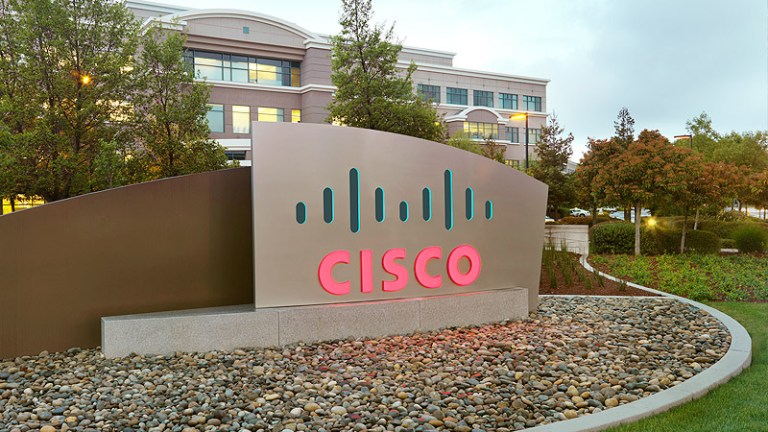
This week, Cisco has signed a $150 million deal to acquire Norwegian company Working Group Two (WG2) from Telenor Group.  

Core network software specialist WG2 was spun out as a separate entity from Telenor in 2017, with the Norwegian operator retaining a significant stake in the business. At the time, additional investors included telecoms equipment specialist Cisco and digital infrastructure investor Digital Alpha.  

Now, six years later, Telenor is selling its entire 44.6% stake in the business to Cisco, which will become WG2’s sole owner. 

WG2 is a cloud-native mobile service platform provider, which offers mobile operators a cloud-based core network to increase product innovation and reduce time to market through authentication, provisioning, voice, messaging, and data services. 

According to Cisco, the acquisition will help them further develop their recently announced Mobility Services Platform. The Platform combines 5G, edge, and cloud technologies to deliver an as-a-service option for service providers, to help them build and manage new Internet of Things (IoT) networks. 

“Built for simplicity, innovation, and efficiency, WG2’s platform uses the web-scale playbook and operating models, which makes it a natural fit with our Mobility Services Platform,” said Cisco Senior Vice president Masum Mir 

“And with WG2 and the Cisco Mobility Services Platform, we’ll be able to boost our service edge deployment and API first strategy for application development partners, enterprise customers and service provider partners.”  

The acquisition is subject to standard regulatory approval and is set to close in Cisco’s first fiscal quarter of 2024. 

Want to keep up to date with all the latest news from the international telecoms sector? Click here to receive Total Telecom’s daily newsletter direct to your inbox  

Also in the news:
Polish operators line up for 5G spectrum auction
TDS considers ‘strategic alternatives’ for UScellular
O2 Slovakia and Slovak Telekom to share mobile networks 

Poland’s ‘largest ever’ broadband subsidy draws 300 applications


News 

The government hopes to use a combination of public and private funding in order to shrink the nation’s digital divide 

According to a statement from the Polish Ministry of Digitalisation, 307 applications have been submitted for a portion of the PLN  9 billion ($2.22 billion) of funding available for national broadband projects.  

Of these, 64 are applications to cover 187 areas of Poland that the government has declared ‘white spots’ – areas that have no internet access at all. 

Alongside the EU-linked government funding, the private sector is expected to contribute at further PLN 750 million ($185.2 million) to fund the broadband projects. 

According to the Polish government, this will be on the country’s largest ever investment in broadband expansion.  

Poland launched the Operational Programme Digital Poland (POPC) in 2014, which carries out public broadband funding, and since then has covered more than 2 million households with broadband. In addition, over PLN 4 billion ($990 million) has been invested into broadband coverage for underserved communities. 

Poland’s national broadband plan, which was updated in 2020, aims to achieve broadband speeds of at least 100Mbps for everyone in the country, and at least 1Gbps for socio economic drivers such as schools and transport hubs. It also seeks to ensure 5G connectivity is available on all major communication routes and in major urban areas. 

In tandem with the POPC, the country has launched for the Nationwide Education Network, which aims at providing all schools in Poland (about 19,500 locations) with free internet with speeds of at least 100 Mbps. 

Want to keep up to date with all the latest news from the international telecoms sector? Click here to receive Total Telecom’s daily newsletter direct to your inbox  

Also in the news:
Polish operators line up for 5G spectrum auction
TDS considers ‘strategic alternatives’ for UScellular
O2 Slovakia and Slovak Telekom to share mobile networks 

Airtel Kenya earmarks US$150m to expand network

Keep up-to-date with all the latest news, articles, event and product updates posted on Developing Telecoms.
Subscribe to our FREE weekly email newsletters for the latest telecom info in developing and emerging markets globally.

Sending occasional e-mail from 3rd parties about industry white papers, online and live events relevant to subscribers helps us fund this website and free weekly newsletter. We never sell your personal data. Click here to view our privacy policy.

LTE-based solution improves performance for Peruvian mine

Keep up-to-date with all the latest news, articles, event and product updates posted on Developing Telecoms.
Subscribe to our FREE weekly email newsletters for the latest telecom info in developing and emerging markets globally.

Sending occasional e-mail from 3rd parties about industry white papers, online and live events relevant to subscribers helps us fund this website and free weekly newsletter. We never sell your personal data. Click here to view our privacy policy.

On-Premise PBX Solutions: Because Home Always Feels Better

You may have noticed the modern trend of companies opting for a cloud PBX solution more often than the older, on-premise method for their communication needs.

And, while there is a lot of merit to upgrading to the cloud, on-premise PBX servers still have an edge over them in certain aspects, ones that may mean more for your clients than the alternative option.

While we here at Bicom Systems offer both cloud and on-site variants, it is still important to present on-premise as an option when selling PBX software and to know exactly what the option offers.

The Client Owns Everything

With the rise of subscription models in almost every industry, it just feels nice to have one’s name on the stuff they use.

Sure, it is usually the pricier option, but it feels more satisfying than having to rely on a third party provider to stay afloat and provide quality support for their services.

This way, the hardware remains and can be repurposed for future use, or in case of a provider swap.

Plus, depending on how the client structures their server maintenance, it can even end up being the cheaper option in the long run.

The Feeling Of Control

Following up on the earlier benefit, the sense of control one gets when everything is done in-house makes the whole experience less stressful as clients can get immediate updates on potential issues.

They can then apply solutions to these issues quicker as well if they have a team dedicated to it, be it for data security, maintenance or whatever else they may need.

The ability to create custom solutions can make an already great product feel even better and it is one of the main reasons why on-premise PBX is still popular.

Lower Latency

Another good benefit of an on-premise PBX solution is that there is a lot less distance between the server’s location and the business office, meaning a lot less latency will be present during operation.

And, even if the connection should break at any point due to a fault in the system, IP telephony will still continue to function in-house.

Custom Solutions

While we have touched upon this idea already earlier, it is important to note that some packages that service providers offer may not cover all of the needs that a client requires or some features may simply be redundant for their business.

Thus, the ability to craft their own solutions for particular issues while opting for a cheaper package ends up being the more ideal option, even if it is an on-premise option instead of a hosted one.

The On-Site PBX That Your Clients Deserve

Finding the right balance of cost and capability of a PBX system can be the difficult part, especially considering how it all hinges on the needs of the client which can get quite varied at times.

On one hand, newer businesses will prefer the cloud-hosted option because it is cheaper, scalable, flexibly, and ultimately easier to sell for those reasons alone.

On the other hand, an on-premise PBX solution offers stability and control, as well as the option for the client to form their own solutions regarding security, and server stability.

Both have their pros and cons which can make the choice between them quite difficult, but it does not have to be.

Though, why present your clients with separate options when you can offer it all under one, Bicom Systems’ very own unified communications solution – PBXware.

If you want to learn more, we have PBXware decoded for you.

It is offered both as an on-premise and a UCaaS solution specifically created with businesses in mind, allowing you to meet and even exceed your clients’ expectations.

On top of the standard benefits of their chosen PBX system deployment option, it also seamlessly integrates into any existing business communications infrastructure, making the switch an overall smoother experience with minimal downtime.

If you want to get a bit more acquainted with our own on-premise PBX solution, feel free to Contact Us at any time. Our team is at your disposal for any questions that you may have.


Polish operators line up for 5G spectrum auction


News

All four of the nation’s mobile network operators – Play (P4), Polkomtel (Plus), Orange Polska, and T-Mobile Polska – have reportedly submitted their initial bids for 5G spectrum licences

Polish telecoms regulator, the Office of Electronic Communications (Urzad Komunikacji Elektronicznej, UKE), has announced this week that it has received opening bids from all four of the nation’s mobile operators, who are seemingly hungry to get their hands on the long-awaited 5G spectrum in the 3.5GHz band.

Poland is one of just two countries in the EU (the other being the Netherlands) not to have made spectrum in the highly sought after 3.5GHz band available to operators, though this was not by design; plans to auction this spectrum band were first announced back in 2020 but, like so many spectrum auctions at the time, the process was delayed significantly by outbreak of the coronavirus pandemic.

Further delays were later caused by the uncertainty around the Polish government’s amendments to the Act on the National Cybersecurity System, which could potentially limit the operators’ choice of 5G vendors.

Today, these amendment discussions are still ongoing, but the UKE has decided to push forward with the auction process anyway, arguing that Poland is at risk of falling far behind its neighbours in terms of 5G capabilities.

The regulator launched an initial public consultation in December 2022, followed by a second in April this year. As a result, the amount of spectrum being made available for each licence was increased from 80MHz to 100MHz, while the reserve price per block remained unchanged at PLN450 million (roughly $108 million).

Now, the auction is finally taking place, with the process expected to conclude in the next few weeks.

Want to keep up to date with all of the latest telecoms news from around the world? Click here to receive Total Telecom’s daily newsletter

Also in the news:
Charlie Ergen’s Dish and Echostar set to merge
TDS considers ‘strategic alternatives’ for UScellular
Rakuten Mobile CEO Tareq Amin makes unexpected exit