Telenor and Hafslund to launch new Norwegian data centre company

Press Release

The newly formed company will launch a trio of data centres in the capital region, helping to ensure sensitive data is stored and delivered safely on Norwegian soil

The criteria for security and sustainability are tightening at the same time as Norway is digitising at a historic rate. Together with partners, Telenor and Hafslund are establishing a company that will build secure and energy-efficient data centres in the Oslo area.

“Data centres are, in many ways, the digital heart of any business. This is where the data flows to and from, which involves high quality, security and energy efficiency requirements. Together with Hafslund and partners, we will now establish Norway’s most secure commercial data centre operator, with a strong focus on sustainable solutions”, says Sigve Brekke, CEO of Telenor.

While Telenor has a unique position as the country’s leading telecoms operator, Hafslund is one of Norway’s largest energy and infrastructure groups. HitecVision invests in developing energy companies in Norway and Europe, and Analysys Mason is a leading consulting agency in telecom, media and technology. This partnership offers concrete solutions to customers who demand a safe and energy-efficient location to store data critical to society.

“Backed by Norwegian-managed capital, this partnership will help resolve a significant issue in an increasingly digital society. Norwegian security authorities have requested the establishment of data centres and cloud services for sensitive information, functions and infrastructure of importance to national security interests in Norway. By creating this company, we are facilitating that sensitive data across sectors is stored and delivered safely on Norwegian soil,” says Brekke.

The investment will contribute to establishing more Norwegian data centers and thus increase the possibility that digital services can be produced within the country’s borders, which gives a greater degree of national control and better safeguarding of functions critical to society. The new company is part-owned by Telenor (31.7%), Hafslund (31.7%), HitecVision (31.7%) and Analysys Mason in Norway (5.0%).

Three new datacentres

Together with its partners, Telenor and Hafslund aim for the new company to be a leading player within colocation data centres. This entails the supply of servers and other hardware from private and public businesses with high security and efficient energy consumption requirements.

The new company’s ambition is to build three data centres, with a total capacity of 40 MW, in the capital region. The data centres will be colocation facilities for several tenants. Telenor Norway will deploy its own infrastructure, with associated strict security requirements. The development of the first data centre in Oslo will start towards the end of 2023.

Safe and sustainable

The new company will build and operate safe, energy-efficient data centres with solid and secure owners. Instead of leaving servers tucked away in basements, the new company makes it possible for businesses to move servers and critical IT infrastructure inside state-of-the-art data centres. This aids businesses and society from unnecessarily high electricity consumption and lays the foundation for more efficient and responsible operations. Together with Norway’s largest district heating supplier, Hafslund Oslo Celsio, the company has ambitions to design data centres with efficient solutions for reusing excess heat. The data centres, therefore, become a valuable contributor to a circular economy in Oslo municipality.

“Establishing these data centres will be an important contribution to enabling Norway’s green transformation and digitalisation. With solutions to reuse excess heat, the data centres will free up power consumption for heating and thus provide energy-efficient solutions necessary to reach Oslo’s and Norway’s climate goals”, says Finn Bjørn Ruyter, CEO of Hafslund.

How is Europe’s data centre ecosystem evolving in 2023? Join the operators in discussion at this year’s Total Telecom Congress live from Amsterdam

Also in the news:
Hyperoptic announces plans to cut 110 jobs
U.S. Huawei ban: A Pyrrhic victory spurring digital decolonisation
New advertising guidelines push for clarity over contract price hikes


Indonesian communications satellite launch heralds ambitious connectivity project

Spacecraft manufacturer, launcher, and satellite communications company SpaceX has launched a new Indonesian communications satellite as part of an ambitious project called SATRIA.

The $550 million project aims to provide high-speed internet access to schools, medical centres and thousands of public and government facilities across the island nation.

The powerful satellite, which is intended to boost broadband access across thousands of islands in the country’s vast archipelago, launched on Sunday. As Reuters explains, roughly two-thirds of Indonesia’s 280 million population already use the internet, but connectivity is limited in the country’s far-flung, underdeveloped eastern islands.

The satellite was built by Thales Alenia Space, which provides space-based systems, including satellites and ground segments, for multiple telecommunications and exploration-related purposes. It will use onboard ion thrusters to circularize its orbit at an altitude of about 35,888 kilometres above the equator at 126 degrees east longitude. 

The CBS news service explains that satellites at that geosynchronous altitude take 24 hours to complete one orbit, rotating in lockstep with the Earth to appear stationary in the sky. That allows the use of fixed antennas on the ground, greatly simplifying the infrastructure needed to send and receive data. The satellite is designed to operate for at least 15 years.

SATRIA is a public-private project between the government of Indonesia and a consortium led by satellite operator PT Pasifik Satelit Nusantara, or PSN.

The launch has received enormous press coverage already – and it’s not too surprising given the statistics involved. With a throughput of 150 gigabytes per second, SATRIA will connect some 94,000 schools, nearly 50,000 village offices, other government facilities and thousands of hospitals and medical facilities across the fourth most populous country in the world.

Before SATRIA, Indonesia relied on five domestic communications satellites and four ‘foreign’ relay stations with a combined 50 gigabytes of telecommunications bandwith. SATRIA can provide more than three times the combined national capacities that are currently in use,

Adi Rahman Adiwoso, chief executive officer of PSN, was quoted by SpaceTechAsia as saying « We are confident that SATRIA can be the solution to the digital gap that still exists in Indonesia. »

MORE ARTICLES YOU MAY BE INTERESTED IN…

The EU’s stance on Chinese 5G vendors exposes internal fractures


VIEWPOINT

The declaration of Chinese telecommunications giants Huawei and ZTE as high-risk vendors (HRV) is revealing a split between EU member states. Thierry Breton, European Commissioner for Internal Markets made the announcement at a recent news conference on 15 June. Several telecom executives and government ministers in Germany and Austria are questioning the EU’s conclusions regarding cybersecurity risks and have publicly voiced their opposition to the restrictions. This could have far reaching implications for the future of 5G development and international relations.

Huawei, in its official statement, “strongly opposes and disagrees” with the European Commission’s decision, asserting the move lacks a “verified, transparent, objective and technical assessment of 5G networks.” The tech giant warns that such restrictions could “pose serious economic and social risks,” possibly stifling innovation and distorting the EU market. Huawei also argued that the ‘High-Risk Vendor’ designation goes against free trade principles. They cite an Oxford Economics report that suggests excluding Huawei could inflate 5G investment costs by billions of euros, an expense that they say will end up being borne by European consumers.

Huawei says cybersecurity is a top priority and to assuage concerns about its products, once again invited customers and independent third-party testing organizations to its Cyber Security Transparency Centre in Brussels. Here customers and government standards bodies can perform security tests on all its equipment and code for verification against industry-recognized cyber security standards and best practices.

While the European Commission’s decision resonates with some, others have publicly rejected the security concerns raised about Huawei. Stephan Broszio, a spokesperson for Deutsche Telekom, asserts that China can’t shut down the 5G network, refuting the claim that manufacturers have remote access. Broszio states that “no update will be installed in live systems that have not previously been extensively tested for functionality and security.” He clarified that “The systems for network management are completely separated from the Internet and Deutsche Telekom’s office communication networks in their own high-security network. Access to this network is only available to a few specially checked employees, remote access for manufacturers is not possible.”

Research by Denmark’s Strand Consult showed that as much as 50% of 4G and 5G equipment in Germany is supplied by Huawei. This could run to as many as 46,000 sites across the country. According to a research note prepared by Barclays and seen by Lightreading, Deutsche Telekom could face a bill of around $1.2 billion, with Telefonica and Vodafone having to spend at least $750,000 each to remove their network equipment supplied by Huawei.

Similar support came from Austria, where Klaus M. Steinmaurer, the Managing Director of the Austrian Regulatory Authority for Broadcasting and Telecommunications (RTR), expressed no security concerns regarding Chinese telecom firms. He sees “no reason for this (naming them as high-risk vendors).”

Austrian Digitization State Secretary Florian Tursky also confirmed that EU network security guidelines had already been implemented in the country, but since there is still no formal ban network operators are still free to use components from Huawei or ZTE for 5G network expansion.

It’s not just industry insiders; Chinese officials too have thrown their weight behind Huawei. The Chinese Ministry of Foreign Affairs refuted the European Commission’s claims of security risks, urging the EU to abide by “international economic and trade rules.” Ambassador Fu Cong, Head of the Chinese Mission to the EU, echoed these sentiments, stating that the ban violates WTO rules and could seriously impact the business communities in both regions.

While the European Commission is trying to shut Chinese vendors out of European markets, China appears to be moving in the opposite direction. European network operators Nokia and Ericsson were recently awarded around 16 percent of a large China Mobile contract. This is double the previous market share held by European telecoms operators in China.

The future of 5G development in Europe hangs in the balance, as does the EU’s trade and political relations with China. It’s a scenario that stakeholders around the world will be monitoring closely.

South Africa’s broadcasters agree to vacate key spectrum bands

In what could prove to be a highly significant development for mobile operators, a number of South Africa’s broadcasters have agreed to the newest deadline to vacate the so-called ‘digital dividend’ bands.

Communications minister Mondli Gungubele has said that the date to complete the migration from analogue to digital terrestrial television is now 31 December 2024. Two previous deadlines were not met by his predecessor, Khumbudzo Ntshavheni.

As the TechCentral website points out, this time the minister has the backing of a number of broadcasters.

Gungubele published a notice in the Government Gazette this week saying all analogue broadcasters using bands above 694MHz must vacate those frequencies by no later than 31 July.

This is important for mobile operators which, in theory, were given access to those frequency bands during last year’s spectrum auctions but still can’t make full use of the spectrum.

Those broadcasters occupying the bands above 694MHz must move to lower frequencies at the end of July. All remaining analogue broadcasting services should temporarily be accommodated in lower frequencies, which seems to be acceptable to big broadcasters SABC and e.tv. Digital broadcasting services operating above 694MHz must go to frequencies below 694MHz to free up the 694-862Mhz frequency bands.

All analogue signals are to be switched off no later than 31 December 2024, by which time, it is hoped, the millions of households now relying on analogue broadcasts will have converted to digital services.

As we mentioned in February 2021, like a number of countries in Africa, South Africa missed the original deadline set by the International Telecommunication Union for completion of the switchover process, which was meant to happen in June 2015.

MORE ARTICLES YOU MAY BE INTERESTED IN…

Angola satcoms-supported connectivity project unveiled

State-owned service provider Angola Telecom has this week announced the launch of a new service called Conecta Angola, whose aim is to reach the most remote areas of the country where, previously, none of the country’s mobile operators had been active.

The Conecta Angola project was formally unveiled at the opening of Angotic 2023 in Luanda, a three-day event held from 12 to 14 June, which acts as a platform for discussing and addressing challenges related to ICT. It was attended by a number of top-level government officials.

The initiative has a strong social angle, notably targeting communities where schools, hospitals and municipal administrations have limited access to operators, to create more digital inclusion.

The sales director of Angola Telecom, Eusébio Santos, suggested that the first phase of the project would involve taking the service to previously internet-excluded populations. In a second phase of the project, he said, « we will be able to start thinking about how to integrate small and medium-sized companies » that operate in these areas.

He also noted that a pilot project is already underway in Bela Vista, in the province of Bié , where students and other users at the local Academic Centre of Excellence can use new internet facilities free of charge.

Conecta Angola developed from a partnership between Infrasat, a provider of satellite communications and backhauling solutions and owner of the only low-cost rural comunications network, and the country’s National Space Programme Management Office (GGPEN).

Indeed, according to TeleGeography’s CommsUpdate, Angola Telecom has said that the aim of connecting some of the most remote areas of the country with free internet services will be supported by the Angosat-2 communications satellite. 

However, the cost of rollout, not to mention a timescale, do not appear to have been revealed.

MORE ARTICLES YOU MAY BE INTERESTED IN…

Hyperoptic announces plans to cut 110 jobs


News

The full fibre operator is the latest in a string of telecoms firms to announce job cuts against the backdrop of the UK’s struggling economy

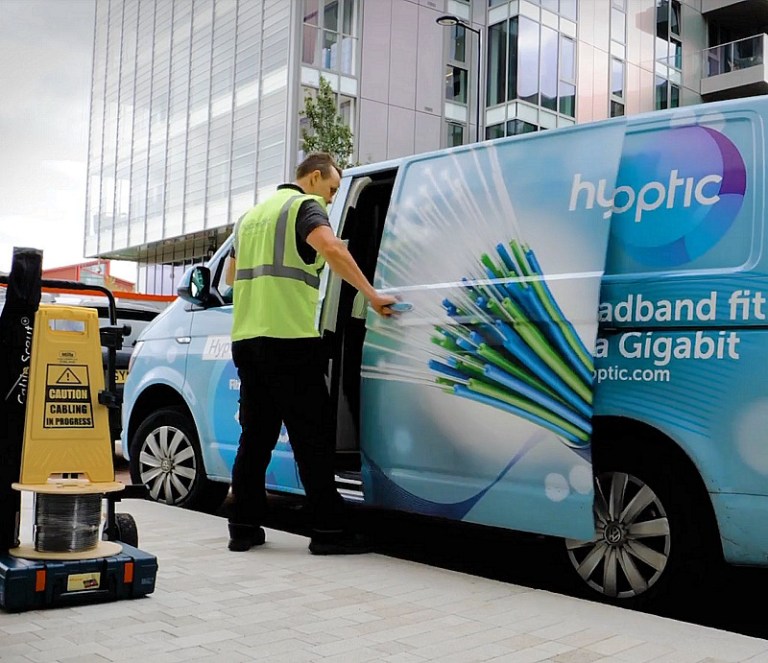
Today, one of the UK’s leading fibre altnets, Hyperoptic, has revealed that it plans to lay off over 100 members of staff.

The majority of affected staff will be network engineers working in Scotland and North West England, regions in which Hyperoptic’s network build is largely complete.

Around 40 network build engineers could be redeployed to customer build and customer connections teams.

The operator will also remove a layer of management from its infrastructure division.

“In support of our continued growth at Hyperoptic, we have refocused around 40 employees on customer-facing engineering roles, and are proposing to make around 110 redundancies in the UK as we increase our focus on areas that offer us the greatest customer reach,” said CEO Dana Tobak. “Where necessary for the customer-centric roles, we will provide support and training to help keep our people in Hyperoptic – building on their skills, experience and expertise. For those employees that do move on from Hyperoptic, we will ensure the support they receive reflects the great work they have delivered for this company.”

Hyperoptic is not alone in the telecoms sector when it comes to announcing job cuts this year. Rival altnets Zzoomm and CitFibre have both revealed plans to lay off hundreds of workers, citing macroeconomic pressures. BT, meanwhile, says it plans to shrink its workforce by 40% – around 55,000 jobs – by the end of the decade, suggesting that many existing roles could be ultimately be performed AI.

In recent years, the UK’s fibre market has been flush with investment, creating a vibrant community of altnets battling with incumbent operator Openreach to deploy full fibre throughout the country. However, with Openreach’s rollout advancing faster than initially expected and the UK’s challenging economic environment over the last year, the bubble is beginning to burst and altnets are clearly beginning to feel the squeeze.

It appears consolidation will soon become unavoidable, but who, when, where, and how remains to be determined.

How is the UK’s altnet ecosystem evolving in 2023? Join the operators in discussion at this year’s Connected Britain event

Also in the news:
Final bids for TIM’s fibre network expected tomorrow
Let’s talk about the symbiotic relationship between data centers and submarine cables
Mexico’s high 5G spectrum price could see Telcel the only bidder in latest auction

MTN warns that Cameroon asset freeze is impacting operations

Keep up-to-date with all the latest news, articles, event and product updates posted on Developing Telecoms.
Subscribe to our FREE weekly email newsletters for the latest telecom info in developing and emerging markets globally.

Sending occasional e-mail from 3rd parties about industry white papers, online and live events relevant to subscribers helps us fund this website and free weekly newsletter. We never sell your personal data. Click here to view our privacy policy.