

A couple of managed services upgrades and a balance sheet move. … [visit site to read more]

A couple of managed services upgrades and a balance sheet move. … [visit site to read more]

India’s Department of Telecommunications (DoT) revealed key initiatives on Monday to boost local development of 5G and 6G use cases, as well as a skilled workforce to support it.
According to ETTelecom, the DoT revealed its Spectrum Regulatory Sandbox (SRS) and Wireless Test Zones (WiTe Zones) to streamline testing and experimentation of domestically produced wireless solutions.
The SRS is expected to encourage start-ups and SMEs to develop use cases for 5G and 6G technologies, as well as help telcos and solutions providers test gear for any technical problems.
The move fulfils a provision in the Telecommunications Act, 2023 to introduce regulatory sandboxes for testing new communications technologies and driving innovation, particularly for 5G and 6G technologies, the report said.
Speaking at the opening of the India Mobile Congress 2024 and the World Telecommunication Standardisation Assembly 2024, Union telecom and IT minister Ashwini Vaishnaw said the SRS will provide “very easy portal-based permissions” via the centralised Saral Sanchar Portal to expedite applications.
Vaishnaw also said that the WiTe Zones allow experimentation in unassigned and assigned spectrum bands.
The report added that the DoT has also abolished the Wireless Operating License (WOL) requirement for licensees under the Indian Telegraph Act, 1885, which means sandbox participants won’t need to acquire a WOL before they start experimenting.
The unveiling of the SRS and WiTe Zones came the same day that the DoT and Ericsson announced that they will collaborate to give India’s academic 5G labs access to the Ericsson Educate platform’s 5G courses.
The DoT has set up 100 5G use case labs within 100 institutes across India with the objective to build competencies and engagement in 5G technologies for students and startup communities. Under an MoU signed by both parties on Monday, Ericsson will open its Ericsson Educate platform to 10,000 students from these institutes and provide access to learning material on key technologies.
Subjects covered as part of the programme at an introductory level include Automation, Telecommunications, AI, IoT, 5G and Machine Learning.
“I am confident that the 5G Labs that we have set up in institutes will help us create new 5G use cases for the country,” Vaishnaw, said. “We are delighted to partner with Ericsson to build competencies in emerging and new technologies and prepare the students to be 5G-ready.”
Nitin Bansal, MD for Ericsson India, said the collaboration is a “significant step” towards developing a 5G ready workforce in India.
“Access to 5G technology related courses will enable these students to develop use cases that can address the local needs of the country, help enhance productivity and accelerate the country’s digitalization efforts,” he said.

Several vendor items and infrastructure for a major sports event: … [visit site to read more]

On Friday, the CPP announced that they would be the latest company to invest in the highly prized fixed network assets of Italian incumbent operator TIM.
The pension fund will invest roughly $2 billion for a 17.5% stake in the business, with the deal giving NetCo an enterprise value of $27.5 billion.
The deal sees CPP join a growing number of investors in TIM’s spun-off fixed networks unit, which includes all of the company’s fibre network assets but excludes the company’s submarine cable unit, Sparkle.
TIM announced plans to separate the unit last year as part of a new strategy under CEO Pietro Labriola seeking to better monetise the company’s assets. The announcement quickly drew interest from numrous major players, most notably US investment firm KKR, who would go on to to acquire the whole of NetCo for €18.8 billion at the end of last year.
Since then, various additional players have joined the growing consortium, including a wholly owned subsidiary of the Abu Dhabi Investment Authority, the Italian infrastructure fund F2i and the Italian Ministry of Economy and Finance.
For CPP, the stake represents the first step of their infrastructure investment strategy in Italy.
“Our investment alongside these key partners with a shared long-term vision will help deliver high-quality digital infrastructure across Italy as well as generating long-term risk-adjusted returns for the fund,” said James Bryce, a managing director and global head of infrastructure at CPP Investments. “We are optimistic that NetCo can represent the first of several infrastructure investments in Italy for CPP Investments.”
The deal is expected to close in the summer, subject to typical regulatory clearances.
Keep up to date with the latest international telecoms news by subscribing to the Total Telecom daily newsletter
Also in the news:
BT wins £26m contract to connect UK schools
Apple fined €1.8bn by European Commission over Spotify row
Japan to reduce regulatory pressure on incumbent NTT

Tower company Edotco Bangladesh revealed on Thursday that it signed an MoU with Huawei Technologies (Bangladesh) to collaborate on deploying a telecoms tower in Bangladesh made of fiberglass reinforced plastics (FRP).
Under the MoU, Edotco Bangladesh said it will become the first TowerCo in the country to offer its fiberglass tower solutions to mobile network operators, with Huawei serving as technology partner to help deploy the tower.
FRP is a composite material consisting of a polymer matrix reinforced with fibers. The fibers – which can be made from materials such as glass, carbon, aramid or basalt – provide the strength and stiffness to the composite material.
According to Edotco, using FRP materials reduces tower weight up to 44%, making such towers suitable for rooftop sites in high-density areas. This also makes them easy to install and transport, which will increase construction efficiency up to 75%.
The company also said FRP towers are engineered not to reflect radio waves, ensuring efficient microwave transmission, while their durability allows them to withstand high voltage without damage. The towers also promise low CO2 emissions.
Sunil Issac, country managing director of Edotco Bangladesh, said FRP towers will help drive innovation in Bangladesh’s evolving tower industry landscape.
“We are dedicated to shape the future of this industry and continue to enable connected Bangladesh with advanced sustainable practices in line with SDGs,” he said.
Huyue, chief operating officer for Huawei Technologies (Bangladesh), said the partnership “enhances site facility availability and is set to bring positive change in the tower infrastructure industry.”
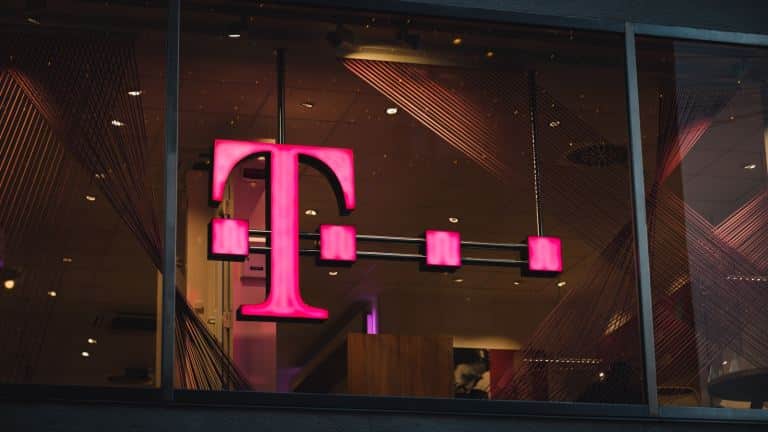
The generative AI platform was originally developed for the use of Deutsche Telekom employees, but after successful trials, was added to its external portfolio
Deutsche Telekom has this week signed up UKA Group, a manufacturer and operator of renewable energy farms, as the first customer for its new Business GPT generative AI platform.
Deutsche Telekom explained that by using their generative AI tool, companies can increase efficiency and productivity in their workforces, through reducing the effort expended for repetitive tasks and speeding up their workflows.
The solution is tested for IT security and data protection and hosted on Telekom’s cloud environments, with the client company able to integrate their own internal documentation.
Though the press release was relatively vague in explaining Business GPT’s specific uses for UKA, explaining only that “the multilingual tool is particularly useful for efficient research and information procurement in day-to-day work as well as content creation.”
Business GPT was originally developed for the German operator’s own employees and how since been adapted for enterprise us.
In future, “it will be possible to connect company applications directly via programming interfaces.”
“Business GPT makes us absolute pioneers. With this tool, we enable our employees worldwide to test use cases for AI language models in a secure environment and use them profitably. That’s what I call real innovation!” says Christian Schmidt, Head of IT and Digital at UKA in a press release.
Catch Deutsche Telekom at next year’s Connected Germany – get your tickets now!
Also in the news:
BT wins £26m contract to connect UK schools
Apple fined €1.8bn by European Commission over Spotify row
Japan to reduce regulatory pressure on incumbent NTT
Keep up-to-date with all the latest news, articles, event and product updates posted on Developing Telecoms.
Subscribe to our FREE weekly email newsletters for the latest telecom info in developing and emerging markets globally.
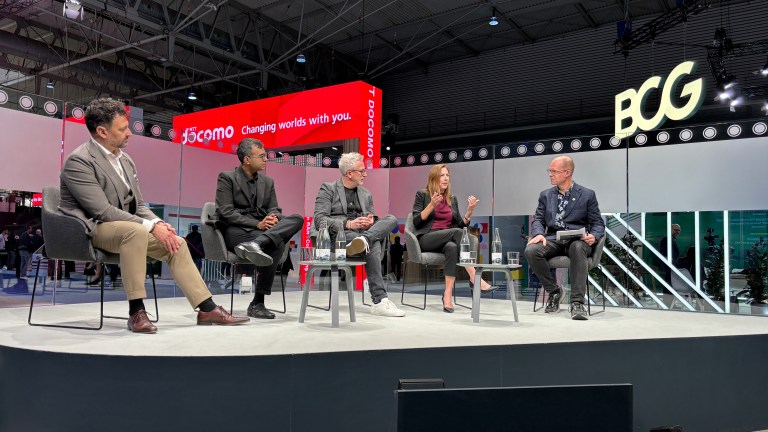
Sustainability was, as ever, a major focus at this year’s Mobile World Congress in Barcelona, will operators and vendors alike keen to show off their green credentials when it came to energy usage and carbon emissions.
However, it was a perhaps less headline-grabbing – but no less important – element of sustainability that was the topic of an insightful panel discussion on day three of the conference, seeking answers to the crucial question: what should we do about the billions of mobile devices that are discarded every year?
A circular approach to the device lifecycle
The scale of the issue at hand should not be underestimated. According to the GSMA, over 5.3 billion devices ended up in drawers or landfills in 2023. At the same time, each time a new smartphone is manufactured, around 80kgs of carbon is introduced into the atmosphere.
This unsustainable cycle clearly needs to change, but to do so requires not only buy-in from the entire mobile ecosystem but also changing the mindset of customers.
For Kingfisher, a company that works with partners to help facilitate second lives (and beyond) for devices, the key lies in making trade-in programmes more flexible.
“We allow customers the opportunity to return and upgrade their device at any time, in any condition, for any reason,” explained Georgiann Reigel, CEO of Kingfisher. “The benefit of that is obviously that device has now been handed back in, so we’re able to take that phone get it back to a good condition through repair or refurbishment, and then get that device back out to another customer and begin a second life.”
This represents a fundamental shift from the typical customer journey, where a customer buys a phone and is trapped with it until the end of their contract, regardless of whether it becomes damaged, or a more desirable device becomes available.
Indeed, building this concept of device trade-in into the very first steps of the customer journey is one of the main drivers for the World Phone Amnesty initiative, which aims to see 100% of devices returned, repaired, repurposed, or recycled.
“It’s a very simple concept: when you get a new phone, hand in your old phone,” said Reigel, noting that circularity rates are only at 5–10% on global scale. “We need to push for a 1:1 trade-in rate to make the industry truly sustainable and we’re a long way from that right now.”
Changing the consumer mindset
Of course, while customers are increasingly aware of the environmental impact of their activities as a consumer, incentivising people to make more sustainable choices remains a challenge.
“The core hook for all of this of course comes from the planet and the sustainability agenda, but I think ultimately customers want value as well,” said Varun Krishnan, Managing Director – FinTech & Connected Devices Tech at Vodafone. “This ecosystem around trade-in, financing, and extending device lifetimes actually gives a lot of value back to customers.”
Vodafone itself has introduced more flexible 36-month contracts, helping to extend the life of purchased devices beyond the norm. In addition, Krishnan noted that Vodafone’s global footprint also plays a role in repurposing these devices; a returned three-year old device may not be particularly attractive to a customer in the European market, but in less developed markets like Africa these devices can still be a major upgrade for consumers.
Meanwhile, Daniel Hernandez Ortega, SVP Devices & Consumer IoT at Telefónica, emphasised the importance of creating new ways to communicate the impact of device decisions to customers.
“We want to emphasise the use of the devices in a more responsible way,” said Ortega “We’ve launched very innovative solutions based on blockchain, Web3, and tokenomics, dealing with how people can compensate their carbon footprint.”
In Spain, for example, Telefonica’s Living Apps help the customer track the carbon emissions from their device activity, allowing them to make more sustainable decisions. They also reward the customer with tokens for making these sustainable decisions, which can then be spent to support local or international sustainability programmes that the consumer is particularly passionate about.
Both of these approaches encourage customers to think, at the point of purchase, about what will happen to their device when they no longer need it.
Push and pull: New technology versus longer device lifecycles
At the core of this discussion around device sustainability is something of a paradox. Operators and device manufacturers, naturally, want customer to upgrade to the latest models so that they can take advantage of the latest services. On the other hand, a more sustainable device lifecycle would see customers stick with their existing devices for increasingly longer periods of time. How do you reconcile these seemingly disparate drivers?
For Reigel, the solution lies in making the latest devices more affordable, a quality that will seem move on to their secondary and tertiary lives more quickly. Currently, devices being returned are three- to four-years old in typical exchange programmes. By contrast, Kingfisher’s programme in Australia, which has been running for three and a half years, is seeing one- and two-year-old devices returning to market.
“These are 4G and 5G devices, helping them meet the demand that the second-hand market has,” explained Reigel. “We’ve seen a 15x increase in the rate of returned devices by having a flexible ownership programme in the market […] We’ve seen the success of that programme without even telling people this is green, this is sustainable – we didn’t even communicate that. Customers were just 15x more likely to bring in that phone. If we can take that and scale it around the world, we’re going to be in a much better place.”
“It’s actually the supply that’s the challenge,” she added. “The demand globally dramatically outstrips demand.”
You can view the full panel session on the Kingfisher YouTube channel from the link below.
[embedded content]
Keep up to date with the latest international telecoms news by subscribing to the Total Telecom daily newsletter
Also in the news:
BT wins £26m contract to connect UK schools
Apple fined €1.8bn by European Commission over Spotify row
Japan to reduce regulatory pressure on incumbent NTT
Keep up-to-date with all the latest news, articles, event and product updates posted on Developing Telecoms.
Subscribe to our FREE weekly email newsletters for the latest telecom info in developing and emerging markets globally.

Colorado-based Vantage Data Centers, a global provider of large-scale data centre campuses, has announced that is has secured a $64 million loan from two Taiwanese banks (CTBC Bank and Cathay United Bank) to support the development of its first data centre in Taipei, Taiwan.
The announcement marks the first financing deal for a hyperscale data centre in Taiwan and is Vantage’s first collaboration with Cathay United and its third transaction with CTBC globally.
The company’s Taiwan data centre campus was initially announced in December last year, and is currently under development, expecting to open in the summer. The campus will offer 16MW of IT capacity across a 215,000 square foot facility, catering to hyperscalers, cloud providers, and large enterprises, contributing to Taiwan’s emergence as a significant digital infrastructure hub in the region.
“Vantage is proud to lead the way in marking the first financing of a greenfield data centre project in Taiwan,” said Joel Cheah, Vantage’s CFO in the Asia-Pacific region in a press release. “We appreciate CTBC Bank’s continued confidence in Vantage’s data centre platform and are pleased to have the Cathay United Bank team join us in this innovative financial milestone in the next phase of Taiwan’s growth as a regional data centre market.”
According to Vantage, the Taipei data centre market is expected to more than double from $1.42 billion in 2022 to $3.21 billion by 2028, which it says is driven by growing cloud service adoption and demand for AI.
Throughout 2023, Vantage raised $10 billion in incremental debt and equity to support the growing data centre demand from the world’s largest hyperscalers.
“In 2023, we entered emerging and high-demand data centre markets to meet the needs of our customers as artificial intelligence and other innovative technologies continue to advance,” said Sureel Choksi, president and CEO of Vantage Data Centers.
Keep up to date with the latest international telecoms news by subscribing to the Total Telecom daily newsletter
Also in the news:
BT wins £26m contract to connect UK schools
Apple fined €1.8bn by European Commission over Spotify row
Japan to reduce regulatory pressure on incumbent NTT