

Four technology deployments by global operators to catch up with: … [visit site to read more]

Four technology deployments by global operators to catch up with: … [visit site to read more]

Orex Sai – the Open RAN joint venture between NTT DoCoMo and NEC – says it has been selected by Cambodia’s Ministry of Internal Affairs and Communications for a project to deploy a 4G Open RAN test network.
According to a statement from Orex on Saturday, the JV will deploy its 4G Open RAN solutions at an unnamed “large commercial facility” in Cambodia as a demo to verify the technology’s ability to provide stable voice and data communications.
The network will also be used to test AI-powered solutions developed for commercial facilities by NTT Data Malaysia to trial potential use cases for 4G in such environments, and demonstrate the ability of Open RAN to support them.
Orex Sai was established by DoCoMo and NEC in April 2024 to integrate Open RAN hardware and software from partners into tailored “Orex Packages” for telcos. Under the Orex Packages framework, Orex provides a full-stack service that includes planning, construction, system verification, maintenance and operation.
Orex said that if the demo goes well, the company will introduce its Orex Packages to the Cambodian market.
Orex Sai also hosted a workshop on Open RAN and other topics on Monday at the Cambodia Academy of Digital Technology (CADT) to help develop local skillsets for Open RAN technologies.
While the chief pitch for Open RAN has typically been to provide telcos with an alternative to vendor lock-in and potentially lower costs, Orex is also pitching its Open RAN solutions – at least in Cambodia – as a security measure for digital infrastructure and a way to mitigate supply chain risks.
“Supply chain risks due to changes in the international situation and concerns about ensuring security in cyberspace have become apparent. Concerns have also been raised about the security of digital infrastructure in terms of security, openness, and transparency,” Orex said.
Orex said that because Open RAN enables various vendors (rather than a single vendor) to supply base station hardware and software, this “will make it possible to reduce supply chain risks, build a flexible and highly scalable wireless access network, and optimize prices by activating the base station market.”

EE has announced that 16 additional locations across the UK will receive an upgrade with the deployment of its 5G standalone (5G SA) network by the end of the year.
This expansion will bring the total number of towns and cities covered by EE’s 5G SA network to 30, encompassing around 21 million people — or nearly a third of the UK population.
In each area where 5G SA is launched, it is expected to cover at least 95% of the outdoor area.
Unlike traditional 5G, which uses 4G networks as a foundation, 5G SA operates on a pure 5G core. This architecture enables devices to connect directly to a 5G network without relying on 4G infrastructure, offering faster speeds and lower latency.
These improvements make 5G standalone particularly effective for high-data-demand applications, such as video calls, streaming or live gaming.
The 16 new locations are:
Ashton-under-Lyne
Barrow-in-Furness
Barry
Birkenhead
Bury
Coventry
Dudley
Dundee
Newport
Nottingham
St Helens
Stockport
Swansea
Weston Super Mare
Wigan
Wolverhampton
EE initially launched its standalone 5G network in September, reaching 15 cities including Manchester, Liverpool, Hull, Glasgow, and Sheffield.
The operator currently charges a premium access to the 5G SA network, unlike competitors Vodafone and Virgin Media O2, for whose customers access to 5G SA is free for compatible devices.
At Connected Britain this year, EE CEO Marc Allera explained the difficulties that 5G has faced since its introduction to the market in 2019. In his Day One keynote speech, Allera said the expectations of 5G were “not met in the early days”, adding that SA would “start bringing the true promise of 5G to consumers and businesses”.
Join us at next year’s Connected North event, 23-24 April in Manchester. Get discounted tickets here!
Also in the news:
Nokia and Lenovo forge partnership to drive AI and automation in data centers
UK govt announces £22m investment in ‘smart data’
“We’re on track to close the loop”: Adtran talks data, AI, and network automation at Connected Britain

 Over the past decade, we have seen infrastructure investments in Latin America growing rapidly but with most of it going into data centers and subsea cables. But markets across the continent are maturing, and EdgeUno sees an opportunity. The infrastructure and cloud provider plans to leverage its footprint across the continent as it builds out diverse, new, longhaul terrestrial fiber between the markets it serves. With us today to talk about their approach and the opportunity they see is CEO Mehmet Akcin. … [visit site to read more]

Czech telco group PPF has completed the sale of a 50% plus one share stake in its telecom assets in Bulgaria, Hungary, Serbia, and Slovakia to Emirati-based telco e&. In doing so, the companies have formed a new joint venture called e& PPF Telecom Group.
The deal is valued at €2.15 billion, with a potential earn-out of up to €350 million.
The joint venture combines PPF’s telecom experience in Central and Eastern Europe with e&’s global tech resources to boost telecom services in the region.
PPF will retain full ownership of its telecom assets in the Czech Republic, including O2 Czech Republic and CETIN Czech, which are outside the partnership’s scope. Additionally, PPF is set to acquire a 30% stake in CETIN Group from Roanoke Investment, making PPF the sole owner of CETIN Czech.
“Together, we have created a platform to drive value creation in fast-developing telecommunications markets,” said PPF CEO Jiří Šmejc in a press release.
“Our partnership with e& testifies to the quality of PPF’s industry expertise and local knowledge. In return, PPF’s telco teams will benefit from the global scale and technology know-how of e&, enabling us to meet our ambitions for further growth,” he continued.
Earlier this year, the European Commission (EC) opened an investigation into the deal, over concerns that it has been “granted foreign subsidies that could distort the EU internal market”.
Concerns stemmed from discussions that e& may have received financial support from UAE banks and the national government, which would have given PPF an unfair edge in the EU market according to newly introduced competition rules that came into effect in July last year.
Earlier this month, the EC unanimously approved the deal.
Keep up to date with the latest international telecoms news by subscribing to the Total Telecom daily newsletter
Also in the news:

Keep up-to-date with all the latest news, articles, event and product updates posted on Developing Telecoms.
Subscribe to our FREE weekly email newsletters for the latest telecom info in developing and emerging markets globally.
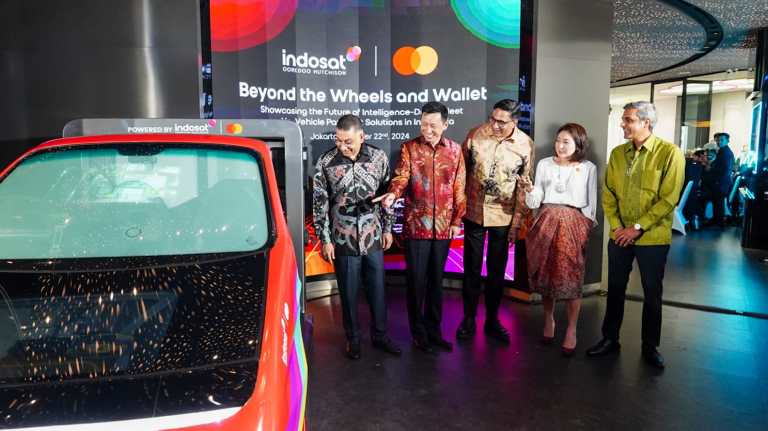
Mastercard and Indosat Ooredoo Hutchison (IOH) have launched a new prototype that uses Mastercard’s in-car payment system in combination with IOH’s AI-powered fleet management platform, NEXTFleet. The joint effort aims to reshape urban travel in Indonesia by bringing together payment and mobility technology, the companies said.
The solution allows drivers to make payments for tolls, EV charging, fuel, and drive-throughs from the dashboard, using Mastercard’s biometric and token technology.
The payment information is stored in the car’s system, letting drivers pay with a fingerprint. At the same time, NEXTFleet helps companies manage multiple vehicles in real-time, tracking and optimising their use through IoT and mobile apps.
IOH announced its intention to turn from telco to TechCo at its Capital markets day last year. The company wants to move beyond traditional telecom services to focus on AI and digital solutions across various industries.
“At Indosat Ooredoo Hutchison, we are dedicated to leveraging AI and innovative technologies to revolutionize urban mobility in Indonesia. This collaboration with Mastercard highlights our ambition to become AI TechCo, reflecting our larger purpose of empowering Indonesia through smarter, more efficient solutions that enhance the quality of life for every Indonesian,” said Vikram Aileen Goh, Country Manager and President Director, PT Mastercard Indonesia Sinha, President Director and Chief Executive Officer at IOH.
As urbanisation in Indonesia rises, the need for connected travel solutions is growing. Digital transactions in the country are set to increase by over 25% this year, with more than 157 million vehicles on the road, a press release stated.
“Through this collaboration with Indosat Ooredoo Hutchison, we are showcasing the possibilities that could unfold when innovation, mobility and commerce come together, and what the future holds with more connected, efficient, and sustainable urban mobility ecosystems in Indonesia,” echoed Aileen Goh, Country Manager and President Director at PT Mastercard Indonesia.
Keep up to date with the latest international telecoms news by subscribing to the Total Telecom daily newsletter
Also in the news:
Nokia and Lenovo forge partnership to drive AI and automation in data centers
UK govt announces £22m investment in ‘smart data’
“We’re on track to close the loop”: Adtran talks data, AI, and network automation at Connected Britain

ZTE has unveiled the innovations of its RAN multi-agent collaboration solution with China Mobile during the China International Information and Communications Technology Exhibition (PTEXPO) in Beijing.
The multi-agent collaboration solution introduces AI large models into the end-to-end operation and maintenance of mobile networks for the first time, yielding impressive performance and efficiency improvements across various locations in China. This represents a significant leap forward in network digitalization and intelligence.
Through the extensive deployment and development of 5G, China Mobile has built the world’s largest mobile network. This expansion has led to increasingly complex network structures and diverse applications, demanding higher efficiency in network operations and maintenance. With the deep integration of 5G with AI+, the introduction of large models is revolutionizing the telecom industry.
The innovations of RAN multi-agent collaboration solution, unveiled at this event, are built upon the latest AI large model tailored for the telecom industry. By harnessing multi-agent collaboration, the solution leverages the network’s native AI atomic capabilities, empowering the network operation and maintenance platform, and exploring a new paradigm for intelligent network management.
The RAN multi-agent collaboration solution seamlessly integrates telecom knowledge, structured data, and network capabilities, enabling accurate understanding and intelligent decision-making in complex operation and maintenance scenarios through multi-agent collaboration and orchestration. This transformation shifts from the traditional « people+tools » model to a new self-orchestrating intelligent service model. The new approach improves the network’s adaptive capabilities and self-service levels, promotes the synergy among various intelligent technologies, and drives the overall advancement of network intelligence. Furthermore, this solution explores new business models and application scenarios, fostering effective integration of 5G-A and AI, expanding the 5G-A industrial ecosystem and enhancing overall industrial value.
In the journey of network transformation driven by « 5G+ » and « AI+ », ZTE and China Mobile collaborate closely to address the challenges posed by ultra-large-scale mobile networks, complex structures, stringent professional requirements, and high performance and security demands, aiming to establish a new paradigm in mobile network operation and maintenance. Since 2023, ZTE and China Mobile have actively promoted the AI multi-agent collaboration solution for network operation and maintenance, showcasing its effectiveness at major events across China, including the Wuzhen Internet Conference, concerts at the Hangzhou Olympic Sports Center, the Jin’an International Tennis Open, the Xi’an Great Tang All Day Mall, and various events in Beijing. At a concert held at the Hangzhou Olympic Sports Center, the solution achieved a 30% reduction in manpower required for network performance assurance. Similarly, at the Xi’an Great Tang All Day Mall, it facilitated a 20% increase in network traffic while significantly enhancing user experience. These improvements highlight the solution’s capability to enhance operation and maintenance efficiency while improving network performance and user perception.
The unveiling of the multi-agent collaboration innovations marks a significant milestone in the network intelligence strategies of ZTE and China Mobile. Moving forward, both companies are committed to deepening their partnership to drive breakthroughs in key intelligent technologies, explore diverse application scenarios, provide robust technical support for the advancement of telecom industry, and facilitate digital transformation across various sectors.

Costa Rican regulator Sutel has reportedly restarted the country’s 5G spectrum auction process, following the dismissal by The Comptroller General of the Republic (CGR) of most of the objections of Instituto Costarricense de Electricidad (Grupo ICE), the Costa Rican government-run electricity and telecommunications services provider.
There was apparently an error in the annex to the specifications, relating to coverage guarantees. This was one of ICE’s objections and one of the few to be accepted. The error has now been corrected.
However, ICE also objected to spectrum caps, which effectively mean that it can’t compete for more mid-range spectrum – that is, spectrum from 1GHz to 6GHz. This, along with most other ICE objections, has been rejected.
In fact ICE has so far held up the auction process with this argument twice, most recently at the end of September, although there had also been earlier objections from operators Claro and Liberty.
Now, however, Sutel aims to resume with the new deadlines and will be able to receive applications from bidders interested in the spectrum.
In fact on 24 October, Sutel published the notice of the 5G tender in the country’s Official Gazette, through which it restarted the remaining period of 12 working days granted for the receipt of offers from those who want to participate in the bid.
Once this part of the process is complete, Sutel will proceed with the evaluation and pre-selection of offers to define who will be the eligible bidders. Once the pre-selection is formalised, the start of actual bidding for spectrum will be scheduled.
As long ago as February last year we reported that all three Costa Rican operators – Liberty, Claro and ICE – had shown interest in acquiring new spectrum for mobile services in the country. APM Terminals, ICE and Liberty were also reportedly interested in implementing private mobile networks, as were a number of cooperatives.

This week, Belgian telco Proximus has announced the sale of its data centre assets to local digital infrastructure player Datacenter United.
The sale, worth €128 million, covers Proximus’s three data centres in Evere, Mechelen, and Machelen, with a combined capacity of 11MW.
These sites will be added to Datacenter United’s existing footprint of nine data centres within Belgium.
Proximus itself will continue to be served by the data centres via a 10-year master service agreement. The operator will also lease office and telco space at both the Evere and Mechelen sites.
“While customers will continue to benefit from state-of-the-art datacenter infrastructure, with data stored in Belgium and managed by an expert partner, Proximus will continue to pursue its hybrid cloud strategy and further sharpen its focus on delivering value added services to customers as an IT integrator,” said Guillaume Boutin, CEO of the Proximus Group. “This transaction will bring close to EUR 130 million of proceeds and fits our goal of monetizing assets as part of our EUR 500 million asset divestment plan. We anticipate the closing of this transaction by Q1 2025.”
Back in September, Proximus announced its intention to dispose of €500 million in assets, in order to fortify its balance sheet and allow it to better focus on its core business.
Also in the news:
Nokia and Lenovo forge partnership to drive AI and automation in data centers
UK govt announces £22m investment in ‘smart data’
“We’re on track to close the loop”: Adtran talks data, AI, and network automation at Connected Britain