

One bit of M&A and three organic expansion moves from around the industry to finish off the week: … [visit site to read more]

One bit of M&A and three organic expansion moves from around the industry to finish off the week: … [visit site to read more]

How progressive digital approaches are helping telcos resolve five of their biggest supply chain headaches
This Industry Viewpoint was authored by SAP’s Gary Pan … [visit site to read more]

China’s Ministry of Industry and Information Technology (MIIT) has reportedly kicked off a pilot programme to allow foreign investors to operate wholly-owned data centres and other telecoms-related services in select locations.
According to a report from state-owned Xinhua News Agency on Wednesday, the pilot opens up “value-added telecom services” in four designated free-trade areas in Beijing, Shanghai, Hainan and Shenzhen.
Under the pilot, foreign firms are allowed to operate their own data centres, and also engage in online data processing and transaction processing within the four free-trade areas, the report said
The MIIT also said foreign companies will also have greater access to China’s cloud computing service markets under the scheme, the report added.
The MIIT said it will monitor the pilot programme’s progress “and expand its scope at an appropriate time.”
The MIIT first announced the pilot programme in a circular released in April 2024. Xinhua reported at the time that the value-added telecom services to be opened up under the programme included “internet data centres, content delivery networks and internet service providers, online data processing and transaction processing, information publishing platforms and information delivery services excluding services related to internet news information, online publishing, internet radio and television, internet culture management, and information protection and processing services”.
Outside of the pilot programme, such services are limited to domestic companies. At most, foreign investors must enter a joint venture with a local firm and cannot own a controlling stake in the JV.
The MIIT claims that 2,220 foreign-invested companies have been licensed to operate telecom businesses in China as of the end of September 2024.
Wang Zhiqin, deputy director of the China Academy of Information and Communications Technology, told Xinhua the pilot would further facilitate integration of digital technologies with various sectors, as well as “align domestic industry systems and regulatory frameworks with high-standard international economic and trade rules.”
The MIIT also said that the programme would further diversify China’s market supply and enable it to export its digital economy innovations.
Xinhua also reported that HSBC’s wholly foreign-owned fintech subsidiary, HSBC Fintech Services (Shanghai) Company Limited, is already getting ready to apply for an internet content provider permit that it says would help it enrich app content and advance its digital business transformation.
According to state-owned newspaper China Daily, Tesla has also applied to be part of the pilot, which will enable its Gigafactory in Shanghai to access China’s cloud computing services. Siemens’ digital health subsidiary, Siemens Healthineers, has also joined the programme, the report said.

UK altnet Community Fibre has raised £125 million from a consortium of lenders including JP Morgan, Alpha Bank, Barclays, Landesbank Baden-Württemberg (LBBW), and Sequoia, in its latest funding round.
The funds, the company says, will primarily be used to help connect customers within their existing footprint, as well as expanding their network coverage.
“Community Fibre has been and will continue to be highly focussed on delivering the best customer experience and the best value for money in the market. Our success here, growing from just 10k customers at the start of 2020 to over 310k in less than 5 years, has driven a strong lender appetite. We and our financial backers are aligned on driving acquisition growth and confident in overachieving our penetration targets,” said Graeme Oxby, Community Fibre’s CEO.
“The lenders and our shareholders share the view that Community Fibre’s momentum will further strengthen its position as the best and largest full fibre only provider in London and is a vote of confidence in its strong management team and their ability to commercialise the large London network,” echoed Olaf Swantee, the company’s chairman.
In total, Community Fibre has raised £1.1 billion since its inception in 2013, according to a Telegraph report.
As of November last year, Community Fibre had passed 1.3 million homes across and around London.
Its last large funding round, back in 2022, had secured a new finance facility worth £985 million, aimed at helping the company to expand its FTTP rollout to 2.2 million by the end of 2024.
By late 2023, however, the company announced its intention to temporarily pause its network build, cutting jobs and shifting its focus to “deliver a stronger return to our investors by focusing even more on our already successful marketing and sales activities.”
Indeed, this rollout deceleration was already prominent in the company’s 2023 financial results, which noted that residential premises passed totaled around 1.3 million.
Keep up to date with the latest international telecoms news by subscribing to the Total Telecom daily newsletter
Also in the news:
Nokia and Lenovo forge partnership to drive AI and automation in data centers
UK govt announces £22m investment in ‘smart data’
“We’re on track to close the loop”: Adtran talks data, AI, and network automation at Connected Britain

Five bits of last mile news: … [visit site to read more]

At GITEX Global 2024 in Dubai, artificial intelligence (AI) was the most talked-about topic, with companies from across industries showcased how AI and machine learning are reshaping business operations and consumer experiences.
With over 6,500 exhibitors, 1,800 startups, and 1,200 investors from 180 countries, GITEX Global 2024 smashed previous records, attracting more than 200,000 visitors. For the first time, GITEX welcomed countries like South Africa, Vietnam, and Puerto Rico, while Europe had its largest representation to date. The event’s theme, Global collaboration to forge a future AI economy, underscored the central role AI plays in transforming industries across sectors.
AI in telecommunications: Ericsson and e& take the lead
At the heart of GITEX Global’s AI focus, Ericsson and e& (formerly Etisalat) stood out with a Memorandum of Understanding (MoU) to explore AI-driven autonomous networks. This three-year agreement aims to transform e&’s mobile networks through AI, fostering innovation, network autonomy, and sustainability.
Ekow Nelson, Vice President and Head of Global Customer Unit at Ericsson Middle East and Africa, highlighted the importance of AI in shaping future networks, “Artificial intelligence and automation will play pivotal roles in shaping the networks of the future.
“By combining Ericsson’s global expertise with e&’s forward-thinking strategy, we aim to pioneer the development of autonomous networks to enhance operational efficiency and contribute to environmental sustainability.”
For e&, this MoU represents a significant step toward responsible AI deployment. Sabri Yehya, Chief Technology Officer at e& international, emphasised that this collaboration goes beyond technology: “Our MoU with Ericsson marks a critical step toward autonomous networks, which will not only transform the way we operate but also help meet our ambitious net-zero targets.”
The partnership aligns with e&’s commitment to achieving net-zero emissions in its UAE operations by 2030.
By focusing on AI-driven autonomous networks, this collaboration is expected to enhance customer experiences while reducing carbon emissions and contributing to environmental sustainability.
Huawei: vision for digital and intelligent transformation
Huawei underscored its commitment to leading the next wave of industrial digitalisation with its innovative approach to ICT infrastructure. In his keynote at the Industrial Digital and Intelligent Transformation Summit, David Shi, Huawei’s Vice President of ICT Marketing and Solution Sales, outlined the company’s vision of building an intelligent world, one in which industrial digitalisation and AI play a crucial role in productivity and societal transformation.
Shi stressed the importance of collaboration with partners to accelerate the adoption of next-generation technologies: “We believe new technologies are emerging even faster, and the only way to bring intelligence to all industries is through collaboration with our customers and partners.” Huawei’s approach focuses on making ICT infrastructure more accessible, user-friendly, and scalable by adhering to four guiding principles: easy to integrate, easy to access, easy to use, and easy to evolve.
Key to Huawei’s vision are its flagship products such as Huawei eKit, designed for SMEs. These products simplify ICT infrastructure, making it more accessible to smaller businesses, and help reduce installation and operational costs. Huawei also emphasised the growing importance of WANs as the “highways in the digital world” and how its IP and optical technologies have reduced total cost of ownership by 30% in key projects, such as its collaboration with BoFiNet.
Huawei’s presence at GITEX 2024 showcased its innovative solutions for digital transformation, focusing on data centres, campus management, and WAN technologies.
Fortinet: AI-Powered solutions and strategic alliances
At GITEX Global 2024, Fortinet demonstrated its leadership in AI-powered cybersecurity by presenting a range of advanced solutions aimed at mitigating the ever-growing complexity of cyber threats. Shane Grennan, Senior Channel Director for MEA, highlighted Fortinet’s AI-driven cybersecurity solutions, designed to navigate the modern hypercomplex threat landscape. He explained: “Our solutions use AI to address labour shortages in cybersecurity and enable organisations to manage risks more effectively.”
Fortinet also emphasised the importance of managed security services in bolstering business resilience. According to Grennan, the expansion of cloud computing presents opportunities for companies to shift their focus towards comprehensive cloud-based security strategies. Fortinet’s participation at GITEX 2024 also featured a second stand dedicated to operational technology (OT) security, highlighting the importance of protecting industrial control systems.
One of the key emerging technologies on display was Fortinet’s Secure Access Service Edge (SASE), combining SD-WAN and security services into a unified solution for modern enterprises. Fortinet’s leadership in SD-WAN gives it a unique edge in providing customers with hybrid solutions that enhance both security and operational efficiency.
Green Circle and SearchInform: strengthening data protection in Saudi Arabia
During GITEX 2024, Green Circle, a leading Saudi cybersecurity firm, signed a strategic cooperation agreement with SearchInform to offer advanced Data Loss Prevention (DLP) solutions to customers in the Kingdom of Saudi Arabia (KSA). This partnership enables Green Circle to deliver comprehensive data protection solutions that ensure compliance with KSA’s regulatory frameworks, including the National Cybersecurity Authority’s guidelines.
Mohammad Alkhudari, CEO of Green Circle, highlighted the importance of DLP in safeguarding businesses from internal threats, fraud, and data leaks. “Our clients have long sought such comprehensive solutions, and this partnership marks a significant step in enhancing data protection standards across the Kingdom,” he said.
Sergey Ozhegov, CEO of SearchInform, added that the fast-growing Saudi market presents an opportunity for significant business growth in the cybersecurity domain. The partnership between Green Circle and SearchInform is set to strengthen the defence capabilities of KSA’s organisations, especially in the face of rising internal threats.
YangoGPT: AI at your service
Yango Group introduced its latest generative AI model, YangoGPT, with its first implementation in the AI assistant ‘Yasmina’. Designed to assist users in decision-making, generating ideas, and simplifying complex concepts, Yasmina represents the future of human-like AI interaction.
Yasmina’s enhanced capabilities were on full display at GITEX Global 2024, demonstrating its ability to assist users with everyday tasks, generate content ideas, and explain complex concepts in simple terms. From helping with vacation planning to breaking down scientific principles for children, Yasmina showcased the power of AI to simplify and enrich lives.
“Yasmina can spark users’ creativity, whether they need help brainstorming birthday gift ideas or crafting poems in Arabic,” stated a spokesperson from Yango Group. With its ability to maintain conversation context and provide real-time responses, Yasmina exemplifies the next evolution in AI assistants.
The road ahead for AI
GITEX Global 2024 underscored the vast potential AI holds for industries across the globe. From telecommunications to customer engagement, and from enterprise solutions to home automation, AI is no longer a distant future—it’s transforming how we live and work today.
As GITEX continues to grow, expanding its global footprint with upcoming events in Africa, Asia, and Europe, the future of AI looks even more promising. With initiatives like Ericsson and e&’s MoU for autonomous networks, companies across the world are poised to lead the way in developing responsible, sustainable AI solutions that drive progress for generations to come.
GITEX Global 2024 has set the stage for a future driven by AI—one that promises to be smarter, more connected, and more sustainable.
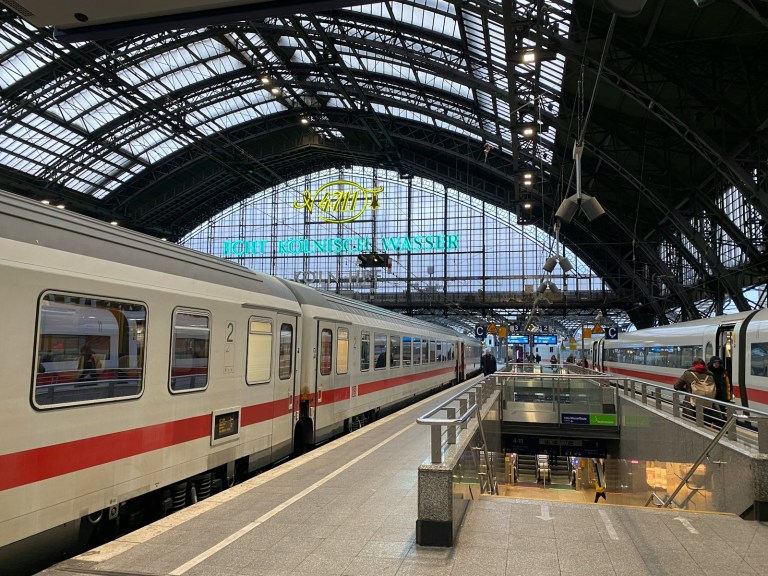
The railway line between Hamburg and Berlin is set to receive ‘seamless’ 5G coverage, thanks to a declaration of intent signed by Deutsche Bahn, the federal government, and the German telcos 1&1, Deutsche Telekom, O2Telefónica, and Vodafone.
The partners announced the deal at the Digital Summit in Frankfurt this week, , pledging to jointly test, develop, and install 5G masts across the 278km long Hamburg–Berlin route.
This route is already scheduled for renovation between August 2025 and April 2026, providing a 9-month window in which to explore infrastructure deployment options and ensure gigabit-capable connectivity for passengers.
The project, dubbed the Future Rail Mobile Communication System (FRMCS), will see the deployment of shared mobile masts besides the tracks, with the partners working together to overcome technical challenges.
“Our gigabit strategy aims to enable gigabit bandwidths wherever people live, work and travel. With the MoU, we are setting an equally ambitious gigabit timetable alongside the ambitious schedule for the upcoming general refurbishment of the Hamburg-Berlin line. Through the joint rail and mobile expansion, we are realising considerable synergies and cost savings hand in hand. This will benefit all travellers, who can look forward to high-performance and uninterrupted mobile communications coverage in the future,” said Dr Volker Wissing, the German Federal Minister for Digital Affairs and Transport said in a press release.
One of the major challenges the FRMCS is seeking to tackle is how to get the 5G signal into the train carriages themselves. Currently, the metal coating on the train windows makes them difficult for 5G signals to penetrate, meaning mobile signal is often delivered to a carriage’s interior by a repeater connected to an antenna on the carriage’s exterior. However, new window technology, which works by etching tiny holes in the metal coating, could allow 5G signals to penetrate the carriage directly from outside.
“Our goal is to make digital work and entertainment on the train as easy for customers as at home,” explained Valentina Daiber, Board Member for Legal and Corporate Affairs at O2 Telefónica, noting that it was a matter of “technical feasibility and identifying the most effective approaches”.
In related news, earlier this month Deutsche Telekom shared that they had made significant improvements to mobile coverage across the national rail network roughly two years ahead of schedule. According to the operator, 99% of German rail passengers on ‘main routes’ can access speeds of at least 200 Mbps.
Join us at next month’s Connected Germany, 5-6 November in Munich. Get discounted tickets here
Also in the news:
Nokia and Lenovo forge partnership to drive AI and automation in data centers
UK govt announces £22m investment in ‘smart data’
“We’re on track to close the loop”: Adtran talks data, AI, and network automation at Connected Britain

Infrastructure news from around the world at midweek: … [visit site to read more]

Kenyan operator Safaricom’s M-Pesa mobile money service has teamed up with Kenyan start-up tappi to digitise 650,000 business users in the country.
Described as a full digital commerce SaaS solution for small and medium-sized businesses, tappi helps small businesses grow by connecting them with customers and establishing online credibility through user reviews.
The partners say this alliance will deliver digital solutions to help these SMEs improve their online credibility and visibility.
The agreement also underlines M-Pesa efforts to broaden its portfolio of services for 650,000 registered businesses and over 50 million monthly active individual users in many African countries.
As one of the first mini apps to feature on the M-Pesa for Business service, tappi will be able to deliver a subsidised package equipping merchants to build their online presence, capture verified reviews and strengthen engagement with an expanded customer base.
As Kenfield Griffith, CEO and co-founder of tappi, points out, with over 35 million subscribers, M-Pesa has long established itself as the engine through which millions of local entrepreneurs handle their transactions. He adds: “With many of these businesses constantly looking for new customers, our tools will be a crucial springboard in driving them to achieve this within an online setting.”
For a nominal sum, merchants will receive access to a free webpage and 50 SMS/WhatsApp reviews, which will be integrated into the merchant’s websites, as well as 250 bulk SMS marketing credits.
As part of the collaboration, M-Peta Ratiba, a new solution allowing M-Pesa users to automate their online payments, has also been included in the tappi mini app, enabling business owners to seamlessly pay their monthly subscriptions without disruptions.
Targeted to reach at least 300,000 M-Pesa for Business app users, the partnership has officially launched with an initial cohort of over 250 M-Pesa For Business app users across the food, fashion, health and beauty sectors throughout Kenya.
tappi’s solutions will build on the M-Pesa For Business app’s existing functionalities, which include viewing collections, statements and payments as well as transacting directly from the M-Pesa till number.
In May 2024, tappi signed a memorandum of understanding (MoU) with the Kenya National Chamber of Commerce and Industry to drive digital services for 30,000 Kenyan MSMEs. The company has also partnered with MTN in Cote d’Ivoire and Nigeria.

Nokia has announced a strategic partnership with Lenovo to create data centre networking and automation solutions. The deal will address the significant and precise needs for compute, storage, and transit for AI, Machine Learning, and other demanding workloads. These solutions will be jointly marketed to businesses, telcos, digital infrastructure, and cloud service providers.
The partnership combines Lenovo’s servers and storage with Nokia’s data center networking technology, which includes fabric, IP routing, and DDoS security. It also features Nokia’s new Event-Driven Automation (EDA) platform, which is designed to automate data centre operations.
“Our partnership with Nokia to bundle AI solutions is a natural alignment,” said Charles Ferland, Lenovo’s Vice President of Edge and Communications Service Providers in a statement.
“Together, we provide a robust platform that meets the needs of telecommunications and enterprise sectors, enabling them to deploy AI clouds and manage their data efficiently. With Nokia’s automated data fabric and Lenovo’s leading automated compute and storage solutions with industry-leading Neptune liquid cooling technology, enterprises can confidently deploy cutting-edge sustainable infrastructure,” he continued.
The integrated solutions allow for easy automation of AI and other heavy workloads, improving flexibility and security for customers. Both Nokia and Lenovo offer built-in security solutions that detect and stop cyberattacks in real-time.
According to the companies, the co-developed solutions will also priortise energy-efficient designs, both to reduce customer costs as well as promoting sustainability.
“By combining Nokia’s Data Center Fabric and Event Driven Automation with Lenovo’s ThinkSystem AI portfolio, we deliver a high performance, scalable data center networking solution designed to efficiently manage and automate AI/ML workloads, with a strong emphasis on security and energy efficiency,” said Vach Kompella, Senior Vice President and General Manager of IP Networks business at Nokia.
Keep up to date with the latest international telecoms news by subscribing to the Total Telecom daily newsletter
Also in the news:
Singtel becomes latest telco to launch AI cloud services
South Korean telcos accused of collusion, may face fines of $4bn
Hexatronic: Innovation will be needed to reach rural customers