

News from three data center projects plus a new PoP: … [visit site to read more]

News from three data center projects plus a new PoP: … [visit site to read more]

PLDT’s wireless arm Smart Communications says it is banking on affordable 5G devices as a key part of its strategy to drive growth in its 5G business in the Philippines as it plans on stronger rollout of its 4G and 5G networks for the rest of 2024.
In a statement Friday, Smart said that data traffic growth is being driven in part by the number of unique 5G devices in the market, which Smart expects to continue as the price of 5G devices drops.
Meanwhile, PLDT has cited 5G adoption as one of the emerging growth streams of their Individual Business, which posted revenues of PHP41.9 billion (around US$745.8 million) in the first half of 2024. Mobile data revenues now account for 89% of PLDT’s total Individual Wireless revenues.
Alex O. Caeg, head of Smart’s consumer wireless business, said that data users, particularly gamers, are beginning to appreciate the power of 5G.
“Moving forward, 5G will definitely play an important role as compatible smartphones become more affordable,” he said in a statement.
Last Thursday, the operator launched what it says its “most affordable 5G device”: the Smart ZTE Blade A75 5G, which retails at PHP5,450 (a little under US$100). Under the current offer, subscribers can buy the smartphone in six monthly instalments at 0% interest.
Smart is also selling the ZTE Blade A75 5G with package bundles for its prepaid and postpaid 5G services.
Smart added it has also been offering device financing for 5G phones through various bank partners.
Apart from device affordability, Caeg said that for Smart to accelerate 5G growth momentum, we must leverage on our site rollouts and capacity enhancements, continue to offer the best value-for-money packages, and deliver excellent customer service to delight our subscribers.”
“We [also] see the potential of premium subscriber benefits for those using the 5G network, » said Kristine A. Go, SVP for Smart’s consumer wireless business.

BT and Edgio have announced the launch of the world’s first Multicast-Assisted Unicast Delivery (MAUD)-enabled Content Delivery Network (CDN).
The partnership aims to improve the delivery of live television over the internet, by offering benefits such as cost reduction, enhanced content quality, scalability, and more sustainable streaming.
Edgio, integrating its CDN with BT Group’s MAUD technology, will be the first to implement this solution in a live environment. The companies plan to trial the delivery of EE TV content on selected set-top boxes within the live network in the coming months.
MAUD combines multiple streams into a single ‘multicast’ in the core of the network, which is then converted back into single streams to serve individual customer. In this way, MAUD improves the efficiency of live streaming over the internet, giving a more reliable user experience.
For CDN operators like Edgio, MAUD will be particularly impactful for for live streaming TV, reducing the impact of other internet traffic and ensuring consistent content quality, especially during large-scale events with more viewers.
According to BT, MAUD technology requires up to 50% less bandwidth during peak events, reducing strain on the network and energy consumption, as well as removing the need for extensive hardware. Content providers can integrate with the MAUD-enabled CDN without needing to modify their existing player applications.
“Our collaboration with Edgio represents an important step in developing an efficient live streaming solution that aligns with the needs of content delivery networks. By integrating MAUD with CDNs, we aim to provide a practical solution for content providers,” said Howard Watson, Chief Security and Networks Officer at BT.
“The partnership allows us to deliver more consistent and high-quality experiences to our clients, particularly in markets with diverse network solutions,” said Emma Whitmore, Group Vice President EMEA at Edgio.
Join BT at this year’s Connected Britain, 11-12 September in London. Get tickets here
Also in the news:
Meet our Top 20 Telco AI Champions!
Are AI and Sustainability Compatible?
Singtel partners with Bridge Alliance to boost GPUaaS offering
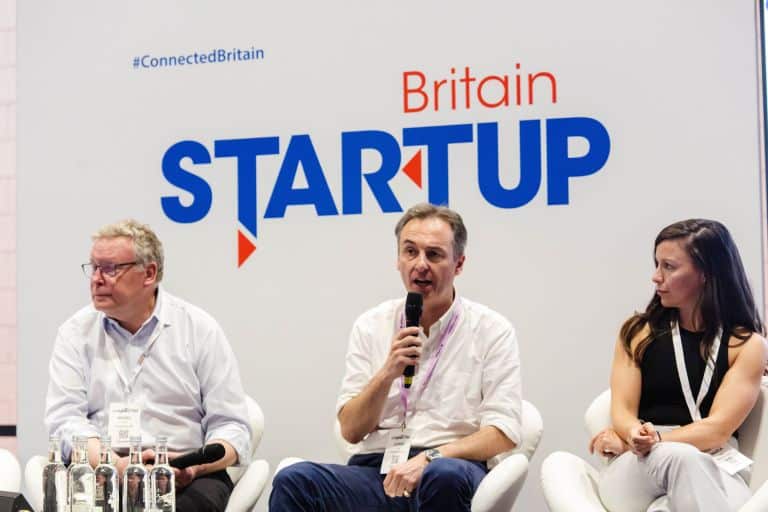
On Day 1 of Connected Britain (September 11), ten startups from the Startup Village will pitch their ideas to a panel of judges, including investors and industry experts. The winner will be awarded the Connected Britain 2024 Startup of the Year Award at the prestigious Connected Britain Awards ceremony later that evening.
After a competitive first round of judging, here are the ten startups shortlisted from the 90 attending the show this year!
Connected
Specialising in advanced building management solutions, the company focuses on integrating technology to enhance the efficiency and functionality of commercial spaces. Their offerings include smart building technologies for managing lighting, heating, cooling, and security, all designed to be energy-efficient and user-friendly.
ZIM Connections
This eSIM marketplace provides a variety of affordable data plans for over 190 countries. The platform allows users to compare, select, and purchase eSIM plans in three steps, simplifying international travel by eliminating roaming fees and ensuring global connectivity.
yWe Media
Based in Oxford, yWe Media focuses on ethical digital solutions in media and audio. It offers privacy-friendly products such as cookie-free analytics and customisable podcast hosting. The company emphasizes ethical data usage and helping businesses avoid reliance on large corporations.
EV Mobiliti
Providing comprehensive electric vehicle (EV) solutions, EV Mobiliti offers services including public and rapid charging, charge station booking, and consultancy. Its MELT system prevents internal combustion engine (ICE) vehicles from blocking EV charging slots, and their priority booking service enhances charging efficiency and revenue for charge station operators.
Appella AI
This startup delivers AI-powered voice assistants designed to boost customer service for businesses. Its solutions handle call routing, FAQ answering, appointment scheduling, and real-time transcription. With a focus on data security and customisation, Appella AI integrates with over 100 apps to align with specific business needs while ensuring accurate and reliable AI interactions.
Thinking Machine
An AI-driven platform aimed at mid-to-large enterprises, Thinking Machine optimises telecom and IT procurement costs. The platform continuously audits contracts and invoices to identify savings opportunities, reduce hidden costs, and streamline vendor management, providing immediate financial benefits without complex integrations.
Qomodo
Focusing on cybersecurity, Qomodo offers solutions for identity verification and fraud prevention. Its tools ensure secure and seamless online transactions, helping businesses mitigate risks associated with identity theft and fraud. It provides real-time identity verification, user authentication, and risk assessment to enhance trust and safety in digital interactions.
Halleyx
Specialising in advanced logistics and supply chain solutions, Halleyx offers a platform that optimises and streamlines logistics operations. Its tools enable real-time tracking, management, and analysis of supply chains, enhancing efficiency and transparency for businesses.
Lumilinks
Founded in 2018 and based in Cambridge, Lumilinks helps organisations effectively use their data. Led by data science expert Dr. Tim Drye, the company offers services such as data storage, visualisation, and analysis. They transform complex data into understandable charts and graphs and use advanced techniques like machine learning to predict future trends.
Polaris is a live GPS-sharing public safety app. It acts as “digital North Star” for humans globally, starting from women and girls. IT does this by providing AI-powered self-protection features, connecting users to 24/7 multilingual helplines, and digitally integrating with user’s local emergency institutes.
Watch these amazing startups present their business cases on the Innovate Britain stage on September 11 at Connected Britain! Tickets for Connected Britain 2024 are still available here

Keep up-to-date with all the latest news, articles, event and product updates posted on Developing Telecoms.
Subscribe to our FREE weekly email newsletters for the latest telecom info in developing and emerging markets globally.
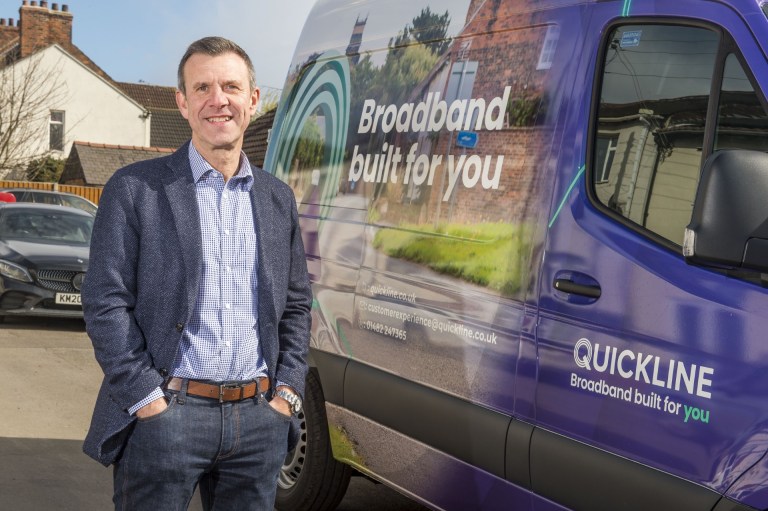
Founded in 2006, Quickline’s mission is to get rural communities connected “to a world of possibilities,” according to the website. The company is based in East Yorkshire and focuses on connecting local communities in Yorkshire and Lincolnshire with fixed wireless access and, more recently, full fibre technology.
The company today serves “more than half a million homes”, a figure which is set to increase quickly thanks to a new £250 million debt facility package secured earlier this month. The funding, which takes the form of a £125 million term loan, a £100 million debt guarantee, and a £25 million term loan provided by NatWest, will reportedly allow Quickline to expand its network to 190,000 additional locations.
“UKIB and NatWest, who we’ve done the deal with, they see the opportunity in rural areas – they see that these areas are being left behind,” explained Quickline CEO Sean Royce, who joined the company back in 2021. “They’re seeing an operator who was laser focused about trying to build where nobody else is building. And that’s really important point today in the UK.”
Royce joined the company as Managing Director in 2021, having spent over 30 years at Hull based ISP KCOM. In 1999, KCOM was floated on the stock exchange, and was the most successful float of that year, at the height of the dot com bubble. Royce oversaw KCOM’s completion of Hull’s whole fibre rollout, which remains the only city in the UK where full fibre is ubiquitously available.
A challenging broadband market
The new funding no doubt comes as welcome relief for Quickline in a market that has seen its purse strings tighten in recent years, following a surge of investment at the start of the decade.
“It is a very, very difficult sector right now. Sentiment is poor in the fibre sector particularly,” said Royce, noting that capital was much more available four years ago and investors less risk averse.
“Money was cheap and there was lots of it around […] There was this opportunity to build full fibre networks in the UK because the incumbent was distracted with BT support and buying EE. They won’t say that, but that’s exactly what they were doing!”
This positive financial environment saw the rise of over 100 altnets across the UK, which today serve roughly 2 million customers.
The boom of investment was not to last long, however. In the past two years, interest rates have soared and altnet investment has largely dried up as a result.
“Investors get nervous about returns in a market like that,” said Royce.
Full fibre and the rural divide
Today, around 65% of the UK has access to full fibre connectivity, a figure that is rising steadily thanks to the efforts of Openreach, Virgin Media O2, and the altnet community. The vast majority of these deployments are in population-dense urban areas where deploying infrastructure can be more cost effective. Rural areas, on the other hand, typically represent a far less appealing prospect for operators, with deployments being more expensive and logistically challenging for far fewer potential customers.
This lack of quality connectivity in small communities, Royce says, can be hugely detrimental, even resulting in their complete abandonment in some cases.
This is especially true for communities smaller than villages, such as tiny hamlets already lacking nearby access to services like GPs, banks, and public services.
“These little villages will wither and die, and we’re trying to regenerate the rural north of England. The first building that Quickline connected (in Escrick, North Yorkshire) did not even have mains gas!” joked Royce.
Deploying fibre under these conditions comes with a considerable number of challenges, from working on difficult terrain to the red tape associated with crossing privately owned land. This means Quickline’s build rate is never going to achieve the same speed as its more urban-focussed rivals – Openreach, for example, regularly passes 40,000 additional premises a week.
Nonetheless, Royce notes that progress remains steady, with Quickline expecting to pass between 500 to 1,000 rural premises a month.
Perhaps even more important is that, in 9 out of 10 of these locations passed, Quickline is the only provider to offer gigabit capable connectivity.
For Royce, this hints at a potential future for the broadband industry where – following considerable consolidation – the market is split into a small number of national players and rural broadband specialists.
Transforming communities beyond connectivity
Beyond simply rolling out broadband infrastructure to rural locations, a large part of Quickline’s business is engaging with and improving the communities they serve; in fact, Quickline has an internal team fully dedicated to this purpose. It has a company programme, aimed at supporting and sustaining rural communities by investing in their future. Named QFutures, it is focussed on three Es: education, enriching livelihoods, and the environment. It has brought over £13 million in social value to the two counties in which Quickline operates in the last year.
“It’s not just is a couple of apprenticeships and a few laptops,” Royce jokes. Earlier this month, for example, Quickline announced a £150,000 partnership with The Prince’s Trust, a charity founded by the King that supports young people facing challenges such as unemployment. Over the next three years, Quickline’s investment will support a range of programmes, equipping young people in South Yorkshire with digital skills to further their chances of employment.
The Road Ahead for Rural Connectivity
As the UK continues to grapple with the digital divide between urban and rural areas, Quickline is positioning itself as a critical player in bridging that gap.
The future of rural connectivity will depend on a combination of continued investment from both public and private sectors, technological innovation, and strategic partnerships across the industry. As these dynamics evolve, the extent to which rural areas can keep pace with their urban counterparts will be a key factor in shaping the UK’s digital landscape.
Join Sean Royce speaking on the ‘Customer uptake’ panel at this year’s Connected Britain, 11-12 September in London. Tickets are available here.

Keep up-to-date with all the latest news, articles, event and product updates posted on Developing Telecoms.
Subscribe to our FREE weekly email newsletters for the latest telecom info in developing and emerging markets globally.

Keep up-to-date with all the latest news, articles, event and product updates posted on Developing Telecoms.
Subscribe to our FREE weekly email newsletters for the latest telecom info in developing and emerging markets globally.

Recently, South Africa MTN and Huawei jointly launched the Ultra-Long-Haul (ULH) 400G optical transport backbone project, aiming to establish high-bandwidth, low-latency, and high-reliability connections between cities in the country, laying a solid foundation for South Africa’s digital and sustainable development, and Leaping towards the F5.5G era.
MTN South Africa, in collaboration with Huawei, has successfully achieved the first ULH 400G commercial link from Cape Town to Bloemfontein. In 2024, it will further expand the deployment of ULH 400G in the backbone links to create ultra-high-speed connections between cities, in order to meet the escalating capacity demands of 5G, home broadband, and enterprise users. Meanwhile, the high-dimensional backbone sites in the network will be transformed into the latest Optical Cross-Connect (OXC) solution, which not only supports the evolution of the existing network to the 400G+ generation, but also enhances energy efficiency to meet the future capacity requirements of the massive data demand in Africa and accelerate the achievement of the goal of a complete average reduction of 50% in carbon emissions by 2030.
ULH 400G and 800G are the critical technologies of the F5.5G industry. The ULH 400G solution employed in this project adopts built-in high baud modulators and QPSK modulation. With the unique Channel-Matched Shaping (CMS) 2.0 algorithm, the transmission distance is increased by 20%, meeting the large capacity and ultra-long-distance transmission requirements of national backbone networks and transnational backbones.
Takalani Ligudu, Senior Specialist in Core Fibre and Transmission at MTN SA, said: “The Ultra-Long-Haul 400G deployment with Huawei is a result of MTN’s purpose to enable the benefits of a modern connected life for everyone. MTN has been committed to leading digital solutions for South Africa’s progress by using industry leading technologies to deliver superior network services”.
“400G solutions can not only bring more bandwidth, but also bring lower per-bit power consumption. ”Victor Zhou, president of optical transmission domain at Huawei, pointed out: “We will continue to support MTN to build a F5.5G All-Optical Premium Transmission Network, laying a foundation for the country’s digital economy and ensuring optimal user experience.”
This joint effort by MTN in South Africa and Huawei has set a new standard for the development of the communication industry in the African region and also injected new momentum into the global push towards the F5.5G generation.

This Industry Viewpoint was authored by David Idle, CPO at Bigleaf Networks
Reliable internet access has become an essential component of modern life, powering businesses, education, and healthcare. Unfortunately, a significant gap continues between urban and rural communities in the United States. … [visit site to read more]