Airbus to Build 100 Satellites for Eutelsat’s OneWeb LEO Expansion


News

The satellites will be built at Airbus’ facility in Toulouse, with production set to begin in 2026

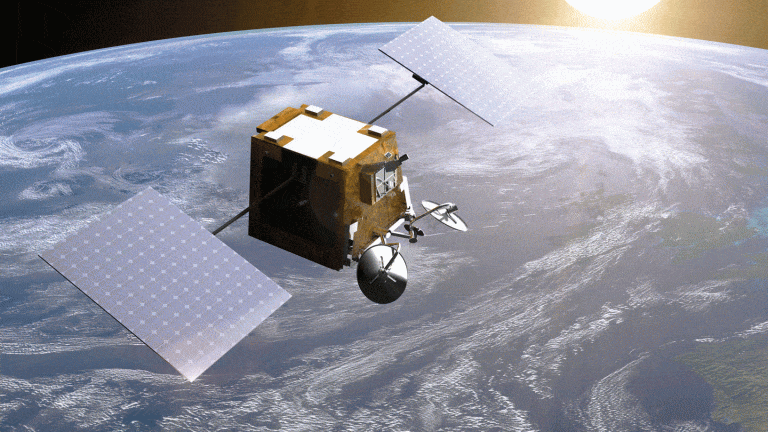
Airbus Defence and Space has been awarded a contract by Eutelsat to expand its OneWeb Low Earth Orbit (LEO) satellite constellation. The contract will see Airbus build the first 100 satellites of the extension, with deliveries expected to begin at the end of 2026.

Airbus has previously manufactured the current OneWeb fleet, and the company is now set to continue its role in supporting Eutelsat’s efforts to enhance and expand its satellite services. Alain Fauré, Head of Space Systems at Airbus, commented: “We are committed to the successful continuation of the OneWeb constellation and to keep serving the business of Eutelsat as we have done over the past decades.”

The new satellites will offer several key technology upgrades, including integration with 5G networks and improved compatibility with Europe’s planned IRIS2 multi-orbit constellation, which is expected to become operational in 2030. This expansion aligns with Eutelsat’s strategy to grow its LEO capacity in response to increasing demand for global connectivity.

“We are relying on our long-standing partner, Airbus, to begin building the first batches of the Next Generation of our OneWeb LEO constellation, which will ensure we deliver continuity of service of the existing constellation with enhanced service features, as we move towards an architecture in line with the European IRIS2 constellation in 2030. Our in-market experience shows us that the appetite for low Earth orbit capacity is growing rapidly, and we are excited to embark on the next stage of our journey to satisfy that demand,” added Eva Berneke, CEO of Eutelsat in a press release.

Keep up to date with the latest international telecoms news direct to your inbox from Total Telecom

Also in the news:
Softbank to invest $100bn in US AI
Japanese telcos unite to strengthen disaster response
BT’s network wrapped reveals how Brits connected with the biggest cultural moments of 2024

Space42 scores US$5.1b UAE govt contract that will also fund new satellites

UAE-based satellite operator Space42 announced on Tuesday it has signed a new AED18.7 billion (US$5.1 billion) contract with the UAE government to provide satellite services until 2043, which will also help fund construction of two new satellites in the pipeline.

Space42 currently has two agreements with the government – a capacity services agreement and a managed services mandate – that are in effect until November and December 2026, respectively. The new contract extends that arrangement by another 17 years to 2043, and also combines related operations, maintenance, and technology management services of ground segment satellite systems and terminals currently provided under a separate agreement.

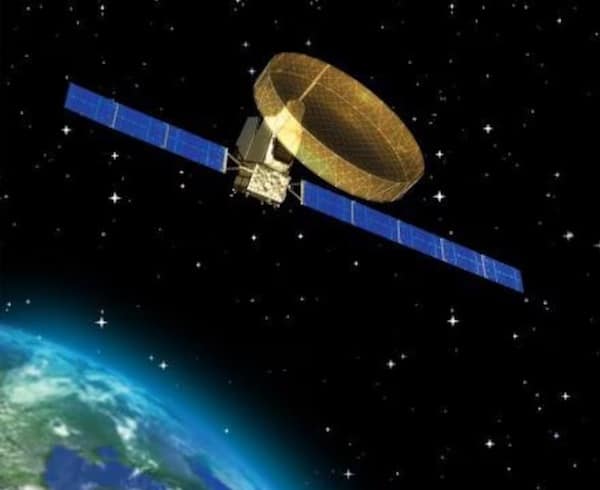
Under the contract, Space42 will provide satellite capacity and related managed services with the existing Al Yah 1 and Al Yah 2 satellites in orbit. The contract also covers capacity from Space42’s upcoming Al Yah 4 and Al Yah 5 satellites, which will provide secure governmental communications across the Middle East, Africa, Europe, and Asia.

In fact, as part of the deal, Space42 said that it will receive AED3.7 billion in advanced payments from the government to construct Al Yah 4 and Al Yah 5, which are expected to launched by SpaceX in 2027 and 2028, respectively.

That advance payment would cover most of the AED 3.9 billion Space42 has budgeted to develop Al Yah 4 and Al Yah 5, including the spacecraft, ground segment infrastructure, launch, and insurance. The satellites are based on the Airbus Eurostar Neo platform, which can deploy flexible multi-band payloads in orbit.

“The Al Yah 4 and Al Yah 5 satellites will offer new capabilities to advance our technology and service offerings, enabling us to continue providing our innovative SpaceTech solutions that meet the UAE Government’s evolving requirements more efficiently, securely and reliably,” said Ali Al Hashemi, CEO of Yahsat Space Services at Space42, in a statement.

Space42 is the product of the merger between Yahsat, the UAE’s flagship satellite operator, and AI-powered geospatial solutions provider Bayanat earlier this year.

In related news, Space42 said that another planned geostationary satellite, Thuraya 4, arrived at Kennedy Space Center in Florida last week, where it will be launched into orbit by SpaceX before the end of this month.

In the pipeline since 2020, Thuraya 4 sports a 12 meter L-band antenna and a payload with on-board processing. Space42 said this will provide advanced routing flexibility of up to 3,200 channels with dynamic power allocation over a large number of spot beams across Europe, Africa, Central Asia, and the Middle East.

MORE ARTICLES YOU MAY BE INTERESTED IN…

Softbank to invest $100bn in US AI


News

The cash injection follows a $50 billion investment in 2016

SoftBank Group, led by CEO Masayoshi Son, has announced plans to invest $100 billion in the US over the next four years, a move that will focus on advancing AI and its related infrastructure. This investment aims to create 100,000 new jobs.

Son made the announcement alongside President-elect Donald Trump, who praised the deal as a strong sign of confidence in the future of the US economy. Trump said that the investment shows “monumental confidence in America’s future.”

Trump welcomed the new investment as part of his broader strategy to boost the US economy and tackle inflation in his second term. “It will help ensure that artificial intelligence, emerging technologies and other industries tomorrow are built, created and grown right here in the USA,” he continued.

The new pledge echoes a similar commitment made in December 2016, when Son promised a $50 billion investment and 50,000 jobs. While that money was deployed, the impact on job creation was unclear.

Although the $100 billion is set to be deployed over the next four years, the funding sources remain uncertain. SoftBank reported $27 billion in cash reserves as of September 30, and the company’s Vision Fund 2 still has $3 billion left to invest. It’s also possible that SoftBank could use funds from its recent acquisition of chipmaker Arm Holdings to help support this ambitious pledge.

This year, SoftBank also invested $960 million in Japanese AIto upgrade its computing infrastructure to deliver a Generative AI  platform in the Japanese language. Over the next two years, SoftBank will purchase GPUs (graphics processing units) from US based chip company Nvidia, using them to train and power its own large language models (LLMs), and then loan access to them to other firms.

Join us at next year’s Connected America, 11-12 March in Dallas. Get discounted tickets here!

Also in the news:
Congress boosts funding for drive to replace Chinese equipment
BT’s network wrapped reveals how Brits connected with the biggest cultural moments of 2024
Talking the language of sustainability

Industry Spotlight – Sean Maskell on GPUaaS and AI at Cologix Canada

Industry Spotlight – Sean Maskell on GPUaaS and AI at Cologix Canada

With the rise of AI as a driving force throughout the data center infrastructure sector, we are starting to see effects beyond just space and power.  The ecosystem is evolving, and new, unique opportunities are arising.  With us today to talk about the changes is Sean Maskell, President and General Manager for Cologix Canada.  Cologix Canada operates facilities across the markets of Montreal, Toronto, and Vancouver. … [visit site to read more]

TM One teams with PR1MA to develop smart-housing projects

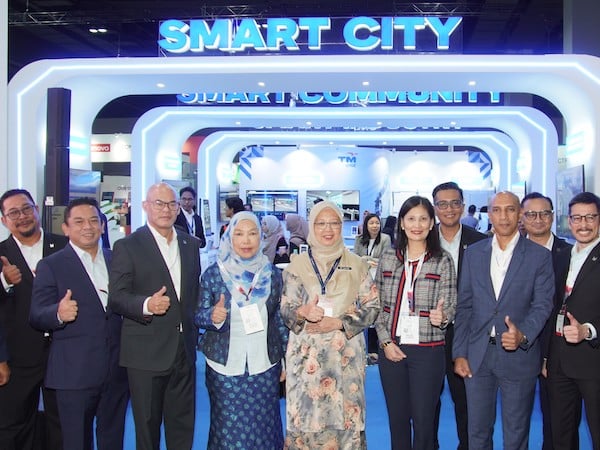
Telekom Malaysia’s enterprise and government sector digital solutions arm TM One announced on Monday it has formed a partnership with local property developer PR1MA Corporation Malaysia to leverage broadband, digital and IoT solutions to help build sustainable smart-housing projects.

Under the three-year deal, TM One will establish a centralised monitoring system for PR1MA’s project tracking and workflows, which it says will improve operations and resource management, and enable data-driven decision-making.

PR1MA will also utilise TM One’s IoT-based solutions for energy and environmental monitoring to lower operational costs and adopt sustainable best practices.

“This partnership supports the creation of connected and eco-friendly living spaces, aligning with PR1MA’s community-centric vision and Malaysia’s Smart City aspirations,” said TM One Executive VP Shazurawati Abd Karim. “By fostering future-ready ecosystems and sustainable urbanisation, we will jointly integrate digital innovation into affordable, high-quality housing.”

Mohd Nazri Md Shariff, PR1MA’s group CEO and Member of Corporation, said PR1MA will also leverage the operator’s solutions to embed smart-home solutions into its residential projects.

“Through this partnership, PR1MA aims to integrate smart solutions from planning to construction, ensuring efficient project management,” he said in a joint statement. “It will also enable our subsidiaries, PR1MA Communications and PR1MA Facilities Management, to provide sustainable connectivity and advanced technologies that enhance convenience, security, and quality of life for residents. These efforts will transform PR1MA’s developments into fully connected, smart communities.”

PR1MA Communications signed a similar deal with CelcomDigi in October 2024, when both companies signed an MoU to collaborate on providing fibre-to-the-home (FTTH) and fixed wireless access (FWA) solutions to PR1MA projects.

That deal also includes implementation of centralised network solutions, managed from a single data centre, to enable “real-time monitoring of bandwidth usage and provide seamless digital experiences at affordable costs”, according to CelcomDigi.

MORE ARTICLES YOU MAY BE INTERESTED IN…

Talking the language of sustainability


Interview

Ahead of the recent World Communication Awards, we spoke with Sandra Klackenborn, Head of Sustainability at Arelion, to discuss the growing energy challenge and how the industry must do more to tackle the issue collaboratively

The growing energy challenge

With networks spanning hundreds or even thousands of miles, it is no surprise that energy consumption has always been a key concern for telcos when it comes to sustainability. Operating these massive networks not only generates a significant carbon emissions footprint, but also incurs a huge energy bill – both of which will only grow further as data demand increases and network density increases.

As a result, making these networks more energy efficient and sustainable is a huge focus for telcos like Arelion, which view the issue as both an environmental and financial imperative.

“Energy is such an interesting area. It’s a melting pot of issues,” explained Sandra Klackenborn, Head of Sustainability at Arelion. “You have concerns about energy costs, the challenge of sourcing renewable energy, and, of course, you have the environmental impact. These are all important topics that we focus on here at Arelion.”

Innovation to the rescue?

With data usage continuing to climb, energy costs sky high, and additional infrastructure being deployed every day, it can feel like telcos are fighting a losing battle against the energy curve.

In reality, however, innovation related to energy efficiency has proven surprisingly resilient in minimising the growth of network energy demand year-on-year.

“Improved energy efficiency can be somewhat built into the equipment upgrade cycle,” explained Klackenborn. “We are in an industry where technology moves really, really fast and things evolve all the time. For us to be able to provide the quality of data transfer that our customers expect from us, we need to develop and deploy more advanced technology, which, of course, is more energy efficient.”

“In our experience, we have been able to really curve that energy consumption, keeping it relatively flat despite ever growing demand,” she added. “In the ever-growing need for data capacity, this focus is important to keep striving for.”

Of course, regularly upgrading your hardware for better efficiency carries its own sustainability burden. The materials used to build these new components are finite and harvesting them can be carbon emission intensive.

As such, Arelion seeks to safeguard these natural resources by repurposing, reusing, and recycling old equipment wherever possible.

“We try to circulate the components we dismantle into a second life internally or resell to an external partner, so the resources can be utilized for as long as possible before being recycled back into original material,” explained Klackenborn, noting that circularity was a key element of the company’s sustainability approach.

Better understanding your sustainability footprint

At the heart of winning the technological race against an ever-growing energy demand is an increasingly precise understanding of exactly where your energy usage is coming from. Network infrastructure (both fixed and mobile) typically accounts for around three-quarters of a telco’s energy consumption – making it the prime candidate for improved energy efficiency – but granular data of each component’s energy footprint is a relatively recent development.

“Today, we probably have more data available than ever before, in terms of understanding, seeing, measuring, and predicting our sustainability footprint,” explained Klackenborn. “We know exactly how much energy a certain piece of technology consumes or how it transfers data.”

Beyond allowing for more targeted equipment refreshes, the wealth of data also allows for a much more accurate forecasting of energy consumption.

“There are the cost savings, of course, but in many ways the main driver behind this data is stability,” said Klackenborn. “It’s really important to know what your electricity bill will be for the next few years – that’s a really underrated benefit of measuring your sustainability footprint more carefully.”

The trouble with sustainability metrics

But while more data is available than ever before, collating and communicating it effectively, both internally and externally, remains a challenge. Sustainability metrics are far from standardised, making collaboration between telcos and partners far more complicated.

“It’s not always the easiest assignment to translate all the data into something as broad as a sustainability value, if you will,” said Klackenborn. “Sustainability is very difficult to report on accurately, particularly across different industries. With so much varied data, there is always a certain level of interpretation with top-level figures. While there are some standards, most companies are reliant on their own metrics to measure performance. That makes it very difficult to compare and share learnings.”

Regulations surrounding sustainability reporting, such as the European Sustainability Reporting Standards (ESRS), are gradually helping to build usable frameworks, but there is still much work to be done.

“Currently, a lot of the reporting regulations don’t require you to break down the figures,” said Klackenborn. “For example, I don’t actually know exactly how much CO2 is generated at our colocators or per external site. If I had that information, I could make better decisions on how we can work together. We could discuss the topic in more detail and so better learn from each other.”

A team effort to build a greener future

Ultimately, making the telecoms sector more sustainable and energy efficient is a collaborative effort, requiring the formation of effective partnerships across borders.

“The focus for us is very international and collaborative when it comes to sustainability,” said Klackenborn. “There is a really strong awareness that we can’t do this by ourselves. We are part of a value chain and a bigger ecosystem. After all, our Scope 2 emissions are someone else’s Scope 3.”

“At Arelion we have the goals of achieving Net Zero carbon emissions for Scope 1 and Scope 2 by 2030, and for Scope 3 no later than 2040. To do this, we need to make sure we’re joining hands internally as well as across borders with other companies. Sustainability is everybody’s business,” she concluded.


Arelion were proud to sponsor the The Sustainability Award at this year’s World Communication Awards. Check out the full list of winners here.


PLDT/Smart gets ready to relaunch Smart Money app

Smart Communications, the mobile arm of Philippine telco PLDT, is reportedly making moves to relaunch its original mobile money app, Smart Money, in an apparent bid to directly take on rival telco Globe Telecom’s GCash.

Smart launched Smart Money in 2003 in partnership with Banco de Oro (BDO). At the time, it was the country’s first and only mobile remittance service until Globe launched rival service GCash in 2004. In 2016, Smart Money was discontinued after the launch of Paymaya (later rebranded as Maya), a JV between PLDT and Rocket Internet to offer mobile payments.

According to a report from ABS-CBN on Friday, the Smart Money app has reappeared on Apple’s App Store and Google’s Play Store and is available for download. The app information page says Smart Money will support transactions for “Mobile Load” and “Send Money”. It can also be used for paying postpaid mobile, cable and internet services, as well as utilities, tolls and education fees.

However, the app is still inactive. Users must put their names on a waitlist to use the new Smart Money app, the report said.

The reappearance of Smart Money follows earlier remarks by Anastacio Martirez – who became Smart’s COO in September – that he said he intends to retake market share from GCash.

« We were the first in the industry to introduce Smart Money, ahead of GCash. Somewhere along the way something happened, but that’s not a problem,” he said onstage at last month’s GSMA Digital Nation Summit, according to InsiderPH. “I want to bring it back.”

While PLDT and Smart haven’t elaborated on what a Smart Money relaunch would mean for Maya, the Inquirer’s “Biz Buzz” column notes that Maya’s business model has shifted beyond consumer-to-consumer payments after becoming one of the first six digital banks licensed by the country’s central bank, Bangko Sentral ng Pilipinas (BSP).

Also, the column added, PLDT only holds a minority stake in Maya’s parent company, Voyager Innovations, which means Smart has little say in Maya’s direction.

GCash is the most popular mobile wallet app in the Philippines with around 94 million users. Paymaya had an estimated 44 million users by the end of 2021.

MORE ARTICLES YOU MAY BE INTERESTED IN…