UN, ITU launch advisory body to strengthen submarine cable resilience

The International Telecommunication Union (ITU), in collaboration with other UN departments established a new body aimed at strengthening the resilience of submarine cables in response to rising outages.

The ITU, the United Nations Agency for Dgital Technologies, and the International Cable Protection Committee (ICPC) have jointly formed the International Advisory Body for Submarine Cable Resilience.

The new body will explore ways to improve cable resilience by promoting best practices for governments and companies. Its focus will include ensuring timely deployment and repair of submarine cables, reducing the risk of damage, and enhancing connectivity continuity.

“Submarine cables carry over 99 per cent of international data exchanges, making their resilience a global imperative,” said ITU Secretary-General Doreen Bogdan-Martin (pictured).

“The Advisory Body will mobilise expertise from around the world to ensure this vital digital infrastructure remains resilient in the face of disasters, accidents, and other risks.”

The ICPC estimates that an average of 150 to 200 faults occur globally each year, requiring around three cable repairs per week. The primary causes of cable damage are accidental human activities, such as fishing and anchoring, as well as natural hazards and equipment failures.

The Advisory Body is co-chaired by H.E. Bosun Tijani, Minister of Communications, Innovation and Digital Economy of the Federal Republic of Nigeria, and Professor Sandra Maximiano, Chair of the Board of Directors of Portugal’s National Communications Authority (ANACOM).

“Submarine cables are essential to the functioning of our connected world, but they face risks that require coordinated, proactive action,” said Tijani. “We are therefore pleased to host the inaugural Submarine Cable Resilience Summit in Nigeria in early 2025.”

“This initiative underscores the global community’s commitment to strengthening these networks and advancing international cooperation for digital resilience,” added Maximiano.
MORE ARTICLES YOU MAY BE INTERESTED IN…

MasOrange reaches a global 1.2Tbps milestone in its data transmission network towards AI era

Spain’s leading telecom operator MasOrange has successfully completed the first 1.2Tbps data transfer over a longer distance commercial optical transmission network, using a single wavelength or channel over terrestrial cable.

The transmission network is the fundamental infrastructure that enables data communication between different points of a telecommunications network. These are the digital highways that connect network nodes between different cities allowing information to flow quickly and efficiently. It is the pillar on which all other layers of the network are built and operate.

This milestone, developed between Granada and Cordoba, has shown that it is possible, thanks to a solution developed by Huawei, to reach more than 310 km with 1.2 Tbps transmission over a single wavelength, without regenerating the signal.

For example, in video transmission, the transmission capability of the new technology will support up to 400,000 simultaneous high-definition (HD) channels, or 80,000 simultaneous 4K ultra-high-definition (UHD) video, tripling current commercial capabilities.

MasOrange thus sets a world record in the field of optical telecommunications. Although 1.2 Tbps tests are already available, they use two wavelengths and do not reach distances greater than 200 km. With this demonstration, MasOrange once again positions itself as a leader in technological innovation towards F5.5G era.

This achievement represents a major step forward in the evolution of telecommunications infrastructure, responding to the growing demand for data and connectivity in the 5G era and preparing for future evolution. MasOrange expects data usage to triple in the next five years, mainly due to the spread of 5G networks, the adoption of artificial intelligence, and the new digital services that the combination of the two will enable.

Miguel Santos, Chief Technology Officer of MasOrange said: « At MasOrange we innovate every day to provide the best service to our customers, including through what will be the networks of the future. Broadcasting over a single wavelength at 1.2Tbps is in line with our commitment to providing the best connectivity from a world-first experience. »

Victor Zhou, President of Huawei’s Optical Transmission Domain, pointed out: « We are pleased to cooperate with MasOrange to verify the optimal performance of the 1.2 Tbps solution. Huawei will continue to provide global operators with superior solutions with high quality, reliability and sustainable evolution. »

MORE ARTICLES YOU MAY BE INTERESTED IN…

DIG and STP to add 1.5GW of data centre capacity in Thailand’s EEC

Singapore-based data centre park developer Doma Infrastructure Group (DIG) said on Thursday it has formed a joint venture with Thai technology park operator Silicon Tech Park (STP) to boost Thailand’s data centre capacity to gigawatt levels.

Under a Memorandum of Understanding (MoU), DIG and STP will purchase 300 acres of freehold land across Chachoengsao, Chonburi, and Rayong provinces that comprise Thailand’s Eastern Economic Corridor (EEC).

DIG said in a statement that the land will be used to develop three AI-ready green data centre parks with a total planned power capacity of 1.5GW. The parks will feature scalable power core and shell facilities that will be integrated with renewable energy solutions and sustainable water systems.

DIG and STP said they’ll reveal their refined master plan for the data centre parks in the coming months, but noted that the facilities will be designed to cater especially to hyperscalers and GPU-as-a-service providers. The parks are projected to be ready for service by the third quarter of 2026.

DIG also said the overall project is designed to align with the Thai government’s EEC strategy under the broader Thailand 4.0 initiative to drive economic development.

First established in 2017, the EEC is geared to attract foreign investments in ten target industries, including automotive, electronics, petrochemical, agriculture and food, tourism, automation and robotics, aerospace, digital, biotechnology, and medical and healthcare.

An underlying component of the EEC strategy is providing advanced digital infrastructure to support industrial innovation, to include data centres. Big-name players like Google and GDS have announced recent data centre investments in the EEC, while other players like Equinix, Microsoft and Amazon Web Services have also invested heavily in Thailand’s data centre space this year.

Meanwhile, Thailand, along with its regional neighbours in Southeast Asia, hopes to capitalise on growing demand for data centres to support hyperscale applications like AI. In October, the Bangkok Post reported that Thailand’s Board of Investment has received investment applications for 46 projects involving data centres and cloud services worth nearly THB168 billion (US$4.9 billion).

According to W.Media, citing data from DC Byte, Thailand currently sports around 110MW of data centre capacity at full build, including projects currently under construction. The three parks planned by DIG and STP could help boost that capacity by over ten times in the longer term.

DIG’s CEO Clement Goh said the JV with STP has been “carefully timed to capitalise on market momentum and meet the surging demand for advanced data centre infrastructure,” and aims to provide a sustainable foundation for Thailand’s digital economy.

“Thailand is a core market for DIG’s Asia Pacific strategy, and our gigawatt plan reflects our commitment to driving transformative projects in the region,” he said in a statement. “Collaborating with STP, a partner with deep local resources, reinforces our confidence in building a sustainable digital infrastructure ecosystem.”

Npairoj Piempongsant, founder and chairman of STP, added that recent announcements of major projects in the EEC underscore the region’s appeal, bolstered by tax incentives, investment promotions, advanced infrastructure, technology enablement, and access to skilled labour.

“The EEC is at the forefront of Thailand’s transformation, and we are excited to lay the groundwork for a digital infrastructure network that will position the region as a Southeast Asian leader,” he said.

MORE ARTICLES YOU MAY BE INTERESTED IN…

Kyivstar launches VoWiFi service to extend coverage

Keep up-to-date with all the latest news, articles, event and product updates posted on Developing Telecoms.
Subscribe to our FREE weekly email newsletters for the latest telecom info in developing and emerging markets globally.

Sending occasional e-mail from 3rd parties about industry white papers, online and live events relevant to subscribers helps us fund this website and free weekly newsletter. We never sell your personal data. Click here to view our privacy policy.

This week’s top stories from across the pond


News

Here’s a look at the five biggest stories over the last week from our sister publication, Broadband Communities

A partnership between T-Mobile and Starlink can move ahead with providing supplemental cell service from space following approval from the FCC, and the industry applauds the latest digital equity grant approvals and passage of the ACCESS Rural America Act.  

T-Mobile and Starlink score a win with the FCC
The Federal Communications Commission (FCC) has approved an application from SpaceX that will allow Starlink and T-Mobile the ability to provide supplemental cell service from space. 

NTIA announces another string of digital equity grant approvals
Federal authorities have approved a string of State Digital Equity Capacity Grant Program applications, following up a busy November for the NTIA. 

Industry applauds Senate approval of ACCESS Rural America Act
Telecommunications industry leaders are applauding the passage of the ACCESS Rural America Act in the U.S. Senate. 

Which states are excelling and falling short on telehealth access?
Here’s where some state plans are excelling, and others are falling short. 

How AI can optimize network construction
Find out how AI is changing the game and addressing some of the challenges facing network construction, like human error and a labor shortage. 

 Join us at next year’s Connected America, 11-12 March in Dallas, Texas. Get discounted tickets here!

Indonesian mobile market shrinks as XL Axiata combines with Smartfren


News

The deal comes with a price tag of $6.5 billion

Having been in discussions since May this year, Indonesia’s third- and fourth-largest telcos, XL Axiata and Smartfren, have finally agreed to merge their operations.

The deal, valued at around $6.5 billion, will see both parties take a 34.8% stake in the merged entity, with the remaining 30.4% stake being traded publicly.

Axiata will receive roughly $400 million as part of the deal.

The new company will be called PT XLSmart Telecom Sejahtera Tbk, or XL Smart for short, and will command a market share of roughly 27%, based on figures from September.

“We are excited to bring our expertise to XLSmart, combining two complementary and solid businesses to form a strong telecommunications operator uniquely positioned to meet the evolving needs of customers across all key segments. XLSmart will be a powerful platform to deliver enhanced connectivity, foster digital inclusion, and bridge the digital divide for communities across the country. XLSmart’s priorities will be on ensuring a stable market environment, maximising merger synergies and driving profitable growth,” said Vivek Sood, Group Chief Executive Officer and Managing Director of Axiata.

“We are confident that XLSmart will be well-positioned to thrive in Indonesia’s dynamic digital economy. Ultimately, we aim to unlock lasting value and benefits for all our stakeholders, including shareholders, customers, employees, and Indonesia as a whole,” he added.

Assuming typical regulatory clearances, the deal is expected to close in the first half of next year.

Keep up to date with the latest international telecoms news by subscribing to the Total Telecom daily newsletter 

Also in the news:
IBM and Samsung poised to win £900m Emergency Services Network contract over BT
IoH and Nokia team up for Indonesian 4G and 5G expansion
Cubic Telecom and Skylo partner for satellite capabilities for vehicles

AST SpaceMobile and Vodafone ink long-term agreement to boost global connectivity 


News 

The agreement will allow Vodafone to offer space-based cellular broadband in both its home and partner markets 

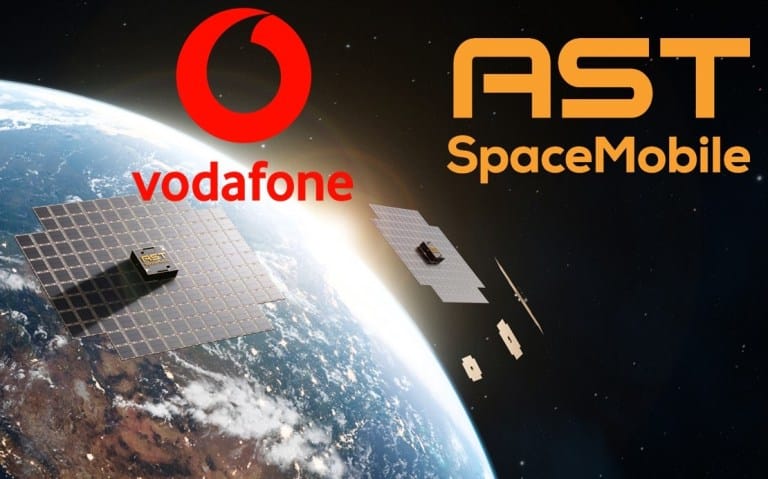
AST SpaceMobile has entered into a long-term commercial agreement with Vodafone to provide global broadband access in underserved areas, enabling users to access broadband services directly through their phones. 

Under the agreement, Vodafone will incorporate AST SpaceMobile’s space-based cellular broadband services into its home markets and offer these capabilities to other operators through its ‘Partner Markets’ program.    

Vodafone has been a key investor and technology partner for AST SpaceMobile since 2018, contributing to several technological breakthroughs, including the first space-based voice call using an unmodified smartphone in April 2023. Additional successful trials included achieving 4G download speeds exceeding 10 Mbps from space in June 2023 and 5G voice call from space in September 2023 

AST SpaceMobile also reached download speeds of over 20 Mbps in later tests. 

Vodafone’s first order for the BlueBird gateway is a key step in AST SpaceMobile’s network rollout. The gateway will connect AST SpaceMobile’s satellites to Vodafone’s existing network, providing broadband access to users outside of traditional coverage areas. 

AST SpaceMobile currently has five of its first generation of BlueBird satellites in low Earth orbit, Thess satellites currently provide coverage across the US and in ‘select global markets’The next-generation BlueBird satellites – 17 of which are currently being built – will have larger antennas, providing much higher capacity and speeds. These new satellites are expected to reach data speeds of up to 120 Mbps, supporting services like voice, data, and video. 

AST SpaceMobile’s growth in 2024 has been supported by investments from AT&T, Verizon, Google, and Vodafone, as well as new contracts with the US government. The company now has agreements with over 45 mobile operators worldwide, reaching about 2.8 billion subscribers. Key partners include AT&T, Verizon, Rakuten Mobile, Orange, and MTN. 

Major investors like American Tower, Cisneros Group, and Bell Canada also support AST SpaceMobile. 

Join us at next year’s Connected America, 11-12 March in Dallas, Texas. Get discounted tickets here! 

Also in the news:
World Communication Award winners 2024
TalkTalk faces mounting losses amid rescue efforts
World Communication Award winners 2024