BT scraps 2025 landline switchover deadline 


News

A new deadline of January 2027 has been set, allowing more time for vulnerable customers to prepare for the switch-off 

BT has confirmed today that it will delay the switch-off of all copper-based phone lines across the UK until 2027, two years later than originally planned. 

The news was hidden deep in the company’s full year financial results for 2023, but has been confirmed again in a separate press release this morning. 

The delay will apply to all customers, both business and consumer.  

The analogue networks are decades old and are increasingly difficult to service, with replacement parts  hard to source. 

The delay follows a wave of concern over the exposed vulnerability of predominantly elderly customers, who rely on landline-based medical and security alarms. While these systems can also work over digital landlines, they are vulnerable to power cuts or other outages, unlike legacy copper connectivity.  

Around 2 million people in the UK currently use these devices. 

Last December, companies including BT and Sky agreed to stop the forced switchover onto the digital lines after several incidents involving telecare devices were reported. In April this year, BT’s Consumer division started switching zero-use landline customers who have a broadband connection to its Digital Voice landline service. 

“The urgency for switching customers onto digital services grows by the day because the 40-year-old analogue landline technology is increasingly fragile. Managing customer migrations from analogue to digital as quickly and smoothly as possible, while making the necessary provisions for those customers with additional needs, including telecare users, is critically important,” said Howard Watson, Chief of Security and Networks at BT. 

“Our priority remains doing this safely and the work we’re doing with our peers, local authorities, telecare providers and key Government organisations is key. But more needs to be done and we need all local authorities and telecare providers to share with us the phone lines where they know there’s a telecare user,” he continued. 

All customers are expected to be moved off the analogue network by January 2027. 

Keep up to date with the latest international telecoms news by subscribing to the Total Telecom daily newsletter 

Also in the news:
UK government conditionally approves £15bn Vodafone–Three merger
Nokia and Vodafone trial Open RAN with Arm and HPE
T-Mobile and Verizon to buy US Cellular, reports say


BII to invest $30m in TOA Tanzania

TOA (TowerCo of Africa) Tanzania has signed a US$30 million financing agreement with UK development investor British International Investment (BII).

The agreement will enable TOA Tanzania to deploy a further 200 telecommunications sites across Tanzania as part of its drive to close the country’s digital gap. Positioned strategically across Zanzibar and the mainland, the sites will help to boost coverage nationwide and particularly in rural regions, connecting previously isolated populations.

Innocent Mushi, CEO of TOA Tanzania, said: « With BII’s invaluable support, we are well-equipped to accelerate our growth trajectory and deliver essential telecom services to underserved communities. We are deeply committed to environmental sustainability and community development. The design of our new sites prioritises environmental protection through meticulous site selection, utilisation of renewable energy sources, and responsible waste disposal practices. »

Richard Palmer, Director and Head of Private Debt at British International Investment added: « Expanding digital infrastructure is critical for fostering sustainable economic development in Tanzania. By focusing on rural areas, TOA Tanzania is not only promoting inclusivity but also ensuring that the benefits of technological advancements reach the most underserved communities.”

Founded in February 2023, TOA Tanzania owns and operates passive telecommunications infrastructure for lease to mobile network operators. As part of its growth strategy, the firm aims to double its site portfolio size by the end of its first year of operations. Once completed, the new sites will not only extend network coverage to underserved communities but also support government digitisation efforts, foster financial inclusion, and generate employment opportunities throughout their lifecycle, from design and construction to maintenance.

MORE ARTICLES YOU MAY BE INTERESTED IN…

Industry Spotlight: FiberLight CEO Bill Major Sees Fiber M&A Ahead

Might we be on the edge of a new phase of consolidation on the US fiber landscape?  That’s what FiberLight CEO Bill Major has on his mind at the moment.  He took the helm last spring when Morrison & Co finalized the purchase of FiberLight from Thermo Companies.  With Morrison’s backing, the company has the resources to be more aggressive both organically and inorganically.  How do they view the industry right now?  Let’s find out. … [visit site to read more]

SubCo to upgrade Australian subsea cable system 


News 

Australian subsea cable company SubCo has announced an upgrade to the capacity of its SMAP subsea cable system that connects Sydney, Melbourne, Adelaide, and Perth (S-M-A-P)

The cable spans roughly 5,000km, was supplied by Alcatel Submarine Networks, and was installed by Optic Marine Systems. 

SMAP was originally designed with twelve fibre pairs, but SubCo has now upgraded the system to a sixteen fibre pairs, increasing the total capacity of the system by 33%. 

“This increased investment in capacity is to ensure we are able to support Australia’s digital infrastructure needs both now, and in the future,” said SUBCO Co-CEO Bevan Slattery in a press release. 

“AI and Cloud are driving the accelerating expansion of hyperscale Data Centres throughout the region, which is driving an increase in demand for hyperscale connectivity. This upgrade will provide for an additional 100Tbps between Melbourne and Perth and 120Tbps between Sydney and Melbourne,” he continued. 

Once completed, SMAP is set to be the world’s first zero carbon long haul subsea cable system, which the SubCo says it will achieve by purchasing renewable infrastructure at every landing station and buying 100% renewable energy.  

Slattery said in a separate statement last August that once operational “SMAP will be the most advanced, secure and innovative submarine cable ever built in Australia.” 

The cable is expected to be ready for service by December next year.  

According to SubCo’s website, the cable is on day 274 of the build, and is 24% complete. 

Join us at this year’s Submarine Networks EMEA event in London, 29-30 May in London. Get tickets here! 

Also in the news:
UK government conditionally approves £15bn Vodafone–Three merger
Nokia and Vodafone trial Open RAN with Arm and HPE
T-Mobile and Verizon to buy US Cellular, reports say

House votes to modernize NTIA for first time in over 30 years


News

US House of Representatives passed bipartisan bill to reauthorize NTIA and modernize its role

On Wednesday 15 May, the US House of Representatives overwhelmingly passed legislation to reauthorize the National Telecommunications and Information Administration (NTIA) for the first time since 1992.

The goal of the bill is to “update the mission and functions of the agency” due to the extensive evolution of the NTIA since its last reauthorization. New Street Research analyst Blair Levin said that the bill “reflects that in this moment in time, NTIA has become a much more important player in telecom issues.”

The bill was originally spearheaded by House Energy and Commerce Committee Chair Cathy McMorris Rodgers (R-WA) and Communications and Technology Subcommittee Chair Bob Latta (R-OH) in July 2023 as the agency’s “duties have changed since it was last reauthorized.” Rodgers and Latta stated that they “look forward to considering several bipartisan solutions to reauthorize NTIA and help ensure that the agency is adapting to meet the needs of a dynamic communications sector.”

Having passed by a vote of 374-36, the legislation extends the NTIA’s mandate through the fiscal year 2025 and introduces several key changes to the agency.

Significantly, the head of the NTIA will be elevated to the rank of Under Secretary of the Department of Commerce. The bill codifies a number of NTIA’s current responsibilities and grants statutory authority for two NTIA offices which focus on public safety communications and international telecommunications policy.

The bill also grants statutory authority to NTIA Office of Spectrum Management and imposes new procedures for disclosing federal concerns. The NTIA must also enhance spectrum resource efficiency.

Crucially, the legislation includes the Plan for Broadband Act, which requires the NTIA to develop a strategy to close the digital divide. The agency must also implement a new process to assess the national security implications of foreign ownership in telecommunications.

Earlier this week, NTIA Administrator Alan Davidson remarked that the NTIA was last reauthorized in 1992, “before Google existed, before the web was popular.” The latest reauthorization seeks to provide clarity about NTIA’s responsibilities in a quickly-changing telecommunications landscape, addressing emerging technologies like artificial intelligence and open radio access networks (O-RAN).

The passing of the bill is supported by industry groups, including the Competitive Carriers Association (CCA), USTelecom, and WISPA.

Also in the news:
UK government conditionally approves £15bn Vodafone–Three merger
Nokia and Vodafone trial Open RAN with Arm and HPE
T-Mobile and Verizon to buy US Cellular, reports say

KPN inks Eneco deal to install solar panels on windfarm  


News

Both KPN’s fixed and mobile networks have been using green energy since 2011 

Dutch telco KPN has announced the signing of a 15-year deal to source green energy from Eneco.  

Eneco is currently deploying around 88,000 solar panels at its existing windfarm in Kabeljauwbeek.  

From 2025, this solar–wind farm will provide renewable electricity to KPN’s fixed and mobile networks. 

Every year, KPN will purchase over 47 GWh (gigawatt hours) of electricity from the solar farm, as well as 200 GWh of additional electricity from the upcoming Ecowende wind farm once this is completed in 2027.  

By combining wind and solar energy collection at the same site, Eneco is seeking to create one of Europe’s most efficient renewable energy generating locations. Combining these two renewable sources, the company says, will ensure that the energy generated matches consumption as closely as possible, reducing the need for other energy sources.  

The move forms part of KPN’s efforts to make the Netherlands’ electricity production more sustainable. By 2030, KPN wants to reduce its total energy consumption by 20%. 

Solar panels have been installed on 40 of KPN’s technical buildings in recent years, meaning that once this deal is once the solar farm is up and running, two thirds of the KPN’s electricity consumption will be renewable by 2027. 

“In three years’ time, almost all our customers will be using the internet via a sustainable and efficient network that we feed with the right power at the right time, via energy from the sun and wind,” said KPN CEO Joost Farwerck in a press release. 

Keep up to date with the latest international telecoms news by subscribing to the Total Telecom daily newsletter 

Also in the news:
UK government conditionally approves £15bn Vodafone–Three merger
Nokia and Vodafone trial Open RAN with Arm and HPE
T-Mobile and Verizon to buy US Cellular, reports say
How Will Data Center Networks Hold Up Under an Avalanche of AI Workloads?

This Industry Viewpoint was authored by Aniket Khosla, Spirent’s Vice President of Wireline Product Management

For a technology limited to sci-fi movies just a few years ago, artificial intelligence (AI) is suddenly everywhere. In a McKinsey survey conducted in April 2024, less than a year after ChatGPT and other first-generation tools debuted, 55% of respondents said they were already using AI. More than two thirds reported that they were planning to increase AI investments. … [visit site to read more]

MEASAT and Mudah launch telehealth kiosks for rural Malaysia

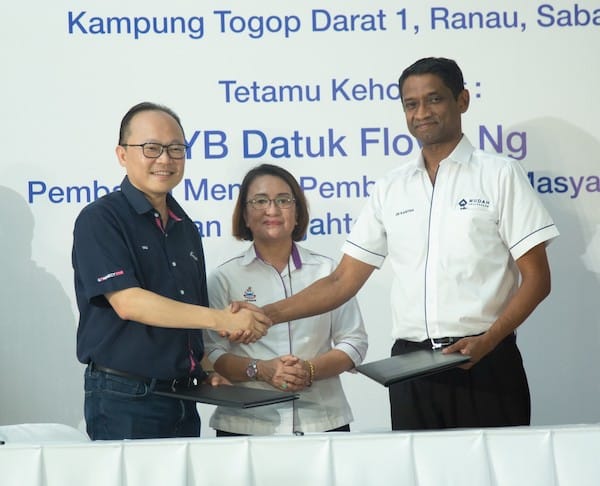
Malaysian satellite operator MEASAT announced on Thursday that it has signed a Memorandum of Understanding (MoU) with local healthcare tech company Mudah Healthtech to bring telehealth services to remote communities.

Under the MoU, Mudah Healthtech will use around 4,000 of MEASAT’s “CONNECTme NOW” satellite broadband hotspots in rural Malaysia to provide Mudah’s Sihat Xpress digital healthcare services for up to 1 million people in unserved and underserved rural and remote communities.

MEASAT and Mudah have also agreed to digitalise clinics in those areas with telehealth capabilities, enabling at least 1,000 doctors to support up to 2,000 Sihat Xpress rural telehealth kiosks to be rolled out at CONNECTme NOW sites within the next two years.

Sihat Xpress telehealth kiosks enable villagers to not only consult a doctor online about various non-emergency medical issues, such as minor illnesses and general health inquiries, but also conduct self- checks for things like oxygen levels, blood pressure and body temperature. In future, the kiosks may also support other services such as blood glucose testing, MEASAT said.

MEASAT chief operating officer Yau Chyong Lim said that by enabling people to do their own basic health screening, the telehealth kiosks could serve as a long-term viable solution for mitigating overcrowding and long wait times at healthcare facilities. They can also potentially improve health literacy in rural communities and limit the spread of non-communicable diseases, he added.

“Through digital healthcare, we aim to help reduce the healthcare delivery gap in remote communities, empowering rural residents to proactively monitor their health via routine checks and online consultations without spending time and money travelling long distances to a healthcare facility,” he said.

The first rural Sihat Xpress site in Malaysia has been established at Kg Togop Darat 1 in Ranau, which MEASAT said will serve as a proof-of-concept to show the potential of telehealth as a cost-effective method to address gaps in high-quality healthcare delivery between urban and rural areas.

Dr Kantha Rasalingam, CEO of Mudah Healthtech, added that the Sihat Xpress initiative in rural areas is aligned with the government’s goals to digitalise all healthcare facilities by 2030.

“Our mission is to make healthcare more accessible, convenient and personalised for everyone, regardless of their location or socioeconomic status,” he said. “We aim to bridge the gap between healthcare providers and patients, offering seamless and integrated platforms that facilitate communication, collaboration and care delivery.”

Flovia Ng, Assistant Minister of Community Development and People’s Wellbeing for Sabah, said telehealth services address the lack of medical professionals in remote areas and can help residents obtain medical advice more easily.

« This is in line with our own efforts to send mobile laboratories to remote districts to conduct medical check-ups and our encouragement of integration and collaboration between the government, private sector and the public to increase awareness on healthcare and improve wellbeing, » she said.

MORE ARTICLES YOU MAY BE INTERESTED IN…

Telecoms shutdown making Sudan’s humanitarian crisis worse: NGOs

A coalition of humanitarian NGOs in Sudan has warned that the shutdown of telecoms services in the midst of the country’s civil war is making a massive humanitarian crisis even worse, and urged all stakeholders – including Starlink – to restore services as soon as possible.

A nationwide telecoms shutdown in February left almost 30 million Sudanese without access to the internet or telephone calls for more than a month. While some levels of services have since been restored in the east part of Sudan, large parts of the country – including the Darfur region, and parts of Khartoum and the Kordofans – remain disconnected from network providers such as Zain, MTN and Sudani, according to an open letter from the Norwegian Refugee Council (NRC) released earlier this week.

In some areas, the only available service has been via satellite connectivity services like Starlink. The NRC letter said that civilians and local responders, such as emergency response rooms (ERRs), often connect through informal Starlink internet cafes.

However, Starlink is not licenced to operate in Sudan, and the military government has ordered people not to use the service, in part because the paramilitary Rapid Support Force (RSF) has reportedly been using Starlink terminals to communicate.

Last month, Starlink said it would halt roaming services to countries where it doesn’t have an operating licence effective April 30, although various media outlets have reported that Starlink remains accessible in Sudan.

The NRC letter said that services like Starlink remain critical for international humanitarian organizations and local responders to remain operational in unconnected parts of Sudan. The letter warned that shutting down Starlink “would have a disproportionate impact on civilians and the aid organizations who are trying to reach them.”

The NRC letter also said military attacks on telecoms infrastructure, as well as government-ordered shutdowns, have “severely affected civilians’ ability to cope with the effects of the war, as well as aid workers’ capacity to deliver essential services, with local responders most severely impacted.”

In the midst of the fighting, civilians need internet access to not only share and receive critical and lifesaving information, including safe areas and routes, but also access cash and bank transfers so they can purchase basic necessities like food and water, the NRC said.

Meanwhile, local aid groups, who have been the first and main responders in most conflict-affected parts of the country, rely heavily on telecoms to reach vulnerable communities and receive funding for their activities. Humanitarian organizations also need connectivity to coordinate and deliver relief efforts safely, particularly to provide cash assistance into the most remote areas.

“Any shutdown of telecoms services is a violation of human rights and may be considered to be a collective punishment that will not only isolate individuals from their support networks but also exacerbate the already dire economic situation facing millions,” the NRC said.

The letter – which was signed by 94 humanitarian, civil society, human rights organizations and members of the #KeepItOn coalition – calls for all stakeholders to ensure the uninterrupted provision of telecoms services in Sudan, as well as for parties on both sides of the conflict to stop attacking, destroying, damaging or shutting down telecoms infrastructure, and allow repairs to be made.

The letter also said restrictions on satellite services and importation of satellite internet devices should be lifted.

The NRC letter also said service providers need to ensure connectivity by “diversifying the means to access the internet, such as solutions based on satellite (including, though not limited to, Starlink) and WiMAX technology, or the use of e-SIMs near the country’s borders. »

Meanwhile, development donors and financial institutions should support long-term development of the telecoms sector by promoting decentralized infrastructure and reducing barriers for smaller businesses to enter the telecoms market, the letter said.

Finally, the NRC also called on the UN to increase emergency telecoms capacity in Darfur and the Kordofans through the Emergency Telecommunications Cluster.

The NRC said that over a year of relentless warfare and indiscriminate violence has led to Sudan becoming the world’s worst displacement crisis and is on the brink of becoming the world’s worst hunger crisis. In total, nearly 25 million people – more than half of Sudan’s population – need humanitarian aid.

MORE ARTICLES YOU MAY BE INTERESTED IN…