Keep up-to-date with all the latest news, articles, event and product updates posted on Developing Telecoms.
Subscribe to our FREE weekly email newsletters for the latest telecom info in developing and emerging markets globally.

Keep up-to-date with all the latest news, articles, event and product updates posted on Developing Telecoms.
Subscribe to our FREE weekly email newsletters for the latest telecom info in developing and emerging markets globally.
Five items from the data center sector from this week to catch up with, three from the US, one from Europe, and one from the Red Sea: … [visit site to read more]
This week, AT&T and AST SpaceMobile have signed a definitive commercial deal to work together in bringing direct-to-mobile satellite communication to AT&T customers.
The agreement, which builds on a previous Memorandum of Understanding signed in 2018, extends until 2030
As part of the MoU, AT&T will invest $500,000 into the satellite firm, with AT&T’s Head of Network, Chris Sambar, taking a seat on AST’s board of directors.
In a LinkedIn post, Sambar said the deal brings the company “one step closer” to effectively combining satellite and terrestrial mobile connectivity, in efforts to ensure customers are never without access to connectivity.
“Working together with AT&T has paved the way to unlock the potential of space-based cellular broadband directly to everyday smartphones. We are thrilled to solidify our collaboration through this landmark agreement,” said Abel Avellan, AST SpaceMobile’s Founder, Chairman, and CEO. “We aim to bring seamless, reliable service to consumers and businesses across the continental U.S., transforming the way people connect and access information.”
Currently, AST SpaceMobile has just one test satellite in orbit, which it used to conduct successful voice call, text, and video calls to an unmodified smartphone last year.
Now, the company has five ‘Block 1’ satellites planned for launch in July or August in this year, enabling the launch of commercial services. These five satellites have been delayed for over a year due to supply chain issues related to satellite production.
Once in orbit, these five satellites will allow for non-continuous nationwide service in the US, with additional Block 1 satellites set to be launched to enhance services at a later date.
AST’s larger and more advanced ‘Block 2’ satellites will begin launching between December 2024 to March 2025.
Keep up to date with all the latest telecoms news from around the world with Total Telecom’s daily newsletter
Also in the news:
Investors shorting BT for $300m in twelve-year record
4G now covers all stations on the Elizabeth Line
EXA Infrastructure continues expansion in North America with new route between Ashburn and Atlanta

ST Telemedia Global Data Centres (STT GDC) announced on Wednesday it is expanding into Vietnam via a joint venture with Vietnamese tech firm VNG Corporation to build and operate data centres in Ho Chi Minh City.
The JV partnership includes VNG’s existing data centre in in the Tan Thuan area, which has been rebranded as STT VNG Ho Chi Minh City 1. The two companies will build a second facility, STT VNG Ho Chi Minh City 2, 1.5 kilometres away within the same Tan Thuan cluster.
Billed as Ho Chi Minh City’s first carrier-neutral connectivity hub when it was opened by VNG at the end of 2022, STT VNG Ho Chi Minh City 1 is an Tier-3 rated facility offering a total IT load capacity of 9.6 megawatts. It provides network coverage from major local telecoms operators and services including cloud access to providers, local leased lines and disaster recovery workspace. Customers can also establish direct peering connections to VNGGames and VNG Cloud.
The new STT VNG Ho Chi Minh City 2 will be connected to the original data centre, and is planned to offer a development potential of up to 60 megawatts of IT load capacity.
STT GDC says the new data centre facility is expected to be operational in the first half of 2026.
Lionel Yeo, CEO for Southeast Asia at STT GDC, said the JV will leverage VNG’s deep local market knowledge, carrier neutrality and extensive customer and partner network to capitalise on Vietnam’s growing ambitions to become a digital powerhouse in Southeast Asia.
“Vietnam is at the cusp of significant growth in the data centre market, and we firmly believe that the combined strengths of both partners will enable us to serve the local market with agility and pace,” he said in a statement.
VNG Founder and CEO Le Hong Minh said the JV would set new service standards worldwide for Vietnam’s data centre industry as well as introduce VNG’s products and services to international markets.
“Together, we are advancing the AI Cloud movement to support both regional and local businesses, in line with key trends in the digital economy,” he said.
News provided by: FCC Office of Media Relations
This piece was originally published by our sister company Broadband Communities
The FCC’s Enforcement Bureau today resolved two investigations into the América Móvil Submarine Cable System, which connects the United States to two additional cable landing stations located in Colombia and Costa Rica, respectively, without the Committee for the Assessment of Foreign Participation in the United States Telecommunications Services Sector’s (commonly known as Team Telecom) review or the required FCC approval. In addition to admitting the violations, LATAM Telecommunications and Puerto Rico Telephone Company will each pay a $1 million civil penalty and enter into a compliance plan.
An undersea cable licensee’s failure to obtain prior FCC authorization before connecting and operating new international subsea cable landing stations circumvents Team Telecom’s ability to conduct a review for national security concerns as required by federal law and regulations.
“Undersea cables keep us globally connected and are essential part of the digital economy. But they can pose real security risks if the FCC and its national security partners aren’t properly given the chance to review where new cables may be installed,” said FCC Chairwoman Jessica Rosenworcel. “Across the board the agency has been focused on network security, and careful oversight of undersea cables is a critical part of this effort.”
“As recently described in the Bulk Sensitive Personal Data Executive Order 14117, international submarine cables that connect the United States to other countries are a key piece of technology that facilitates the voluminous transfer and use of sensitive personal and U.S. government information,” said FCC Enforcement Chief Loyaan A. Egal, who also serves as head of the FCC’s Privacy and Data Protection Task Force. “We will also work closely with our national security partners and the Commission’s Office of International Affairs to identify and address unauthorized and non-notified transactions that implicate FCC licenses and U.S. national security interests.”
“Team Telecom is designed to review and address national security threats to our critical telecommunications infrastructure,” said Assistant Attorney General Matthew G. Olsen of the Justice Department’s National Security Division. “When that process is bypassed, it puts the American people, their communications, and their data at risk. Today’s enforcement action makes clear that the Department of Justice, as Chair of Team Telecom, will continue to work closely with the FCC to ensure that applicants and licensees play by the rules.”
The FCC investigation found that construction began on a cable landing station in Isla San Andrés, Colombia, in March 2020, which went into operation in September 2021, and a cable landing station in Puerto Limón, Costa Rica, in May 2021, which began operation in November 2022, with both connecting to the América Móvil Submarine Cable System. Neither company sought FCC authorization until 2023, thus evading vital national security reviews and assessments, among other concerns, that the FCC, in collaboration with the Team Telecom Committee, considers when reviewing new undersea cable landing license applications, as well as requests to modify existing licenses.
Reflecting the increased emphasis on data security issues in the national security sphere, the financial penalties associated with today’s settlements are significantly larger than prior enforcement actions for undersea cable rule violations.
In addition to critical infrastructure voice and data services, undersea cables also facilitate emerging technologies that are key to the digital economy such as artificial intelligence, machine learning, and cloud computing. The Enforcement Bureau will continue to prioritize investigations that concern U.S. national security interests involving telecommunications and information and communications technology networks.
How is the international submarine cable ecosystem evolving in 2024? Join the submarine networks community in discussion at this year’s Submarine Networks EMEA conference
Also in the news:
Spanish regulators clear Zegona’s acquisition of Vodafone Spain
UK’s fastest supercomputer switched on
EXA Infrastructure continues expansion in North America with new route between Ashburn and Atlanta

Four items from around the world to catch up with: … [visit site to read more]

Over 1.5 billion women used mobile internet in 2023 in developing nations, as women are adopting connectivity faster than men, according to the GSMA.
Detailed In the industry body’s latest Mobile Gender Gap Report, the gender gap in mobile adoption narrowed for the first time since 2020 in low-and middle-income countries (LMICs), from 19% in 2022 to 15% in 2023.
Women are now 15% less likely than men to use mobile internet in LMICs. However, over 785 million women in developing countries remain unconnected.
Around 940 million (40%) still do not own a smartphone, and 1.4 billion women (60%) have one.
In 2023, the smartphone gender gap narrowed from 15% to 13% across LMICs, driven by women in South Asia who cut the gap from 41% to 34%.
The body estimated that by closing the gender gap, the mobile industry could gain US$230 billion in revenue over an eight-year period.
Markets
India, one of the world’s largest mobile markets, saw a massive rise of 37% among women as adoption among men remain stable, cutting the gap from 40% to 30%.
In Indonesia, the rate of adoption from women exceeded men with the gap now at 8% from 15%.
Sub-Saharan Africa saw a slight narrowing in the gender gap for the first time in five years, from 36% to 32% year-on-year. Although women in South Asia and Sub-Saharan Africa are still less likely to use mobile internet compared to men, with gaps of 31% and 32% respectively.
Mobile connectivity is primary access to the internet for people in developing countries, accounting for 84% of broadband connections in 2023.
Barriers to gaining a handset and connectivity are affordability, literacy and digital skills. Affordability is a key challenge for women due to the gender pay gap and lower employment rates, stated the GSMA.
The industry body acknowledged barriers to mobile adoption is shaped by country rather than gender, but women still lag behind men in using mobile internet. This discrepancy is partly due to social norms and structural inequalities such as unequal access to education and income.
Claire Sibthorpe, GSMA Head of Digital Inclusion said the decrease in the mobile internet gender gap was “promising” but conceded maintaining this growth was “fragile”.
Connexin joins prestigious roster of B Corp Certified Companies
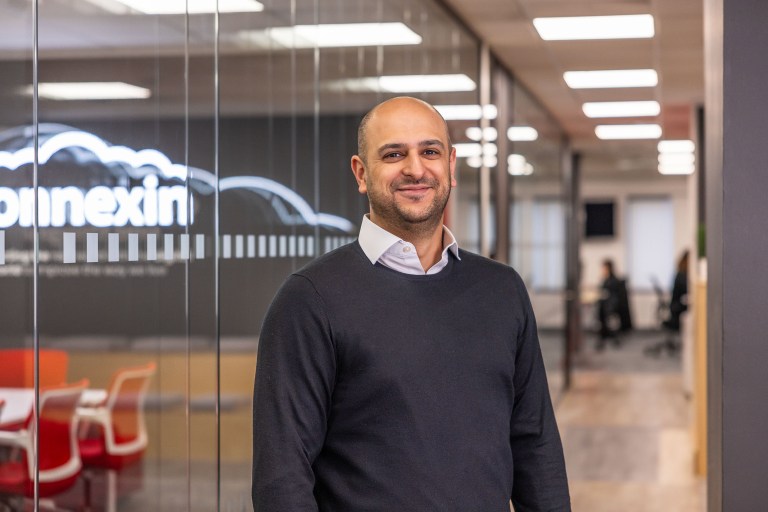
UK-based smart technology and digital provider Connexin is pleased to announce it has earned B Corp™ Certification following a rigorous social and environmental impact evaluation, a rarity for technology and service-led providers. The certification places the business amongst some of the most respected B Corp brands globally, including Patagonia, Divine Chocolate, Octopus Energy and Innocent Smoothies.
Businesses certified by B Lab™, a third-party non-profit, are leaders in the global movement for an inclusive, equitable, and regenerative economy. B Lab measures a company’s entire social and environmental impact and attaining B Corp Certification means a company meets high standards of social and environmental performance, accountability, and transparency.
“Becoming a B Corp is further validation of our sustainable practices and our ongoing commitment to create positive social impact,” says Furqan Alamgir, CEO at Connexin. “We have always lived by the principle that businesses should be a force for good, and we practice this belief through everything we do, from our business strategy, product sets, to our operational practices. We are honoured to be recognised for this and become part of a global community that is championing change.”
The B Corp Certification follows in line with Connexin’s commitment to become Net Zero by 2040 and achieving a 5-Star ESG rating awarded by the Global Real Estate Sustainability Benchmark (GRESB).
Founded in 2006, Connexin offers services across three areas: broadband, smart solutions and digital training. Its mission is to connect the real world to the digital world to improve the way people live. The commitment to use technology to create positive and long-lasting social impact is rooted firmly in the business’s DNA.
Connexin’s smart water metering services enable its utility customers including Essex and Suffolk Water, Yorkshire Water and Severn Trent Water to rapidly detect water leaks across the UK. This helps reduce water wastage and carbon emissions from manual meter readings. Working with city councils, Connexin’s Smart City solutions help to build more efficient, sustainable and better connected communities.
Its education and training division, Connexin Academy, consistently demonstrates its dedication to narrowing the growing gap in tech skills across the nation. By offering training bootcamps ranging from Cybersecurity, IT Skills, and Advanced Fibre Engineering, Connexin Academy upskills individuals and businesses with a constantly updated curriculum and new courses for emerging markets.
Through its Connexin Cares scheme, the company donates up to £20 to a local charity for each new customer that signs up to its fast full-fibre broadband deals.
Notes to editors:
Connexin is a UK-based digital service and smart technology provider with an industry-leading offer across three areas: broadband, smart solutions and digital training.
From day one we’ve been on a mission to connect the digital world to the real world to improve the way we live. We’re passionate about ending the digital inequalities that exist within society which prevent people and businesses from accessing the benefits of technological advancement.
By connecting people, places and things to smart technologies we’re changing lives and communities for the better.
Connexin recently ranked 2nd in the Top 100 league table at the annual Northern Tech Awards, a remarkable 14 place jump from 2023 (16th) and a staggering 28 places from 2022 (30th).
Earlier this year, Connexin was selected by Essex & Suffolk Water for the UK’s largest IoT advanced water metering infrastructure (AMI) framework contract, to manage the rollout of up to one million smart meters across the Essex and Suffolk supply regions.
Connexin was also awarded £58.6 million in government funding by Building Digital UK, as part of Project Gigabit, to rollout lightning-fast fibre broadband to over 30,000 rural homes in Nottinghamshire and West Lincolnshire.

According to a release from Quantum Loophole yesterday, Maryland has passed legislation fixing what had been a vexing issue for the data center project. They are talking about the Critical Infrastructure Streamlining Act of 2024, which ‘clarifies the definition and legislative framework around the use of emergency backup power generation’. … [visit site to read more]