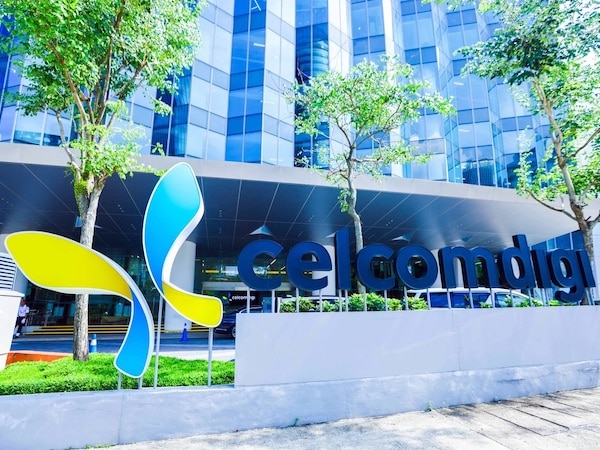
CelcomDigi almost halfway done with network integration project

Malaysian telco CelcomDigi says it’s close to the halfway mark in integrating and modernising its mobile network across the country, which puts it ahead of schedule in its post-merger transformation plan.

CelcomDigi said on Friday that it has completed 44% of its nationwide network integration and modernisation programme, which officially commenced in June 2023, around seven months after the merger between Celcom Axiata and Digi Telecommunications was approved by the boards of both companies in November 2022.

The telco said it has modernised over 7,200 sites as at end April 2024, which it says has boosted download speeds for customers in those areas by between 20% to 26%, and improved signal strength by between 13% to 16%.

CelcomDigi reckons that it will pass the 50% mark in four states by the end of June, and 60% in three states, to include completion of the programme in Penang. The initiative is scheduled for nationwide completion in 2026.

The telco also reported that its 4G LTE and 4G LTE-Advanced network footprint stands at 96.8% and 92.1% nationwide respectively, while 86% of its end-state sites are now 5G-ready. CelcomDigi said it is also transforming its 5G core network to support 5G-Advanced functionality and services.

CelcomDigi has committed RM4 billion (US$846 million) in capex to the project with the goal of establishing 18,000 5G-ready sites and turning the operator into a “digital growth engine” for Malaysia, said CelcomDigi CEO Datuk Idham Nawawi in a statement.

“This new network is designed to potentially transition seamlessly into a new 5G network with an 18,000-site reach – the right infrastructure to usher Malaysia into the era of ultra-high speeds, low latency, and the opportunities of a more connected future,” he said. “We are working with strategic partners to trial 5.5G technologies and new use cases for enhanced digital experiences for Malaysian enterprises and consumers.”

MORE ARTICLES YOU MAY BE INTERESTED IN…

KDDI to deploy emergency response drones at 1,000 locations


News

The Japanese operator has reportedly invested $64 million in drone start-up Skydio as part of the deal

This week, Japan’s KDDI has announced a new partnership with US-based drone specialist Skydio aiming to create a network of drone stations across the country to aid in disaster response.

The deal, which reportedly involves an investment of $64 million, will see KDDI deploy Skydio’s X10 unmanned aerial vehicle (UAV) to around 1,000 locations. This will allow them to be launched rapidly in response to natural disasters like earthquakes and tsunamis, where they will help in search and rescue operations, as well as surveillance task and infrastructure inspections.

According to KDDI, the locations have been selected so that a drone can reach any location in the country within just 10 minutes.

The X10 drones are notably equipped with thermal imaging and night-vision capabilities, making them effective in any rescue scenario.

They will also use Skydio’s Visual Slam technology, onboard AI to enhance real-time spatial understanding and image processing. This will allow the drones to fly autonomously, automatically avoiding obstacles, even in the dark.

“The drones will be useful in finding survivors during disasters, as they can fly in the dark and are equipped with temperature sensors,” said Hiromichi Matsuda, KDDI’s managing executive officer.

Data gathered by the drones will be transmitted over KDDI’s infrastructure, including the company’s 5G network where possible, but also satellite.

Beyond disaster response, KDDI says they will also use the drones to support local governments and companies, helping to tackle issues like infrastructure inspection.

Keep up with all the latest telecoms news from around the world with Total Telecom’s daily newsletter

Also in the news:
UK government conditionally approves £15bn Vodafone–Three merger
Nokia and Vodafone trial Open RAN with Arm and HPE
T-Mobile and Verizon to buy US Cellular, reports say

Vodacom Group profits dip

Keep up-to-date with all the latest news, articles, event and product updates posted on Developing Telecoms.
Subscribe to our FREE weekly email newsletters for the latest telecom info in developing and emerging markets globally.

Sending occasional e-mail from 3rd parties about industry white papers, online and live events relevant to subscribers helps us fund this website and free weekly newsletter. We never sell your personal data. Click here to view our privacy policy.

More Than a Switch: How to Change Vendors Without Disrupting Your Business

As you pursue innovation and growth for your business in a rapidly changing industry, switching telephony vendors may become an inevitable, though cumbersome, task on your checklist.

Perhaps you started with a low-cost or free provider that simply cannot support the level of growth you desire. Perhaps your existing provider is lacking in features, innovation, or support. Or perhaps the solution powering your business is set to terminate its service, as is the case of Mitel’s MiCloud.

MiCloud Business is set to expire on June 30 of this year – just two months away. Whether you are switching from Mitel or another provider, we want to help. Keep reading to learn what to look for when switching providers and what sets Bicom Systems apart.

There are a few key areas to assess when switching to a new telephony vendor. 

Forwarding-Thinking Features

Obviously you want to make sure your new vendor offers all of the features you and your customers are accustomed to. But even more important than that, is looking for a vendor that has innovative features.

 You want to partner with a company that has a pulse on the future of the industry and is paced to stay ahead of the competition in adopting new trends and technologies.

In addition to the basics, we recommend choosing a vendor that offers:

  • Video meetings
  • Comprehensive mobility
  • Omnichannel options
  • Security measures
  • Scalability

These features are signs that the business is not falling behind on new trends and prioritizes future-proofing their solution and your business.

Spoiler alert: Bicom Systems offers all of the above features and more.

Partnership, Support, and a Transition Plan

Features and solutions aside, look for a provider that will be a true partner to your business. Having a team of individuals with high levels of experience in the industry that is rooting for your success is invaluable.

Be sure to ask about support before signing on with a vendor. How big is the support team? When are they available? What kinds of issues will they resolve for you? And once the deployment and training phase is over, who will be your contact in the company? Look for a vendor that wants to come alongside you as a long-term partner with support and resources that surpass your expectations.

Do not forget to ask about a transition plan. Migrating to a new solution is a big deal, and you want to avoid downtime and hiccups for your customers. Find a vendor that instills confidence in you with their to ensure swift changes and communications continuity.

At Bicom Systems, our in-house support and success teams have transition plans in place to support fast, seamless migrations. Read 5 Reasons Switching to Bicom is so Fast here.

Hardware Compatibility

As you make that transition, what will happen with your existing handsets and other devices? Will they remain compatible with the new system or will you be forced to purchase new hardware? 

Definitely do not settle for a provider that requires you to upgrade your hardware, unless it is truly antiquated and no longer useful. Hardware compatibility is another sign of a business’s agility and ability to evolve into the future.

You can find a list of Bicom System’s supported endpoints here, note that Mitel hardware is on the list.

Financial Impact

Finally, you must consider the financial implications of your move. What will be due up front? What will your new expenses be? How does this compare to your previous budget?

Bicom Systems solutions are extremely flexible and scalable, so we can meet new partners where they are at. Start as small as you need and grow as big as you are able, paying for only what you need throughout your journey.

Now may be the perfect time to make the switch because our annual Spring Sale Event is coming up in May! We cannot let you in on the details yet, but the discounts are stellar and we will have something for everyone. Contact us to begin your transition today.

Bicom Systems webinar

With those basic criteria and your infinite ideas and hopes in mind, we present the Bicom Systems Platform. A complete communications suite, the Bicom Platform gives you all of the pieces needed to run and grow your company.

From PBX to Call Center to Unified Communications, our white label, fully customizable solutions are based on over 20 years of experience in the industry and partner feedback.

In-House Support & Partner Programs

What is even better than our products and solutions? The fact that they are backed by 100% in-house development and support. 

All of our software is created by our seasoned team of developers based on real feedback and customer requests. We strive to release new versions regularly with the latest features and technologies that our partners need to stay ahead on the market.

Our in-house support team is made up of individuals throughout our global offices to maximize availability and give our partners peace-of-mind that someone is always ready to jump on live chat or a phone call to address issues and questions.

For partners that are particularly dedicated to growth, our Partners Program gives access to additional training, support, and resources to support their success. 

From our highly experienced Account Managers to our Customer Success team to our Support team, you will be in good hands as we ensure a quick, easy, and risk-free transition. We cannot wait to support your ongoing journey to growth and success.

Focus on Security

While no telephony vendor is immune to cybersecurity risks (and you should not believe any provider that claims they are), prioritizing a focus on security goes a long way in protecting partners, customers, and data.

Bicom Systems takes security seriously and our developers are constantly working to incorporate the latest safeguards and precautionary technologies into our products. sipPROT is our dedicated SIP Protection module, using advanced detection techniques to monitor SIP packs in real-time and take action at the first sign of a threat.

Most importantly, we are transparent about cybersecurity and our approach to keeping our partners and their data safe. Learn more in 12 Features that Keep our Partners Secure.

Innovative Features

As we mentioned previously, your search for a new vendor should include questions about features and particularly new and upcoming features that reflect the business’s focus on innovation. At Bicom Systems, innovation is ingrained into everything we do.

In the first few months of 2024 we have already launched two major new releases with features and capabilities that our customers have been requesting. 

Version 7.1 brought our groundbreaking omnichannel add-on, meticulously crafted to seamlessly unify customer interactions across communication channels to boost satisfaction and growth. And our updates to SERVERware and sipPROT gave our partners new insight, transparency, and control over their servers and security.

And of course our Meeting solution, mobile unified communications, and true multi-tenancy are old news to our partners who are accustomed to getting the latest features as soon as they hit the market.

White Label Products

All of our solutions are white label so that you can take them to market as your own. We want you to have complete control over pricing, marketing, and your customer relationships so that you can grow your own brand.

We never ask for end user contact information or make our pricing public, so as not to compromise your control and ability to earn a higher profit margin. We believe in supporting your success as your own brand so that we can grow together.

Flexible Deployment Options

Last but certainly not least, Bicom Systems supports different deployment options to fit your unique business needs. While we all know and love the benefits of cloud computing, we know that some businesses still benefit from on-premise solutions. So we offer on-site, hosted, and hybrid solutions.

Ready to get started? Contact us to start a no-strings-attached conversation about your business and your plans for the future. 

Or learn more in our webinar: Strategic Benefits of Partnering with a UC Software Manufacturer: Bicom Systems.

6 UCaaS Features That Enhance Productivity In The Workplace

The goal of unified communications is to create a more cohesive workplace environment where teams can communicate within the team itself, and with one another with little to no miscommunication present.

In order to achieve this, UC platforms have evolved over the years, perfecting their tools to be easy to use and modernizing available communication channels to ensure a seamless transfer of information.

However, those are not the only goals a business strives for when looking into a UCaaS solution.

There is the monetary aspect too, sure, allowing them to save up on overhead costs in comparison to a more physical option, but the main one revolves around a desire to boost workplace productivity.

While UC platforms as a whole are geared toward that idea, there are a few standouts which put the P in productivity.

Let us see what these specific features are and why they are an important aspect of a UC solution to be on the lookout for.

Communication is in the very name of UC, so it is no surprise that access to team communication would be one of the most productive features of a UC platform, with different messaging options possessing different benefits.

Many businesses would agree with that notion as a good majority of them have implemented it into their infrastructure, utilizing it to improve workflow and information exchange, especially in businesses that employ workers from all over the globe or ones that practice WFH strategies.

This doesn’t just revolve around the ability of sending texts back and forth either, but also takes the robust nature of UC platforms to integrate other useful features into account like file sharing, organizational tools, presence tracking and the like.

Some even go as far as integrate SMS and MMS from phones into their platforms or enable a virtual dialer, allowing employees to have everything in one place or work on the go with just their phone, depending on their position.

Modern UC platforms are a marvel that enhance productivity by keeping all necessary tools in one place, removing the need to swap from one app to another and creating confusion during complex tasks. Our own UC app, gloCOM, was created with that very purpose in mind.

One thing that has seen wild success in terms of workplace productivity due to greater market intelligence is the inclusion of contact centers into businesses, allowing them insights into the minds of the average customer and saving companies money on previous market research strategies by allowing them to adapt to their existing customer base.

They allow businesses to gather feedback and use it to improve their existing customer experience and overall satisfaction.

A happy customer is a loyal one after all, and when customers are happy, it reflects on employees too, allowing them to work in a less strenuous environment and to retain a more positive and work-oriented attitude, ending up in an overall increase in productivity.

This goes doubly so to the fact that there is less confusion about the direction of the product offered by the business as they know exactly what their customers want and what to focus on with a contact center integration.

Bicom Systems’ UC platform offers an easy-to-implement Contact Center solution that allows businesses to do all of this and more, streamlining their existing CC operations and allowing them to modernize its infrastructure to improve employee productivity as well as build upon the existing employee and user experience.

Rotating back to the first feature, we have established that improving team communication is one of the most productive things a UC platform can do, but messaging is not the only form of employee interaction that manages this as meetings are a core part of information exchange too, but on a greater scale.

Given the growing rise of remote work in order to facilitate better working conditions and improve productivity overall, companies had to adapt and evolve, especially since most meetings could now not be held in person, so they swapped to doing it online.

Thus, it makes sense that UC providers would enable a feature like this on their platform, making it easier for businesses to organize, schedule, and hold meetings with any employees and at any time.

And, the fact that it is done over a UCaaS provider means that held meetings are bound to be more stable and with less issues affecting performance, allowing for smoother and more efficient information exchanges with bigger groups of people, be it between employees or partners.

Our own Unified Communications app, gloCOM, has a meeting module that enables exactly that directly on the app itself, keeping everything in one place and allowing company employees to connect with one another, wherever they are in the world with minimal delay, enhancing productivity.

What better way to improve productivity but to allow employees of a business access to the UC platform regardless of where they are?

Most modern UCaaS providers provide this commodity through their product nowadays, and it is not just limited to the home office as we have mentioned prior, but it also helps enable digital nomads who would work on their laptops from anywhere in the world, or even those who need to be able to access their workplace directly from their phones.

Bicom Systems has covered this aspect too by creating a mobile version of gloCOM, gloCOM GO, available to anyone and allowing it to be set up as a proper phone extension without the need of a specialized VoIP phone provided one has a valid gloCOM license.

It provides one with all the capabilities they would have access to on the desktop version of the app, allowing employees to perform their duties without loss of performance and from anywhere with a stable internet connection.

While not a direct productivity-enhancing feature, cloud hosting is an important core feature that enables more productive practices.

Given the transition to remote work and with avenues for businesses opening up to hire people from outside their immediate office’s area, businesses have started to transition away from on-site PBX implementations and have started to move toward cloud-hosted or hybrid options.

This enables the idea of remote work and work from home options for businesses in the first place, making the overall talent pool bigger and thus improving overall potential employee quality which should positively affect performance in the long run.

Most of the Bicom Systems product suite offers both an on-site and cloud implementation with a seamless transition to the cloud for existing on-site installations, making it easier for companies to take the next step toward a more modern and productive infrastructure.

The final major feature worth mentioning is Omnichannel support, an addendum to contact center performance numbers.

Omnichannel can be considered a modernization of existing communication channels as it helps open up new avenues of contact between customer and business, allowing them to utilize their preferred method of communication to submit inquiries or deliver feedback about their experience with a product.

Instead of only having access to calls, an Omnichannel-enabled contact center allows customers to reach out to a business via SMS, e-mails, as well as Facebook Messenger and WhatsApp, or a live chat integration on the business’ main site.

More advanced Omnichannel solutions can even map the customer’s journey from one communication channel to another, allowing for a frictionless transition between mediums and improving the overall customer experience.

It also helps lower employee stress and enhance productivity by giving them access to this data to tailor the customer’s experience without having to ask needless and potentially repetitive questions which would otherwise lead to a dissatisfied customer, and a frustrated employee.

Bicom Systems’ own Contact Center solution features Omnichannel support and works with any existing contact center implementations, allowing businesses to gain access to these benefits at a moment’s notice.

While these are not the only features that showcase how UCaaS facilitates a more productive workplace, they are certainly some of the major standouts.

However, to keep in mind that they are not the only thing a business is going to be looking out for. Make sure that your product has other options to make it more robust and more appealing to your clientele, something that paints a more complete picture outside of pure statistics.

Bicom Systems’ own product suite offers all that and more at competitive prices, with flexible editions and with stellar customer support, giving businesses and partners the chance to create the ideal product package to suit their needs.

If you want to take a look at our platform, be sure to visit us or give us a call if you have any questions regarding any of our products.


Dubai’s du partners HPE to aid major bank’s digital transformation

Dubai-headquartered telecommunication company du, from Emirates Integrated Telecommunications Company (EITC), and global edge-to-cloud company Hewlett Packard Enterprise (HPE) have announced a major deal with the Commercial Bank of Dubai (CBD), one of the most prominent national banks in the United Arab Emirates (UAE).

CBD has selected the HPE GreenLake, a portfolio of cloud and as-a-service solutions hosted in du’s hyper-connected and Tier III-certified data centres, to accelerate CBD’s hybrid cloud journey and optimise the customer and team member experience.

The solution brings together the powerful capabilities of HPE GreenLake with connectivity, hosting, and network security services provided by du.

By utilising HPE GreenLake as the foundation of the private cloud, along with du’s comprehensive network and security solutions and services, CBD will be able to implement and expedite a five-year strategy that aims to establish a more efficient and automated self-service IT operational model.

The goal is to enhance responsiveness, visibility and control while minimising complexities and manual processes. As HPE points out, it is essential for the bank to operate core banking applications and workloads within a private cloud environment that incorporates AI capabilities and customised services under its complete control. This approach, HPE adds, ensures CBD’s ability to promptly adapt to evolving business requirements and meet customer expectations.

The HPE GreenLake platform provides a unified, automated control plane across both CBD’s private and public cloud. The solution is underpinned by leading HPE products and services, such as HPE Services for the overall migration process and Zerto for VM migration and cyber resilience.

To ensure efficient and secure connectivity throughout its IT estate, CBD also relies on intelligent edge solutions from HPE Aruba Networking, including state-of-the-art Wi-Fi 6E and Network Access Control (NAC).

This comprehensive hybrid cloud environment will be further enhanced through key services provided by du as part of its data centre solutions and HPE managed services.

This environment, say du and HPE, enables CBD to enhance security, automate tasks, drive innovation, and develop AI-driven services to deliver exceptional customer experiences. Additionally, it acts as a critical safeguard to protect sensitive financial information and customer data.

MORE ARTICLES YOU MAY BE INTERESTED IN…

T-Mobile and Verizon to buy US Cellular, reports say 


News 

The news follows T-Mobile’s acquisition of Mint Mobile just last month 

US mobile operators T-Mobile and Verizon are in discussions to separately buy parts of smaller rival US Cellular, according to a report from the Wall Street Journal. 

US Cellular serves over 4 million customers, predominately in rural areas. The company was put up for sale last year by its owners, TDS, in response to years of pressure from shareholders. 

According to the report, T-Mobile is seeking to purchase over $2 billion in assets, which include “some operations and wireless spectrum licenses.” 

This deal is close to being finalised and could be announced later this month, said people familiar with the matter.  

The deal with Verizon is less defined, with these discussions still in the early stages.  

Both Verizon and T-Mobile are seeking to acquire the spectrum from US Cellular as well as assets and customer base. 

US Cellular also has 4,000 mobile towers, though these are reportedly not part of either deal. 

The Wall Street Journal suggests part of the reason for the piecemeal sale is to stay under the radar of the US competition authorities. T-Mobile’s acquisition of Sprint in 2020 faced almost two years of scrutiny from federal regulators, as well as a lawsuit over potential harm to consumers. Critics essentially argued that the merger would reduce competition and create a player in the market whose market share was too dominant, which could easily be the case here should either Verizon or T-Mobile acquire the entirety of US Cellular. 

Indeed, T-Mobile has already grown via M&A activity this year. Just last month, T-Mobile finalised the acquisition to buy Ka’ena Corp, the owner of Mint Mobile, for up to $1.35 billion. The deal has been approved by the Federal Communications Commission after being first reported in January last year. 

Keep up to date with the latest international telecoms news by subscribing to the Total Telecom daily newsletter 

Also in the news: 
Verizon Business and Cummins deal combines private 5G and neutral host tech 
Samsung and Telefonica partner for German vRAN site 
AT&T sheds cybersecurity division to create LevelBlue 

UK government conditionally approves £15bn Vodafone–Three merger 


News

The merger is under ongoing investigation from the Competition and Markets Authority 

The UK government has this week released a “Publication of notice of Final Order” that provisionally approves the Vodafone–Three merger, subject to certain conditions. 

Following a “detailed national security assessment”, the cabinet office has approved the merger, providing that: 

– A National Security Committee is set up within the merged company to oversee any sensitive information that the company deals with that is related to the national security of the UK. It will be necessary for the company to provide regular updates to the government; 

– Within this group, a specific technical group is established that will deal with a specific list of topics (such as cyber, physical, and personnel security); 

– The MergeCo’s network migration planning is subject to review by a government approved external auditor;  

– The MergeCo will have specified arrangements for its governance. 

The government said in this statement that the above measures will mitigate national security risks in relation to UK networks and data “resulting from the merging of two large, complex organisations and their respective staffing, policies, processes and networks.” The government also says these measures will eliminate risks in relation to Vodafone’s role as a supplier of services to the government. 

“We strongly believe (the merger) will strengthen competition in the UK’s mobile sector and enable a significant step-up in the UK’s mobile network infrastructure,” said the two companies in a joint statement. 

The investigation by the Competition and Markets Authority (CMA) is separate and still ongoing. The investigation began its second phase last month, with results expected by September. 

Keep up to date with the latest international telecoms news by subscribing to the Total Telecom daily newsletter  

Also in the news:
Verizon Business and Cummins deal combines private 5G and neutral host tech
Samsung and Telefonica partner for German vRAN site
AT&T sheds cybersecurity division to create LevelBlue 

Nokia and Alcon to deploy private LTE for lithium mining in Brazil

Keep up-to-date with all the latest news, articles, event and product updates posted on Developing Telecoms.
Subscribe to our FREE weekly email newsletters for the latest telecom info in developing and emerging markets globally.

Sending occasional e-mail from 3rd parties about industry white papers, online and live events relevant to subscribers helps us fund this website and free weekly newsletter. We never sell your personal data. Click here to view our privacy policy.