
Vodafone Germany to cut 2,000 jobs 


News

The company says the move will save €400 million over the next two years 

Vodafone Germany has announced today that it will cut 2,000 jobs over the next two years as part wider company restructuring. 

The company, which currently employs 15,000 people within Germany, said that staff would be relocated where possible, though specific numbers were not provided.  

The job cuts are part of cost-cutting measures announced by new Group CEO Margherita Della Valle in May last year, in which 11,000 jobs are expected to be cut globally over the next three years. 

 “Vodafone wants to make itself even simpler, faster, leaner and therefore more powerful in the next two years,” said the press release from Vodafone Germany. “In addition to more efficient processes and optimised structures, the focus is on even better interaction options and simpler products and services for customers.”  

Vodafone has been reshaping its operations globally for some time in an attempt to combat debt and its relatively flat growth in highly competitive markets.  

In October last year, the company sold 100% of its Spanish unit to Zegona Communications for €5 billion and, just last week, Vodafone Italia was sold to Swisscom in its entirety in the latest step towards its “reshaped European footprint”.  

The company is also in the process of merging its operations in the UK with CK Hutchison’s Three. 

In a company announcement, Della Valle explained that “going forward, our businesses will be operating in growing telco markets – where we hold strong positions – enabling us to deliver predictable, stronger growth in Europe”. She also highlighted a major focus on the B2B sector, saying it held the “biggest opportunity” for revenue growth. 

In related news, Vodafone Germany announced earlier this month that Marcel de Groot, the company’s head of private customer business, would take over as CEO, replacing the outgoing Philippe Rogge. 

Keep up to date with the latest international telecoms news by subscribing to the Total Telecom daily newsletter 

Also in the news:
BT wins £26m contract to connect UK schools
Apple fined €1.8bn by European Commission over Spotify row
Japan to reduce regulatory pressure on incumbent NTT

Telecom Egypt and Tejas aim to boost local manufacturing sector

Telecom Egypt and Indian telecoms vendor Tejas Networks announced on Monday they have signed a Memorandum of Understanding (MoU) to boost telecoms R&D and manufacturing facilities in Egypt, as well as train up local skillsets.

Under the MoU, which was also signed by Egypt’s Information Technology Industry Development Agency (ITIDA) and the National Telecom Institute (NTI), Telecom Egypt and Tejas will cooperate to establish local manufacturing and R&D facilities for fibre-to-the- home (FTTH) products.

The MoU also covers setting up technical support services in Egypt for customers within the country as well as for the larger Africa and Middle East region.

Meanwhile, Telecom Egypt, Tejas, ITIDA and NTI will work to build up the capacity of Egyptian engineers and technicians to work on state-of-the-art telecom and networking technologies.

Egypt’s Minister of Communications and Information Technology Dr. Amr Talaat said the MoU is the result of discussions that began in January 2023 between Egypt and India to enhance cooperation in ICT technologies.

“It is a comprehensive agreement that seeks to promote localization of world-class communications products, inject new Indian investments into Egypt, create job opportunities, and develop research cadres in various fields of communications,” he said in a statement.

Eng. Mohamed Nasr El-Din, CEO and MD of Telecom Egypt, said the MoU is “aimed at providing Telecom Egypt with the latest communications technology in the world while ensuring that it provides the highest quality of infrastructure services.”

Yogesh Verma, VP of Middle East and Africa (MEA) at Tejas, said the MoU would enable the company to bring its experience with India’s Bharatnet (Rural Broadband Project) and NKN (National Knowledge Network) projects to Egypt.

“Tejas has been operating in MEA for over a decade now and has extensive knowledge and insights about the local requirements and operating conditions to roll out cost-effective and scalable networks,” he said. “This MoU provides a great platform for us to expand our business in MEA while deepening our collaboration with Telecom Egypt and other customers in the country.”

MORE ARTICLES YOU MAY BE INTERESTED IN…

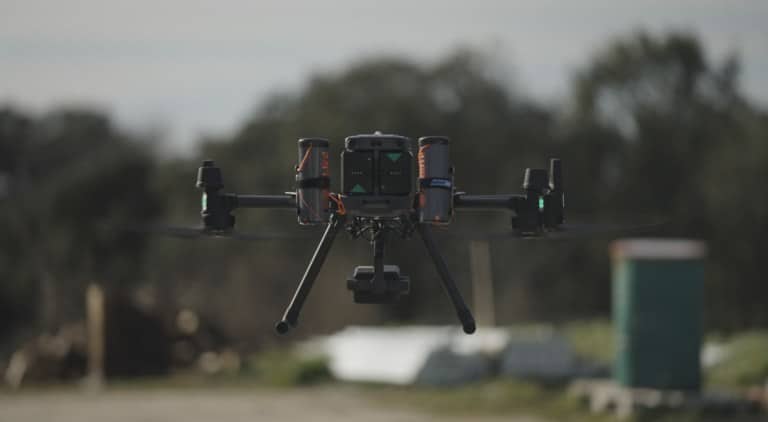
Telefonica Tech inspecting traffic accidents using drones in Madrid


Press Release

Serveo and Telefónica Tech have carried out an innovative pilot project for the Community of Madrid that allows the inspection of traffic accidents and the state of its roads with drones. This is a pioneering project that shows the potential of drone technology to promote safer, more efficient and sustainable mobility.

Both companies, together with the operator Navalair, have carried out a 4.6 kilometres drone flight out of visual range from the North Zone Road Maintenance Centre in La Cabrera (Madrid) to a simulated accident at kilometre point 1+300 of the M-631 road, with the aim of optimising the inspection of accidents and speeding up the response of the Serveo service in critical situations.

Drone technology will make it possible to quickly assess the scene of any incident that occurs on the roads, speed up the response of the conservation and emergency services and improve the care of the people involved in the accident. In addition, drones provide a complete aerial view of the accident scene, which can be particularly useful for further investigation in the case of complex accidents.

The pilot project has also simultaneously inspected 13 kilometres of the M-608 road with LiDAR technology using a drone piloted from a moving vehicle, with the aim of obtaining a cloud of points for subsequent processing and analysis by Serveo and the Directorate General of Roads, Department of Housing, Transport and Infrastructure of the Community of Madrid, which will allow the necessary actions to be planned to improve road safety on the infrastructure.

Cristina Aragón, head of innovation at Serveo, said: “This project demonstrates Serveo’s commitment to road safety and efficient infrastructure management, placing us at the forefront in the implementation of innovative solutions to promote safer and more sustainable transport.

Alfredo Serret, Global Head of IoT at Telefónica Tech, said: “We are very proud to carry out this innovative project with drones in the field of mobility that will improve road safety and speed up the response in case of accidents. It represents, without a doubt, an exciting step forward in the management of transport infrastructures and the prelude to being able to carry out this type of flights in the future with 5G technology”.

Pedro J. Capote, CEO of Operadora Navalair, said: “This project has been a great challenge for our company. We have been able to demonstrate once again that drone technology is a great tool when it comes to obtaining data and images, among other of its multiple uses, with the resounding success of the operation. It has been a great pleasure to work hand in hand with the Telefónica Tech and Serveo teams, two giants that undoubtedly work every day to improve services for all users”.

Keep up to date with the latest international telecoms news by subscribing to the Total Telecom newsletter 

Also in the news:
BT wins £26m contract to connect UK schools
Apple fined €1.8bn by European Commission over Spotify row
Japan to reduce regulatory pressure on incumbent NTT
NEC XON follows through on Eutelsat OneWeb connectivity deal

Keep up-to-date with all the latest news, articles, event and product updates posted on Developing Telecoms.
Subscribe to our FREE weekly email newsletters for the latest telecom info in developing and emerging markets globally.

Sending occasional e-mail from 3rd parties about industry white papers, online and live events relevant to subscribers helps us fund this website and free weekly newsletter. We never sell your personal data. Click here to view our privacy policy.

CMA completes first investigation of Vodafone Three Merger


News 

The merger was agreed last year, with Vodafone taking a 52% in the new business and Three UK taking the remaining minority stake

This week, the UK competition and markets authority (CMA) have completed the first phase of its investigation into the merger which was put in place to identify whether the deal may lead to a ‘substantial lessening of competition’. 

The review, which began in January, concluded in short that the “CMA is concerned that combining these two businesses will reduce rivalry between mobile operators to win new customers.” 

The CMA have concluded that it has identified concerns significant enough to warrant further scrutiny in a Phase 2 investigation, in which an independent body will review the concerns raised in phase one in more depth. 

The high level of CMA intervention is necessary because, if the deal is given the greenlight, it will reduce the number of MNOs in the UK from four to three, with the newly merged company having a market share of 32.1%. Additionally, and perhaps rather obviously, the CMA found that “Vodafone UK and Three UK provide important alternatives for mobile customers”. 

Of particular concern to the CMA is the potential impact on smaller mobile virtual network operators (MVNOs), such as Sky Mobile, Lebara, and Lyca Mobile. These operators rely on access to larger network infrastructures to provide services to their customers. The merger could potentially limit their ability to negotiate favourable deals with fewer network operators available to host their services. 

Both Three and Vodafone have made significant investments in their networks in recent years, including rolling out 5G. Unsurprisingly, both companies are emphasising that the merger will allow them jointly invest £11 billion in services and next generation wireless infrastructure.  

According to the CMA, Vodafone UK and Three UK have five working days to respond with meaningful solutions to the CMA, otherwise the deal will be referred to a more in-depth Phase 2 investigation. 

Keep up to date with the latest telecoms news by subscribing to the Total Telecom daily newsletter 

Also in the news:
BT wins £26m contract to connect UK schools
Apple fined €1.8bn by European Commission over Spotify row
Japan to reduce regulatory pressure on incumbent NTT

 

Telkom South Africa tower unit sold for $330m

UPDATED: Telkom South Africa confirmed the sale of its tower unit Swiftnet for ZAR 6.75 billion (US$355 million) to infrastructure-focused private equity firm Actis, a move to pay down debts and balance its books. 

In a stock exchange announcement, Telkom South Africa said: “​​The reduction of Telkom debt through application of the disposal proceeds will strengthen Telkom’s balance sheet and enable Telkom to release free-cash-flow for investment in Telkom’s core businesses and deployment in pursuit of growth opportunities.”

It added it has growth plans for other units including wholesale infrastructure provider Openserve and Telkom Consumer, its fibre broadband provider. 

Actis said in a separate statement, the deal was made to acquire 100% shares in Swiftnet and its footprint of 4,000 sites across South Africa. It made the acuistion with backing from Royal Bafokeng Holdings,a soverign wealth fund. 

The company said: “The deal allows Actis to invest in a growing sector, with strong secular tailwinds and an increasing need for tower densification driven by increasing internet penetration and the transitions from 3G and 4G to 5G.”

The acquisition of Swiftnet aligns with Actis’ strategy, as the unit has a “unique tower footprint” and is well positioned to meet demand from MNOs looking to connect rural locations. 

This acquisition will mark Actis’ second buy into telecom towers this year following its acquisition of sites in the Western Balkans. The deal was for 1,800 macro towers in Serbia, Bosnia & Herzegovina, and Montenegro.

The company also bought South African fibre provider Octotel in 2020. 

MORE ARTICLES YOU MAY BE INTERESTED IN…

Four components of a robust wireless strategy

This Industry Viewpoint was authored by Stephen M. Kowal, Chief Commercial Officer (CCO) at Nextivity

Any successful collaboration at work relies on readily available connectivity. The surge of remote and hybrid work necessitates virtual collaboration, meaning teams cannot function properly without internet connectivity. Nowadays, connectivity dictates how we work, how quickly we are able to get things done, and impacts the quality of our interactions. … [visit site to read more]

Telecom Egypt adds EXA Infrastructure to WeConnect

Telecom Egypt says it has added European fibre backbone and transatlantic subsea cable infrastructure provider EXA Infrastructure to its WeConnect ecosystem in its latest move to establish Egypt as a major regional interconnection hub.

Through a partnership signed by both companies earlier this week, EXA Infrastructure will combine multi-route solutions to become a one-stop-shop for traffic from the Middle East and Asia into Europe.

The deal also enables EXA to provide protected capacity solutions from Egypt via Telecom Egypt’s infrastructure and WeConnect model to hundreds of endpoints in Europe and North America. This means that EXA Infrastructure will serve as the European and North American-based service provider to access WeConnect.

Mohamed Nasr, MD and CEO at Telecom Egypt said the partnership with EXA enables its customers to pick their traffic from Egypt to any point of presence (PoP) in Europe via Telecom Egypt’s Mediterranean cable landing stations.

“Using [the] WeConnect ecosystem, 19 subsea systems can easily and seamlessly scale-up and extend their reach to major PoPs in Europe hopping on EXA Infrastructure’s well-established network,” he said.

As we previously reported, the WeConnect model – which Telecom Egypt launched in September 2023 – enables users to mix and match connectivity between subsea cable systems in the Mediterranean Sea and the Red Sea using an open and neutral model.

Telecom Egypt said the EXA partnership is another step in its strategy to position Egypt as the main gateway to Asia, Africa, and Europe, and as an emerging intercontinental interconnection hub as demand grows for international connectivity coming from the Far East and Africa.

The telco says it enables more than 90% of international Eurasian traffic, and accounts for more than 200 Tbps of international traffic across Egypt.

As part of that strategy, Telecom Egypt said it is actively expanding its international infrastructure by establishing new landing stations on the Mediterranean and Red Sea coasts, which are connected via diverse terrestrial and subsea routes.

MORE ARTICLES YOU MAY BE INTERESTED IN…