Connected North 2024 returns to Manchester 


Press release 

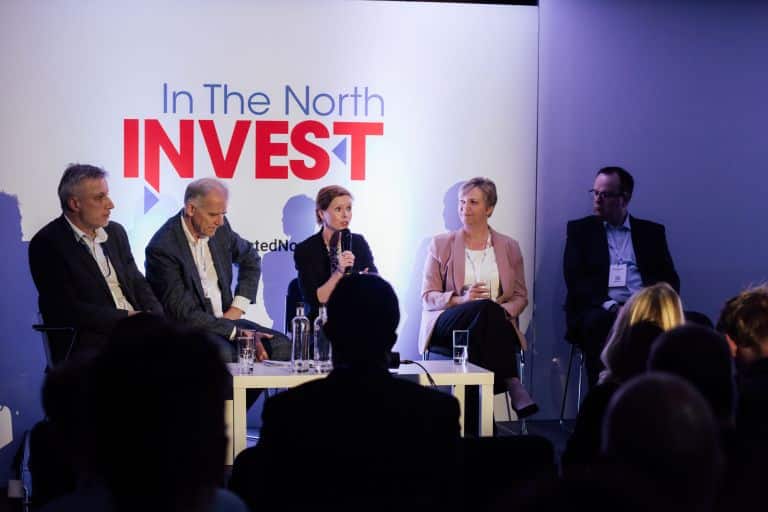
Manchester, UK – Connected North, the North’s Dedicated Digital Economy Event is returning to Manchester Central for its third year 

Hosted by telecoms media and events specialist Total Telecom, the event builds on the success of the Connected North’s debut in 2022, which saw over a thousand stakeholders meet to discuss the industry’s hottest topics in the region.  

This year, the event will see an incredible speaker lineup of over 200 industry experts and network with 2,500 attendees. 

Post pandemic, the North of the UK is at a turning point, with the attention both locally and nationally to build back better by affording equal opportunity for previously underserved areas. 

The push for better connectivity in the North of the UK continues, as part of the government’s pledge to make gigabit capable networks available for 85% of the UK by the end of 2025. 

However, upgrading digital infrastructure across the region is about more than just hitting government targets. It’s about improving lives for local communities, creating opportunities for local businesses, and increasing the region’s global competitiveness. The entire ecosystem across public and private sectors need to collaborate to make this happen. 

Across two action-packed days, the event will delve into six key themes covering topics such as Fibre & 5G delivery, rural connectivity, regulation and investment context and The Levelling Up Fund. 

Key speakers at this year’s event include:

  • Martyn Taylor, Chief Commercial Officer, BDUK  
  • Daren Baythorpe, Chief Executive Officer, ITS 
  • Georgia Grimes, Director of Fibre Build, Openreach   
  • Conal Henry, Chair of Fibrus 
  • Brian Potterill, Director of Mobile Network Strategy, Ofcom   
  • Eamonn Boylan Chief Executive Officer of Greater Manchester Combined Authority 
  • Dr Aileen Jones, Executive Director – Investment and Delivery, Liverpool City Region Combined Authority   
  • Sean Royce, Chief Executive Officer of Quickline 

“We’re delighted to be returning to Manchester for the third year of Connected North,” said Dominic Beresford-Webb, the event’s Senior Conference Producer. “The event really is an essential dedicated forum to spotlight the way connectivity can drive social and economic growth in the region,” he continued. 

For more information or to register to attend Connected North 2024, visit: https://www.terrapinn.com/conference/connected-north/index.stm  

_________________________________________________________________________________

About Total Telecom
Since 1997, Total Telecom has provided the connection between the buyers and sellers in the global telecom market. We do this through high quality editorial content and events to facilitate discussion on industry issues, and recognise innovation and excellence by companies and individuals.  

Our community of 120,000+ telecom professionals rely on Total Telecom for daily news and regular in-depth insight, delivered through a number of channels including online, video, social media, and at our series of events. 

Our award-winning event portfolio includes, Broadband Communities Summit, the World Communication Awards, Connected North, Connected Germany, and the UK’s largest connectivity event Connected Britain 

Recent U.S. advisory warns of threats to critical infrastructure posed by Chinese cyber group


News

A cybersecurity advisory issued last month warns that “state sponsored actors” from the People’s Republic of China are compromising and maintaining persistent access to critical infrastructure in the United States, and several other nations

This article was originally released by our sister publication Broadband Communities

A February warning from three American agencies assesses that the Chinese government is sponsoring attempts to “pre-position themselves on IT networks” to have assets in place in case there is a conflict with the United States.

The Cybersecurity and Infrastructure Security Agency (CISA), the National Security Agency (NSA), and the Federal Bureau of Investigation (FBI) released the Feb. 7 cybersecurity warning, which the advisory said was prompted by observations from U.S. agencies tasked with responding to incidents that compromised critical-infrastructure organizations.

The advisory claimed that a state-sponsored cyber group, known as Volt Typhoon, is preparing for “destructive cyberattacks against U.S. critical infrastructure in the event of a major crisis or conflict with the United States.”

According to the advisory, agencies that have “confirmed that Volt Typhoon has compromised the IT environments of multiple critical infrastructure organizations,” including the U.S. Department of Energy, the U.S. Environmental Protection Agency, the U.S. Transportation Security Administration, along with other government cybersecurity agencies from Australia, Canada, the U.K., and New Zealand.

“The U.S. authoring agencies have confirmed that Volt Typhoon has compromised the IT environments of multiple critical infrastructure organizations—primarily in communications, energy, transportation systems, and water and wastewater systems sectors—in the continental and non-continental United States and its territories, including Guam,” the advisory read.

The advisory stated that American agencies “are concerned about the potential for these actors to use their network access for disruptive effects in the event of potential geopolitical tensions and/or military conflicts.”

While the risk to Canada’s critical infrastructure may be lower, according to the advisory, the nation would likely still be affected due to cross-border integration should the critical infrastructure of the U.S. become disrupted. The assessment said risks are also present for critical infrastructure in Australia and New Zealand, which “could be vulnerable.”

According to the warning, Volt Typhoon relies on valid online accounts and leverages strong operational security, which can allow for the group to develop a long-term undiscovered persistence.

Volt Typhoon actors have maintained access within some victimized IT environments for lengthy periods of time that can sometimes last years, the advisory stated.

“Volt Typhoon actors conduct extensive pre-exploitation reconnaissance to learn about the target organization and its environment; tailor their tactics, techniques, and procedures to the victim’s environment; and dedicate ongoing resources to maintaining persistence and understanding the target environment over time, even after initial compromise.”

The advisory urged critical-infrastructure organizations to apply mitigations and hunt for malicious activity, which, if discovered, should be reported to a relevant agency.

Click here to read the full advisory about Volt Typhoon’s alleged activities.

Reach Broadband Communities Editor Brad Randall at brad.randall@totaltele.com

Also in the news:
BT wins £26m contract to connect UK schools
Apple fined €1.8bn by European Commission over Spotify row
Japan to reduce regulatory pressure on incumbent NTT 

Intelsat and Eutelsat sign $500m LEO partnership 


News

Intelsat have claimed that the announcement will put the company “at the forefront of the next wave in global connectivity”

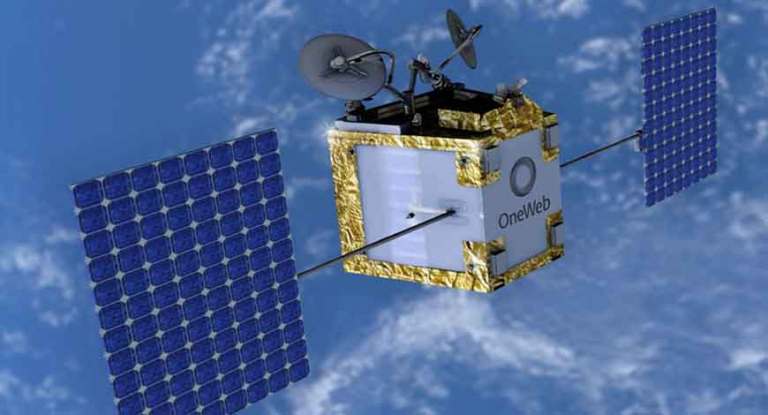
France-based Eutelsat Group and America’s Intelsat have partnered to invest $500 million to advance the OneWeb Low Earth Orbit (LEO) Constellation.  

The collaboration, which was announced this week, will in begin mid-2024 with a $250 million commitment, has an option of a further $250 million, the company said. 

Starting mid-2024, Intelsat will integrate OneWeb’s LEO Network with its existing GEO and terrestrial networks. This move is expected to deliver unmatched services to customers in networks, government, and mobility industries.  

Intelsat will cooperate with Eutelsat to develop its Next Generation OneWeb constellation, providing direct design and functionality input to help ensure that the new constellation will meet increasing customer needs. 

“Today’s announcement elevates that partnership to unprecedented heights, bolstering our capacity to offer cutting-edge multi-orbit services and solutions across our diverse portfolio of customers and business segments,” Dave Wajsgras, CEO of Intelsat in a press release. 

Eva Berneke, CEO of Eutelsat Group, highlighted the importance of the collaboration in a press release, saying, “This expanded collaboration with Intelsat underscores a resounding vote of confidence in the prowess of the OneWeb satellite constellation, both today and in the foreseeable future.” 

The Eutelsat Group was formed through the merger of Eutelsat and OneWeb in 2023, becoming the first fully integrated GEO-LEO satellite operator with a fleet of 35 GEO satellites and a LEO constellation of more than 600 satellites to cater to mobile connectivity needs across Europe, the Middle East, and the Pacific. 

As the partnership evolves, it promises to redefine satellite communication possibilities, offering unprecedented connectivity solutions worldwide. 

Keep up to date with the latest telecoms news by subscribing to the Total Telecom daily newsletter  

Also in the news:
BT wins £26m contract to connect UK schools
Apple fined €1.8bn by European Commission over Spotify row
Japan to reduce regulatory pressure on incumbent NTT 

Taking the temperature of the telco market with EY’s Adrian Baschnonga 


Insight 

At Mobile World Congress (MWC) in Barcelona last month, we caught up with Adrian Baschnonga, EY’s Global (Technology, Media and Telecom) TMT Lead Analyst, to get his insights into the top trends of this year’s event

Having covered the telco sector for a long time coming to his first MWC in 2001, Adrian highlights the importance of events like this to be able to “take the pulse” of the industry. 

One of Adrian’s key takeaways of the event this year is the importance of ecosystems and partnerships, “detecting in comparison to previous years, a lot more openness in terms of collaboration and companies willing to work with each other. 

But it never used to be like this. Why does he think this has changed?  

“Because these days, no single company has all the competencies that their customers need, so bringing someone else in is essential, particularly when it’s an enterprise customer and they are looking at buying different technologies,” he says. “For example, if you’re providing 5G or IoT to a business, customers might want AI or analytics as part of that, so partnering would mean providing multiple services more easily.”

Every year, EY conduct the “Reimagining Industry Futures Study”, which aims to find out what do businesses want from emerging technologies (such as IoT, 5G, AI, or edge computing etc), and importantly, what do they think of the providers of those technologies. 

It’s there to get an enterprise customer perspective. What they are finding, is that business are investing in these technologies, and how do they combine these technologies together to create value and provide an integrated service portfolio. 

 Last year, EY published a list of its top 10 predicted risks for 2024, and concerns around security and privacy came up top. The list was an amalgamation of all the research that Adrian does. What is coming out from this research, is that telcos are trusted when it comes to protecting data, but when it comes “newer” things such as AI, they are asking questions on issues like data ethics, and so the bar on telcos having to protect their network and cyber resilience is raised.  

“It’s a consequence of the fact there is lot of technology change, coupled with the fact that telcos have got a decent track record, but they are having to spend increasing amounts on research on dealing with potential cyber breaches, so data and security is top of the agenda at the moment. 

Regardless of whether or not AI can be regarded as “new”, it was one of the main hot topics at the event that everyone was talking about. Underneath the shiny PR, how can telcos utilise it to its full extent? 

Adrian spoke on how AI has been around for a while, but Generative AI is newer. What EY are finding, is that a lot of companies are trying to find a way to harness the latest version of AI (Gen AI) within their preexisting transformation frameworks, that already have a measure of AI in them already. “They want to take this baby step approach to adaption rather than radical adoption. This is the key thing in at the moment – how do they include these exciting new technologies into their business models in a phased and structured way?” 

“How do they bring AI into their network, to improve energy efficiency for example, or to automate customer interaction. And choosing which ones are easiest to adopt right now versus which require some more work?” he continued. 

Bringing the conversation closer to home, Adrian discussed the current economic climate in the UK, the cost-of-living crisis in the UK, and how this is impacting competitiveness amongst telcos. 

The current cost of living crisis in the UK asks questions about the pricing models that telcos have. Customers want to see more pricing predictability, (according to recent EY research, 80% of people). They want more fixed priced guarantees, in a market where prices typically increase year on year. 

So, there is scope for operators to be more flexible, and transparent in how they are communicating their price, in exact number and not percentages. It’s all about how they can align to changing customer expectations. 

Going forward, customers may look for flexibility, such as pay as you go models. But it will be up to service providers to bring simplicity to their customers – and get rid of the advertising asterisks!  

Keep up to date with the latest telecoms news by subscribing to the Total Telecom daily newsletter 

Also in the news:
BT wins £26m contract to connect UK schools
Apple fined €1.8bn by European Commission over Spotify row
Japan to reduce regulatory pressure on incumbent NTT

Hormuud launches 5G in Somalia

Hormuud Telecom launched 5G in key locations across Somalia with 4G customers receiving free upgrades to the next generation technology starting from today (March 21). 

Subscribers will see their connectivity upgrade to 5G at no extra cost in the following locations: Mogadishu, Kismayo, Galkayo and Baidoa, Dhusamareeb, Beledwayne, Afgoye, Merca and Dhobley. The operator noted its 5G coverage across these locations is up to 81%. 

Hormuud highlighted how the the faster speed and reliability will be a significant tool for subscirbers that rely on mobile money services for business and leisure. 

The 5G service will provide speeds of 10Gbps/100Gbps/200Gbps/400Gbps based on request per single wavelength with a total capacity of 0.96Tbps/9.6Tbps/19Tbps/38Tbps.

Hormuud will offer customers an unlimited data plan that costs US$20 per month which it claimed rivals the most affordable in Africa. Hormuud customers use on average 5GB monthly, which is up from 1-2 gigabytes two years ago.

The new technology will support deployment of IoT products that will upgrade Hormuud’s disaster management systems, enabling the platform to monitor environmental conditions in real time through sensors. 

Hormuud noted 70% of Somalia’s population has access to 4G connectivity following the operator’s 4G network deployment that began in 2015. The company is aiming for 88% coverage in urban areas and 70% in rural locations. 

Minister of Telecommunication for the Federal Government of Somalia, Jama Hassan Khalif, said: “As Somalia strides towards stability, the launch of 5G services by Hormuud Telecom emerges as a critical milestone. This initiative is more than just a technological advancement; it’s a symbol of our nation’s commitment to growth and constant improvement.

“Enhanced connectivity is pivotal for Somalia, underpinning the growth of a resilient economy and empowered citizens – it’s about giving every Somali, their family, and their business, access to the digital tools they need to thrive.”

Hormuud Telecom CEO Ahmed Yusuf added: “We aim to ensure that the benefits of 5G – faster internet, improved services across sectors such as healthcare, education, and agriculture – become accessible to all, fostering a future where everyone can benefit, in myriad ways, from this advanced technology.

“This initiative is about more than just connectivity; it’s about empowering our communities, stimulating progress, and paving the way for a thriving, digitally inclusive society. »   

MORE ARTICLES YOU MAY BE INTERESTED IN…

Nokia breaks the mould with mmWave for FWA

Fixed Wireless Access (FWA) is an attractive play for many operators, and Nokia believes its potential can be further enhanced with the arrival of 5G FWA solutions using higher millimeter wave (mmWave) spectrum.

5G mid-band FWA already supports a number of different deployment scenarios. Fixed broadband operators are using it to complement fiber deployments, plugging coverage gaps and quickly building out their footprint to increase market share. Mobile operators are taking advantage of its fast time-to-market and low start-up costs to compete with fixed-fiber services.

Like all technologies, FWA comes with its challenges. In a recent operator study, Nokia found that mid-band FWA deployments are leaving 19 per cent of subscribers with low signal levels, resulting in wasted network capacity. Around 29 per cent of capacity in such cases could have been restored to the operator just by having the CPE device correctly positioned, either indoors or using an outdoors device, for optimal performance. Using outdoor antennas rather than indoor CPE at the cell edge could achieve a 62 per cent gain in network capacity, says the company.

As FWA users consume around 20 times more data than mobile uses, managing capacity is a key consideration in FWA deployments, to ensure neither FWA nor mobile services are compromised, and to protect an operator’s valuable investment in spectrum. Conserving radio resources from the start is far more efficient than later investments to upgrade the network or change devices to regain that lost capacity.

Employing 5G mmWave FWA at and above 24 GHz, with its resulting benefits in capacity and performance, is becoming increasingly attractive for operators, says Nokia.  

mmWave has already been successful at delivering wireless capacity in hot zones and high-traffic urban environments where limited range and signal attenuation don’t present a significant problem. This signal attenuation has led to a long-standing belief that mmWave is only for urban areas and it can’t really be used in other scenarios.

Not so, says Nokia. By advocating the deployment of mmWave as a capacity overlay to mid-band spectrum, Nokia says it can add much needed capacity for FWA subscribers that are within mmWave range from the base station, while freeing up the mid-bands for mobile broadband and more distant FWA subscribers. The operator study mentioned earlier found that 50 per cent of suburban FWA subscribers would be able to connect to and benefit from a mmWave capacity overlay.

Nokia is busting the myths around FWA mmWave with their advances in antenna technology and device intelligence. These advances mean that mmWave FWA can be deployed in non-line-of-sight locations (NLOS) and over far greater distances, says Nokia. The company has announced a new outdoor mmWave device, the FastMile 5Gmm Receiver that does exactly this. A 27dBi gain antenna overcomes propagation loss and weak signals. It also scans the environment in 360 degrees, using advanced analytics to create a fingerprint of the radio environment, and directing itself to the best signal that it receives. This means it can connect to signals from any direction, whether they are direct or reflected.

So, if something comes along that blocks the signal, such as a tree growing, the antenna can find another signal path including reflections, and continue to connect. This dispels another myth, says Nokia: that mmWave FWA doesn’t work in non-LoS conditions.

However, when LoS isn’t an issue, mmWave has another very attractive use case. In Australia, nbn is deploying Nokia’s mmWave technology in rural areas and achieving broadband speeds up to 1 Gb/s over a 7km range. Nokia has shown that its FastMile FWA technology can drive mmWave signals out over 12km. This makes FWA a compelling choice where the economics of deploying fiber broadband don’t make sense.

Ensuring a brilliant end-user experience is a key concern for Nokia. Network planning tools enable operators to look at radio capacity and cell site locations to know where to market their FWA services. The same data is then used at point of sales to validate the service levels for every new subscriber. An intelligent mobile application then guides the end-user or a technician to install their FWA CPE in the best position to maximize broadband performance and optimize capacity usage of the radio network.

Nokia FWA devices also enable operators to drive new revenues beyond connectivity. The Corteca software within Nokia devices uses application container technology so that enhanced features, such as cyber security or low-latency performance for gaming, can be downloaded to the FWA CPE and sold to subscribers as add-on services that increase ARPU.

When thinking about deploying FWA to connect homes and business, the mid-bands are still going to be the first choice for operators in most scenarios, says Nokia. But as FWA deployments continue to accelerate – industry experts expect 250 million FWA subscribers by 2028 – mmWave FWA is becoming a vital tool for preserving capacity and maintaining service levels. It will also prove valuable in helping operators meet their regulatory service coverage commitments and as a tactical deployment tool where fiber can’t be deployed, as nbn is demonstrating with its rural FWA service.

Nor will an mmWave FWA solution of the kind being deployed by nbn work for everyone, and it probably won’t be widely repeated. The need for a long-distance rural application meant that nbn had a specific network that they built for rural connectivity using 4G, and which was upgraded to mmWave. They had that total LoS environment, and in that kind of scenario it can be economic.

So even though deployment scenarios for mmWave over FWA may be very specific, Nokia is showing that this is a much more useful tool than everybody thinks.

Click here to know more about Nokia’s 5G mmWave FWA solution.

MORE ARTICLES YOU MAY BE INTERESTED IN…

Africell taps Perception to launch OTT mobile TV in Angola

Keep up-to-date with all the latest news, articles, event and product updates posted on Developing Telecoms.
Subscribe to our FREE weekly email newsletters for the latest telecom info in developing and emerging markets globally.

Sending occasional e-mail from 3rd parties about industry white papers, online and live events relevant to subscribers helps us fund this website and free weekly newsletter. We never sell your personal data. Click here to view our privacy policy.

Belgian cable operator Telenet to enter EV market 


News

The move will begin on 1st April this year 

Belgian cable operator Telenet, which is wholly owned by Liberty Global, has announced that it will enter into the energy market in April as it launches its new service “Blossom”, which will be used for the installation and running of at home charging stations for electric cars. 

Blossom will be spun out as separate company under the Telenet group, which will initially focus on focus on installing and activating smart charging stations for the employees of companies, with private customers coming later. 

According to Telenet, there will be 1.7 million electric vehicles on the road in Belgium by 2030 with 65% of vehicle charging done at home. The estimate that 800,000 home charging stations will be installed by the end of the decade, but currently, say Telenet, the user experience is not adequate. 

The ambition behind the project is clear. According to a press release, Telenet aims for Blossom to “to become an ally to customers in the energy transition by providing innovative and simple home solutions. Specifically, Blossom will start offering a service to smartly charge electric vehicles at home. Initially, the focus will lie on the corporate market. In a later phase, Blossom will also offer charging services directly to self-employed workers and private customers.” 

Blossom will partner with Scoptvision, Optimile, and Unit-T, amongst others, to launch the company. 

“By placing renewed emphasis on the ongoing digitization of our society, as well as the rapid electrification of our mobility, we can optimize both the installation and management of home charging stations through a unique digital platform,” said Telenet CEO John Porter. “This way, we can simplify the lives of both employees and employers and create a win-win for both parties,” he continued. 

Parent company Liberty Global launched a similar service in the UK in 2022 with a venture called “Egg”. The service will, amongst other things, provide subscription-based electric vehicle charging. The subscription model had not been available in the UK before, and Liberty Global say “customers benefit from ongoing maintenance and technical support, all included in a monthly £30 fee and without any up-front fees”. 

This is a great example of a company in the broadband and telco industry going beyond their usual connectivity realm – and is the type of thing we’re looking for to win “The Beyond Connectivity” award at this year’s World Communication Awards – held in London this December.  

The winner of this award will have developed a product or service that moves beyond the traditional connectivity-based offerings, into new business areas or new market segments – enter now! 

Also in the news:
BT wins £26m contract to connect UK schools
Apple fined €1.8bn by European Commission over Spotify row
Japan to reduce regulatory pressure on incumbent NTT