End User Signup And Its Importance In The Business World

Getting more leads is one of the key stepping stones in business growth, boosting reach and allowing for more opportunities to present themselves as the brand’s network of influence grows.

But getting leads is not always easy, and getting successful conversions to end users out of those leads even less so.

Thankfully, strategies around lead generation and conversion are constantly evolving into more successful forms.

So, let us delve into the world of leads and end users, how they affect businesses and how we here at Bicom Systems are tackling the ever prevalent issue of successful lead generation.

Before we get into the subject matter, we need to understand what the terms we are looking into are. Leads, for one, count as any form of interest or interaction an individual party displays in what a business is offering. They are a step away from a future customer, but not quite there yet.This is everyone who visits the business’ site or signs up for a newsletter, downloads their content or leaves a way for the business to get back to them in any way, be it through contact number, email address or otherwise.

It encompasses everyone who buys and uses a product or service offered by a business. “End user” can refer to an individual, a group, or another business altogether. It is their experience and input that businesses focus on and adapt their product around as their satisfaction leads to greater customer retention and potential tools for lead conversion strategy updates.

With that out of the way, we move onward to lead generation. Leads, as mentioned prior, are useful tools that help expand a businesses reach, help get the word out about upcoming news relating to said business, potentially leading to further business growth.

However, not all leads are useful which is why lead quality is often prized over lead quantity and why conversion ratios are the main indicator rather than the number of leads generated.

Anyone can throw insurmountable amounts of money into marketing campaigns and get a large amount of leads, but if they are not going after their target audience and are instead casting a wide net, chances are that the costs will far outweigh their potential gains, which leads us to the first important aspect of a successful lead generation strategy, scope.

Scope

Before you start developing a lead generation strategy, doing market research is key as it will help you determine your target audience and allow you to establish a better frame of what groups of people to shape the strategy around.

Once you have that sorted, it is time to get started with said strategy.

Creating An Appealing Landing Page

Most leads that enter your website are likely not going to stick around for long if your landing page is not appealing to them.

A successful landing page is kept clean and simple with an intuitive design that will not leave leads confused but will instead intrigue them into exploring further.

SEO Friendliness And Site Crawlability

Aspects important to you, Google, and your potential leads.

If a site is SEO friendly, it often means that it contains quality content that users will want to read, created in a way that pleases search engine algorithms and ranks them based on information reliability.

The more SEO friendly your website is, the better its rank will be on browser searches which will naturally lead to greater visibility and, summarily, greater lead generation.

The same is true for site crawlability which determines how easy your site is to navigate.

If it is neatly interconnected and every part of it can be reached within a few clicks, it will be more appealing and will affect ranking authority, once again leading to more potential leads and less lead frustration due to site navigation issues.

Opt-in Opportunities

The core of lead generation is creating opportunities where potential leads can opt into a product or service. This takes the form of offers of free brochures, booklets, PDFs, product demos and the like, a sample that showcases what the product or service can do for them at its core and what awaits them should they choose to make the next step and become an end user, all for the low-low price of their contact info that can be used for future marketing opportunities and lead conversion strategies.

These need to be plain to see and, most often, in the lead’s face to be noticed.

Whether it is in the middle of a post on the website or a pop-up that shows when the lead’s mouse leaves the main screen, it does not matter, as long as it is made hard to ignore.

Sure, that can be considered obnoxious and aggressive, and it is, but otherwise it would be ignored.

Forcing the decision on the potential customer helps generate that lead and potential future conversion to an end user.

Advertising Through Relevant Channels

Your page is not the only method of lead generation as you also have the means of redirecting traffic your way through advertising.

This can be done in a number of ways, but the most common and most effective ones revolve through paid ad campaigns through Google or social media coverage, once again aimed at specific groups that your market research has determined so you do not bleed your budget dry for bad leads.

This is what is known as inorganic traffic as it comes through paid sources, but it is valuable all the same.

Another alternative which is deemed successful is advertising over various conventions and expos where your audience tends to frequent and that covers the area in which your business operates.

Deploying Multiple Strategies And Adapting

Lead generation strategies may be successful from the get-go, but they can always be refined. Some may even end up working at one point, but failing at another.

That is why testing multiple strategies at a time is the key to finding what works best for your business.

Small tweaks in CTA buttons, different fonts and colors to whole new opt-in opportunities and methods of addressing leads are all possible tweaks that may just make the difference.

They may appear small at first glance, but they can have a significant impact on conversion rates, to the point where businesses deem it worth the investment to constantly do this testing until a successful strategy can be zeroed in on.

Once you have your lead generation strategy nailed down, the next step is lead conversion.

While the lead generation strategy is already being optimized to convert as many leads as possible, more can always be done after the initial process:

• Following up on newly converted leads to retain them

• Further refining lead generation strategies by further focus on the best performing market areas

• Incorporating positive testimonials on your landing page as proof of product quality from outside sources

• …and more

It is hard to pin down exact effective lead conversion strategies into such a small space as things that work for one marketing campaign may not work for another.

It is all trial and error, and that is what pays off in the end.

End user signup by Bicom Systems

Now, lead generation and later conversion to end users can be a very resource intensive process and finding ways to free some of them up either through automation, process modernization or other means so that they can be allocated elsewhere is always at the forefront of any business.

That is why we have been developing a more modern take on end user signups, the End User Signup Wizard.

It is envisioned as a module for the PBXware Service Provider edition, but will have the option to be seamlessly implemented into existing websites and will have an open API to allow for the creation of a custom end user signup wizard solution that caters more to your ideal specifications.

Its goal is to compound demo distribution together with lead generation and automate it while allowing our partners an easy way to integrate it into their sites, reducing development time on their end as we provide them with the tools necessary to either utilize our ready-made solution, or customize it to better fit their needs.

 It retains the basic functionality of a standard signup form, requesting the name, email address, company name and country from the requested lead for better lead tracking and guides the lead through the process of account creation, finishing up on a referral process should the lead desire to invite others to try the product out.

Said referral process will automatically send out an email to everyone added to the referral list by the lead using the end user signup wizard.

The product that they receive at the end of the process is a free variant of the white label version of gloCOM, Communicator, providing the users with its core functionalities with some limitations like only being able to generate 20 extensions as a free user or time limitations on meetings, but none that would severely hamper the apps functionality.

The free plan will further prompt users to upgrade should they want to experience the full capabilities of the Bicom product suite if they were satisfied with their demonstration through the free version. 

We have plans for further enhancements to the wizard, but we will wait for deployment until initial feedback is received, but the core goal is to make our lives and the lives of our partners’ easier by providing a ready-made, but customizable solution for user signups and lead generation and conversion.

Lead generation, conversion to end users, customer retention and so on, all of it plays a vital role in business success and growth, both for us, our partners, and every business out there.

That is why we were hard at work to find a way in which we could enable an easier approach to these processes for our partners, both present and future ones.

We offer a partner-centric approach which is why we do not plan to stop with the benefits here.

Our teams are always looking into ways to make working with us as frictionless as possible and we hope that that reflects through our actions as many of our existing partners can attest to.

Know that you are always safe in our hands, so feel free to contact us if you are curious. Our teams are eager to hear from you.
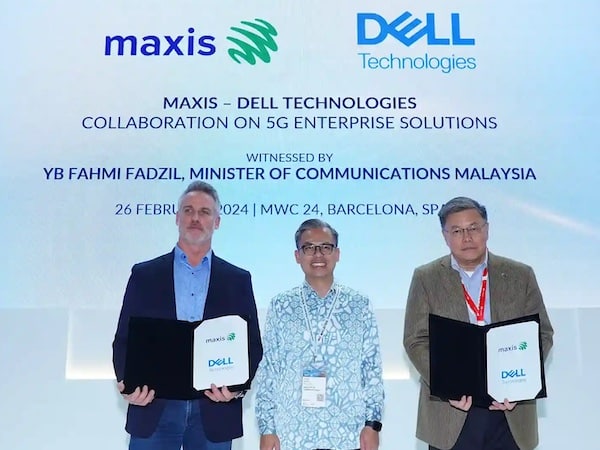

Maxis and Dell to collaborate on 5G-powered cybersecurity

Keep up-to-date with all the latest news, articles, event and product updates posted on Developing Telecoms.
Subscribe to our FREE weekly email newsletters for the latest telecom info in developing and emerging markets globally.

Sending occasional e-mail from 3rd parties about industry white papers, online and live events relevant to subscribers helps us fund this website and free weekly newsletter. We never sell your personal data. Click here to view our privacy policy.

Connected America puts industry challenges under the spotlight in Texas


News

This year’s Connected America event has kicked off in Texas

The second annual Connected America event is underway at the Irving Convention Center in Texas, bringing together leaders from the telecommunications field and public-sector leaders, along with non-profits, suppliers, providers, and manufacturing leaders.

Jose Ortero, the vice president of 5G Americas, began the event with a keynote speech and reminded attendees that the country is “less than five (or) six years away from 6G.”

“One of our main commitments as an industry is to explain to the government the need that we have (with) spectrum,” Ortero said, and added that the United States needs to do more when it comes to providing mid-band spectrum.

Ortero was then joined by a panel to discuss the American mobile landscape. The panel included Karmen Rajamani, the vice president of government affairs at the Wireless Infrastructure Association, Amanda Toman, the director of the innovation fund at the National Telecommunications and Information Administration, and Yigal Elbaz, a senior vice president and network CTO at AT&T.

During the panel, Toman laid out a roadmap to the remaining $1.3 billion that her agency is set to award to advance broadband builds across the United States.

“We’re going to have additional opportunities, two additional opportunities this calendar year, for industry to submit for funding opportunities to enhance the supply chain,” she said, and added that one funding chance would be focused on specific hardware, and the other would focus on software that can increase efficiencies.

“We hope that we get a lot of interest from industry players,” she said.

Connected America, an event that’s part of the Total Telecom portfolio, will continue until Wednesdays, March 13, when the event concludes after dozens of panel discussions that will focus on topics like middle-mile fiber builds, tribal connectivity, sustainability, what comes next after the potential lapse of the Affordable Connectivity Program, along with much more.

The event expects to bring together thousands of attendees, scores of exhibitors, and hundreds of organizations.

Those not at the event can track news and updates about Connected America by following the hashtag #ConnectedAmerica.

This article was originally published by Brad Randall (brad.randall@totaltele.com) on Total Telecom’s sister website, Broadband Communities.

Keep up with all the action on social media with #ConnectedAmerica

Also in the news:
BT wins £26m contract to connect UK schools
Apple fined €1.8bn by European Commission over Spotify row
Japan to reduce regulatory pressure on incumbent NTT

Leveraging AI And Vector Embeddings For Advanced Search Capabilities

With AI technology becoming more prevalent in the business industry, everyone is trying to find ways to apply it to their industry in order to develop new features or to build upon and improve existing ones.

One feature of particular note is vector embedding, a method of converting existing forms of data like images or words into their numerical equivalents without having them lose their initial ties and meaning.

But how can this be applied to help businesses? That is what we are here to find out.

Vector embedding, as mentioned above, is a way to turn existing data into vectors that AI technology can process better in order to produce better and more accurate results and to gain the ability of providing an answer through “context clues”, in a sense.

This allows users to search for queries that are loosely tied around their input, perform comparisons between two examples and even create whole knowledge bases that can later serve as a basis for training new AI models on.

Its current use is that of an essential tool often found in search engines that offer image searching as an example, but have a more widely applicable use for enabling AI models to better understand the data that they are being trained on.

Our product offer, in particular, is quite robust, with a lot of features behind it that may leave some people overwhelmed when trying to take it all in, especially for new users who may have a hard time navigating our documentation and general knowledge base.

That is why our teams are hard at work trying to apply the vector embedding method and shaping it into a versatile search feature that can help people find what they need from different databases, be it our documentation, gloCOM chat history or similar, all done through the help of a customer-safe AI model.

We are currently looking into open-source AI models that can provide a desirable level of result quality without putting too much strain on resources while respecting customer data privacy.

In time, this process should allow us to build up a rich and detailed knowledge base of our entire product suite which should enable our users to find what they need a lot easier.

This may sound complex, but the method of implementation can be visualized through a few simple steps:

1. Data Retrieval: Fetching the relevant data.

2. Data Preprocessing: Chunking the data.

3. AI Model Integration: Utilizing an AI model for vector embedding.

4. Vectorization: Transforming data into vectors.

5. Vector Database Integration: Storing the vectors in a dedicated database.

The search process is even more intuitive, only utilizing 3 steps:

1. User Query: Inputting a search query

2. Vector Database Query: Retrieving results from the vector database based on number of matching vectors

3. Result Penetration: Displaying results ordered by vector similarity

The concept itself is great enough and should help reduce the tedium of trying to find a specific feature through screenshots and semantic clues and we wish for this to have a wider application for all users of the Bicom Systems product suite.

That wish, however, does come with a few challenges considering the robust clientele that our partners handle, especially ones that hold privacy to a very high degree like hospitals, banks, law enforcement agencies and more.

They cannot exactly feed confidential information to this database without breaching some rather heavy laws, a hurdle that one of OpenAIs base vector embedding models faces.

We, however, believe that we have managed to avoid this hurdle by providing a tool with a similar function, but one that can be set up in a way where it works with custom sets of privacy rules that these institutions have to follow, making it a more favorable solution in the open market.

The technology behind vector embedding feels like it has a lot of untapped potential waiting to be discovered and utilized to further improve business workflow in different aspects.

As we devised this technology through the use of existing open source sentence transformers from SBERT in an offline setting, we had uncovered a few potential use cases later down the line as well as received a surprising compatibility on our AI model with multiple languages without lowering search result quality too drastically.

• Further search optimization and refinement

• Utilizing other open source models in an offline setting to enhance result quality and feed  the knowledge base further

• Using existing and future research to construct an offline vector embedding model of our own.

• Applying the gathered knowledge and tools to repurpose the AI as an advanced search engine within gloCOM for optimal results.

Though, currently we do not have a particular focus on which of these to pursue further without delving into more research, we do have a few ideas in mind and are waiting on partner input before making our decision on how best to tackle this monumental task.

If this has piqued your interest or if you would simply like to be part of these conversations, feel free to give us a call if you have any inquiries. Our teams will gladly answer any of your questions.

DoT unveils sandbox, test zones and classes for 5G/6G use cases

India’s Department of Telecommunications (DoT) revealed key initiatives on Monday to boost local development of 5G and 6G use cases, as well as a skilled workforce to support it.

According to ETTelecom, the DoT revealed its Spectrum Regulatory Sandbox (SRS) and Wireless Test Zones (WiTe Zones) to streamline testing and experimentation of domestically produced wireless solutions.

The SRS is expected to encourage start-ups and SMEs to develop use cases for 5G and 6G technologies, as well as help telcos and solutions providers test gear for any technical problems.

The move fulfils a provision in the Telecommunications Act, 2023 to introduce regulatory sandboxes for testing new communications technologies and driving innovation, particularly for 5G and 6G technologies, the report said.

Speaking at the opening of the India Mobile Congress 2024 and the World Telecommunication Standardisation Assembly 2024, Union telecom and IT minister Ashwini Vaishnaw said the SRS will provide “very easy portal-based permissions” via the centralised Saral Sanchar Portal to expedite applications.

Vaishnaw also said that the WiTe Zones allow experimentation in unassigned and assigned spectrum bands.

The report added that the DoT has also abolished the Wireless Operating License (WOL) requirement for licensees under the Indian Telegraph Act, 1885, which means sandbox participants won’t need to acquire a WOL before they start experimenting.

The unveiling of the SRS and WiTe Zones came the same day that the DoT and Ericsson announced that they will collaborate to give India’s academic 5G labs access to the Ericsson Educate platform’s 5G courses.

The DoT has set up 100 5G use case labs within 100 institutes across India with the objective to build competencies and engagement in 5G technologies for students and startup communities. Under an MoU signed by both parties on Monday, Ericsson will open its Ericsson Educate platform to 10,000 students from these institutes and provide access to learning material on key technologies.

Subjects covered as part of the programme at an introductory level include Automation, Telecommunications, AI, IoT, 5G and Machine Learning.

“I am confident that the 5G Labs that we have set up in institutes will help us create new 5G use cases for the country,” Vaishnaw, said. “We are delighted to partner with Ericsson to build competencies in emerging and new technologies and prepare the students to be 5G-ready.”

Nitin Bansal, MD for Ericsson India, said the collaboration is a “significant step” towards developing a 5G ready workforce in India.

“Access to 5G technology related courses will enable these students to develop use cases that can address the local needs of the country, help enhance productivity and accelerate the country’s digitalization efforts,” he said.

MORE ARTICLES YOU MAY BE INTERESTED IN…

Canadian pension fund to take slice of TIM’s NetCo


News

The Canada Pension Plan Investments Board (CPP) will invest $2 billion for a 17.5% stake in the newly spun-off business

On Friday, the CPP announced that they would be the latest company to invest in the highly prized fixed network assets of Italian incumbent operator TIM.

The pension fund will invest roughly $2 billion for a 17.5% stake in the business, with the deal giving NetCo an enterprise value of $27.5 billion.

The deal sees CPP join a growing number of investors in TIM’s spun-off fixed networks unit, which includes all of the company’s fibre network assets but excludes the company’s submarine cable unit, Sparkle.

TIM announced plans to separate the unit last year as part of a new strategy under CEO Pietro Labriola seeking to better monetise the company’s assets. The announcement quickly drew interest from numrous major players, most notably US investment firm KKR, who would go on to to acquire the whole of NetCo for €18.8 billion at the end of last year.

Since then, various additional players have joined the growing consortium, including a wholly owned subsidiary of the Abu Dhabi Investment Authority, the Italian infrastructure fund F2i and the Italian Ministry of Economy and Finance.

For CPP, the stake represents the first step of their infrastructure investment strategy in Italy.

“Our investment alongside these key partners with a shared long-term vision will help deliver high-quality digital infrastructure across Italy as well as generating long-term risk-adjusted returns for the fund,” said James Bryce, a managing director and global head of infrastructure at CPP Investments. “We are optimistic that NetCo can represent the first of several infrastructure investments in Italy for CPP Investments.”

The deal is expected to close in the summer, subject to typical regulatory clearances.

Keep up to date with the latest international telecoms news by subscribing to the Total Telecom daily newsletter 

Also in the news:
BT wins £26m contract to connect UK schools
Apple fined €1.8bn by European Commission over Spotify row
Japan to reduce regulatory pressure on incumbent NTT

Edotco and Huawei to deploy fiberglass tower in Bangladesh

Tower company  Edotco Bangladesh revealed on Thursday that it signed an MoU with Huawei Technologies (Bangladesh) to collaborate on deploying a telecoms tower in Bangladesh made of fiberglass reinforced plastics (FRP).

Under the MoU, Edotco Bangladesh said it will become the first TowerCo in the country to offer its fiberglass tower solutions to mobile network operators, with Huawei serving as technology partner to help deploy the tower.

FRP is a composite material consisting of a polymer matrix reinforced with fibers. The fibers – which can be made from materials such as glass, carbon, aramid or basalt – provide the strength and stiffness to the composite material.

According to Edotco, using FRP materials reduces tower weight up to 44%, making such towers suitable for rooftop sites in high-density areas. This also makes them easy to install and transport, which will increase construction efficiency up to 75%.

The company also said FRP towers are engineered not to reflect radio waves, ensuring efficient microwave transmission, while their durability allows them to withstand high voltage without damage. The towers also promise low CO2 emissions.

Sunil Issac, country managing director of Edotco Bangladesh, said FRP towers will help drive innovation in Bangladesh’s evolving tower industry landscape.

“We are dedicated to shape the future of this industry and continue to enable connected Bangladesh with advanced sustainable practices in line with SDGs,” he said.

Huyue, chief operating officer for Huawei Technologies (Bangladesh), said the partnership “enhances site facility availability and is set to bring positive change in the tower infrastructure industry.”

MORE ARTICLES YOU MAY BE INTERESTED IN…

Deutsche Telekom signs first GenAI business customer 


News 

The generative AI platform was originally developed for the use of Deutsche Telekom employees, but after successful trials, was added to its external portfolio 

Deutsche Telekom has this week signed up UKA Group, a manufacturer and operator of renewable energy farms, as the first customer for its new Business GPT generative AI platform. 

Deutsche Telekom explained that by using their generative AI tool, companies can increase efficiency and productivity in their workforces, through reducing the effort expended for repetitive tasks and speeding up their workflows.  

The solution is tested for IT security and data protection and hosted on Telekom’s cloud environments, with the client company able to integrate their own internal documentation. 

Though the press release was relatively vague in explaining Business GPT’s specific uses for UKA, explaining only that “the multilingual tool is particularly useful for efficient research and information procurement in day-to-day work as well as content creation.” 

Business GPT was originally developed for the German operator’s own employees and how since been adapted for enterprise us.  

In future, “it will be possible to connect company applications directly via programming interfaces.” 

“Business GPT makes us absolute pioneers. With this tool, we enable our employees worldwide to test use cases for AI language models in a secure environment and use them profitably. That’s what I call real innovation!” says Christian Schmidt, Head of IT and Digital at UKA in a press release. 

Catch Deutsche Telekom at next year’s Connected Germany – get your tickets now!

Also in the news:
BT wins £26m contract to connect UK schools
Apple fined €1.8bn by European Commission over Spotify row
Japan to reduce regulatory pressure on incumbent NTT