Indian smartphone market rebounds

The Indian smartphone market rebounded 20% year-on year in Q4 to 38.9 million units on the back of strong festive season demand, with growth predicted on the back of affordable 5G devices in 2024. 

Analysts company Canalys stated, Samsung was the highest shipper and maintained its leading position with 20% market share and shipments of around 7.6 million units. Chinese vendors dominated the rest of the top five, as Xiaomi claimed second with 7.2 million units, while vivo took third with 7 million units. 

Taking fourth place was realme with 4.5 million units and finally Oppo with 3.7 million. 

For the whole of 2023, the Indian smartphone market maintained stability with 148.6 million units, a drop of only 2%. Canlays noted the market showed resilience due to improved consumer confidence in the later part of 2023, despite inventory challenges for vendors, minimal inflation improvements and unpredictable demand.

Canalys senior analyst Sanyam Chaurasia noted increased investment in mainline retail space proving beneficial for vendors and enabled market stabilisation. 

“The premium segment witnessed robust growth, thanks to easy financing options, incentive schemes for retailers and rising disposable income,” said Chaurasia. “With the celebration of Diwali in November 2023, Apple got the opportunity to push the latest iPhone 15 series during the festive sales, contributing more than 50% to its shipments in Q4. Additionally, discounts on the previous-generation iPhone 14 and iPhone 13 models during online sales resulted in Apple’s record shipments, allowing it to capture 7% market share in India. 

“Similarly, Samsung had set aggressive retail targets for its premium Galaxy S23 series to drive premium segment growth. Along with this, Samsung’s latest Galaxy S23 FE launch in Q4 drove shipments, thanks to compelling banking deals.” 

“Vendors are entering 2024’s ‘Election Year’ with improved indicators for the consumer market with manageable inflation, a steady interest rate and clear visibility of a stable government to come into power,” said Chaurasia. 

“Canalys expects the Indian smartphone market to grow by mid-single digits in 2024, driven by affordable 5G and the pandemic period replacement cycle. But the biggest challenge for vendors this year will be to manage the rising bill of materials costs.” 

MORE ARTICLES YOU MAY BE INTERESTED IN…

Telstra upgrades network for LATAM

Australia-based operator Telstra extended its network capabilities in Latin America by establishing a dedicated point-of-presence (PoP) in Dallas, Texas and collaborating with Mexican operators Axtel and Vivaro, in its pursuit of growth. 

In a statement, the company detailed that its subsidiary Telstra International will carry out the project, and that its initial focus will be on Mexico as the new “strategic” PoP will be a “critical gateway” for internet and IP traffic from the region. It enables global enterprises and wholesalers including in LATAM, to be able to easily integrate into Telstra’s network and enhance their reach. 

Mexican multinationals aiming to connect to other regions and plug into the network to reach Asia-Pacific, Europe and other continents can do so through the same PoP. 

Telegeography estimated that on average 84% of internet traffic to and from LATAM currently goes through the US and Canada. Data traffic is expected to grow as international bandwidth increases in LATAM and massive bandwidth markets continue to rely on the US to be the gateway to reach markets on other continents. 

“We’re focused on Latin America as a key growth market as we expect to see increased demand for connectivity from enterprises, hyperscalers and wholesale customers between APAC and the region driven by a technology boom and growing economies. 

“Our official expansion and continued investments in digital infrastructure position us well to offer customers simple and secure options to connect to this dynamic region and leverage our global network,” said Telstra International CEO Roary Stasko.

“Looking ahead, Telstra International will continue to innovate on our network infrastructure through additional PoPs and collaborate with our industry partners to provide critical connectivity and capacity to more Latin American countries such as Brazil, Chile, Argentina and Colombia.”

MORE ARTICLES YOU MAY BE INTERESTED IN…

Running IoT Through the Skies

Running IoT Through the Skies

This Industry Viewpoint was authored by Dana Cohen Mizrahi, Product Marketing Manager at Sony Semiconductor Israel

Non-terrestrial network (NTN) connectivity is making its way into IoT chipsets, enabling connected devices and installations to be deployed anywhere. Some devices are being outfitted with stand-alone chips that can only connect to satellites, while others are using hybrid chipsets that support both terrestrial and non-terrestrial connectivity. … [visit site to read more]

Foxconn and HCL plan semiconductor venture in India

Keep up-to-date with all the latest news, articles, event and product updates posted on Developing Telecoms.
Subscribe to our FREE weekly email newsletters for the latest telecom info in developing and emerging markets globally.

Sending occasional e-mail from 3rd parties about industry white papers, online and live events relevant to subscribers helps us fund this website and free weekly newsletter. We never sell your personal data. Click here to view our privacy policy.

Manchester named the UK’s most digitally inclusive city 


News 

A study undertaken by Bionic, a UK-based broadband comparison company, has revealed that Manchester is the UK’s most digitally inclusive city 

After discovering that 1 in 5 UK adults lack the most basic digital skills needed for everyday life, and a shocking 1 in 2 households in the UK have no internet access at all, Bionic dug deeper into how UK cities compared when it came to digital inclusion.  

In the study, the number of digital inclusion services in each city were examined, taking into account their population and size. Manchester topped the list, having 193 digital inclusion services for a population of 586,100. This was followed by Coventry, with 61 services for 345,300 people, and Bangor took third place with 5 services for 31,765 people.  

Although they have a significant number of digital inclusion services, London failed to make it to the top 20 as it had less services per person.  

On the on the other end of the scale, the town of Armagh in Northern Ireland topped the list for the worst digital inclusion support, no services for its 63,874 residents. This was followed by Ely and St Davids, both of which also had no services, despite having a great population.  

“Our study highlights the pivotal role of digital inclusion support in building a more connected society,” said Les Roberts, connectivity expert at Bionic. 

“The fact that Manchester, Coventry, and Bangor have all emerged as the top three cities for digital inclusion in the UK is undoubtedly thanks to the hard work of local charities and organisations in their areas, showcasing their commitment to bridging the digital divide,” he continued. 

Roberts emphasised that whilst it is encouraging to see progress in areas outside of London, the study highlights the need for digital inclusivity to be extended to every corner of the UK. 

Total Telecom runs Connected North, which brings together over 200 expert speakers and 2500 to the North’s dedicated digital economy event in Manchester. Join us in April– book your tickets here! 

Also in the news:
South Korean president backs semiconductor mega cluster investment
Malaysia to launch second 5G network alongside DNB
BT signs connectivity deal with Iraqi gas firm

Nokia doubles down in Germany with €360 million investment  


News 

The investment is part of the company’s long-term goal to strengthen Europe’s value chain 

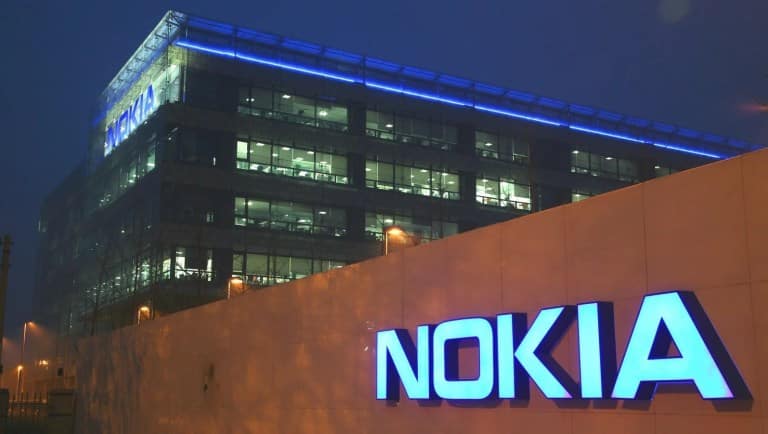
Nokia has announced that it will invest €360 million in the development of hardware, software, and chip design at its German sites in Ulm and Nuremberg. 

The investment is part of a four-year European IPCEI (Important Projects of Common European Interest) project, which is also supported by the German Federal Ministry of Economics and Climate Protection (BMWK) and the German states of Baden-Württemberg and Bavaria. 

Nokia says the investment will help strengthen the integrated development of software, hardware, and chips, all of which will be used in radio and optical products in future mobile communications systems based on 5G Advanced and 6G standards. 

It is hoped that the project will strengthen both Germany and Europe’s global positions in the fields of microelectronics, particularly in terms of emerging technologies like 6G and AI. 

“This important funding will support our efforts to advance the telecommunications industry in Germany and in Europe, helping to drive innovation and strengthen competitiveness,” said Nokia’s President of Mobile Networks, Tommi Uitto in a press release. 

“In particular, it will help our research into microelectronics that will power future technologies such as 6G, artificial intelligence and the metaverse as well as develop networks that are more energy-efficient and powerful. Germany is an important market for Nokia, and we look forward to working with the government to produce cutting-edge technology that is ‘Made in Germany’,” he continued. 

Keep up to date with the latest international telecoms news by subscribing to the Total Telecom newsletter 

Also in the news:
South Korean president backs semiconductor mega cluster investment
Malaysia to launch second 5G network alongside DNB
BT signs connectivity deal with Iraqi gas firm

Bengalaru to host new Pixxel and Apple facilities

Two new facilities, recently opened by Pixxel and Apple, underline the continuing attraction to technology companies of the Indian market in general and the city of Bengaluru in particular.

Pixxel, a specialist in hyperspectral earth-imaging technology inaugurated its first spacecraft manufacturing facility (called MegaPixxel) in Bengaluru this week.

The new facility, spanning more than 30,000 square feet, consolidates all satellite manufacturing services, providing a comprehensive spacecraft assembly, integration, and testing (AIT) facility under one roof.

The facility, Pixxel says, will ensure a streamlined production process from concept to launch — providing a space for Pixxel’s satellites to be designed from scratch, manufactured, integrated and tested for launch conditions before being shipped to a launch site.

At full capacity, the facility is equipped to handle more than 20 satellites simultaneously that can be turned around within a timeframe of six months, making a total capacity of 40 large satellites per year possible.

The space is uniquely designed, with two modern clean rooms of ISO Class 7 and ISO Class 8 that safeguard against contaminants that could impair satellite functionality during the satellite assembly and integration process.

Additionally, it houses labs for advanced camera integration, electronics R&D, and electrical assembly, along with a mechanical workshop, a mission control room, and an office space that can accommodate more than 200 employees. 

Pixxel’s facility will also feature a wastewater treatment plant to help conserve water and reduce water dependency as well as smart heating, ventilation, and air conditioning (HVAC) systems to further enhance energy efficiency and minimise carbon footprint.

Meanwhile Apple has opened its latest Indian office in Bengaluru, underlining its commitment to the world’s second-largest smartphone market – and its divergence outside of China.

The new Apple office will house up to 1,200 employees and comprises 15 floors, dedicated lab space, and areas for collaboration and wellness.

This is the latest addition to Apple’s corporate office footprint across Bengaluru, Mumbai, Hyderabad and Gurugram. The company has nearly 3,000 employees in India.

MORE ARTICLES YOU MAY BE INTERESTED IN…

BT clears up pricing policy after Ofcom crackdown 


News 

The company has assured customers that the price increases will only amount to “the price of a takeaway coffee per month” 

Following a recent Ofcom crackdown on broadband advertising and mid-contract price hikes, BT have confirmed that they will be adopting a simpler approach to their pricing models, starting from this summer. 

“Starting in early summer, we will introduce a pricing model consistent with Ofcom’s approach, moving away from % figures and CPI, and offering instead, a clear and simple view of any changes in “pounds and pence,” read the press release 

For broadband customers the increase is expected to be around £3 per month, and mobile customers around £1.50, although this will only occur after the company’s next price hike. 

The pricing model currently used by BT adjusts the customer prices on 31st March every year by the rate of inflation (CPI) plus 3.9%. Advertising prices that are linked to inflation rates can often be confusing for consumers because an exact increase amount is not advertised; instead, only a percentage increase and esoteric inflation metric is shown. Ofcom found that over 55% of broadband customers and 58% of monthly paying mobile customers did not know what inflation rates like CPI and RPI measure. 

Additionally, consumers have grown angry with the size of mid-contract price rises – BT’s increase last year totalled 14.4%, for example.  

Research conducted by Ofcom found that four in ten (11 million) broadband customers and over half of mobile customers (36 million) were on contracts subject to inflation-linked price rises (as of April 2023). 

“Most people are left confused by the sheer complexity and unpredictability of inflation-linked price rise terms written into their contract, which undermines customers’ ability to shop around,” said Ofcom CEO Dame Melanie Dawes. 

In mid-December, Ofcom proposed a ban on these inflation-linked mid-contract price rises and have been conducting a consultation that is set to end on 13th February, after which the final decision will be published. 

The rest of the UK’s operators will likely follow suit in short order, with Ofcom expected to implement the new measures later this year. 

Keep up to date with the latest international telecoms news by subscribing to the Total Telecom daily newsletter 

Also in the news:
South Korean president backs semiconductor mega cluster investment
Malaysia to launch second 5G network alongside DNB
BT signs connectivity deal with Iraqi gas firm