Zayo Closes on Crown Castle Fiber

Zayo Closes on Crown Castle Fiber

At the end of last week, one of the biggest metro and regional fiber deals in recent years finally closed. Zayo has finished off its purchase of Crown Castle’s fiber business, adding some 90K route miles of dense metro fiber to its own reach and connectivity into 40K enterprise locations. The deal brings to something of a conclusion the metro rollup I’ve spent the last decade and a half keeping an eye on. … [visit site to read more]

ADB reveals US$70b plan to connect Asian power grids and digital networks

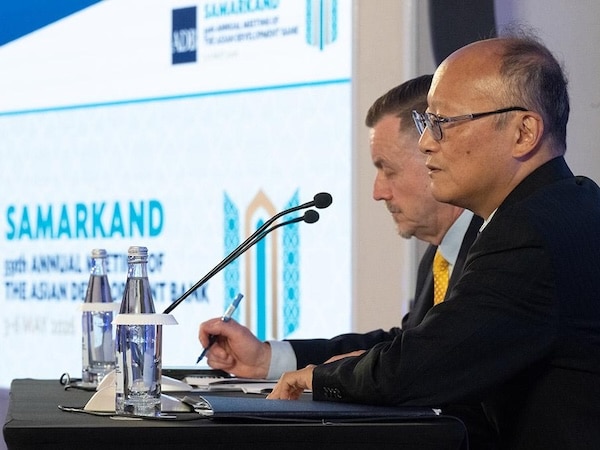
The Asian Development Bank (ADB) announced on Sunday it will back two new initiatives priced at US$70 billion total to connect power grids, expand cross-border electricity trade and improve broadband access across Asia and the Pacific.

The Pan-Asia Power Grid Initiative aims to connect national and subregional power systems so that renewable energy can flow across borders, while the Asia-Pacific Digital Highway promises to help close the digital infrastructure gap and enable the region to benefit from AI-driven growth.

The lion’s share of that investment will go towards the Pan-Asia Power Grid Initiative, although digital infrastructure projects – particularly data centres – also stand to benefit from better access to interconnected renewable energy.

For the Power Grid Initiative, the ADB said it will work with governments, utilities, the private sector and development partners to mobilise US$50 billion by 2035 for cross-border power infrastructure that can unlock renewable energy at scale.

The initiative will focus on transmission and grid integration, including cross-border lines, substations, storage, and grid digitalization. It will also support power generation linked to electricity trade, including renewable energy export projects, regional renewable hubs, and hybrid generation-storage facilities.

The ADB aims to integrate about 20GW of renewable energy across borders, connect 22,000 circuit-km of transmission lines, improve energy access for 200 million people, create 840,000 jobs, and cut regional power sector emissions by 15% – all by 2035.

The ADB said it plans to finance about half of the US$50 billion from its own resources and raise the rest through cofinancing, including from the private sector. Up to US$10 million in technical assistance will support efforts to align regulations, adopt common technical standards, prepare feasibility studies and advance other work needed for major projects.

The ADB said the Power Grid Initiative builds on existing subregional cooperation initiatives, including the South Asia Subregional Economic Cooperation program, the Bay of Bengal Initiative for Multi-Sectoral Technical and Economic Cooperation grid interconnection planning, the ASEAN Power Grid, and the Central Asia Regional Economic Cooperation Energy Strategy 2030.

US$20b for digital infrastructure

Meanwhile, the ADB’s Asia-Pacific Digital Highway Initiative will mobilise US$20 billion by 2035 to finance digital corridors, data infrastructure, and AI-ready economies.

Investments will focus on connected infrastructure, including terrestrial and subsea fibre networks, satellite links and regional data centres. The ADB said it will also provide policy and regulatory support, including on cybersecurity risk management, and invest in skills programs to strengthen digital and AI readiness.

By 2035, the initiative aims to provide first-time broadband access to 200 million people and faster, more reliable digital connectivity for another 450 million people across the region. It is projected to cut connectivity costs in remote and landlocked areas by about 40% and help create 4 million jobs.

The ADB expects to finance US$15 billion of the initiative from its own resources and raise US$5 billion through cofinancing, including from the private sector.

The initiative also calls for the establishment of a Centre for AI Innovation and Development in Seoul, which will be backed by a US$20 million contribution from the South Korean government. The ADB said the centre will promote responsible and inclusive AI adoption and help train about 3 million people in digital and AI-related skills by 2035.

“Energy and digital access will define the region’s future,” said ADB president Masato Kanda in a statement. “These two initiatives build the systems Asia and the Pacific need to grow, compete, and connect. By linking power grids and digital networks across borders, we can lower costs, expand opportunity, and bring reliable power and digital access to hundreds of millions of people.”

Both initiatives were revealed at the ADB’s annual meeting in Samarkand, Uzbekistan on Sunday.

Sierra Leone eyes satellite push to narrow connectivity gap

Sierra Leone is ramping up efforts to strengthen digital infrastructure through satellite-enabled solutions, as part of a wider strategy to expand nationwide connectivity.

Speaking at a parliamentary stakeholder meeting in Freetown, Minister of Communication, Technology and Innovation Salima Monorma Bah said that despite around $400 million in investment and backbone expansion to 14 of 16 districts, a 60% usage gap remains.

She highlighted satellite technology as key to reaching underserved areas and improving reliability when combined with existing broadband networks. Bah also urged greater infrastructure sharing among operators to cut costs and boost affordability.

The government is also advancing plans for a second subsea cable, backed by $15 million, to increase international bandwidth and improve network resilience.

Stakeholders, including the National Communications Authority and mobile operators, backed a multi-layered approach combining fibre, subsea and satellite infrastructure to support digital growth.

MTN Nigeria wins shareholder approval to offload fintech units to parent

MTN Nigeria has secured shareholder approval to sell its stakes in fintech subsidiaries MoMo Payment Service Bank and Yellow Digital Financial Services to parent company MTN Group.

Local media reported that shareholders met on April 30 and passed a resolution authorising the transfer of shares to the parent company. The move is aimed at easing the burden of capital investment while allowing MTN Nigeria to focus on its core telecoms operations.

Under the deal, MTN Group will invest around NGN152 billion ($110 million) to acquire a 60% controlling stake, with MTN Nigeria retaining the remaining 40%. The operator said the fintech businesses have strong potential, but the level of capital required to scale them was considered steep.

The transaction is expected to close by December 31, subject to regulatory approvals.

TELUS and L-SPARK give Canadian startups access to AI supercomputer

Press Release

Inaugural cohort gains exclusive access to Canada’s fastest supercomputer and hands-on commercial expertise to build advanced AI solutions
TELUS and L-SPARK have announced a first-of-its-kind program designed to enable high-potential Canadian startups and scaleups to build, train and deploy advanced AI solutions on
Canada’s fastest and most powerful sovereign AI supercomputer. The TELUS Sovereign AI Accelerator will usher in a new wave of Canadian innovation by accelerating the go-to-market strategies and investment readiness of select businesses.


The inaugural cohort includes ambitious Canadian companies developing breakthrough AI solutions across retail, healthcare, robotics, enterprise software and industrial automation:

  • Airy3D:  Airy3D’s DepthIQ™ IP delivers simultaneous 2D images and 3D depth maps from a single passive image sensor – providing a compact, power-efficient, and cost-effective solution for use in robotics, automotive, industrial automation and consumer devices.
  • Codalio is an AI-driven product and application development platform that empowers startups and companies to launch MVPs and build scalable, enterprise-grade applications faster and more affordably.
  • Edge Signal helps retail and telco retail use physical AI to increase revenue and profitability, improve customer experience and optimize daily operations across every location.
  • PataBid offers AI enterprise-grade construction bidding software designed for complex specialty trades, delivering standardization and risk reduction for commercial, industrial, and institutional projects across teams and regions.
  • TopoLift transforms generic AI into a bespoke intelligence layer that learns the structure of the customer’s business and grows smarter with their data – delivering clearer reasoning, fewer errors and highly accurate, context-aware decisions.

Participants gain immediate access to the TELUS Sovereign AI Factory, paired with tailored business advisory support from L-SPARK, Canada’s leading corporate accelerator and innovation partner. This powerful combination of high-performance computing and hands-on commercial expertise equips these startups to transform ambitious AI roadmaps into scalable, market-ready offerings that strengthen Canada’s position in the global AI economy.

“Canada has no shortage of talented AI visionaries and founders, but too often they lack the coordinated support needed to scale from promising ideas to globally-competitive businesses,” said Hesham Fahmy, Chief Information Officer, TELUS. “The TELUS Sovereign AI Accelerator demolishes those barriers. By arming founders with the same high-performance AI infrastructure available to tech giants – combined with hands-on advisory support – we’re enabling them to accelerate development, strengthen their market position and build AI companies that dominate the world stage, right here in Canada.”

“Great AI companies aren’t built on technology alone – they’re built on execution, focus and access to the right expertise at the right time,” said Leo Lax, Executive Managing Director, L-SPARK. “Through the TELUS Sovereign AI Accelerator, we’re working hand-in-hand with each company to refine their product and position them for sustainable growth. This cohort represents the future of Canadian innovation, and our mission is to ensure they have everything they need to translate that potential into accelerated traction.”

Participating companies will receive compute credits from the TELUS AI Factory – powered by 99% renewable energy and NVIDIA platform – alongside one-on-one guidance from seasoned L-SPARK executive advisors. The six-month engagement is designed to fast-track product development, unlock new customer relationships and build the investor networks critical to long-term success, all while maintaining complete control over data and intellectual property.

The initiative underscores TELUS and L-SPARK’s shared commitment to strengthen Canada’s AI ecosystem by enabling founders to build and scale transformative technologies – securely, responsibly and domestically.

The CFO’s Blind Spot: Network Performance as an Unmeasured Financial Risk

This Industry Viewpoint was authored by Prakash Mana, CEO of Cloudbrink

Enterprise leadership teams today operate with increasingly sophisticated models for understanding financial risk. Revenue variability, supply chain dependencies, regulatory exposure, and cybersecurity threats are all quantified, tracked, and regularly discussed at the board level. Over the past decade,
… [visit site to read more]