Vodafone Business and Geely Technology Europe (GTEU), the European R&D organisation within Geely Auto Group, have extended their partnership to include Internet in the Car, Mobile Private Networks, and Cloud Connect solutions.
The Internet in the Car service from Vodafone Business supports capabilities such as diagnostics and over-the-air software updates, while Cloud Connect ensures secure data transfer between vehicles and cloud systems. This means Geely can monitor vehicle’s performance and support improvements to the driver experience.
In addition, Vodafone provides secure and reliable connectivity across Geely Technology Europe’s operations in Germany and Sweden, as well as with its pan-European sales teams.
GTEU plays a key role in developing the vehicle architectures, digital platforms, and intelligent systems. These provide customers with highly responsive integrated in-car internet and digital services such as dynamic electric vehicle (EV) charging planning and 3D lane guidance. Central to this is equipping vehicles with the latest software, data, and connected services.
Giovanni Lanfranchi, CEO at Geely Technology Europe, said: “We’ve moved beyond simple transport solutions. Today, vehicles can be continuously improved through software, with data and connectivity enabling a more responsive and personalised user experience over time.”
Vodafone Business’ vehicle services support GTEU in responding to customer insights, continuously enhancing its vehicles long after they leave the showroom. One example is Zeekr Navigation, where secure, always‑on connectivity enables instant in‑vehicle customer feedback. This shortens development cycles and improves GTEU’s ability to identify issues and deploy improvements rapidly.
Fanan Henriques, Vodafone Business Product and International Business Director of Vodafone Business, added: “As the adoption rate of electric vehicles continues to grow, the opportunities to enhance their safety, efficiency and the user experience through digital connectivity are significant.
“We’re supporting Geely’s growth in vehicle sales across Europe and its operations with a secure, multi-service digital infrastructure.”
Vodafone Business is providing solutions tailored to international cybersecurity, data protection, and regulatory compliance needs, while enabling Geely to scale rapidly across regions by leveraging Vodafone’s extensive global network. For example, Vodafone Internet in the Car service combines Vodafone’s global managed Internet of Things (IoT) connectivity platform, which currently has over 240 million connections worldwide, with local internet service providers.
By 2030, it’s expected that more than 98% of new passenger vehicles sold will be connected. Vodafone Business, working with Geely, is ready to help drive this expansion.
Also in the news
TELUS and L-SPARK give Canadian startups access to AI supercomputer
Belden to acquire RUCKUS Networks for $1.85bn
VMO2 taps Suffolk solar farm for 10 years of clean energy

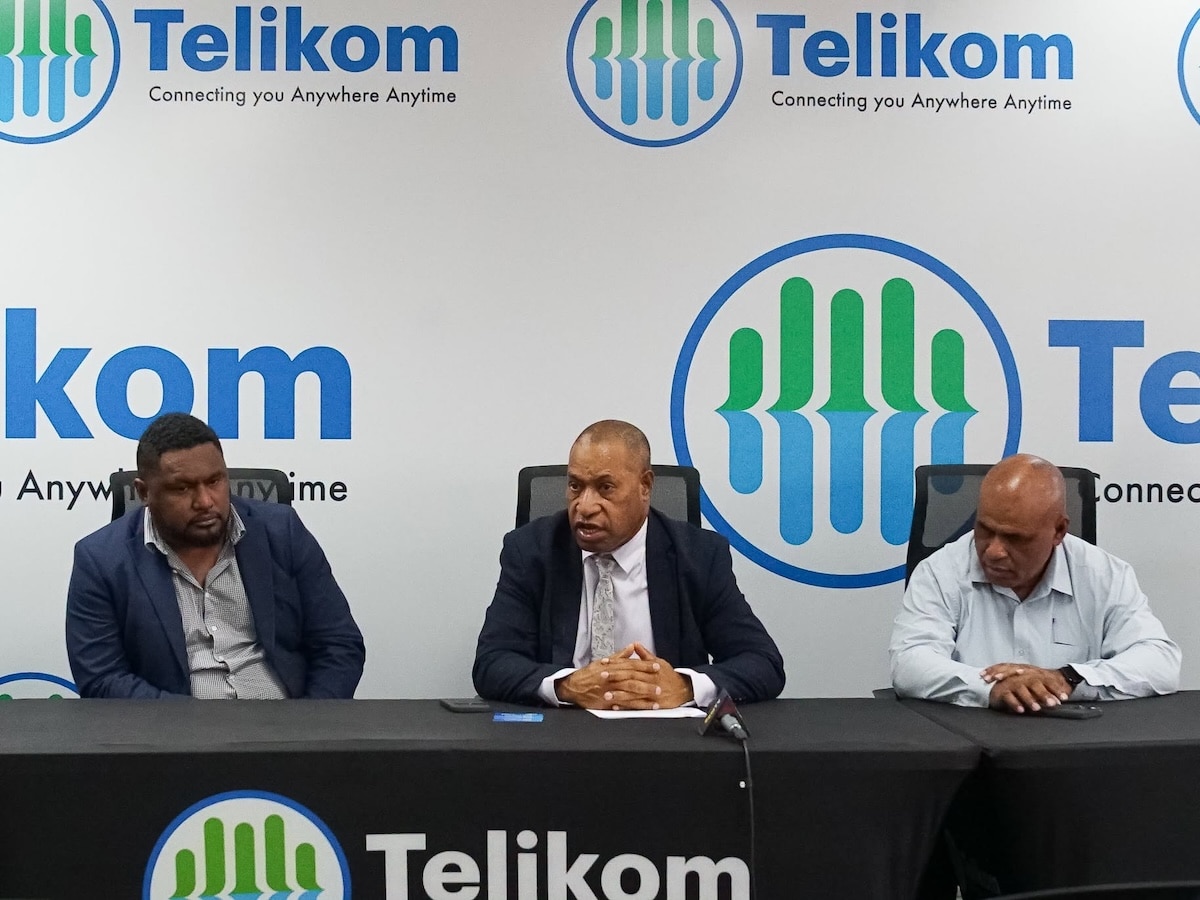
Papua New Guinea’s state-owned telco Telikom PNG has joined the Starlink bandwagon after announcing it has signed a deal to become the country’s second authorised Starlink reseller as of last Friday.
Telikom plans to offer Starlink’s LEO satellite broadband service primarily to government departments, SMEs, verticals such as financial services and mining, and anyone currently using VSAT services.
In a Facebook post on Tuesday, Telikom said it will support the service locally via customer service, billing, installation, technical support, enterprise solutions and managed services.
Telikom CEO Amos Tepi said the Starlink partnership is not about replacing existing services, but complementing and enhancing connectivity options for customers and providing reliable, affordable, and resilient connectivity.
« As a country, we must continue to build redundancy across all critical communications infrastructure. Fibre networks, mobile networks, microwave connections, submarine cables, cloud infrastructure, and satellite technologies must work together to ensure our nation remains connected, » Tepi said in a statement.
Telikom’s Starlink announcement follows last week’s news that Digicel PNG became the first operator in the country to sign a reseller deal with Starlink.
Both announcements came after an April 2026 ruling by the PNG National Court overturned a ban on Starlink operations originally imposed by the Ombudsman Commission in 2024, which enabled the National Information and Communications Technology Authority (NICTA) to approve Starlink’s operator license.

This week, SoftBank Group has announced plans to invest up to €75 billion to deploy 5 GW of AI-focused data centres in France.
Phase one of the project will see €45 billion building out 3.1 GW of AI data centre capacity at a variety of locations in northern France including Dunkirk, Bosquel, and Bouchain.
The first of these new locations is expected to be operational by 2031, with additional sites to be announced at a later date.
SoftBank Group will work with national energy company EDF and digital automation specialist Schneider Electric throughout the project.
“SoftBank is proud to make this major commitment to France,” said SoftBank Group CEO Masayoshi Son. “With its industrial capabilities, talent base and national ambition, France is uniquely positioned to become a leading AI infrastructure hub in Europe.”
The French government praised the decision, similarly highlighting the favourable environment for data centre deployments.
“SoftBank’s decision to invest massively in AI datacenters in France – a first for the group in Europe – is testament to President Emmanuel Macron’s ambition to position France as a leading destination all along the AI value chain,” said Roland Lescure, Minister of Economy, Finance, & Industrial, Energy, & Digital Sovereignty. “ It reflects our country’s substantial assets: fast access to the most reliable electrical grid in Europe, a strong digital and industrial ecosystem with a skilled workforce, and a government that works in unison with local authorities and stakeholders to fast track procedures for strategic projects.”
France is quickly becoming something of a European champion for AI data centres, with major tech and telco consortium AION pledging to build an ‘AI gigafactory’ in the country just last month.
For SoftBank, on the other hand, this announcement comes as an addendum to its Stargate Project, which pledges to deploy $500 billion-worth of AI infrastructure in partnership with Open AI over the next four years.
As well as expanding its AI capacity, SoftBank is also digging deeper into the AI value chain. Last month, the company announced plans to build its own batteries to support its own AI data centres, suggesting that these batteries could eventually be sold to others.
Also in the news
TELUS and L-SPARK give Canadian startups access to AI supercomputer
Belden to acquire RUCKUS Networks for $1.85bn
VMO2 taps Suffolk solar farm for 10 years of clean energy

Some subsea fiber, a bit of data center consolidation, and some last mile fiber: … [visit site to read more]
FLAG has launched a new subsea route between Chennai and Singapore, adding capacity and route diversity along one of Asia’s busiest connectivity corridors.
The privately-owned subsea cable operator said the route forms part of its Vision 2030 strategy to strengthen global network resilience and expand coverage in key digital markets.
The Chennai-Singapore route follows FLAG’s Mumbai-Singapore investment announced in 2025 and provides a second, geographically distinct connection between India and Singapore. The company said the new path will improve network resilience and offer additional routing options for customers across South and Southeast Asia.
When combined with FLAG’s ECHO subsea cable system linking Singapore and the US, the route also creates new connectivity options between India and the United States, reducing reliance on traditional westbound routes through the Middle East and Europe.
FLAG said the infrastructure is designed to support cloud providers, content delivery networks, enterprises and international carriers seeking greater network redundancy and lower latency.
Chief Strategy and Revenue Officer Paul Abfalter said growing demand for digital services means operators can no longer rely on a limited number of international routes. He added that the new link strengthens FLAG’s ability to manage and reroute traffic across a more resilient network architecture.
Vice President of Product Nadya Melic described India as a key market for FLAG, adding that Chennai is an increasingly important connectivity hub for linking the country into global digital networks.
The launch forms part of FLAG’s broader investment strategy in India, where the company is expanding both its network footprint and local operations.
This Industry Viewpoint was authored by Mike Hicks, Principal Solutions Analyst, Cisco ThousandEyes
Satellite constellations are already transforming global connectivity, extending the Internet’s reach to nearly every corner of the planet. Now, as conversations turn toward compute in orbit, the focus is expanding from connectivity alone to how distributed infrastructure will shape the future of digital services. … [visit site to read more]