India moves to reduce submarine cable repair delays 

Underlining the strategic importance of international cable connections to the country, India is reportedly looking at ways to reduce delays in approvals for submarine cable repairs.

One of these is a single-window portal platform proposed by the Department of Telecommunication (DoT). The platform would bring agencies involved in the clearance process onto one system, including shipping authorities, the Coast Guard and the Ministry of Home Affairs.

As the Moneycontrol news service points out, although telecom operators are the main players affected by cable faults, many repair permissions sit with diverse government bodies.

The initiative was announced earlier this week. However, there will be a number of stages to be completed before it becomes a reality. The DoT expects to finish a proposal for the portal in about two months. Then will come approvals, procurement and tendering, with March 2027 identified as a tentative implementation target. An information technology agency under the Centre for Development of Telematics (C-DoT) is expected to participate in the process.

A number of reports also suggest that  India is working to build a domestic submarine cable repair sector. According to Indian news service Communications Today, there are currently no Indian-flagged or Indian-owned cable repair vessels; the country depends entirely on foreign fleets based in Singapore and Dubai. Repair turnaround typically takes four to five months.

The DoT has apparently opened discussions with industry players on developing repair capabilities within India, though it reportedly wants the substantial investment in specialised vessels and supporting infrastructure to come from industry rather than from government.

One potential option involves retrofitting exist vessels rather than building from scratch, cutting the time taken to commission new vessels, which can be as much as three to four years.

In the short term, however, developing a single window portal meant to bring multiple agencies onto a common platform and streamline the repair approval process seems to be the priority.

This activity comes at a time when he country’s subsea network has grown to around 19 international cables and roughly 193 Tbps of lit capacity. Demand for high-capacity, low-latency international connectivity is expected to continue growing.

Claro Colombia invests US$25.5mn in data centres as AI demand grows

Claro Colombia is investing US$25.5 million in 2026 to expand and upgrade its Triara data centre in Bogota and Megacenter facility in Medellin, as demand for cloud, AI and data processing capacity increases.

According to BN Americas, the investment forms part of US$123 million that Claro Colombia has committed to its data centre infrastructure over the past five years.
Around US$14 million of this year’s investment will be used to expand capacity and upgrade infrastructure, while a further US$11.5 million will be directed towards cybersecurity platforms and services.

The investment will add technical space, replace critical equipment and increase power capacity at the facilities, with Claro targeting growing demand for cloud services, advanced analytics, artificial intelligence and intensive data processing.

Claro Colombia president Rodrigo de Gusmao said the company is increasingly positioning itself as a technology provider rather than solely a connectivity operator.
The company claims its data centre infrastructure accounts for around 50% of installed capacity in Colombia, with its facilities used by around 80% of financial institutions, 50% of companies and 30% of government entities.

The data centres currently host more than 1,500 racks and 14,000 virtual machines, while handling more than 500,000 cybersecurity events each month.
Triara also hosts Oracle’s Colombian cloud region, following a 2022 agreement that included a US$25 million investment from the US technology company.

Jazz reaches 1,000 5G sites in Pakistan, targets 2,500 by year-end

Pakistani operator Jazz has reached 1,000 5G sites across the country, claiming the largest 5G network footprint in Pakistan as it targets more than doubling its coverage by the end of 2026.

The Veon-owned operator said its 5G network currently covers 10 cities, with plans to increase the number of sites to 2,500 by the end of the year.

Jazz GSM president Kazim Mujtaba said reaching the 1,000-site milestone demonstrates the operator’s commitment to delivering faster connectivity and improved digital services to customers.

Jazz CTO Khalid Shehzad said the scale of the rollout required a network capable of supporting different connectivity requirements across the country, with the operator combining multi-band spectrum, advanced radio technology and modernised infrastructure to increase coverage and capacity.

Jazz acquired 190MHz of spectrum across four bands – 700MHz, 2300MHz, 2600MHz and 3500MHz – in Pakistan’s 5G spectrum auction earlier this year, taking its total spectrum holdings to 284.4MHz.

The rollout follows Jazz’s pledge to invest US$1 billion in 5G following the auction. The operator said it has invested around US$12 billion in its Pakistani business to date.

Pakistan’s telecoms market has also undergone significant consolidation, with Norwegian operator Telenor selling its Pakistani operation to Pakistan Telecommunication Company Limited (PTCL). PTCL subsequently absorbed the Telenor business under its Ufone brand.

Beyond the Killer App: How 5G and 6G Are Redefining Network Value

Beyond the Killer App: How 5G and 6G Are Redefining Network Value

This Industry Viewpoint was authored by Juho Sarvikas, CEO of Inseego

Each generation of wireless has had a breakthrough moment, a single application that justified the upgrade and captured public imagination. 2G gave us Short-Message Service (SMS). 3G brought mobile internet to the masses. 4G built the smartphone ecosystem, putting everything from ridesharing and mobile banking to streaming in the palm of our hands. Each of these “killer apps” gave operators a clear story to tell: Build the network, and this is what you’ll get. … [visit site to read more]

Boldyn Networks’ 5G RedCap to support smart livestock monitoring in West Sussex

Press Release

Growing Sussex milestone gives farmers near real-time insight into livestock-building conditions, supporting animal welfare and farm resilience

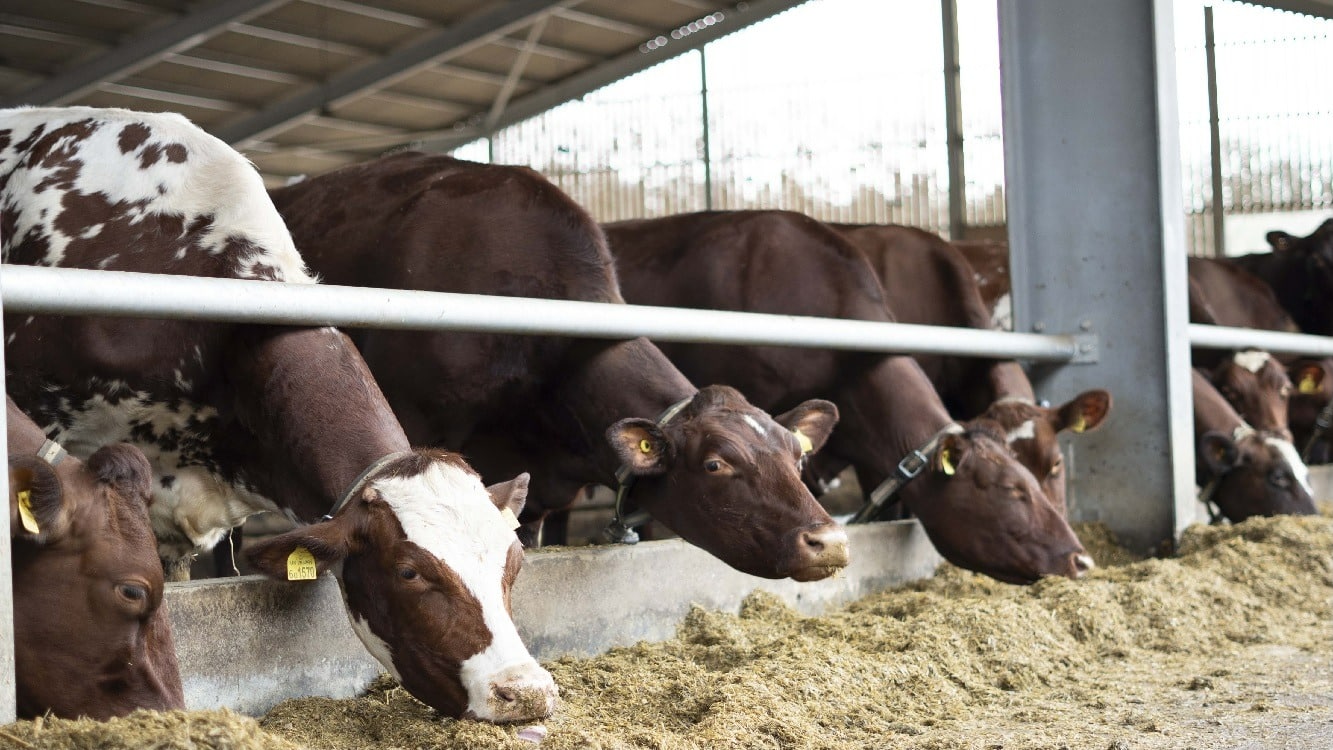
West Sussex County Council is leading the way in smart livestock monitoring. Through the public sector-led Growing Sussex programme, it is partnering with Boldyn Networks (Boldyn) and agritech specialist Pneumonitor, to connect Pneumonitor’s in-pen environmental monitoring device to Boldyn’s private 5G network. The deployment gives farmers near real-time insight into conditions inside livestock buildings, helping them identify and respond more quickly to environmental factors that may increase the risk of respiratory disease and animal stress.

Unlike sensors typically mounted on walls, Pneumonitor measures conditions within the pen, where the animals are. Connected through 5G Reduced Capability (RedCap) technology, the device can share timely information from livestock buildings and support practical, scalable monitoring across farms.

The deployment comes as repeated heatwaves across parts of the UK and Europe place greater pressure on livestock and farm operations. By helping farmers understand how conditions are changing, the technology can support earlier action, animal health and welfare, productivity and long-term resilience.

Cllr Yvonne Gravely, Cabinet Member for Economy and Skills at West Sussex County Council, said: “Agriculture plays a vital role in West Sussex, but periods of extreme weather are creating new challenges for the sector. Through Growing Sussex, we’re helping growers and food producers use technology to better understand changing conditions, protect animal welfare and build resilience for the future. That’s good for local businesses, good for our rural economy and good for West Sussex.”

Gearoid Collins, Commercial Director, Real Estate, Enterprise & Wind Farms at Boldyn Networks, said: “As the connectivity partner for Growing Sussex, we’re committed to helping shape a new era for agriculture and deploy technologies that bring a welcome boost to the West Sussex economy. Connecting Pneumonitor through RedCap shows how private 5G can support practical agritech and provide the digital foundation for many more connected applications across the farming sector.”

Isaac Orr, Chief Executive Officer at Pneumonitor, said: “With heatwaves becoming more frequent, conditions inside livestock buildings can deteriorate faster than they can be spotted by eye. Pneumonitor measures conditions in the pen itself, where the animals are, rather than at the wall where sensors are usually mounted. This project showed when heat load was building and what could be done before yields were affected. The connectivity behind the deployment now allows us to bring this monitoring to far more sites than before. We thank Boldyn Networks and the Growing Sussex programme for their partnership.”

Bringing advanced wireless technology to the farm

RedCap is designed for IoT devices that do not require the full capabilities of standard 5G. It combines 5G connectivity with lower power consumption, reduced battery requirements and longer device life, helping lower maintenance needs and operating costs for farm-based deployments.

Growing Sussex was established by West Sussex County Council to co-develop and showcase practical uses of 5G, IoT and AI across food, drink and agricultural production. The programme brings together local government, specialist education providers and technology partners, with input from growers and livestock producers.

Boldyn Networks and West Sussex County Council announced plans for four private 5G networks in 2024. All four Growing Sussex partner sites were live by December 2025. The Pneumonitor integration adds livestock-building environmental monitoring to the programme’s wider connected-agriculture ecosystem.

How can the latest in connectivity technology reinvigorate British agriculture? Join the discussion at Connected Britain, the UK’s largest digital economy event

Also in the news
Shared Rural Network rollout extends to UK national parks with over 150 4G masts live
Vodafone touts latest attempt to bridge the UK’s digital divide
Virgin Media O2 cuts 5,200 tonnes of carbon dioxide emissions

Garbage in, bad decisions out: The data problem behind autonomous networks


Contributed Article

by Miha Ušeničnik, Associate Director at DFG CONSULTING

Telecom automation is moving beyond predefined tasks towards networks that can increasingly analyse conditions, make decisions and act autonomously. Self-configuration for provisioning, closed-loop optimisation, and automated fault recovery promise greater operational efficiency and reliability, while enabling services to be provisioned and adapted with less manual intervention.

The transition is already underway. According to a study by the IBM Institute for Business Value and TM Forum: Navigating autonomous networks, 73% of network executives surveyed said their organisations had developed phased roadmaps towards autonomous operations. Yet only 6% of CSPs reported operating highly autonomous Level 4 network instances. Within three years, 22% expect to reach that level.

What must change to bridge that gap? It starts with data. As a data transformation company, DFG CONSULTING focuses on the quality and trustworthiness of the physical network data that automation depends on.

When the network and its data diverge

Telecom networks have evolved continuously over decades, but the data describing them has not always kept pace. Network extensions, technology changes, mergers and system migrations have left many operators with information distributed across multiple systems and formats.

Critical network information may still reside in CAD or Visio drawings, PDFs, raster images and spreadsheets alongside central inventory systems. While valuable to engineers, this unstructured information cannot readily support automation.

The challenge goes deeper than format. Field changes are not always accurately reflected in the system of record, creating discrepancies between as-planned and as-built networks.

Missing or incorrect connectivity creates further uncertainty. Engineers and field teams may consequently maintain local “shadow documentation” to capture information that is missing, outdated or difficult to retrieve from the system of record.

The problem is therefore often not the absence of data, but whether operators can trust that it accurately represents the physical network and whether it is in the right form for growing network automation and autonomy.

The consequences of inaccurate data

Experienced engineers might still recognise when a network record does not reflect reality and question it before acting. Automated operations do not necessarily have that safeguard because they cannot recognise inaccurate data.

Physical assets do not have intelligence, telemetry, or at least some form of active communication. They cannot report their state. They cannot self-discover. They cannot tell an inventory system where they are, how they’re connected, or whether they were built to design. Automated decisions solely rely on a trustworthy, precise, end-to-end digital representation of all available physical assets.

Incorrect data can lead to an incorrect path calculation, affecting service provisioning or instructions for field teams. Inaccurate connectivity can result in flawed impact analysis and the wrong customers or services being identified during an outage.

Intelligent data migration

Recognising the need for trustworthy data is the easy part — the challenge is quality, scale, efficiency and continuity. Operators may hold hundreds of thousands of legacy files accumulated over decades, while new documentation keeps arriving, often incomplete, inconsistent or conflicting, and daily operations cannot pause while this data is transformed.

The question becomes: how can operators convert, validate, and reconcile network data at scale while updating operational data on the fly?

Physical network documentation is naturally fragmented across distinct views — spatial maps, schematics and splice diagrams — each describing the same elements at a different level of detail. Manually redrawing legacy files into operational support systems is common, but a more effective approach is to use a specialised tool Interactively Assisted Converter™ that extracts data from legacy drawings and structures it in a machine-readable format, ready for direct ingestion into the system of record.

This tool can cross-reference and merge disparate views into a single dataset, with AI adapting to the multiple drawing standards different data providers use. Data conversion is fundamentally a cleaning process: automation extracts, structures, and resolves quality issues for most of the data, while human oversight handles conflicting edge cases — far more reliable than manual redrawing, which is resource-intensive and prone to replicating existing mistakes into the central system of record.

Keeping humans in control

As autonomous systems make decisions at a scale and speed humans cannot replicate, engineers may struggle to understand and independently validate them. Human-readable network connectivity visualisation therefore becomes more important, not less: data transformation gives us machine-operational data, but at the cost of human readability.

The answer isn’t another manually maintained layer of “shadow” documentation. Instead, iNTERACTIVE SCHEMATICS™ can automatically generate high-level and low-level network diagrams directly from the same inventory data used for automation — providing a real-time visual representation from the single source of truth.

Network connectivity visualisation is now evolving from documentation into a control and validation layer between automated systems and engineers, turning trusted digital data into an interactive operational view to support design, planning, troubleshooting, maintenance, and service provisioning.

Trust before autonomy

Autonomous networks are not only about making machines more intelligent. They also require a trustworthy representation of the physical network and the human visibility needed to understand and validate manual and automated decisions.

As network operators move towards higher levels of autonomy, the strategic question is:

Do we have an effective, trustworthy and scalable way to convert, validate, reconcile and visualise the physical network data on which network operations depend?

DFG CONSULTING can help you answer that question.

We can assess a representative sample of your own data to identify quality gaps, transformation opportunities and potential process improvements — and determine what it takes to make your network data trusted and automation-ready.

Contact miha.usenicnik@dfgcon.si to arrange an initial assessment or meet us at Connected Britain 2026 on 9–10 September.


Miha Ušeničnik has spent more than two decades working across telecommunications, technology development and operational transformation.

He has held senior technical and management positions in telecom and technology companies, including responsibility for broadband network development and WiMAX systems, and contributed to national broadband policy as principal author of Slovenia’s Broadband Strategy.

At DFG CONSULTING, his focus is on helping network operators transform complex network data into trusted, structured information that can support more efficient operations, automation and AI.

Infineon acquires India’s C2i Semiconductors

Infineon Technologies, which describes itself as a global semiconductor leader in power systems and IoT, has announced the acquisition of India’s C2i Semiconductors, a technology company specialising in software-defined multiphase controllers and smart power stages for AI data centre applications.

Infineon says that C2i Semiconductors’ technology complements its portfolio of power semiconductors and power systems, enabling intelligent and scalable power delivery architectures from grid to core for AI servers and high-performance computing platforms.

The acquisition also strengthens Infineon’s position in power solutions for AI data centres and adds highly specialised expertise in software-defined power management to Infineon’s global R&D network. In addition, it expands Infineon’s engineering capabilities in India, where it currently has approximately 2,800 employees, and reinforces the country’s role as a strategic innovation hub.

Adam White, President of Infineon’s Power Systems (PS) division, explains: « This acquisition will further strengthen Infineon’s leadership in power solutions for AI data centres and create a new centre of excellence for digital power technologies in India, » adding: « C2i Semiconductors brings exceptional expertise in software-defined power management and system-level power architectures, backed by a proven highly experienced engineering team with decades of combined industry experience. With this acquisition, we will accelerate innovation in power delivery solutions for AI data centres, expand our capabilities in next-generation vertical power delivery architectures, and create significant value for our customers. »

 Ram Anant, Founder & CEO of C2i Semiconductors, adds: « We founded C2i Semiconductors with the vision of bringing greater intelligence to power delivery systems and addressing the growing power challenges of AI infrastructure. Joining Infineon gives us access to world-class semiconductor technologies, manufacturing capabilities, and global customer relationships. Together, we can accelerate the development of software-defined power architectures and bring our innovations to customers worldwide. »

By adding intelligence to the power delivery architecture, Infineon says, software-defined solutions help data centre operators improve efficiency, reduce power losses, and support the increasing power density requirements of next-generation AI processors. C2i Semiconductors’ technology takes a system-level approach to power delivery, spanning the path from grid to core and enabling more intelligent and adaptive power architectures for AI infrastructure.

The transaction is expected to close in the third quarter of 2026.

Aarhus Vand Selects Netmore for Smart Meter Network

Stockholm, Sweden – (August 25, 2026) – Netmore Group, the leading network operator and platform provider for Massive IoT, today announced a collaboration with Aarhus Vand and Kamstrup to support the deployment of approximately 69,000 digitally connected water meters across Aarhus Municipality, Denmark. Powered by Netmore’s carrier-grade LoRaWAN® network and Kamstrup’s digital water metering technology, the project will provide Aarhus Vand with real-time visibility into water consumption while helping residents better understand and reduce their water usage. 
Rollout begins in Tranbjerg following a successful pilot involving approximately 1,000 households, where the communication between Kamstrup’s digital meters and Aarhus Vand was validated. The full deployment will continue through 2030, covering communities across Aarhus Municipality. 
The new water meters will eliminate manual meter readings while enabling continuous remote collection of consumption data. Customers will gain online access to their water usage, allowing them to monitor consumption patterns and identify opportunities to conserve water. At the same time, Aarhus Vand will be able to detect unusually high consumption earlier, helping identify issues such as water leaks, faulty heat exchangers, or damaged water infrastructure before they result in unnecessary water waste and higher utility bills. 
“Delivering reliable meter reading demands a network that meets high-performance requirements consistently, not just in ideal conditions, but across every meter, every day,” said Helle Pernille Hansen, Specialist Manager, Aarhus Vand. “Our pilot demonstrated that LoRaWAN meets those standards in practice, and our partnership with Netmore and Kamstrup gives us the confidence to scale. This is an important step in giving our customers real visibility into their water consumption and helping us identify issues before they become costly problems.” 
To ensure reliable communication, Netmore will deploy and manage a dense LoRaWAN network that enables seamless data transmission between the Kamstrup water meters and Aarhus Vand’s systems. As each area is completed, customers will be notified once their meter becomes fully operational for remote reading. 
“We are pleased to support Aarhus Vand in delivering a modern digital water infrastructure that benefits both the utility and its customers,” said Eric Collinder, Country Manager Nordics at Netmore. “Reliable, carrier-grade connectivity is essential for smart metering deployments and this project demonstrates how the right technology and partners can help utilities improve resource management, increase operational efficiency, and provide consumers with better data.” 
“Smart water metering only delivers its full value when data arrives reliably and on time, and that places real demands on the connectivity layer. Kamstrup’s meters are engineered to perform across the full range of installation environments, and Netmore’s carrier-grade LoRaWAN network ensures those capabilities translate into the consistent read rates Aarhus Vand needs to meet its operational and customer service targets,” said Henrik Jensen, SVP, Kamstrup Water. This is a strong example of what becomes possible when metering technology and network infrastructure are matched to the same standard.”  
Installation of the new meters is being carried out area by area with deployment partner Eltel, beginning in Tranbjerg before expanding throughout the municipality over the coming years. 
About Netmore Group 
Netmore Group is the leading global network operator and platform provider for Massive IoT, powering the world’s most advanced and sustainability-focused solutions for utilities, buildings, cities, and other markets that benefit from sensor-connected environments. With a decade of innovation and leadership in IoT platform development and network operations, Netmore continues to set the standard for IoT excellence. Netmore operates in 18 countries and is backed by Nordic infrastructure investor Polar Structure. 
About Aarhus Vand 
Aarhus Vand is one of Denmark’s leading water and wastewater utilities, providing drinking water and wastewater services to customers throughout Aarhus Municipality. The company is committed to delivering sustainable water management solutions while protecting one of society’s most valuable natural resources. 
About Kamstrup 
Kamstrup is a global technology company delivering intelligent metering solutions and services for water and energy utilities. Through innovative metering technology and digital solutions, Kamstrup helps utilities improve efficiency, optimize operations, and support sustainable resource management. 

Interview: GSMA’s Steven Moore on the industry’s Net Zero goals

Across the telecoms sector, operators, vendors and other suppliers are pushing towards renewable energy and sustainability goals with an uncommon unity. Given that operating a network requires a constant supply of power, it makes sense that to pivot towards cheaper and more sustainable sources of energy – but behind the talk, are companies truly taking action on their Net Zero goals?

The GSMA’s Mobile Net Zero Report 2026 examined industry progress on the broad goal of achieving Net Zero by 2050 and found that increased access to renewable energy is fundamental to achieving this.  We spoke to Steven Moore, Head of Climate Action at the GSMA, to find out where progress is being made, and what more needs to be done.

The report mentions that a 45% reduction is required on the science-based pathway, but it’s looking like the sector might fall short of that by 2030. Why is the industry not on track? Further progress in Asia particularly is going to be essential to accelerate that – why is Asia so significant for this?

The steepness of the reduction curve is aligned to limiting heating to 1.5 degrees – effectively it means a 45% cut by 2030. Beyond that to 2040, there’s a project underway with the ITU to work out what the next stage of the science-based pathway will be, but the end goal needs to be Net Zero by 2050. We’ve had a 13% cut from 2019 to 2024, and that’s despite seeing a very big increase in both data traffic across networks and mobile connections. We’ve managed an overall global decrease despite effectively serving more customers and providing a greater service, but we are short – at about a 5% reduction in 2024, which is the last full year that we have data for. We need to be about a 7.5% annual reduction by 2030, so to hit that there needs to be an acceleration. There are two very significant regions to help us achieve that – they’re both in the same part of the world, but we separate them in the GSMA: the Greater China region and APAC more broadly. In terms of the number of connections and the electricity use across those two areas, the overall Scope 1 & 2 carbon emissions are really significant. What happens in those markets will determine whether we’re able to hit that 2030 global target. China has made fantastic progress on renewables; they’re adding more renewable capacity than the rest of the world combined each year, but still are also using a significant amount of coal to power electricity, and we’ve seen significant increases in electricity use by Chinese operators over the last few years. We have seen a drop; Chinese operators have started to purchase some renewable energy, so that’s helped, but the world is really watching China to see what happens to its emissions over the next few years. Overall they’re stabilising, potentially reducing, but then we’ve had this challenge with the energy crisis in terms of receiving things like oil and gas; is that going to mean that there’s more coal that’s used? The APAC region more broadly is also an interesting one because mobile connections are continuing to grow, whereas they’ve plateaued more in Europe and North America and other parts of the world. We also highlight in the report the potential growing investments in AI; that’s obviously quite uncertain.

AI’s power consumption is a controversy in itself – how is this impacting the industry’s Net Zero goals?

Some operators have made announcements about investments in AI; the very largest tech companies have made some extremely large announcements in terms of their financial investments into AI. There is a question mark around how much of this will actually end up being built out because of challenges around the chips and memory shortage, which we know is impacting the cost of mobile phones as well, and whether they can get sufficient power for these new data centres – that’s the other potential constraint. We’ve looked at what’s been announced by some of the biggest companies, and how telco announcements compare against those. Those are some of the headwinds to reductions over the coming years, but there’s significant uncertainty around those. We also talk about continued improvements in energy efficiency; we know that the rollout of 5G has helped, that switching from copper to fibre is also helping, and that switching off 2G and 3G legacy networks seems to support reducing network emissions in countries where they’ve been shuttered. We’re in the middle of developing 6G and we’re having lots of discussions around the sustainability of this. There’s also been an increase in renewable use across the sector – it was around 10% in 2019, now around a quarter of electricity used is directly purchased by operators. This is in addition to renewables that are already on grid worldwide, which operators get automatically by buying electricity from a country’s grid, but lots of operators go beyond this with specific investments – either buying renewable energy certificates or entering long term power purchase agreements. Operators are a good match for renewable energy providers as they want longer-term customers; operators can say that they need energy for the next 20 to 25 years, and these long-term purchase agreements have enabled the construction of several new renewable energy facilities worldwide because of the guarantees around the buying. We also see a lot of on-site renewables, particularly in off-grid locations or areas with a poor grid. This is challenging as there’s often a lack of available space; masts are in rented locations, and this restricts the amount of onsite renewable energy we’re able to generate as an industry. That’s never going to power more than a couple of per cent in terms of overall electricity demands, but where we can deploy it it’s essential.

The role of tower companies is particularly significant to emerging markets – the ownership structures are a bit different to mobile network operators, which in general are more publicly listed companies so there’s more transparency around their emissions, with annual sustainability reports. This is not generally the case with towercos – some of them publish their results, and are making good progress on reducing Scope 1, 2 and 3 emissions, Cellnex being a good example – but there are many where it’s less clear. We included some estimations of the amount of diesel used by tower companies in 2024 – around 2 billion litres – which is obviously a significant cost, and there are major environmental implications of the carbon emissions of 2 billion litres of diesel being burnt. We know that the 100 largest tower companies cover about 4 million sites around the world, so they’re a significant part of the market. What we also explored in the report was how well aligned the lease agreements are, i.e. the contracts between tower companies and mobile network operators, in terms of supporting some of the targets. 81 operators now have near-term science-based targets, but we see a smaller proportion of tower companies that have these targets as well. That’s a challenge for mobile network operators if the company that they’re contracting isn’t as aligned as they are in terms of reducing emissions and switching to renewables.

Operators have a degree of leverage here, but that’s largely going to be through how agreements are structured. Is there much of an appetite for gearing business models towards those that encourage decarbonisation among tower companies? The efforts of operators to reduce their emissions obviously are apparent, but if tower companies are not doing enough, the impact is going to be diminished.

That’s the big question mark: what are the different contract structures used across the industry, and are they supporting decarbonisation? That’s what we provide analysis around – we give examples of which are likely to work in the interests of the operators for reducing emissions, and others in which there’s not really any incentive for the tower company to reduce emissions. We highlight it as an issue across the industry, and explain how incentives might be better aligned – pointing to contracts which would work more in the interest of operators with targets, to say to them: “if you’re looking to renegotiate or when the contract comes to an end, you might want to consider restructuring it in a slightly different way, so that you and the tower company are on the same page”. We’re interested in engaging with our companies more: we’ve certainly spoken to them from the climate side. We want to send signals that this is where operators are, this is where the industry as a whole is moving to and see if we can have more of them get on board and support reduction efforts. We would love to see some more transparency around reporting of emissions because it helps us. We do this report every year, and there’s a data gap, so it makes it more difficult for us to understand where exactly emissions are going if we’re having to estimate and infer some of these figures.

Operators are inherently consumer focused; they feel that pressure but also a genuine concern and drive to pursue this. A lot of the emissions from the sector are Scope 3, i.e. supply chains, which encompasses towercos, so perhaps feel less pressure to be seen to be decarbonising or reducing emissions. How can that be addressed? How can we engage that side of the sector in order to start driving down carbon emissions across Scope 3?

This is this is one of the key challenges, particularly around Scope 3, but around how companies share these targets internally and make sure the organisation is moving in the same direction on them, because climate targets are so far-reaching they now are intersecting right across the organisation. Scope 1 & 2 emissions are focused on network operations, but Scope 3 is all about procurement, and operators obviously procure lots of different things, not just energy. There are conversations to have with device manufacturers and network equipment suppliers, and there are all sorts of other things that they might buy as well. We’re seeing some operators moving into selling other types of equipment, so having your procurement team fully up to speed in terms of what the climate targets are, and then engaging your suppliers, having that conversation to say, « We’re aiming for this reduction by 2030. Are you measuring your emissions? How are you managing them? Have you set your own science-based targets? Are you cascading that back into your supply chain?” Those are all fundamental questions that we see the leading operators [asking] and have quite a positive relationship with their suppliers around this, because they’re sending a signal of the direction they want to head in, but they’re also setting out a reasonable time frame for suppliers to respond and take action. We have seen some, particularly European operators, say to their suppliers, « If you don’t meet these requirements, then you effectively are deselected.” So there’s an incentive for them to act, and operators provide support, but there’s also there’s a hard backstop that if they don’t see movement, then they’ll look to choose others. That’s on the procurement side, but we see climate action targets cutting across into finance; when you’re making the business case for a particular switch in approach, you might be looking to raise money as well. We’ve seen green bonds be used quite extensively by operators where they want to make sustainable investments.

So transition planning needs to be fairly holistic even if procurement is one of the main pitfalls?

Overall, something that we worked on from the GSMA side that we published last year was guidance on climate transition planning. When you’re reducing emissions, you need to take a whole company approach to it – it doesn’t really work if you just have a sustainability team trying to work on this in isolation. You need to have all different departments across the company brought into it, and each of them taking responsibility for the area of the target that they’re managing. We see reducing emission size, the mitigation part, being just as important as the adaptation piece as well. Both of those form a climate transition plan: how are you reducing emissions? Obviously we’re trying to avoid changing the climate much more than we have done already, and then accepting that there is already a significant amount of climate change built in. So, what are operators doing to address that, and how can they make their networks more resilient? That’s also an area that we’ve been working on more with operators over the last few months to try and understand how are they addressing some of the bigger climate challenges that are now confronting them? We’ve seen enormously extreme weather events over recent years. The mudslide through Valencia, the flooding of the Rhine in Europe, the U.S. in terms of wildfires, which are now becoming much more common in Europe. A third of Pakistan was underwater a couple of years ago. Southeast Asia is continually battered by typhoons. For operators, it’s business as usual in terms of keeping a network running, but there are now climate events, weather events that were completely unexpected. Portugal had its first very strong storm at the beginning of this year, with winds in excess of 80 to 100 miles an hour. That wasn’t even part of their risk register because it had never happened before. That’s also something else that we touch on in the report, looking at how the industry is addressing this challenge and what some of the potential costs might be of future damage around this, because we can see that’s likely to increase in the future.

What’s the impact of data centres? Are we only factoring in operator data centres in terms of the emissions? What about non-operator data centres?

We’ve looked at what the hyperscalers have announced and the type of energy use that will entail. In comparison, telecom operators are a small fraction. Geographically, the Middle East and APAC regions are more likely to be building AI data centres – Japan, South Korea, Malaysia, Singapore, although it has some energy challenges, and the Middle East. We’re not seeing it so much from operators in Europe, North and Latin America. Some operators are building AI data centres but not to the same scale. Critically, the scale of telecom operator AI data centres is much smaller than hyperscalers. Given that 81 operators are aiming for science-based targets where they’re building data centres, it’s much more likely to be powered by renewable energy as they want to hit these targets. We will evaluate this over the next few years, seeing how data centre buildout will affect our energy usage as a sector, and how many are being powered by renewable energy or other sources. One of the benefits of powering them with renewables is that they’re actually very cost competitive, particularly in certain parts of the world, and a renewable energy installation – a wind farm or a solar farm – can be quick to construct, which is a challenge at the moment in terms of how quickly can you plug into a new energy source or if there’s available energy on the grid, so this seems to be one of the biggest constraints in terms of building these new data centres. Given some of the memory and power challenges, as well as planning constraints, we can see policymakers are hesitant. We’ve seen local pushback, particularly in the U.S. where very big installations have been built. Local electricity prices have gone up, so we’re starting to see opposition to building data centres. So, quite significant uncertainty around announcement versus what will be the actual build out in the future.

We’ve seen pushback in terms of the ability to connect to the grid and the reliability, but also the incentives that have been offered to build out data centres – countries are realising they don’t necessarily have the ability to meet demand. The report notes that in terms of renewable energy powering data centres, operators are consuming about 300 terawatt hours of electricity in 2024, of which 70 was renewable, so less than a third of the total usage.

That’s of purchased renewables. I should clarify because it’s tricky to come up with an overall figure because if you look at electricity produced globally, around a third of it on grids is from renewable sources – wind and solar, also hydro power. We add that figure to the purchased one, but there is a bit of overlap so the accounting becomes tricky. We specify the amount that’s purchased directly by operators, but there will be an addition of what’s already on the grid. Operators in general want to use more renewable energy; the industry is a very eager purchaser of renewables, and that is quite a challenge because many markets around the world don’t have liberalised energy markets. They might have one single provider which might offer you a green tariff that is more expensive than the normal tariff, whereas in a liberalised energy market like the UK and other European markets, you can directly contract with a renewable energy generator, and you can enter into a long-term power purchase agreement. One of the recommendations for policymakers and regulators is to improve access to renewable energy for mobile network operators. We need a fully liberalised energy market because we need to have wheeling in the technical part – wheeling of electricity across the grid, because we have many sites across the country, unlike a data centre; you can build a solar farm next to the data centre, plug it in, and then you’re powering that data centre from renewables. We can’t do that because most of our electricity flows through the grid, so we need to have a system in which we can match our electricity demand through a market design, and tell an energy generator “we use this amount of energy, we’re going to purchase it from a renewable energy generator, and they can provide that to us.” These are technical conversations that we’re having with policymakers and regulators in certain countries. We’ve had some really positive discussions with the Malaysian government over recent years, and they are moving in that direction and making it easier for corporates to purchase renewable energy. But that is a significant challenge for us in quite a few markets, and particularly developing markets.

Your statistics show that a lot of renewables are purchased in Europe and the US, but in Latin America the figure is 45% – is it lower in Asia and Africa? I imagine the energy markets there are not as liberalised as would be ideal in this scenario.

No, and in APAC, there’s a challenge around one single monopoly provider. There also is that situation in Africa, but there’s the added challenge of a lack of a grid in many cases. We see so many off-grid sites, and obviously that’s where we see a significant amount of diesel use. Or if there is a grid, it’s not reliable enough, so you need to have a diesel generator back up. We’re very fortunate in that recent years there’s been a huge amount of technological development in solar panels, and their efficiency, and then also battery development in general in terms of storage, and also the cost of batteries. That’s all very helpful in terms of looking at alternatives for diesel generators. Fuel cells are also another option that I know some operators are exploring as well; there are still some challenges around security though, in that where they have been installed, there’s been theft associated with some of them because they’re seen as quite valuable assets. There are things that operators want to do; they’re moving in that direction, but there are some challenges in order to achieve that.