
Two expansion projects and one bit of M&A: … [visit site to read more]
6
Mai, 2026

Will fuel price volatility lessen telcos’ reliance on diesel in Africa?
MTN Nigeria’s margins reportedly face a potential US$87.5 million hit as diesel prices rise, a situation that may have been exacerbated by the war in Iran, although the removal of fuel subsidies in 2023 has also played a part.
Now, according to ITWeb Africa, the operator is intensifying its transition to gas-powered infrastructure to protect network operations from Nigeria’s deepening energy challenges.
Estimates suggest that MTN Nigeria consumes more than 40 million litres of diesel yearly to power thousands of base stations, data centres and switching facilities nationwide; in fact diesel accounted for a little over 58% of the company’s total energy consumption in 2025.
Power from gas (about 23.6%) and the grid (about 18%) made up most of the rest. Renewable energy contributed only 0.05%. In fact energy can take up nearly 40% of telecom operating costs in Nigeria but fuel price volatility and weak grid infrastructure are ongoing issues.
Beyond Nigeria, according to a report from the AP news service, diesel powers the majority of Africa’s estimated 500,000 telecommunications towers, but fuel prices and other challenges such as transport logistics, theft and maintenance are forcing a rethink, especially in off-grid areas where energy can account for up to 60% of operating costs for telecom towers.
Thus, says AP, across the continent, mobile network operators are increasingly adopting hybrid systems that combine solar panels, battery storage and limited diesel backup. Some, it suggests, are aiming for fully solar-powered sites over time, particularly in rural and off-grid areas; investments in alternative energy systems may even be accelerating as early results show significant savings. And of course solar-powered towers are less vulnerable to fuel shortages and generator failures.
This does beg the question of why the switch to renewables is not yet more advanced. However, if there is one upside to the Iran conflict, it may be to underline the fact that using renewable energy systems for towers means fuel price volatility is less of a problem.
Such systems could even enable faster and more cost-effective expansion into underserved areas, and, of course, if they are more reliable, renewable-powered towers could also improve service stability.
5
Mai, 2026

Cornerstone and StonesThro tap Neos Networks to support the ‘micro-edge’
News
Neos’ fibre network will be used to connect StonesThro’s distributed compute infrastructure
This week, Neos Networks has announced a new partnership with Cornerstone to connect StonesThro’s edge computing infrastructure.
The deal will see Neos Network’s fibre network connect StonesThro’s microscale, distributed cloud and AI compute units, some of which are being co-located with Cornerstone’s existing telecoms infrastructure deployments.
These edge computing facilities will bring data processing capabilities closer to the end user, resulting in lower latency, which is crucial for latency sensitive use cases like autonomous driving, drones, and factory robots.
The partners also suggest the initiative will support the UK’s goals of greater data sovereignty by supporting Critical National Infrastructure (CNI) customers and reducing the country’s reliance on major international cloud providers.
Neos Networks in the UK’s largest B2B connectivity provider, with a fibre network spanning roughly 34,000km across the UK. It is also deploying fibre infrastructure to support the UK’s rail network as part of Project Reach, in partnership with Network Rail, .
“Our national footprint is the ideal backbone for Cornerstone and StonesThro’s edge AI cloud,” said Lee Myall, CEO at Neos Networks. “Through our high-capacity connectivity, we are providing the UK-wide sovereign coverage, optionality and technical resilience required for high-security projects. We are proud to power the infrastructure that will enable the next generation of real-time applications and critical national services.”
“Working with Neos Networks and Cornerstone allows us to develop and scale sovereign edge AI infrastructure with national reach,” added Andy Bates, CISO at StonesThro. “Their position as the UK’s largest B2B connectivity provider, alongside their access to the rail network through Project Reach, makes them the ideal collaborator to help us deliver a local solution for local people.”
The deal builds on the partnership between Cornerstone and StonesThro announced earlier this year, which aims to “explore how micro-edge cloud computing can strengthen the UK’s digital resilience by bringing compute capacity closer to where it’s actually needed”.
Pilot deployments of StonesThro’s edge cloud technology are already being deployed at some of Cornerstone’s 16,000 sites across the UK.
Keep up to date with all the latest news with the Total Telecom newsletter
Also in the news
TELUS and L-SPARK give Canadian startups access to AI supercomputer
Belden to acquire RUCKUS Networks for $1.85bn
VMO2 taps Suffolk solar farm for 10 years of clean energy
5
Mai, 2026
EllaLink and MTNIMA land new Subsea Cable Branch in Nouadhibou
Metro Bytes: IQ Fiber, Vero Fiber,Arvig, DE-CIX
Four bits of metro and last mile news from around the US: … [visit site to read more]
5
Mai, 2026

Vodafone to take control of VodafoneThree in £4.3bn buyout
News
Vodafone said the deal came at the “right time”, noting that the “significant progress” had already been made in integrating the two businesses
Vodafone has announced it will purchase CK Hutchison’s 49% stake in VodafoneThree for £4.3 billion, giving the UK-based mobile giant full control of the joint venture.
The deal, which values VodafoneThree at £13.85 billion including debt, will be facilitated by a cancellation of shares.
Max Taylor will remain a CEO of the company and Vodafone will retain the use of the Three brand.
CK Hutchison said the deal provided an “attractive” valuation, while Vodafone said deal will allow for continued simplification of operations, with the company aiming to achieve around £700 million in annual capex by the 2030 financial year.
VodafoneThree was formed by the merger of Vodafone UK and CK Hutchison’s Three UK in 2025, following around two years of regulatory scrutiny. The move immediately created the largest mobile operator in the UK, with around 27 million subscribers.
VodafoneThree has pledged to invest £11 billion in upgrading the company’s mobile network over the coming decade, ultimately aiming to reach 99.95% coverage with standalone 5G by 2034.
“A year on from the merger, the team has made remarkable progress, as we maximise the full potential of VodafoneThree and capture the significant synergies. I’m delighted that we will now have full ownership of VodafoneThree as we roll out one of Europe’s most advanced 5G networks, provide the UK’s best customer experience and drive long-term value for our shareholders,” said Margherita Della Valle, Chief Executive of Vodafone Group.
The move itself should not come as a surprise – the terms of the joint venture aways gave Vodafone the option of buying out CK Hutchison after three years, and analysts had regularly speculated that full ownership would be sought after the initial integration had proved successful. However, the speed at which the deal has materialised is notable.
“This deal was always on the cards but comes sooner than expected, with the joint venture still in its first year,” said CCS Insight analyst Kester Mann in a LinkedIn post.
“It also reinforces a wide-held industry view that the Vodafone brands will eventually prevail over the Three brands,” he added.
The deal is subject to regulatory approvals, including those in relation to the UK National Security and Investment Act.
It is expected to close in the second half of this year.
Keep up to date with all the latest news with the Total Telecom newsletter
Also in the news
TELUS and L-SPARK give Canadian startups access to AI supercomputer
Belden to acquire RUCKUS Networks for $1.85bn
VMO2 taps Suffolk solar farm for 10 years of clean energy
5
Mai, 2026

SC CapRock adds hybrid satellite connectivity to Taboca’s Amazon mining operations
Satellite operator Speedcast’s Brazilian operation, SC CapRock, says it has developed and implemented a hybrid solution for mining company Mineração Taboca to provide more resilient connectivity for its operations in a remote area in the Amazon.
The multi-orbit solution combines geostationary satellite, LEO satellite and Speedcast’s proprietary Sigma platform that acts as an intelligent band aggregator, allowing the management and combination of multiple links in real time.
Speedcast said the solution was initially implemented as a pilot project with three terminals. It has since been expanded to four terminals, serving two distinct locations and numerous users simultaneously.
Taboca’s existing infrastructure in the mining area is based mainly on fibre optics with its own hydroelectric plant on site. The new architecture gives the company an extra connectivity option to enable its infrastructure to minimise interruptions and further support its operations, said Bruno Moreira, IT manager at Taboca.
« In an operation like ours, connectivity is directly linked to the continuity of activities,” Moreira said in a statement. “The solution brought even more stability and predictability to support our demands.”
SC CapRock director André Gustavo SantAnna said the project is the first project in the North region to use that specific configuration with Sigma Speedcast, enabling the link aggregation technique to optimize performance, expand capacity and ensure redundancy.
“This project is a clear example of how the combination of different technologies, combined with an intelligent layer of management, allows relevant gains in performance and resilience, especially in remote regions,” he said.
4
Mai, 2026

Zayo Closes on Crown Castle Fiber
At the end of last week, one of the biggest metro and regional fiber deals in recent years finally closed. Zayo has finished off its purchase of Crown Castle’s fiber business, adding some 90K route miles of dense metro fiber to its own reach and connectivity into 40K enterprise locations. The deal brings to something of a conclusion the metro rollup I’ve spent the last decade and a half keeping an eye on. … [visit site to read more]
4
Mai, 2026
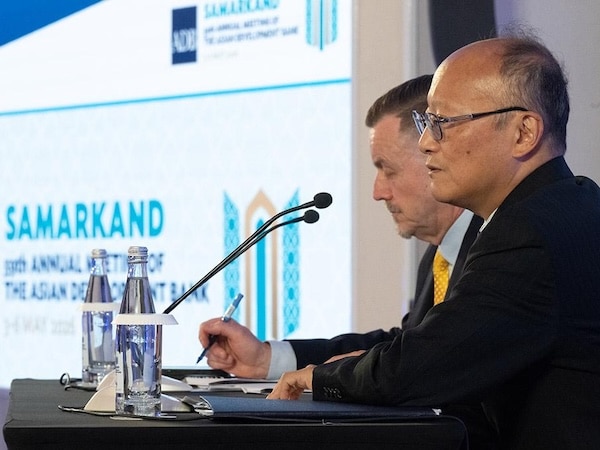
ADB reveals US$70b plan to connect Asian power grids and digital networks
The Asian Development Bank (ADB) announced on Sunday it will back two new initiatives priced at US$70 billion total to connect power grids, expand cross-border electricity trade and improve broadband access across Asia and the Pacific.
The Pan-Asia Power Grid Initiative aims to connect national and subregional power systems so that renewable energy can flow across borders, while the Asia-Pacific Digital Highway promises to help close the digital infrastructure gap and enable the region to benefit from AI-driven growth.
The lion’s share of that investment will go towards the Pan-Asia Power Grid Initiative, although digital infrastructure projects – particularly data centres – also stand to benefit from better access to interconnected renewable energy.
For the Power Grid Initiative, the ADB said it will work with governments, utilities, the private sector and development partners to mobilise US$50 billion by 2035 for cross-border power infrastructure that can unlock renewable energy at scale.
The initiative will focus on transmission and grid integration, including cross-border lines, substations, storage, and grid digitalization. It will also support power generation linked to electricity trade, including renewable energy export projects, regional renewable hubs, and hybrid generation-storage facilities.
The ADB aims to integrate about 20GW of renewable energy across borders, connect 22,000 circuit-km of transmission lines, improve energy access for 200 million people, create 840,000 jobs, and cut regional power sector emissions by 15% – all by 2035.
The ADB said it plans to finance about half of the US$50 billion from its own resources and raise the rest through cofinancing, including from the private sector. Up to US$10 million in technical assistance will support efforts to align regulations, adopt common technical standards, prepare feasibility studies and advance other work needed for major projects.
The ADB said the Power Grid Initiative builds on existing subregional cooperation initiatives, including the South Asia Subregional Economic Cooperation program, the Bay of Bengal Initiative for Multi-Sectoral Technical and Economic Cooperation grid interconnection planning, the ASEAN Power Grid, and the Central Asia Regional Economic Cooperation Energy Strategy 2030.
US$20b for digital infrastructure
Meanwhile, the ADB’s Asia-Pacific Digital Highway Initiative will mobilise US$20 billion by 2035 to finance digital corridors, data infrastructure, and AI-ready economies.
Investments will focus on connected infrastructure, including terrestrial and subsea fibre networks, satellite links and regional data centres. The ADB said it will also provide policy and regulatory support, including on cybersecurity risk management, and invest in skills programs to strengthen digital and AI readiness.
By 2035, the initiative aims to provide first-time broadband access to 200 million people and faster, more reliable digital connectivity for another 450 million people across the region. It is projected to cut connectivity costs in remote and landlocked areas by about 40% and help create 4 million jobs.
The ADB expects to finance US$15 billion of the initiative from its own resources and raise US$5 billion through cofinancing, including from the private sector.
The initiative also calls for the establishment of a Centre for AI Innovation and Development in Seoul, which will be backed by a US$20 million contribution from the South Korean government. The ADB said the centre will promote responsible and inclusive AI adoption and help train about 3 million people in digital and AI-related skills by 2035.
“Energy and digital access will define the region’s future,” said ADB president Masato Kanda in a statement. “These two initiatives build the systems Asia and the Pacific need to grow, compete, and connect. By linking power grids and digital networks across borders, we can lower costs, expand opportunity, and bring reliable power and digital access to hundreds of millions of people.”
Both initiatives were revealed at the ADB’s annual meeting in Samarkand, Uzbekistan on Sunday.
1
Mai, 2026

Sierra Leone eyes satellite push to narrow connectivity gap
Sierra Leone is ramping up efforts to strengthen digital infrastructure through satellite-enabled solutions, as part of a wider strategy to expand nationwide connectivity.
Speaking at a parliamentary stakeholder meeting in Freetown, Minister of Communication, Technology and Innovation Salima Monorma Bah said that despite around $400 million in investment and backbone expansion to 14 of 16 districts, a 60% usage gap remains.
She highlighted satellite technology as key to reaching underserved areas and improving reliability when combined with existing broadband networks. Bah also urged greater infrastructure sharing among operators to cut costs and boost affordability.
The government is also advancing plans for a second subsea cable, backed by $15 million, to increase international bandwidth and improve network resilience.
Stakeholders, including the National Communications Authority and mobile operators, backed a multi-layered approach combining fibre, subsea and satellite infrastructure to support digital growth.