

Large-scale data centre growth in India appears to be accelerating, with recently announced deals or plans including big names such as CtrlS Datacenters, Submer, BSNL and Google, but some public discomfort has been expressed about the rollout in Andhra Pradesh.
CtrlS Datacenters has signed a letter of intent (LoI) with the government of Bihar, a state in eastern India, to invest INR100 billion (an estimated US$1.05 billion) to set-up a 150 MW hyperscale AI factory in Bodh Gaya, one of Buddhism’s most important pilgrimage sites. CtrlS has also formally inaugurated its INR4 billion (about us$42 million) AI and cloud-ready data centre in the capital Patna.
Meanwhile, global IT services and digital infrastructure provider Submer and BSNL Tower Corporation Limited (BTCL), a wholly owned subsidiary of operator BSNL, have signed a memorandum of understanding (MoU) to explore the development of sovereign, AI-ready data centre infrastructure across India.
Submer and BTCL will jointly assess opportunities spanning GPU-as-a-service (GPUaaS), sovereign AI cloud infrastructure, edge and micro-edge data centres and large-scale data centre projects of up to 20 MW.
Under the MoU, Submer will apply its expertise in integrated data centre architecture, liquid cooling, thermal management and high-density computing. BTCL will coordinate access to relevant BSNL premises and data centre facilities for technical and commercial feasibility studies. It will also support connectivity, regulatory alignment, and engagement with government and enterprise stakeholders.
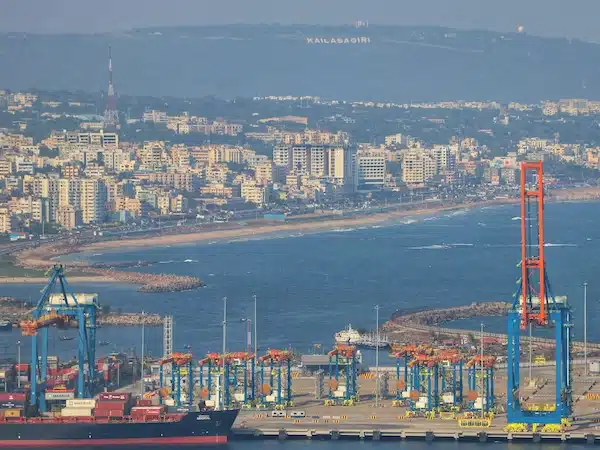
However, in Visakhapatnam in Andhra Pradesh on India’s southeast coast, where the US$15 billion construction of Google’s largest data centre outside the United States is under way, such developments are being questioned.
Visakhapatnam is a landing point for submarine internet cables linking the country to Singapore, so, for India, the location of the 600-acre site is ideal. And other tech sites are planned in the area. Indeed, a joint venture between multinational conglomerate Reliance Industries, investment management company Brookfield and data centre platform provider Digital Realty, is investing US$11 billion in another AI data centre in Visakhapatnam.
Many residents fear the Google data centre will strain water and power resources, damage the environment and bring too few jobs in return, fears that Google and local government suggest are unjustified; they argue that many direct and indirect jobs, as well as significant economic activity, will result.
In response to comments about water supply, Google has said it will deploy ‘advanced’ air cooling technology to ease water use at the data centre, while the state plans six 1.2-gigawatt nuclear power plants to manage energy demand.
Nevertheless, news reports suggest that activists in Andhra Pradesh are demanding a moratorium on new data centres across the state until independent environmental and social impact evaluations are published.
However, more such developments are highly likely. India has only about 3% of global data centre capacity, according to government figures, and wants more. It has rolled out a variety of incentives to attract big tech companies, including tax cuts.