
The Submarine Cable Market: A Bright Present and an Even Brighter Future

There is no question that the submarine fiber optics industry is enjoying an unprecedented period of strong demand for new cable systems.  The end of 2021 marked an extraordinary eight years of solid and sometimes spectacular growth for the market.  For an industry that traditionally saw a boom and bust cycle ever three-to-four years, the strength of the market during this period is something that has never been seen before.
In fact, the global submarine cable network is literally being rebuilt by new players using new methods and technologies…

There is no question that the submarine fiber optics industry is enjoying an unprecedented period of strong demand for new cable systems.  The end of 2021 marked an extraordinary eight years of solid and sometimes spectacular growth for the market.  For an industry that traditionally saw a boom and bust cycle ever three-to-four years, the strength of the market during this period is something that has never been seen before.

In fact, the global submarine cable network is literally being rebuilt by new players using new methods and technologies.  The “Over-the-Top” content providers are essentially overlaying a new transoceanic network on top of the existing global network.  This new network has capacities never before dreamed of thanks to Spatial Division Multiplexing (SDM).  With SDM, fiber counts are increasing, first from 12 pairs to 24 pairs, with even more pairs are envisioned in the near future.  Total capacity on these cables has jumped from a few dozen Terabits per second (Tbps) to over 100 Tbps and soon to over 200 Tbps, all within just a handful of years.  

And while in the past the term “global network” actually referred more to connections between large cities throughout the world than a network that truly served the global community, today’s global network literally is being taken to the ends of the earth.  

Recently, we have seen submarine cables being deployed in the Amazon River Basin, to the island of St. Helena (considered one of the most remote inhabited islands on the planet), to the tip of South America and to numerous small islands in the Pacific and Indian Oceans.  And then there are the Polar Regions.  Multiple projects for the Arctic and even the Antarctic are now being proposed and taken seriously.  

But the explosion in submarine cable demand is not confined to the number of cables, their capacities and their locations.  Other applications are being found for cables, most notably the use of commercial submarine cables for scientific data collection in addition to carrying the usual Internet traffic.  This application takes several forms, including SMART (Scientific Monitoring and Reliable Telecommunications) Cables, Distributed Acoustic Sensing (DAS) and State of Polarization (SOP) and could lead to improved tsunami warning capabilities, improved understanding of subsea geological activities such as earthquakes and volcanoes and many other possibilities.

DAS and SOP are being studied and tested on multiple cables around the world, but let’s focus on SMART for a moment.  2021 saw several major developments, beginning with an endorsement of the technology by the United Nations Decade of Ocean Science for Sustainable Development.  This was followed by a more than $7 million award from the Gordon and Betty Moore Foundation to set the groundwork for the use of SMART technology on a planned cable connecting New Caledonia and Vanuuta.  In the Atlantic, the Portuguese government has become a leading proponent of the technology and plans to use SMART on an upcoming domestic cable system connecting the mainland with the Azores and Madeira Islands.  We are about to see the dawning of a new era of ocean exploration based on submarine cables.

The current boom in submarine cable demand already has lasted far longer than most expected.  While there are no objective data to indicate that this will end soon, the reality is that it will end at some point.  But when it does, it will be a in a world consisting of a network of massive subsea data pipes carrying Internet traffic to every corner of the globe, while at the same time providing us with undreamt amounts of scientific data that will enable us to understand our oceans like never before.  

This is the real future of the submarine cable market.  
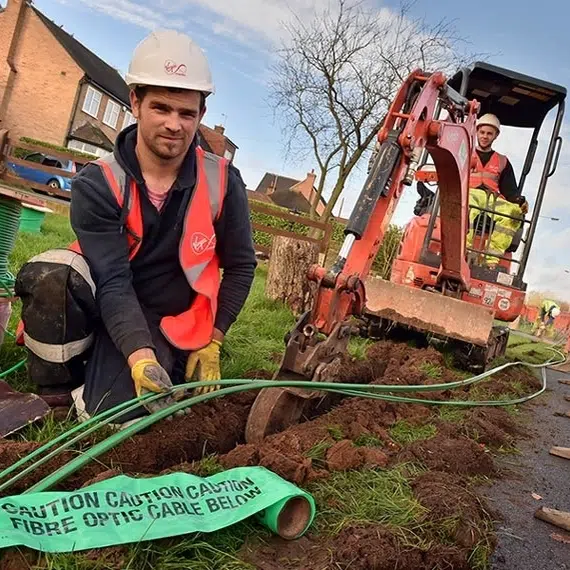
VMO2 confirms fibre JV talks with investors

Last week, rumours were emerging suggesting that the owners of VMO2 – Liberty Global and Telefonica – had entered into discussions with investors for the creation of a new JV to help accelerate the rollout of FTTP in the UK.
At the time, sources were suggesting that VMO2 would be looking to raise as much as £1 billion to help launch the new business…

Last week, rumours were emerging suggesting that the owners of VMO2 – Liberty Global and Telefonica – had entered into discussions with investors for the creation of a new JV to help accelerate the rollout of FTTP in the UK.

At the time, sources were suggesting that VMO2 would be looking to raise as much as £1 billion to help launch the new business, which would target areas VMO2’s FTTP network currently is not set to reach. 

Now, alongside announcing their financial results, VMO2 have confirmed that they are indeed in discussions with a number of potential investors to take part in a JV. This JV will aim to build a new FTTP network covering roughly 7 million premises by 2027, which will then be offered on a wholesale basis to UK operators. VMO2, naturally, will be an anchor tenant of the new network. 

Ultimately, seeking partners for additional network investment should come as little surprise, with VMO2 having said last year that it would prefer not to fund the rollout of FTTP to another 7 million on its own. In the past few years we have seen numerous rumours related to UK ISPs that could potentially have joined forces with Virgin Media to facilitate this joint build, though until now they have never been confirmed.

If all goes to plan, once completed this new network will expand VMO2’s total gigabit reach to roughly 23 million premises, presenting a serious challenge to UK incumbent Openreach.

However, its rollout still has a long way to go. 

VMO2 currently has around 1.2 million premises with FTTP and is aiming to increase that figure to 7 million by 2027. The company said today that they expect to add roughly 500,000 new premises to the FTTP network in 2022, though this pace will need to be accelerated if they hope to reach their 7 million target.

BT, meanwhile, already has roughly 6 million premises covered by FTTP and is planning to spend £15 billion to increase this total to 25 million premises by 2025.

For the time being, however, VMO2 can claim to be ‘the country’s largest gigabit provider’, having announced back in December last year that they had fully completed their network upgrade to DOCSIS 3.1 technology, allowing their full 15.5 million covered premises to access gigabit-capable broadband. 

What impact would the creation of new major fibre wholesaler have on the UK broadband market? Find out from the experts at this year’s Connected Britain conference 

Also in the news: 
Tech sovereignty debate takes the to the stars with €6bn EU satellite plan
CityFibre and BAI team up for private 5G in Sunderland
IBM spin off Kyndryl partners with Nokia to target enterprise market

AT&T chasing green goals with new solar power purchase

AT&T has announced two new virtual power purchase agreements with Dutch energy and commodities trader Vitol, buying 155MW of capacity at two upcoming solar plants. 
According to the operator, 80MW of capacity will come from the Bluegrass project in Maryland, while the other 75MW will come from the Swiftwater project in Pennsylvania…

AT&T has announced two new virtual power purchase agreements with Dutch energy and commodities trader Vitol, buying 155MW of capacity at two upcoming solar plants. 

According to the operator, 80MW of capacity will come from the Bluegrass project in Maryland, while the other 75MW will come from the Swiftwater project in Pennsylvania. These sites are expected to be operational in 2022 and 2023, respectively, reportedly creating up to 300 new jobs for the local areas.

“In addition to reducing our emissions footprint, deals like the ones with Vitol allow us to hedge against changes in energy costs and support economic development in communities we serve. It’s a win-win-win,” said AT&T’s vice president of global infrastructure optimisation and implementation, Joe Taylor.

Back in 2020, AT&T announced it would purchase 500MW of power output from Invenergy’s planned Samson Solar Energy Center in Texas. At the time, AT&T said the deal was the largest solar deal ever in the US.

In total, AT&T now has access to 1.7 gigawatts of renewable energy capacity through power purchase agreements. 

Naturally, energy usage is the operator’s largest source of CO2 emissions, so building more efficient networks and fuelling them with renewable energy are at the heart of AT&T’s goals of reaching carbon neutrality by 2035. Verizon is similarly aiming for net zero carbon emissions by 2035, while T-Mobile is aiming to reduce Scope 1 and Scope 2 emissions by 95% by 2025, using 2016 as the base year. 

T-Mobile also announced last year that they had already sourced renewable energy equivalent to 100% of their total electricity usage, meeting a goal they had set back in 2018.

In related news, earlier this week AT&T’s rival Verizon announced that it had allocated the roughly $1 billion in funding raised from its latest Green Bond, covering around 910MW in renewable energy purchase agreements. Since the end of 2019, the company claims to have signed over 20 such agreements, purchasing roughly 2.6 gigawatts in renewable energy production capacity.

Are operators doing enough to make the telecoms sector more environmentally friendly? Find out the latest news in telco sustainability at this year’s Total Telecom Congress 

Also in the news: 
Tech sovereignty debate takes the to the stars with €6bn EU satellite plan
CityFibre and BAI team up for private 5G in Sunderland
IBM spin off Kyndryl partners with Nokia to target enterprise market