FCC places foreign made consumer-grade routers on US ban list


News

Consumer-grade routers manufactured in foreign countries are now on the FCC’s list of products considered to be national security threats.

By Brad Randall, Broadband Communities

The Federal Communications Commission (FCC) in the United States has taken a step to heed President Donald Trump’s call to close security gaps in the United States by placing foreign made routers on the FCC’s list of products deemed to pose unacceptable security risks.

As a result of the move, foreign-made consumer grade routers will now be prohibited from receiving FCC authorization, in line with the Secure and Trusted Communications Networks Act.

“Following President Trump’s leadership, the FCC will continue do our part in making sure that U.S. cyberspace, critical infrastructure, and supply chains are safe and secure,” Chairman Brendan Carr said in a statement included with the FCC’s release.

An exemption for routers granted conditional approval by the Department of Defense and the Department of Homeland Security was also included in the FCC’s decision.

Existing routers not impacted by the decision

Meanwhile, the FCC also urged producers of foreign made routers to submit conditional approval applications.

“As outlined below, today’s action does not impact a consumer’s continued use of routers they previously acquired. Nor does it prevent retailers from continuing to sell, import, or market router models approved previously through the FCC’s equipment authorization process,” the FCC’s release stated. “By operation of the FCC’s Covered List rules, the restrictions imposed today apply to new device models.”

The move is being billed as in line with the president’s strategy for national security, announced in 2025.

“The United States must never be dependent on any outside power for core components—from raw materials to parts to finished
products—necessary to the nation’s defense or economy,” the strategy stated.

A full list of companies and products featured on the FCC’s list of products covered under the Secure and Trusted Communications Networks Act can be found online at the FCC’s website.

Get US telecom news in your inbox. Subscribe to the Broadband Communities newsletter!

‘Innovation has no ZIP code’: Azercell talks AI leadership


Interview 

At MWC 2026, we caught up with George Held, CTIO of Azercell, on how the company’s infrastructure is turning Azerbaijan into a regional digital hub 

“We were able to switch the traffic automatically from one place to another,” he said. “This delivered unprecedented experience to our customers.” 

Speaking to Total Telecom at the WinWin studio, Held explained how Azercell’s infrastructure backbone was a key foundation for the nation’s future growth. 

“In our part of the world, we have a saying: if you want happiness and prosperity, you build a road […] In our world nowadays, it’s building a digital road,” he explained. 

In recent years, Azercell has focused on nationwide fibre deployment, including upgrading to the latest GPON technology. 

“At first, we built just a normal GPON network, and now we’re bringing it to GPON with speeds of 50gbps,” said Held. 

This powerful network, Held said, holds the keys to capitalising on Azerbaijan’s strategic geographic position as a transit corridor linking Asia, Europe, and beyond. 

“The role which we play is just absolutely unbelievable because we are connecting East and West, North and South. And by doing this, we are making life so much better for people in our countries. We’re bringing employment. We’re bringing opportunities. And, at the same time, we’re bringing the global economy together,” he said. 

Embracing the AI era 

Beyond deploying high quality infrastructure itself, Azercell is also implementing AI within network management, with a strong focus on developing autonomous, self-healing networks aligned with TM Forum frameworks. These systems dynamically reroute traffic and optimise performance in real time. 

“With autonomous networks we will be able not only to connect people, but give different experiences, different speeds of connectivity. And some elements like low latency bring absolutely different experiences,” said Held. “We’re putting lots of elements on the network just to make sure that the experience for users is absolutely uninterrupted.” 

Held pointed to major live events as proof points of this technology’s effectiveness, including the Azerbaijan Formula One Grand Prix and a recent Justin Timberlake concert in Baku.  

The same capabilities apply to environmental disruptions, including the harsh weather conditions faced in part of the country’s most mountainous regions. 

“Huge winds, huge amounts of snow, rain — they all impact day to day operations,” said Held. “Self-healing networks address this by optimising traffic, bringing the capacity to the places where it really matters.” 

From network performance to commercial growth 

With a more optimised and resilient AI-powered network, opportunities for revenue growth are myriad.  

“Commercial impact is fully related to the customer experience,” said Held, highlighting the importance of network reliability over pure speeds. “If we provided uninterrupted service, the volume of traffic would really see growth.” 

Low latency is also becoming a key differentiator, particularly for cross-border traffic and AI applications. 

“Latency […] is starting to play a really important role,” he said, noting its importance for emerging enterprise services and emerging use cases. “With low latency, all AI advanced applications and all the automatic processing is done in a much more elegant way.” 

In addition to better customer experience across a raft of new services, AI serving as a leveller, allowing junior engineers to learn more quickly and compete with senior colleagues that have many years more experience. 

“Our young engineers came up with a really cool AI tool where all the documents [about the network] are actually installed into one database and they can use natural language processing to pull any of the documents, and the system gives you a response on the network,” Held explained. “It gives a chance for young kids out of the university to deliver quality of service and compete with somebody who has been doing the job for 20 years.” 

More than this, it gives Azerbaijan an opportunity to compete on a global level. 

“Innovation has no ZIP code,” said Held. “AI for us is not just a gimmick. It’s not something which is invented in Cupertino or Mountain View. It can be invented in Baku. It works in Baku and makes lives better for our people.” 


Make sure all tools are present, always

The high cost of missing equipment in field interventions is becoming a thing of the past. With Brady’s complete RFID solution, telco providers and field service operators can now digitise vehicle inventory checks, ensuring every asset is accounted for in seconds.

Instantly see which tools are present in a vehicle – and what is missing. Easily save substantial time per vehicle, per intervention, with automated equipment inventory checks that take only seconds. 

By labelling equipment with passive, battery-free UHF RFID labels, we can let an RFID reader in your vehicle detect which tools and items are present. The RFID reader can check detected tools versus a list of expected items to confirm a complete vehicle inventory or to highlight missing equipment on your phone. 

Be fully equipped before leaving for a field intervention. Avoid losing tools after interventions. Don’t waste time checking visually where every piece of equipment is. Just scan, get confirmation in seconds, and drive to your next destination.  

Solution components 

We develop and manufacture every component in our solution. Tested in in-house laboratories, each component is designed to withstand the wear and tear of field interventions, including exposure to UV, dust and moisture. 

  • RFID labels: Brady offers industrial grade on- and off-metal RFID-labels and tags that stay attached and remain legible on your equipment. 
  • Fixed RFID readers: Equipped with patented data capture technology, Brady’s fixed RFID readers collect data on items passing through their read range. 
  • Portable RFID readers: With intuitive displays, portable RFID readers and SLEDs from Brady deliver unmatched mobility, data collection and interaction. 

Find out more details about the Van Scan solution from Brady! 

Ready to optimise your fleet? Find out more about the Van Scan solution from Brady:

Colt develops Agentic AI engine with Microsoft AI cutting enterprise quote time from days to minutes

London, March 2nd 2026 – Colt Technology Services (Colt), the global digital infrastructure company, today announced a successful proof of concept for an agentic AI engine it has developed together with Microsoft, to accelerate, simplify and clarify complex deal pricing for customers and enhance the Colt customer experience. As Colt’s customers grow, scale and expand their global presence, pricing can be complex, particularly across global markets, and a lack of transparency can be confusing and costly. The new agentic AI engine reduces time spent on developing and sharing pricing from days to just 10 minutes, giving customers fast, accurate competitive deal pricing to help drive decision making and manage cost control.  

Colt is exploring ways to apply agentic AI throughout the customer journey, from pricing to onboarding and beyond. This pricing agent is one of the first proofs of concept to be explored and delivered as part of the Colt programme. In just three days Colt and Microsoft trained the agent to deliver complex deal pricing across the majority of its markets, with 99% accuracy. While the quotes are generated by the agent, Colt’s skilled teams check them before issuing to customers.  

This agentic AI engine is one of the first tools to be developed as part of Colt’s broader ‘people first’ AI strategy, which focuses on creating secure, scalable and responsible AI ecosystems for its employees and customers, empowering them to face an AI defined future with confidence.  

Frank Miller, chief AI and platforms officer, Colt Technology Services says, “Enterprise IT buying has always been complex. A large-scale global infrastructure project can take weeks for providers to generate accurate pricing, but there’s no question it can slow down delivery. Together with Microsoft, we wanted to explore how AI capabilities can break this pattern. By accelerating and clarifying pricing, our customers can focus on achieving their goals, faster, while we keep them connected across the world. Businesses deserve connectivity without complexity and its down to global digital infrastructure providers to make sure this happens.” 

Frank added, “We’ll continue the innovation journey with Microsoft in building the factory for agentic application in telecommunication with a specific focus on the best possible customer experience; fast, simple, accurate, secure and reliable.” 

“Agentic AI has the potential to transform complex enterprise workflows in the telecom industry, where speed, accuracy and scale are critical,” said Rick Lievano, Worldwide CTO, Telco, Media & Gaming at Microsoft. “Colt’s initiative, combining deep telecom domain expertise with Microsoft cloud AI capabilities, helps automate complex processes, improve consistency, and give customers faster access to the information they need to make informed decisions.” 

The agentic AI engine for pricing is expected to become available for use later this year.  

About Colt Technology Services 

We’re Colt. We own and operate exceptional digital infrastructure which powers the global AI economy, connects societies, builds communities and transforms lives. Thousands of colleagues in 65+ offices across Europe, Asia, and North America share a deep commitment to delivering an outstanding experience and making every interaction effortless for our customers. 

Customers and partners choose our award-winning fibre infrastructure, digital platforms and security solutions, delivered across a network that spans continents and crosses oceans. We’re Europe’s largest B2B operator: we connect 40+ countries, 32,000 enterprise buildings, 275+ points of presence, and 12 cable landing stations and we manage eight subsea cable systems. We also co-manage AS3356 – the most widely peered network in the world. 

Founded in London over 30 years ago, we’re privately funded and driven by values of fairness, inclusion and equity. We’re known for our urgent call for social and sustainable change and we’re guided by our purpose in everything we do: creating effortless connections and extraordinary outcomes for our customers, communities and people. Be a part of our story: come on over to www.colt.net  or join our amazing communities at LinkedIn, Instagram, TikTok, Facebook and YouTube. Media enquiry? Email us at pressqueries@colt.net.  

You can meet Colt at Submarine Networks EMEA, in London on the 27th – 28th May 2026. Get your ticket HERE

Building trust at scale: Why digital sovereignty needs a rethink

Viewpoint 

The future is federated sovereignty, says Aaron Boasman-Patel of TM Forum. Learn what that means for you, from concept to architecture

By Aaron Boasman-Patel, VP, Innovation, TM Forum

Over the years, digital sovereignty was defined by borders. That mindset increasingly feels outdated and is being challenged as perceptions evolve behind how it is understood and exercised.

Across Europe, narratives of a “failing concept” and “falling behind” are gaining traction, signaling the need for organizations to move faster and strengthen the strategic position on how they manage and organize data.

It’s no longer feasible for every country to build a fully autonomous digital stack as the economics don’t add up and operational risks are high. And today’s networks, cloud, and AI systems are designed to interconnect, not isolate. These realities are forcing us to rethink what sovereignty means in a hyper-connected world. Europe is already moving in this direction with initiatives like Gaia‑X and the EU Digital Networks Act, signaling a shift from isolation to interoperability and system‑level coordination.

The future is federated sovereignty. This is where connectivity is organized around regional alliances, common standards, and shared trust frameworks that enable interoperability while keeping control of critical assets local.

From concept to architecture

Federated sovereignty means evolving into a framework of collaboration and shared responsibility rather than nationally isolated control. Initiatives such as Gaia‑X signal this shift at a policy and framework level, setting common rules for interoperability and trust across borders and moving sovereignty away from isolation and toward system‑level coordination.

Increasingly, federated sovereignty is being expressed through technical architecture. Sovereign cloud implementations such as the AWS European Sovereign Cloud illustrate how sovereignty can be enforced through technical controls, operational separation, and European governance while still participating in global cloud and AI ecosystems. Rather than fragmenting infrastructure, this approach enables interoperability by design while keeping control of critical assets local.

For telecom operators, this evolution brings both responsibility and opportunity. When sovereignty is no longer just about ownership, it becomes an issue of control, assurance, and verifiability in a world of disaggregated networks, cloud‑native infrastructure, and AI‑driven operation. Operators must answer fundamental questions in real time: Where is data processed and trained? Who controls decision-making systems? How are policies enforced? And how can outcomes be audited?

Governance and leadership in a federated world

Artificial intelligence accelerates the challenge. As networks move toward intent‑driven and autonomous operation, sovereignty shifts from physical hardware to adaptive software, policy, and model governance from manual configuration to cognitive automation.

To manage this, leadership models must evolve. Sovereignty spans networks, IT, AI, cloud, data, security, and regulation; it cannot sit solely within compliance or legal. It requires ongoing oversight, clear decision rights, and joined‑up leadership across technology, policy, and operations. Many organizations are formalizing this through introduction of a ‘Chief Sovereignty Officer’ function or equivalent operating model that unites governance, architecture, and operational assurance.

Telcos as architects of cloud sovereignty

What do telcos need to do, to ensure they are serving the needs of customers prioritizing sovereignty? Primarily, collaboration between telcos and cloud providers is essential to deliver secure, compliant, and innovative services. Telcos bring unique strengths to this partnership: trusted relationships with governments and enterprises, operation of critical infrastructure, and deep regulatory expertise.

Meanwhile, hyperscale cloud providers offer advanced technology and scalability. Together, they can create interoperable solutions that meet stringent security and compliance requirements while opening new market opportunities.

Real-world progress is underway, and multi‑cloud resilience practices reduce single‑provider risk. TM Forum’s Open Digital Architecture (ODA) and Level‑4 autonomous network capabilities advance observability, automation, and componentized networks, the essential foundation for sovereignty by design. Across geographies, operators and network infrastructure providers are recognizing that investment in autonomous network capabilities is key to control now and into the future. Which is why ODA and Level 4 autonomy play a pivotal role, providing operators the foundation to scale intelligent and sovereign networks.

Designed trust at scale

This year, those who lead the way will be those who embed sovereignty into architectures through policy-driven control, certification, continuous testing, and clear accountability. Something this critical should never be an afterthought. Risk-based resilience will be critical, including diversified routes and mediums such as fiber, subsea, and satellite networks, and tiered service continuity for emergency traffic.

The future of digital sovereignty is not fragmentation but designed trust at scale. Telecom operators sit at the center of that future, not just as connectivity providers but as custodians of controlled digital resilience.

Building sovereignty through collaboration

The path forward is shared. It is a commitment to federated sovereignty architectures rooted in open standards and shared assurance. It is an imperative to operationalize sovereignty with joint governance and runtime verification across multi‑cloud and multi‑network domains. It requires investment in observability, automation, auditability, and sovereign key management as core capabilities, not add‑ons.

By the end of this year, we expect to see those that lead on sovereignty to have made headway on four key milestones. These are:

  1. Establishing a cross‑functional sovereignty council that brings together technology, legal, security, policy within the organization;
  2. Defining and publishing sovereignty Service Level Objectives (SLOs) for data residency, model lineage, policy enforcement latency, auditability KPIs;
  3. Completing pilot sovereign cloud landing zones with route diversity and traffic tiering;
  4. And certifying model and data provenance for critical AI workflows.

Sovereignty built this way is verifiable, interoperable, and investable. It brings structure, clarity and control to an increasingly sensitive and mission critical organizational defense. Those who move first will define the standards, architectures, and trust models that others will follow.

Huawei unveils AI-native framework and new generation solutions to enable all intelligence

Partner Article

Huawei unveils AI-native framework and new generation solutions to enable all intelligence 

The communications industry is entering a new phase of transformation, as operators move beyond basic automation towards building intelligent networks. Rising network complexity, surging data traffic and the rapid adoption of Artificial Intelligence (AI) across enterprises and consumer use cases are exposing the limitations of traditional operations models, which remain largely reactive and fragmented.  

At the recently concluded MWC Barcelona 2026, Huawei outlined its vision for this shift, unveiling what it describes as the industry’s first AI-native framework for intelligent operations, alongside a new suite of solutions designed to accelerate the transition. The announcement is in line with a broader industry trend, where telecom operators are increasingly looking to leverage AI across the entire network lifecycle, from Operations and Maintenance (O&M) to customer engagement and monetisation. 

According to Capgemini, telcos have, on average, achieved a 20% improvement in operational efficiency and 18% reduction in operational expense through autonomous networks over a period of two years. While telcos are increasingly using AI to automate networks, the rise of AI-powered tools and applications is placing new demands on network performance and reliability.  

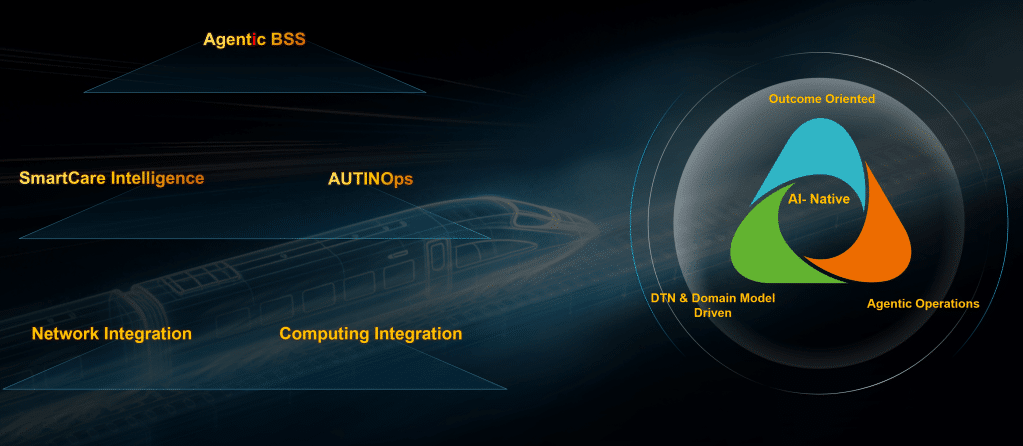
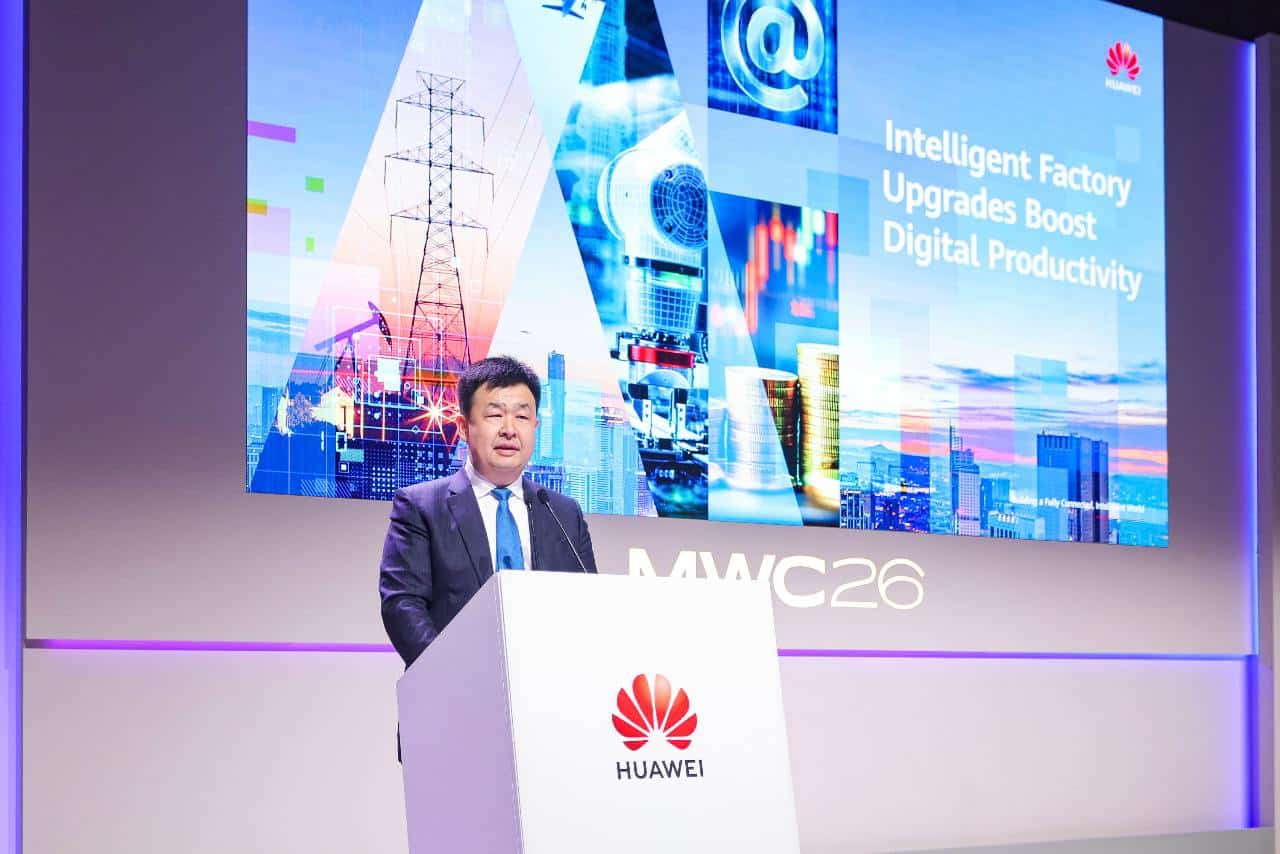
President of Huawei’s Global Technical Service, Bruce Xun, announced the launch of three solutions, Agentic BSS, SmartCare Intelligence and AUTINOps, which he believes will “ensure a seamless evolution while establishing new paradigms, creating new value, and achieving a massive leap in intelligence.” He was speaking in a session on Agentic Services and Software Enable All Intelligence.  

These solutions are based on an AI-native framework, which is “designed to accelerate the transition of AI innovations into real production, creating tangible new value,” said Xun.  

This framework is built on three core pillars. To begin with, it targets operational and business challenges that legacy solutions have failed to resolve. Secondly, it leverages digital twins and telecom-domain models to enable optimal solutions. Thirdly, the framework reinvents workflows and talent development to ensure a seamless collaboration between human experts and digital employees. 

A key challenge for service providers today is that traditional operations models remain largely reactive.  The tariff design and launch process is slow, and may not meet customer needs or effectively recommend the right products at the right time. 

In this context, Agentic BSS focuses on transforming business operations by introducing AI agents that can interpret customer intent, design new offerings and optimise customer engagement. By enabling collaboration between multiple agents, service providers can significantly reduce time-to-market and deliver more personalised services. 

“The key to intelligent operations lies in our ability to anticipate customer intent and identify unmet needs,” said Xun. This shift towards intent-driven operations is particularly relevant as operators expand into enterprise services and digital ecosystems, where responsiveness and customisation are critical.  

Huawei received a Silver award in the Total Experience category for its collaboration with a Chinese operator, where AI-driven account management agents were introduced. These digital assistants improved response times, reduced business processing time by 30%, and enhanced enterprise customer engagement. 

Reimagining network optimization  

While business transformation is one aspect, network operations remain central to the AI-native vision. SmartCare Intelligence, another solution introduced by Huawei, is designed to move network optimisation from a reactive to a predictive model. By leveraging large AI models, including User Experience Large Model (UELM) and Beam Space Large Model (BSLM), the system can analyse network data in real time, simulate potential scenarios and generate optimal adjustments. This approach ensures that the networks are always tuned to deliver optimal performance. This is significant because service providers are struggling with growing network complexity. AI-driven systems can help them provide consistent service quality.  

Towards predictive and preventive operations 

The third pillar of Huawei’s portfolio, AUTINOps, focuses on Operations and Maintenance (O&M), introducing a predictive approach to network reliability. 

Traditional O&M models often respond to faults after they occur, leading to service disruptions and longer recovery times. AUTINOps addresses this by identifying potential risks in advance and taking preventive action. It uses a cross-domain digital twin network and EDNS 2.0 model to monitor networks in real time, detect risks and trigger recovery actions. It combines proactive risk mitigation (T-1) with quick fault recovery (T0) to ensure “dual protection,” leading to high uptime and network reliability.  

Huawei’s approach is beginning to see validation in real-world deployments. At the World Communication Awards (WCA), the company received a Silver award for Best Digital Transformation Programme for its work with a Middle Eastern operator, where it implemented an AI-driven O&M system focusing on fault management and resource topology optimization. Based on the AUTIN platform, the solution enabled over 95% topology visibility across VoWiFi access points, LTE anchor points and IMS core network elements. It delivered measurable improvements, including service availability exceeding 99.5%, a 40% reduction in call drop rates, and significant gains in fault detection and repair times. 

Xun emphasized the importance of robust connectivity, without which AI remains an information silo. He urged the industry leaders to standardize definitions and specifications of AI native elements, jointly design new business and transaction models and to share best practices to simplify network operations while ensuring improved performance.  

A mandatory leap: Why AI is fast becoming part of ‘Industrial DNA’ for manufacturing

Interview

We spoke with Liu Chao, CEO of the Huawei’s Manufacturing & Key Enterprise Account business unit, about the seismic impact AI is having for the manufacturing industry

At Mobile World Congress 2026, AI finally appeared to be coming of age. From myriads of commercial AI agents to early demonstrations of physical AI, it was clear that AI was finally becoming

For Huawei’s Liu Chao, the era of treating AI as a high-tech accessory is over for the manufacturing sector.

“AI is now more than tools,” said Liu in an interview with Total Telecom. “It can be a unique distinguisher for manufacturers to set themselves apart from their competitors[…] AI is now becoming an important paradigm shift in innovation and in leadership.”

““This shift is being driven not only by the growing maturity of AI, but also by the urgent need for manufacturers to strengthen their competitiveness. Established leaders in traditional manufacturing sectors, such as automotive, are facing increasing pressure as more players actively embrace advance technologies.

Given the precision and high standards required in manufacturing, industrial players place a strong emphasis on proven reliability and predictable outcomes. This means they tend to wait for new technologies have demonstrated clear value and stability. For Liu, this urge to wait is a “trap”.

“Adoption of AI is not optional. It’s a mandatory choice you have to make. The question is not whether to do it or not, but how to do it,” he said.

Bridging the expertise gap

Perhaps the biggest hurdle to adoption, Liu explained, is the lack of cross-discipline expertise. Industrial experts are typically not AI experts, and vice versa,

“I think one of the key priorities for manufacturers adopting AI is deepening their understanding of the technology and its evolving trends,” said Liu. “This also means strengthening capabilities in data and digital infrastructure, while developing more talent with AI and IT expertise – both of which are essential to fully unlock the value of AI.”

For AI adoption to scale across industry, both manufacturers and tech companies need to cultivate multidisciplinary talent that combines both industrial and digital expertise.

“We need AI experts who have the knowledge and background in the manufacturing sector,” he said.

It is only with this shared expertise, Liu argues, that the industry will be able to develop AI models tailored to the manufacturing sector’s specific needs.

“General models like OpenAI answer questions based on public information. But when it comes to the data about a specific company, industry, or process, these models are not good at giving very specific answers,” said Liu. “In manufacturing companies, the data about operation management, production processes, and research and development is proprietary and private. So, they need specialised solutions.”

Practical first steps: Pilot projects and infrastructure foundations

With this in mind, what does early AI adoption look like for manufacturing companies?

For Liu, initial focus should be not on overall transformation, but on addressing specific challenges.

“When a manufacturing company comes to us and says they want to begin using AI, we first discuss their pain points in their business,” Liu said, noting that identifying the right use cases can generate early value.

“We have to find some typical cases where AI can be applied and give a quick win to our customers,” Liu said. These early projects often act as pilot programmes that help organisations build internal experience and refine their data strategies.

“In the first stage we identify scenarios as the first batch of AI adoption pilots,” Liu explained. “Then in the next step we review their more confidential or private data in production or R&D and help them standardise it, ready for use in AI models.”

Automotive taking a lead

One manufacturing industry leading the pack when it comes to AI adoption is the automotive industry.

“Each year in China, 50% of new cars are connected to the internet and are electric vehicles. The changes in the market are very fast. These days, auto manufacturers are launching their new car models almost as frequently as mobile phone makers are launching phones,” he said, adding that “autonomous driving and smart cockpit capabilities are all enabled by AI models.”

The most advanced carmakers are using AI across product development, factory operations, and quality inspection. This is allowing customers to enjoy a far greater level of personalisation as part of a C-to-M (Consumer-to-Manufacturer) framework.

“It is an end-to-end process that allows full customisation by the consumers,” explains Liu. “It’s how auto manufacturers in China are trying to win in such fierce competition.”

“In the assembly line, a fully assembled car is built every minute,” Liu continued. “When the customer chooses a specific configuration – say, for example, a yellow safety belt – you have to make sure that yellow belt arrives at exactly the right point in the assembly process. That needs AI-enabled scheduling with the data flowing from the order side directly to the production.”

Networks come first

Of course, a strong foundation of digital infrastructure is a critical requirement in this journey.

“The precondition is that you have very solid network connections and very good hardware,” Liu said. “Without this, putting AI into action is incredibly difficult.”

For Liu, the pace of change means manufacturers must continue learning and adapting as AI technologies evolve.

“You cannot wait for the latest technology for fear of being left behind because AI is changing so quickly,” he said. “You have to learn throughout the process of adoption.”

Keep up to date with all the latest telecoms news with the Total Telecom newsletter

Also in the news
World Communication Award Winners 2025
Ofcom clears the way for satellite-to-smartphone services
LG Uplus’s AI voice call app glitch leaks user data


TIM and Fastweb create JV to build 6,000 mobile towers

Press Release

TIM and Fastweb + Vodafone have signed a non-binding agreement for the construction and operation of new mobile towers (passive infrastructure) in Italy, with the prospect of creating up to 6,000 new sites. The joint initiative also aims to accelerate the  national rollout  of 5G.

The project will enable TIM and Fastweb + Vodafone to improve operational efficiency and align costs with the European average, while maintaining high infrastructure quality standards and the technological flexibility needed to develop next-generation networks.

The initiative will initially be implemented through a  joint venture  owned equally by TIM and Fastweb + Vodafone, with the aim of evaluating the entry of third-party investors into the company at a later stage to optimize its financial structure. The infrastructure will also be made available to third-party telecommunications operators under an open access model.

Construction activities will begin according to a multi-year development plan. TIM and Fastweb + Vodafone will act as  anchor tenants  of the new infrastructure, signing long-term agreements for the use of the towers at market conditions. The parties will also evaluate the possibility of providing additional services.

The initiative contributes to strengthening the sustainability of the telecommunications sector in Italy and will allow for greater resources to be allocated to the development of next-generation networks. The project is subject to the necessary authorizations from the relevant authorities.

Keep up to date with all the latest telecoms news with the Total Telecom newsletter

Also in the news
World Communication Award Winners 2025
Ofcom clears the way for satellite-to-smartphone services
LG Uplus’s AI voice call app glitch leaks user data

O2 deploys Europe’s first pre-assembled mobile mast in Kent

Press Release

O2 installed Europe’s first pre-assembled mobile site in Sandwich, Kent, introducing an innovative new approach to building mobile infrastructure that significantly speeds up deployment and minimises issues on site, meaning reliable connectivity can be delivered to customers more quickly and efficiently.

Traditionally, engineers installing antennas, radios and cabling would have to connect and configure hundreds of connections on site, often working at height and exposed to the elements. Using technology developed by Vecta Labs, these components are now fully assembled and tested before they ever reach the tower, dramatically simplifying installation while improving quality control.

Each unit is pre-assembled and validated in a controlled testing environment using specialist equipment, including anechoic chambers that allow engineers to precisely measure radio performance. They are then subjected to simulated wind conditions to replicate real-world stresses before they leave the factory, ensuring every mast meets the same exacting standard on arrival.

Passive radio frequency components such as antennas, cables and connectors are also tested for Passive Intermodulation (PIM), a common source of interference that can degrade network performance. By identifying and resolving these issues before deployment, O2 can ensure consistent mobile network performance from the moment a site goes live.

The approach also dramatically simplifies installation, reducing the number of connections engineers must complete on site from around 100 cables to just six, helping save time and minimising the risk of errors. The first European deployment was completed in Sandwich, Kent, where the pre-assembled equipment was installed in four hours, reducing time on site by up to 75 per cent compared with traditional deployments.

For O2 customers, this means new and upgraded sites can be installed faster with less network downtime, helping to improve coverage and boost capacity so they can stream, browse and stay connected on the move. O2 plans to go deploy 100 of these pre-assembled sites across the UK this year as part of its £700m Mobile Transformation Plan.

Steven Verigotta, Director of Mobile Delivery at O2, said: “Moving one of the most complex parts of building a mobile mast into the factory is a real step forward for our network. It allows us to install sites faster, improve quality control and ensure customers benefit from stronger, more reliable connectivity from the moment the site goes live. This is just one of the improvements we’re making as part of our £700m Mobile Transformation Plan which is helping to create the biggest and most reliable network in the UK.”

John Bonello, Director and Founding Member at Vecta Labs, said: “We’re proud to see Europe’s first Vecta Labs deployment delivered with O2. This approach combines pre-assembly, precision RF testing and simplified installation to help operators deploy infrastructure faster while maintaining the highest standards of performance.”

O2 was recently recognised as the most improved mobile network across Europe in Umlaut Connect’s Mobile Network Test, an independent and comprehensive benchmarking report. It was also awarded Best Mobile Network Coverage at the Uswitch Telecoms Awards for the second year in a row, which recognised the scale, reach and reliability of O2’s mobile network.

Keep up to date with all the latest telecoms news with the Total Telecom newsletter

Also in the news
World Communication Award Winners 2025
Ofcom clears the way for satellite-to-smartphone services
LG Uplus’s AI voice call app glitch leaks user data

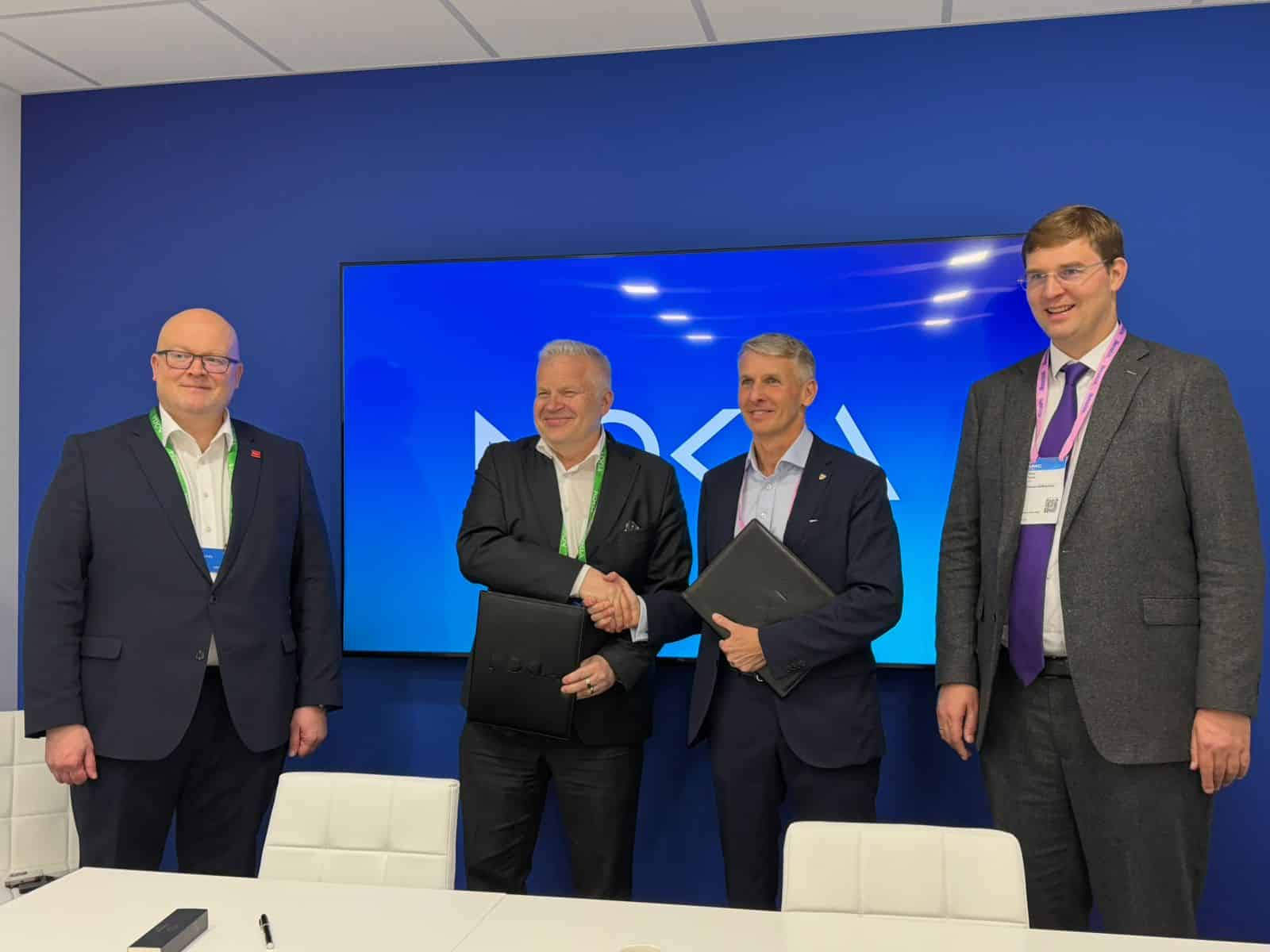
Freedom Telecom International and Nokia signs Strategic Cooperation Agreement to begin joint innovation work

Freedom Telecom International (FTI), a subsidiary of Freedom Holding Corp. (NASDAQ: FRHC), has signed a Strategic Cooperation Agreement with Nokia. As a first step, Freedom Telecom International and Freedom Lifestyle Group will inaugurate an Innovation Lab at Nokia’s Sunnyvale, California campus in the coming months.

The initial focus is on designing next-generation AI data center blueprints, conducting feasibility studies in Kazakhstan and neighboring markets, and leveraging Nokia’s global ecosystem to scale cloud and AI-driven services. FRHC, a diversified international financial services group who intends to lead the region’s digital infrastructure buildout, views this cooperation key to realize this ambition and pave the way to further joint projects globally.

The move comes as Kazakhstan intensifies efforts to establish itself as a regional hub for artificial intelligence, digital talent, and sovereign cloud capabilities – domains that are rapidly becoming global benchmarks for economic competitiveness. Central Asia, historically underpenetrated in hyperscale infrastructure, is now drawing growing attention from global technology providers and international investors seeking new growth corridors.

Timur Turlov, Founder & CEO of Freedom Holding Corp., commented: “Kazakhstan is investing heavily in the future of cloud and AI, and global partnerships play an important role in this journey. Over the past year, we began collaborations with companies like NVIDIA and OpenAI to help accelerate high performance computing, digital skills, and modern AI infrastructure. Exploring opportunities with Nokia reinforces this direction and helps us evaluate technologies and expertise that are necessary for technological progress across our global footprint.”

Johannes Hummer, CEO of Freedom Telecom International, added: “This agreement is an important milestone for Nokia and FTI as our mission includes crafting international partnerships’ for Freedom Holding Corp. with Telcos and TechCo’s. The Innovation Lab in Sunnyvale will allow both teams to test ideas and learn together. It marks the beginning of a journey focused on innovation, collaboration, and long-term impact.”

The newly established Innovation Lab will serve as the venue to test and evaluate AI architectures, cloud technologies and advanced networking solutions. Freedom Lifestyle Group will use the Innovation Lab to test AI-powered consumer services across its e-commerce and health tech businesses including chat and voice assistants, agentic AI systems, and next-generation Superapp capabilities – and organize trials to see how Nokia’s infrastructure performs and could scale in a real-world environment.

Alexey Lee, CEO at Freedom Lifestyle Group, commented: “The Innovation Lab provides an important platform to advance our already established digital services into their next generation – leveraging AI to deliver more intelligent, personalized, and seamlessly integrated experiences across the Freedom ecosystem.”

By combining Nokia’s technology with Freedom’s ecosystem play, global market access and capital markets expertise, the companies are assessing how to unlock scalable digital infrastructure opportunities and support the next phase of digital development worldwide.

Mikko Lavanti, Senior Vice President for Middle East and Africa at Nokia, said: “We look forward to working closely with the Freedom teams as they explore different approaches for cloud, AI initiatives, Lifestyle services and beyond. I am impressed by their clarity of purpose and the commitment their team brings to this work. The geographies they consider for future infrastructure expansion are highly promising. We appreciate the strong engagement and hope to reveal opportunities where Nokia truly makes a difference in advanced connectivity and brings undisputed value.”


About the Signing Parties

Nokia is a global leader in connectivity for the AI era. With expertise across fixed, mobile, and transport networks, we’re advancing connectivity to secure a brighter world. To learn more about Nokia, visit nokia.com 

Freedom Telecom International supports global partners in deploying and integrating Freedom Holding Corp’s portfolio of digital financial and lifestyle services. FTI also evaluates and executes investment opportunities in the telecom and fintech sectors, promoting financial and digital inclusion in emerging and frontier markets.

Freedom Holding Corp. is a leading international provider of investment and brokerage services across the markets of Central Asia, Americas, Europe and Middle East with more than 16 years of experience in global financial markets. The Holding’s shares are publicly traded on the NASDAQ stock exchange under the ticker FRHC with current market capitalization at USD 7.3 billion, and total assets amounting to USD 10.3 billion. The total number of clients in its digital ecosystem exceeds 11 million.

Freedom Holding Corp. employs over 11,000 professionals who are based in 231 offices in 22 countries, including Kazakhstan, the United States, the United Arab Emirates, Cyprus, Spain, France, Germany, Greece, Uzbekistan, and Armenia. The company’s principal executive office is located in New York City.

To learn more about Freedom Telecom International, visit: freedomtelecominternational.com To learn more about Freedom Holding Corp., visit: freedomholdingcorp.com
Media Contacts: Freedom Telecom International: contact@freedomtelecominternational.com