‘Ghost investor’ in True Corp could expose weaknesses within Thailand’s SEC

News

The Thai telco is questioning the validity of a newly reported $1 billion stake in the business

The Thai Securities and Exchange Commission (SEC) is under scrutiny this week after individual investor, identified as Supaporn Pimphong, has reported a trade bringing her ownership of telco True Corporation to 7% – but the telco says it has doubts the trade really took place.

The discrepancy came to light when True asked the SEC to verify a filing showing Supaporn had acquired a roughly a 3.2% stake from UBS Group AG on June 15.

This acquisition would raise Supaporn’s position to around 7.1%, worth around 32.5 billion Baht ($1 billion), making her one of True’s largest stakeholders.

Further confusing matters, Supaporn’s filing claimed the purchase included both ordinary shares and a block of ‘preferred shares’. True Corp, however, says it has never issued preferred shares and have none outstanding in their capital structure.

The SEC has subsequently launched a probe into the matter.

An individual investment of this scale is always noteworthy, but the lack of information surrounding Supaporn’s identity makes the apparent mistakes in this filing particularly concerning.

Initial investigations into her identity by Thai media outlet Khao Hoon uncovered no information regarding her business background, investment track record, or preexisting wealth portfolio. What they did find, however, was that since 2018 Supaporn had filed massive ownership positions in major Thai blue-chip companies, including a 49% stake in GJS Steel and positions over 5% in Bangkok Bank, Kasikornbank, an Asia Aviation. Combined, these stakes would be worth around $1.5 billion, not including Supaporn’s supposed $1 billion stake in True.

The Stock Exchange of Thailand (SET) and the respective companies’ shareholder registries have since confirmed that none of these positions officially exist.

So, what exactly is going on here? It seems highly likely that Supaporn does not really exist, but what is the point of the deception?

One theory is that this is a form of stock market ‘pump and dump’, with the fake positions being filed to artificially inflate stock prices before the sale of the owner’s real shares.

Another theory, proposed by Kasikorn Securities, suggests that the transfer of shares may have indeed taken place, with the Supaporn filing used to conceal the identity of the real final owner and mask financial restructuring.

The report notes that the True transaction perfectly aligns with UBS AG London Branch acquiring shares from Charoen Pokphand Group, a billionaire conglomerate and True Corp’s largest shareholder.

Regardless of the whether the transaction in fact took place here, the finding severely undermines the viability of the SEC’s reporting mechanism. The filing of a Form 246-2 requires encrypted user registration, identity verification against a national database, and validation of the underlying assets being traded by a brokerage; if these guardrails are somehow compromised, the validity of all the SEC’s public financial disclosures could be at risk.

The SEC is currently working with the SET for an emergency overhaul of their combined data infrastructure to address any weaknesses, but it could be some time before the extent of these systemic issues are fully revealed.

Keep up to date with the latest news with the Total Telecom newsletter

Also in the news
TELUS and L-SPARK give Canadian startups access to AI supercomputer
Belden to acquire RUCKUS Networks for $1.85bn
VMO2 taps Suffolk solar farm for 10 years of clean energy

VodafoneThree blocks over 2 million fraud attempts for banking sector

Press Release

VodafoneThree is trialling a new process to help the banking sector block scams

VodafoneThree has helped develop a proof of concept to help banks tackle fraud and protect their customers.

Created with Barclays, and in partnership with Mobile Ecosystem Forum* and Cyber Defence Alliance, the proof of concept has since expanded to include The Co-operative Bank, now part of the Coventry Building Society, and TSB.

Since August 2025, more than 2 million fraudulent messages have been blocked from reaching participating banks’ customers. This marks an estimated 25% increase in blocked scam messages on VodafoneThree’s network.[1]As UK banks lose £1.17 billion a year due to fraud[2], this process helps stop fraudulent SMS messages before they reach banking customers, while ensuring legitimate messages still get through.

Building on the success of VodafoneThree’s existing scam prevention tools, which blocked 139+ million fraudulent SMS in 2025 alone, the process sees VodafoneThree working closely with banks to build bespoke rules to the existing SMS firewall. This intelligence can differentiate between fraudulent SMS content and legitimate communications from banks to their customers.

Recent malicious SMS messages focus on impersonating banks and asking customers to share their personal or financial information urgently via scam phone numbers or phishing links included in the messages.

Rachel Andrews, Director of Corporate Security and Fraud, VodafoneThree, said: “Preventing fraud on our network and protecting trust in the UK’s digital economy is a huge priority. With fraud now accounting for 44% of all crime[3], no single organisation can tackle it alone. We’re working closely with banks, government, law enforcement, and industry partners to stay ahead, evolving our capabilities as quickly as fraudsters change their tactics. What’s clear is that we need to innovate as well, scaling new solutions like this is crucial in making the UK one of the toughest places in the world for fraudsters to operate.”

Nick Gliddon, Business Director, VodafoneThree, said: “Banks sit at the frontline of the UK’s fight against fraud, and their role has never been more critical. Together, we’re leading the way by stepping up our work with banks to strengthen protections and accelerate new solutions. And we’re challenging partners across the sector to match that ambition by working with us to raise the bar and better protect customers at scale.”

Paul Davis, Head of Economic Crime, Barclays, said: “Protecting our customers’ money and data is our highest priority. With reports of APP scams originating via SMS increasing by around 40% in 2025 compared with 2024, it is essential that we continue to work together to stay ahead of new threats. By sharing intelligence across banks, telecoms providers and industry bodies, we can help stop suspicious messages before they reach customers, while ensuring our customers still receive genuine messages from us. VodafoneThree’s work is a strong example of how collective action can help tackle fraud at source and better protect consumers.”

Garry Lilburn, Operations Director, Cyber Defence Alliance, said: “At the CDA, we seek to bring our banking members, Telecommunication, Law Enforcement and Tech partners together to problem solve on cross-sector problems. This project, initiated at such a cross-sector meeting, with MEF, Vodafone Three and Barclays bank, is an excellent example of cross-sector collaboration. Working with MEF, collectively, we will scale this project and its success to protect a wider number of banking and telecom customers.”

Dario Betti, CEO, Mobile Ecosystem Forum, said: “For many years, MEF has been at the forefront of the fight against smishing, continuously evolving our strategy to keep pace with the changing tactics used by fraudsters. We are very pleased to have supported VodafoneThree in this successful initiative, which shows what can be achieved when industry partners work together in a practical and targeted way to tackle fraud. The results are significant, and we look forward to seeing this approach adopted more broadly across the industry.”

Chris Gray, CISO, The Co-operative Bank, said: “Our customers’ safety is our top priority. Alongside our Cyber Fraud Fusion Cell – where we bring together expertise to spot and stop scams fast – this initiative helps tackle fraud at source. By partnering across sectors to block fraudulent messages before they reach customers, together, we’re strengthening everyday banking security and keeping people’s money safe.”

George Hulland, Fraud Prevention Manager, TSB, said: “For too long, UK households have lost life-changing sums to cruel fraudsters posing as their bank, so this much-needed intervention with Vodafone should help cut scams off at source. Fraud can only be tackled with different businesses coming together, and this is a great example of cross-sector collaboration to protect consumers. Banks will never ask you for personal information, or to transfer money to them – so if you’re ever asked, hang up, it’s fraud.”

VodafoneThree urges customers and members of the public to remain vigilant and report any suspicious messages or voice calls to our dedicated 7726 SPAM reporting link, either by clicking on the SPAM icon or forwarding to 7726 at no extra cost. This valuable intelligence is then shared with other mobile network providers and anti-scam organisations, helping to protect customers.

Keep up to date with the latest news with the Total Telecom newsletter

Also in the news
TELUS and L-SPARK give Canadian startups access to AI supercomputer
Belden to acquire RUCKUS Networks for $1.85bn
VMO2 taps Suffolk solar farm for 10 years of clean energy

SK Group to invest $1.36 trillion in AI chips and data centres

News

The South Korean giant is betting heavily on both chip production and data centre growth

South Korean conglomerate SK Group has announced a massive 2,100 trillion won ($1.36 trillion) investment roadmap targeted at domestic semiconductor manufacturing and AI data centre deployments.

The strategic push focuses heavily on securing upstream supply chain dominance and scaling computing infrastructure to reposition South Korea on the global AI stage.

“We should not simply export AI products. We need to export intelligence itself while building a domestic market for AI-driven intelligence,” said SK Group’s chairman Chey Tae-won, as reported by Yonhap News Agency.. “To achieve that, we will rapidly build AI factories in the form of large-scale AI data centers.”

SK Hynix plots memory chip production expansion

The group’s semiconductor division, SK Hynix, is spearheading the hardware allocation by committing 1,100 trillion won ($706 billion) to scale production capacity for High-Bandwidth Memory (HBM) and next-generation DRAM and NAND flash components critical for AI workloads.

Key capital projects within the chip investment include:

  • Cheongju: 100 trillion won ($65 billion) allocated for site expansion.
  • Southwest Cluster: 400 trillion won ($261 billion) earmarked to construct an entirely new semiconductor production hub.
  • Yongin Mega-Cluster: 600 trillion won ($392 billion USD) dedicated to fast-tracking the deployment of its primary semiconductor hub. The group has pulled forward the completion timeline for this project to 2033, moving it 12 years ahead of its original 2045 deadline.

The broader long-term vision outlines a sustained capital expenditure of approximately 100 trillion won ($65.3 billion) annually in South Korea over the next decade, according to Chairman Chey.

SK Telecom pivots to GPUaaS and regional infrastructure

In tandem, telecom unit SK Telecom will deploy 1,000 trillion won ($642 billion) to build out physical AI data centres. The operator intends to establish 15 GW of AI data centre capacity across South Korea by 2035, with an interim target of 5 GW operational by 2029.

The initial phase involves a 140 trillion won ($91.5 billion) investment targeting the southeastern Yeongnam region to create a localised AI hub. This rollout begins with a 100MW hyperscale AI data centre in Ulsan, scheduled to begin operations in Q4 2027. SKT plans to expand this site by an additional 900MW, alongside another 1GW deployment elsewhere in the region.

“The massive AI data centers could transform the region into a hub for the verification and expansion of manufacturing AI, when combined with the manufacturing capabilities in the region,” SK Telecom’s CEO Jung Jai-hun announced during a public briefing with South Korean president Lee Jae Myung last week.

SK Group’s multi-year investment plans arrive amid unprecedented infrastructure spend across the global technology landscape; US hyperscalers, including Microsoft, Alphabet, Amazon, Meta, and Oracle, are forecast to spend a combined $600 billion to $750 billion USD in 2026 alone. While SK Group’s investments pale in comparison to these true giants, it nonetheless places the organisation firmly as a regional competitor.

For a telco, on the other hand, the scale of these AI investments is broadly unrivalled. SK Telecom has long signalled its intent to shake off its role as a traditional telco and embracing a new persona as an ‘AI factory’. Backed by architectural alignment with NVIDIA, the operator aims to leverage this massive footprint to position itself as a major GPU-as-a-Service (GPUaaS) provider in the Asia-Pacific region.

SK Group has interntional AI ambitions too.  Last month, SK Telecom said it would invest 738 billion won ($480 million) into the newly formed ‘AI Co.’, a US-based subsidiary of memory giant SK Hynix created in January by repurposing its US flash memory firm Solidigm. The business, which is intended to operate as a strategic investment and ecosystem vehicle, is backd $10 billion from SK Hynix and a further $250 million and $380 million from SK Inc. and SK Innovation, respectively. 

By unifying upstream chip manufacturing via SK Hynix with mega-scale data center infrastructure from SK Telecom, SK Group is establishing a strong foundation for global AI development. This multi-trillion-won capital strategy effectively shifts the conglomerate from a regional component supplier into a high-margin, full-stack intelligence powerhouse capable of reshaping the Asia-Pacific tech landscape.

Keep up to date with the latest news with the Total Telecom newsletter

Also in the news
TELUS and L-SPARK give Canadian startups access to AI supercomputer
Belden to acquire RUCKUS Networks for $1.85bn
VMO2 taps Suffolk solar farm for 10 years of clean energy

The new cyber frontline beneath the sea: Why subsea resilience must be built from day one

Contributed Article

By Ferris Adi, Chief Information Security Officer, Trans Americas Fiber System

Subsea cables have long been viewed as physical infrastructure, fiber on the ocean floor, landing stations, and cable ships. That view is no longer sufficient. Today’s subsea systems are defined less by steel and fiber, and more by the digital operating ecosystem that surrounds them. As these environments become more automated, remotely managed, and vendor-integrated, they are quietly transforming into critical cyber systems, and expanding the attack surface in ways many organizations have yet to fully recognize.

The risk has shifted, but the narrative hasn’t

Public discussion still focuses on physical risks: anchor dragging, fishing activity, and geopolitical disruption. These threats remain real and visible.

But the more immediate risk is less visible, and more scalable: What happens if the systems used to operate, monitor, or restore subsea infrastructure are compromised? In modern environments, the cable itself is no longer the most vulnerable point. The management plane is.

From passive asset to digital ecosystem

A subsea system is no longer a single asset. It is an interconnected service model that includes:

  • Network operations platforms and control systems
  • Vendor access and remote support pathways
  • Identity, privileged access, and monitoring infrastructure
  • Cloud-connected services and customer platforms
  • Restoration, assurance, and operational workflows

This ecosystem drives performance, but it also defines the attack surface. A compromise in any one of these layers can escalate quickly from a technical issue into an operational, regulatory, or customer-impacting event.

The hidden critical layer: The management plane

The most important systems in subsea cybersecurity are often the least visible to executives. The management plane governs how infrastructure is configured, accessed, monitored, and restored. If compromised, it provides attackers not just with disruption capability, but with the ability to operate the network itself.

This risk is amplified in environments with:

  • Heavy reliance on vendor support
  • Weak identity controls or shared credentials
  • Limited segmentation between IT, OT, and operational systems
  • Unmonitored or poorly governed remote access

If the management plane is not secured, resilience is largely theoretical.

Why geographic diversity is not enough

The subsea industry has historically defined resilience through route and bare metal servers in a 1+1 config for the NMS, multiple paths, landings, and restoration options. That assumption no longer holds in a cyber context. Cyber threats are not constrained by geography. A globally distributed network can still fail in a correlated way if it shares:

  • Identity vulnerabilities
  • Common vendor access models
  • Centralized management dependencies
  • Untested recovery processes

Geographic diversity reduces physical risk. It does not address systemic cyber risk. True resilience requires design diversity, access control, and operational discipline.

The greenfield advantage, and responsibility

New subsea programs have a rare opportunity: the ability to build security before operations begin. This is the point where decisions are most impactful—and least expensive to implement. Organizations that succeed treat cybersecurity as a core design function, embedding it into:

  • Architecture: Segmentation, controlled access pathways, separation of operational and corporate environments
  • Supplier models: Clearly defined access controls, accountability, and oversight
  • Operational readiness: Logging, monitoring, and validated recovery capabilities
  • Emergency access: Structured, time-bound, and auditable “break-glass” processes

If these controls are not built early, they become significantly harder, and often incomplete, once operations are underway.

Supplier risk is now an operational risk

Subsea infrastructure depends on specialized suppliers. That dependency is unavoidable. What must change is how it is governed. Supplier assurance can no longer sit within procurement processes alone. It must be operationalized daily, through:

  • Controlled and monitored remote access
  • Session visibility and auditability
  • Defined roles in incident response and recovery
  • Clear ownership and accountability

If a supplier is critical to restoring service, they must be part of the resilience model before an incident, not during it.

Resilience is defined under pressure

The true test of subsea cybersecurity is not policy; it is behavior during disruption.

Marine repair events illustrate this clearly. Under pressure:

  • Access controls are often relaxed
  • External actors are introduced
  • Decisions are accelerated
  • Standard processes are bypassed

These conditions increase cyber risk at precisely the moment when operational dependency is highest.

Leading operators recognize that repair windows are also cyber events, and plan accordingly, with predefined access controls, approval mechanisms, and validation processes.  Resilience is not theoretical. It is controlled execution under stress.

From compliance to operational readiness

Cybersecurity frameworks provide structure but they do not guarantee resilience.

Resilient organizations are defined by their ability to:

  • Detect meaningful anomalies across identity, access, and management systems
  • Make informed decisions quickly under pressure
  • Coordinate effectively across internal teams and suppliers
  • Restore services with confidence, and evidence

The shift required is from control presence to operational confidence.

The board-level question that matters

Executives do not need detailed technical expertise, but they do need clarity. The most important question is not whether controls exist, but whether they work when needed.

“If a critical management system or supplier access path were compromised today, how quickly would we know, and how confidently could we restore service?”

This question forces alignment across governance, technology, operations, and supplier management. It also exposes the difference between compliance and resilience.

The next decade will raise the stakes

Subsea infrastructure is becoming increasingly strategic and increasingly contested.

It underpins:

  • Cloud and hyperscale platforms
  • Financial and digital economies
  • Government communications and national security
  • AI-driven workloads and global data exchange

At the same time, advances in AI, automation, and supply chain complexity will accelerate both attacker capability and operational dependency.

Technology alone will not determine the outcome. The differentiator will be governance and operational discipline.

Redefining the asset

The future of subsea cybersecurity will not be secured by protecting the cable alone. It will be secured by protecting the operating model around it, identity, access, vendors, monitoring systems, and recovery processes. Subsea infrastructure has always connected continents. But in a digital-first world, the real challenge is no longer connectivity.

It is trust. And trust, in this context, is built on one thing: Proven resilience before it is needed.


The submarine cable industry is evolving rapidly. Join the industry in discussion at Submarine Networks EMEA 2027

Minister joins industry to champion the people behind the world’s critical subsea cables

Press Release

Government, industry and education unite to inspire the next generation of professionals who will build, maintain and protect critical digital & energy infrastructure  

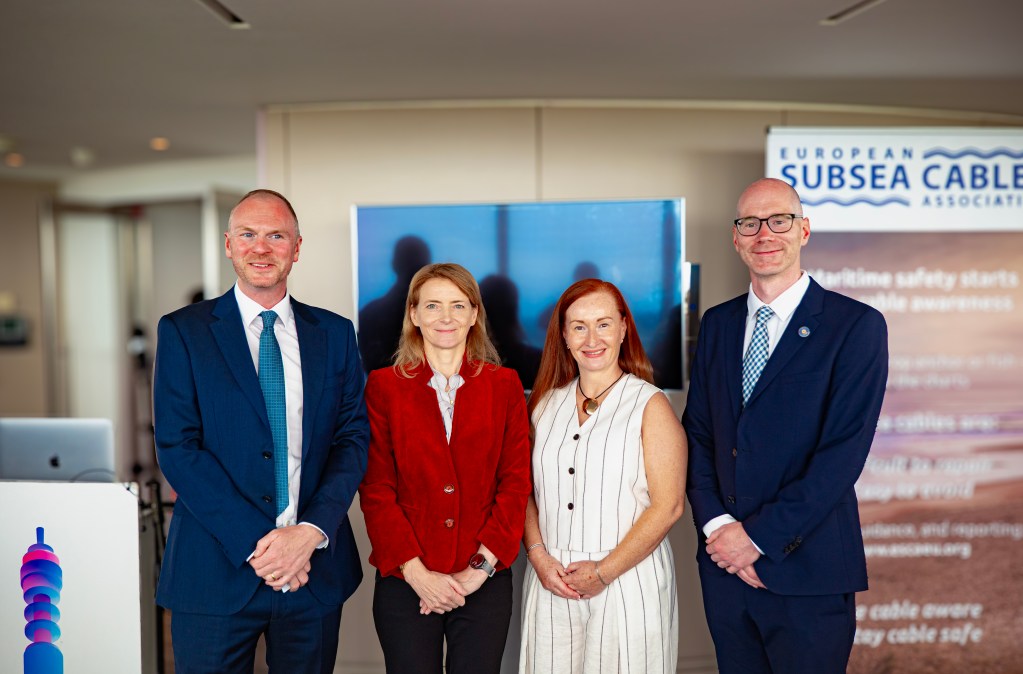
While recent headlines have focused on the importance of protecting submarine cables, government and industry leaders gathered at London’s BT Tower this week to highlight another vital part of the story: the people who build, install, maintain, repair and protect the infrastructure that keeps the world connected. 

The UK’s Minister for Digital Economy, Baroness Lloyd, joined representatives from government, industry and academia to discuss how the UK can attract and develop the skilled workforce needed to support one of the world’s most important yet least visible industries. 

Subsea telecommunications cables carry more than 99% of intercontinental digital communications, enabling everything from financial transactions and cloud computing to international communications and global trade. Behind this infrastructure is a highly skilled workforce working both offshore and onshore, requiring a diverse skillset including mariners, engineers, technicians, environmental specialists, manufacturers, and project managers. 

Hosted by BT and delivered in partnership with the European Subsea Cables Association (ESCA), the International Cable Protection Committee (ICPC) and the SubOptic Foundation, the Subsea Cables Summer Reception brought together government, industry and education to explore how awareness of these careers can be increased and how the skills pipeline can be strengthened for the future.   

Opening the event, Baroness Lloyd, Minister for Digital Economy, and Gus Jaspert, Managing Director – Marine at The Crown Estate, highlighted the importance of developing the workforce that will support the UK’s future digital infrastructure. The Minister also met engineers, cable specialists and offshore professionals responsible for laying, repairing and protecting submarine cables, alongside members of ESCA’s NextGen Subgroup—a network of around 120 students and early-career professionals committed to encouraging the next generation into the sector.   

The event showcased the wide variety of careers available across the industry, demonstrating that there is no single route into the sector. Alongside graduate opportunities, speakers highlighted the importance of apprenticeships, vocational training and technical education in developing the workforce needed to support future digital connectivity.   

Baroness Lloyd, Minister for Digital Economy said: 

“Subsea cables are the hidden backbone of our economy and everyday lives, carrying the data that keeps people, businesses and public services connected. Building a resilient future for this critical infrastructure means investing not just in technology, but in the skilled people who install, maintain and protect it - and events like this are vital to inspiring the next generation to take up those opportunities.”

Gus Jaspert, Managing Director – Marine at The Crown Estate said:

“Subsea cables are a critical part of our national life and complex marine ecosystem. However, the infrastructure itself is only part of the story. Our resilience as a nation depends just as much on the people who operate, maintain, and restore these systems – sometimes in very difficult conditions. It is great to come together with partners from across this vital sector to champion their work, and underline the importance of encouraging young people to consider careers that will underpin our resilience and security for future generations.”

John Wrottesley, Executive Director of the European Subsea Cables Association, said:

“Subsea cables often make the headlines, but far less attention is given to the people who build, maintain, repair and protect them. If we want resilient digital infrastructure in the future, we need to invest in the workforce that makes it possible. That starts by inspiring more people to see this as an exciting, rewarding and globally important career.”

As demand for digital connectivity continues to grow, organisations across the subsea cable sector are working together with governments and education providers to raise awareness of the industry and encourage more people to pursue careers that will help underpin the resilience of the global digital economy.


The submarine cable industry is evolving rapidly. Join the industry in discussion at Submarine Networks EMEA 2027


CMA skips to Phase 2 of nexfibre–Netomnia review

News

The regulator is exploring whether the £2 billion merger between the fibre network players will harm competition

The Competition and Markets Authority (CMA) has announced it will move directly to the more in-depth Phase 2 of its competition review into the of nexfibre–Netomnia merger.

The decision follows requests from both nexfibre and Netomnia, both of whom are keen to see the process progress as quickly as possible.

“We requested a fast-track to Phase 2 to get to the right answer faster; ensuring due process, while recognising urgency. We look forward to continuing our constructive engagement with the CMA,” said Rajiv Datta, CEO of nexfibre. “This deal would create the scaled, sustainable alternative to the BT Openreach monopoly, something the UK market still lacks. Every day of delay reinforces the incumbent’s advantage and slows the progress of genuine competition.”

The £2 billion merger, announced in February, would see InfraVia, Liberty Global, and Telefónica – owners of Virgin Media O2 (VMO2) – acquire Substantial Group, the owners of fibre wholesaler Netomnia and ISP brand You Fibre.

Netomnia would be merged with the parties’ existing joint venture, nexfibre, bringing together two fibre networks planned to span a combined 8 million premises by the end of 2027.

This new entity – when considered alongside VMO2’s roughly 5.7 million premises passed with fibre and 10.5 million with legacy hybrid fibre coaxial technology – would create a ‘scaled, financially secure challenger’ to BT (Openreach) and unlock £3.5 billion of investment in the UK market, the companies claim.

The tie up immediately triggered a review from the CMA, with preliminary stages inviting the industry to comment on the deal beginning in April. This was expected to be followed by a Phase 1 review, a process typically taking around 40 days and designed to identify any obvious risks to competition.

Given that the tie-up in question combines two of the biggest players in the market, it seems highly unlikely that the deal would have passed this stage, hence it makes sense for the network operators to ask for an acceleration to the more detailed Phase 2.

The largest point of criticism of the deal comes from the not-insignificant overlap of Netomnia’s fibre footprint and that of nexfibre. According to a report from PointTopic, around 832,000 premises could overlap, leading to “reduced infrastructure-level competition, less aggressive pricing or promotional activity over time, lower pressure for network upgrades and service innovation, and reduced long-term competitive tension between independent fibre builders.”

CityFibre, which had been attempting to acquire Netomnia itself, has argued that the deal will “significantly reduce competition and the choice available to consumers, as well as force hundreds of thousands of Netomnia customers back to VMO2”.

These concerns are unlikely to sink the deal entirely but could prompt remedies from the CMA, including stronger wholesale pricing requirements that will ensure prices are controlled for customers.

“A timely resolution is likely to be important given risks of finance deals dissipating, and even sellers’ heads being turned by alternative offers from CityFibre, although securing the finance to beat the nexfibre offer won’t be an easy feat,” Karen Egan of Enders Analysis noted in a LinkedIn post.

The deadline for the Phase 2 review is mid-December, though discussions about potential remedies could prolong the process.

How is the UK telecoms landscape evolving in 2026? Join the discussion at Connected Britain 2026

Also in the news
TELUS and L-SPARK give Canadian startups access to AI supercomputer
Belden to acquire RUCKUS Networks for $1.85bn
VMO2 taps Suffolk solar farm for 10 years of clean energy

BT and Verizon form enterprise JV

Press Release

BT Group and Verizon Communications Inc. have announced the signing of an agreement to combine their respective international enterprise operations into a 50:50 joint venture – in a move that is set to transform international connectivity.

The new joint venture will focus on serving multinational organisations. It is expected to serve more than 3,000 customers across more than 180 countries, representing approximately $4 billion in combined annual revenue. This breadth of operations will unlock significant scale efficiencies across the combined global network and service operations following completion.

Designed specifically for a cloud-first world in the age of AI, the joint venture brings together BT International, which serves multinational customers with secure and resilient communication and network services around the world, with Verizon’s international enterprise wireline arm, which provides secure connectivity to enterprises worldwide. Both BT and Verizon will hold equal voting rights and Verizon has agreed to pay BT an equalisation payment of $625 million.

By combining global scale with infrastructure designed and built to support local compliance and sovereignty needs, the joint venture will create a stronger platform for growth and accelerate the rollout of next-generation connectivity platforms. Customers will benefit from secure and resilient connectivity designed to meet data, operational and regulatory requirements.

At the same time, the parent companies will be better able to focus on their domestic markets, while providing support to the new joint venture as equal shareholders.

BT and Verizon have also today confirmed that Martijn Blanken has been appointed Chief Executive Officer-designate of the new joint venture, conditional on the completion of the transaction. Martijn has almost three decades in senior leadership positions across telecommunications, technology and digital infrastructure at Telstra, Openwave Systems, EXA Infrastructure and KPN, and a career spanning four continents. From 01 September he will join BT and will work with both parent companies, while observing relevant regulatory requirements, as they prepare for the launch of the proposed joint venture.

Clive Selley will continue to lead BT International as CEO, ensuring continuity of BT International’s ongoing transformation in readiness for the creation of the joint venture. Verizon’s leadership remains unchanged.

Allison Kirkby, Chief Executive of BT Group, said: “The world’s leading brands and international organisations trust BT International to connect them across the world. Bringing together this expertise and heritage with Verizon’s deep relationships with multinationals will create a stronger, scaled connectivity partner – one that has the reach, innovation and investment to succeed. Customers will benefit from new, secure and resilient connectivity platforms, which are designed for the age of AI and sovereign where it matters. It will create new opportunities for our people and long-term value for our owners. Today’s announcement marks a major milestone for BT International, and an important step forward for BT as a whole, as we deliver on our UK-focused strategy.”

Dan Schulman, CEO of Verizon, said: “Our international customers require secure, flexible connectivity that works seamlessly across borders and cloud environments. When we thought about how to best support them, this joint venture was the clear answer: a cutting-edge, AI-ready and secure platform run by a single global organization dedicated to their needs. At the same time, our relationship with those customers will stay equally strong as we continue to directly provide them with the connectivity they need in the U.S.”

The transaction is subject to regulatory clearances and consultation with employee representations in countries where required. BT and Verizon’s international businesses will continue to operate independently until the transaction officially closes with a full commitment to their respective customers.

Also in the news
TELUS and L-SPARK give Canadian startups access to AI supercomputer
Belden to acquire RUCKUS Networks for $1.85bn
VMO2 taps Suffolk solar farm for 10 years of clean energy

China Telecom and Huawei Win TM Forum 2026 Excellence Award for Second Straight Year

Press Release

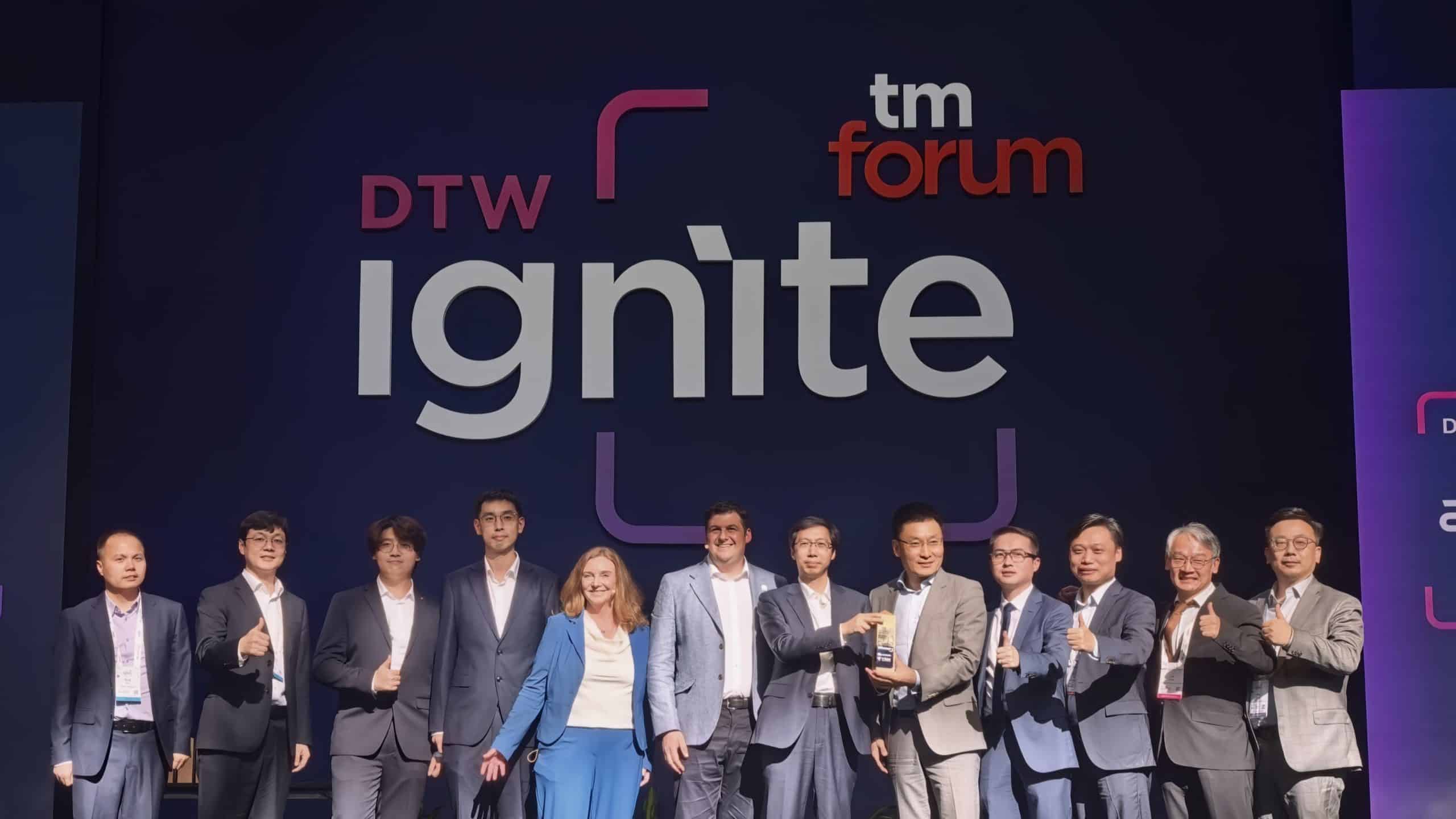
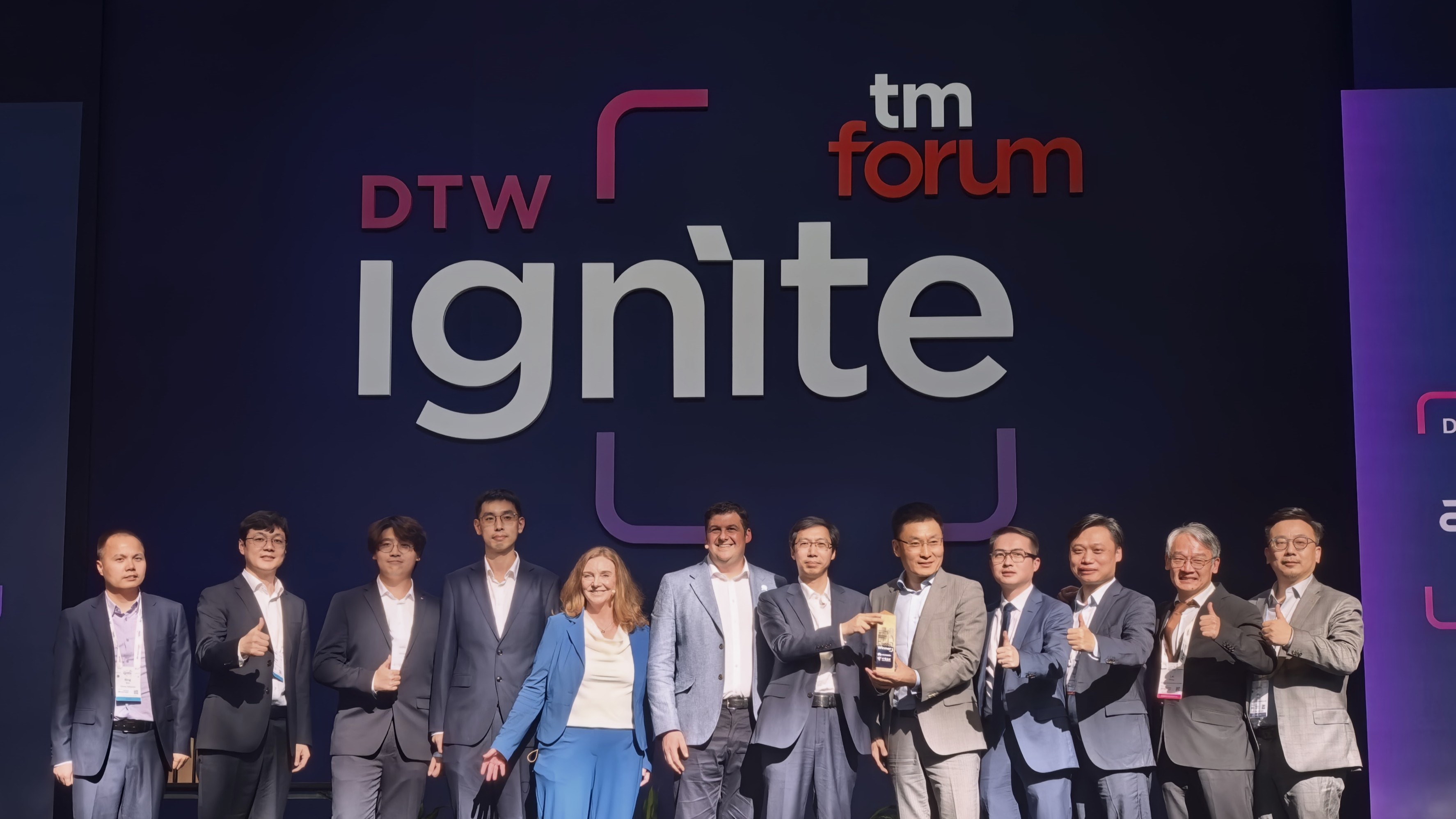
[Copenhagen, Denmark, June 26, 2026] At Digital Transformation World (DTW 2026) hosted by TM Forum, the joint project submitted by China Telecom and Huawei—”To AN Level 4 and Beyond – How 900+ AI Agents Have Transformed China Telecom’s Operations”—was honored with the 2026 Excellence in Autonomous Networks Award. This marks the second consecutive year the partners have taken home a heavyweight industry award, following their success at the 2025 TM Forum Excellence Awards. This latest win underscores high industry recognition for their breakthrough progress in the evolution of autonomous networks.

Booming services, including mobile AI, live streaming and mobile gaming have raised consumer expectations for mobile network quality. To address this demand, China Telecom and Huawei have co-developed a domain-specific large model dedicated to radio network experience improvement: the Network Experience Improvement Large Model. Built on China Telecom’s proprietary network large model foundation and powered by SRCON 2.0 (Simulated Reality of Communication Networks 2.0) as its core engine, the model identifies poor-QoE events network-wide and translates complex user experience anomalies into precise, readily actionable network optimization solutions. Combined with large language models to enable end-to-end autonomous operation, the solution effectively improves network quality, mitigates potential customer complaints and consistently boosts user satisfaction.

The solution has been rolled out across 21 cities with remarkable results: grids suffering from poor user experience have been cut by 20%, while network-related customer complaints have dropped by 10%. The deployment successfully converts AI computing power into tangible, high-quality network experiences for end users.

Looking ahead, China Telecom and Huawei will further deepen their strategic partnership to drive technological innovation and standards development. Committed to building AI that truly “understands networks and users,” the two parties will keep injecting robust momentum into the intelligent transformation of the global communications industry, and translate the requirements for developing new quality productive forces into concrete industrial practices.

Indonesia’s Indosat Ooredoo Hutchison and Huawei Win TM Forum 2026 Excellence in AI & Data for business impact Award


Press Release

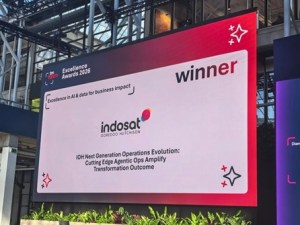
[Copenhagen, Denmark, June 24, 2026]‌ At the DTW 2026, Indosat Ooredoo Hutchison (IOH), in partnership with Huawei, won the “Excellence in AI & data for business impact” award for the new Generation intelligent operations solution AUTINOps based on the AI-Native Framework for Intelligent Operations. Leveraging cutting-edge technologies such as Digital Twin Network (DTN), Multi-agent collaboration, and Domain Specific Model (EDNS 2.0), the solution addresses the complex challenges of network operations in Indonesia, establishing a benchmark for AI-Native-driven operations transformation in the global telecom industry.

IOH and Huawei are committed to joint innovation centered on value and technology, pioneering the deployment of the AUTINOps solution across IOH’s network. This initiative elevates technology, processes, and organization through comprehensive intelligent transformation. By applying data governance framework of “Identify-Analyze-Optimize-Retain,” along with full-domain DTN and EDNS 2.0. These enable real-time, network-wide visibility, supporting fault management and predictive risk prevention. Through core capabilities such as multi-agent collaboration, dynamic chain-of-thought, and domain knowledge management, the solution achieves an 80% one-hop closure rate for fault-handling and reduces mean time to repair (MTTR) by 15%. In terms of network quality, availability improved from 99.3% to 99.7%, and site traffic loss decreased by 15%.

Simultaneously, both parties redefined the operations model, streamlining the original nine-step manual process into a two-step intelligent closed loop. This transformation facilitated the skill upgrade of over 400 operations personnel and cultivated 65 “digital employees,” establishing a new intelligent operations paradigm characterized by “humans supervising/enhancing AI Agents to execute and close tasks.”

The solution has been deployed at scale across all IOH network domains, including wireless, microwave, IP, transport, and energy, with annual agent calls exceeding 2 million, supporting communication services across more than 17,000 islands in Indonesia. Furthermore, based on project practices, IOH and Huawei have contributed 15 new standards, protocols, and methodologies to TM Forum, providing reusable practical experience for the digitization operations transformation of global operators.

IOH and Huawei Win “Excellence in AI & Data for business impact” Award

This TM Forum Excellence Award reaffirms Huawei’s technical strength and deployment capabilities in intelligent operations. Huawei will continue to explore and practice Agentic Operations together with leading operators like IOH, accelerating the journey towards ANL4 and implementing a new operations paradigm driven by value.

Deepening the Transformation Process, Ushering in a New Era of Intelligent Operations‌


Press Release 

Huawei with TM Forum and 12 Operators, Jointly Releases the New-Generation Intelligent Operations White Paper 4.0‌ 

[Copenhagen, Denmark, June 23, 2026]‌ At the DTW Ignite 2026, Huawei in collaboration with TM Forum and 12 global operators, jointly released the New-Generation Intelligent Operations White Paper 4.0. This white paper focuses on Agentic Operations, integrating practical achievements from multiple global operators. It elaborates on the AI-native operations architecture, implementation pathways, and business value, aiming to accelerate the construction of a new paradigm for ICT operations, unleash new value, and enable a leap for operational intelligence. 

Since the first version was released in 2023, Huawei has released four generations of white papers, continuously evolving along the operational transformation path of “network-centric,” “service-centric,” and “value-centric.” Based on technological advancements and industry pain points, White Paper 4.0 proposes an AI-Native intelligent operations value proposition: value-driven, with Digital Twin Network (DTN) and Domain Specific Model (EDNS 2.0), and a new paradigm of intelligent operations featuring Hybrid Team + Agentic Process. 

White Paper 4.0 distils a “Three-Stage, Six-Step” methodology encompassing data governance, process re-engineering, and organizational transformation, along with a four-stage data governance framework of “Identify-Analyze-Optimize-Retain.” Simultaneously, leveraging DTN and EDNS 2.0, continuously scans network and service status in real-time, identifies risks, and generates remediation plans. This ensures the effectiveness of backup and disaster recovery mechanisms at the T0 moment, guaranteeing stable service operations. By eliminating risks at the T-1 moment and enabling rapid fault recovery at T0, it establishes a “dual protection” for intelligent operations. 

Based on this framework, a new operational paradigm is redefined: shifting from humans utilizing tools to execute and close tasks, to humans supervising/enhancing AI Agents to execute and close tasks. Through intelligent agents, massive-scale tasks such as inspections and fault handling are automated, allowing personnel to shift focus to high-value work like complex problem-solving and agent development/optimization. Several operator practices have already been implemented, achieving an agent one-hop closure rate of over 80%, supporting the dual enhancement of network and service quality. 

Danwill Duan, President of Huawei ICT Assurance and Operation Services Domain, stated: “Agentic Operations is an inevitable trend in the evolution of network operations. White Paper 4.0 consolidates the exploration achievements of the entire industry. We hope to take this as an opportunity to collaborate with more partners to effectively address challenges, create greater value, and accelerate the journey towards AN L4.” 

In the future, Huawei will continue to collaborate with global operators and standards organizations, deepen technological innovations in Domain Specific Models, Digital Twins of Networks, and AI Agents, continuously improve the new-generation intelligent operations framework, and accelerate the transformation of technological innovation into operational benefits.

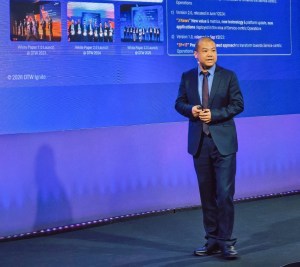
President of Huawei ICT Assurance and Operation Services Danwill Duan 

Interprets White Paper 4.0‌ 

Official Download Link for the New-Generation Intelligent Operations White Paper 4.0:‌ 

https://inform.tmforum.org/research-and-analysis/reports/new-generation-intelligent-operations-an-ai-native-reinvention