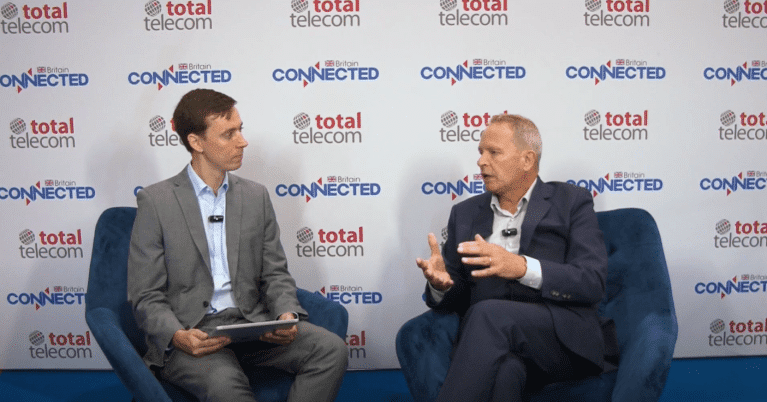
15,000 customers now connected to LilaConnect’s lightning-fast gigabit full fibre network

Retail ISP and specialist broadband provider, LilaConnect has announced it has surpassed 15,000 connected customers.

The milestone is another step forward in its vision, and commitment, to providing UK homes and businesses with best-in-class full fibre internet connectivity. This is in line with the UK government’s target to have full-fibre technology available nationwide by 2030.

Unlike other regular broadband connections, or ADSL, that use copper wires to transmit data, all LilaConnect services offer highly competitive internet speeds thanks to the ISP’s full Fibre to the Premises (FTTP) set up. FTTP will also help future-proof homes ahead of the nationwide copper switch off.

Over the past year, the retail ISP has increased new orders by 90 per cent and witnessed a 300 per cent growth in Active Subscribers. LilaConnect prides itself on its customer service –  with a customer-focused culture based on an authentic, collaborative and friendly approach to solve customer issues.

LilaConnect will not rest on its laurels, it has a razor sharp focus on further expanding its territory, made possible by the recent merger of VX UK and the Freedom Fibre Group. It will allow the retail ISP to tap into the alternative network provider’s innovative FTTP network that uses state-of-the-art XGS-PON technology. Alongside this LilaConnect will continue to commercialise its current footprint across Stoke-on-Trent, Bristol, Colchester, Wivenhoe, Crewe, Nantwich, Leek and Uttoxeter.

Jan Lange, Managing Director at LilaConnect commented: “At LilaConnect we understand the important part we play in helping to eliminate the digital divide by ensuring everyone in the community has access to fit for purpose and future proof connectivity. We’re proud to have hit the impressive milestone of our 15,000th customer.

He added: “Our work is certainly not done – the next step is to get even more homes and businesses across the UK connected to this essential full fibre network. Added to this, faster connectivity speeds are on the horizon to align with ever-evolving technological innovation and the exponentially increasing number of connected devices.”

Residents and businesses interested in connecting to the LilaConnect full fibre network can register their interest at www.lilaconnect.co.uk.

BSNL and MTNL forgo merger, sign 10-year service agreement  


News

The agreement will see BSNL take over the management of MTNL, with the former joining the latter as a management agency

For many years now, India’s state-owned telecoms firms Mahanagar Telephone Nigam Ltd (MTNL) and Bharat Sanchar Nigam Ltd (BSNL) have been haemorrhaging subscribers, struggling to compete effectively against the country’s two largest telcos, Reliance Jio and Bharti Airtel.

In an effort to make the companies (and, therefore, the national telecoms sector itself) more competitive, the government has been considering merging the two businesses since at least 2022. This, the government suggests, would generate valuable synergies, allow for considerable operational streamlining, and make the companies more attractive targets for investment.

However, the dire financial struggles of both companies have seen merger talks irretrievably bogged down in discussions of debt and regulatory roadblocks.

Instead, in recent months the government has leaned towards handing over control of MTNL’s operation to BSNL without formally merging the businesses. This, reports suggested, would remove some of the logistical hurdles related to a merger, such a having to de-list MTNL and buy back a certain number of shares.

This week, MTNL has announced it has approved just such a move, with the new deal seeing BSNL manage the operator for the following ten years. The deal can potentially be renewed by mutual agreement by both companies and can also be annulled by either party given six months’ notice.

This solution is not without its own headaches, however. The Department of Telecommunications (DoT) is currently exploring what such an agreement will mean when it comes to tax implications, saying they will not give the greenlight until they can be sure it will not result in unforeseen tax liabilities for the government.

Keep up to date with the latest international telecoms news by subscribing to the Total Telecom daily newsletter  

Also in the news:
LG and KT partner for 6G research
EE’s first 5G small cells go live, masts now deployed at 1,000+ locations across the UK
Optus clashes with AustralianSuper over slow tower build

Eutelsat adds Bayobab to list of OneWeb partners 


News 

The partnership will make use of Eutelsat’s 600 Low Earth Orbit (LEO) satellite constellation 

Eutelsat and Bayobab, a subsidiary of MTN Group, have entered a multi-year agreement to improve digital connectivity across Africa. The collaboration will use Eutelsat’s OneWebLEO satellite constellation to address the continent’s connectivity needs, particularly for enterprise and cellular network backhaul in remote areas. 

Bayobab, a key player in Africa’s digital infrastructure, will use Eutelsat’s OneWeb constellation to deliver reliable fixed connectivity services. These satellite solutions are designed to improve coverage in rural regions, offering high-quality, low-latency connectivity. The full rollout is expected by the end of the year, with services already available in four unspecified African countries. 

“This collaboration brings cutting-edge digital connectivity to even the most remote corners of the continent and reaffirms our promise of ‘Connecting Africa’ – a promise rooted in partnership and driven by a vision of a digitally inclusive future,” said Bayobab CEO Frédéric Schepens. 

“We are proud to count Bayobab and the broader MTN Group amongst Africa’s early adopters of the Eutelsat/OneWeb LEO constellation,” echoed Cyril Dujardin, co-president of Eutelsat’s business unit.  

“This partnership underscores the commitment of both Eutelsat and Bayobab to drive digital inclusion, and the pertinence of innovative satellite solutions to achieve this aim, notably the unique properties of ubiquitous, low latency LEO capacity,” he continued. 

Keep up to date with the latest international telecoms news by subscribing to the Total Telecom daily newsletter  

Also in the news: 


T-Mobile fined $60m over data security violations 


News 

This fine is the largest ever issued by Committee on Foreign Investment, and one of only six issued in the last 18 months 

T-Mobile has been fined $60 million by the Committee on Foreign Investment in the United States (CFIUS), a regulatory committee that scrutinises foreign investment for national security risks. 

The CFIUS fined T-Mobile for failing to prevent unauthorised access to sensitive data, and not reporting the incidents prompt, which violated its nationl security agreement. 

The incidents occurred between 2020 and 2021 during T-Mobile’s integration with Sprint. Technical issues led to the mishandling of information from a small number of law enforcement information requests. 

Although the data was mistakenly sent to the wrong law enforcement agency, it remained within the law enforcement community and was quickly addressed. T-Mobile emphasised that there was no data breach or malicious activity. 

“The $60 million penalty announcement highlights the committee’s commitment to ramping up CFIUS enforcement by holding companies accountable when they fail to comply with their obligations,” said an unnamed US official speaking to the Wall Street Journal. 

The T-Mobile and Sprint merger, valued at $26 billion, was finalised in April 2020.  The merger combined the third and fourth largest US wireless carriers. Despite facing legal challenges, the merger was approved, and the Sprint brand was discontinued. 

The delay in reporting these incidents to CFIUS was a significant factor in the fine.  

T-Mobile says it has since taken steps to improve its data handling and reporting processes. 

“We reported this in a timely manner, and the issue was quickly addressed. We are glad to have reached a resolution and look forward to continuing to work cooperatively with the law enforcement community to help keep the country and our customers safe,” a spokesperson for T-Mobile said. 

Keep up to date with the latest international telecoms news by subscribing to the Total Telecom daily newsletter 

Also in the news: 

Cisco to cut 7% of staff in company AI refocus 


News 

This is the second round of layoffs that the company has announced this year, having cut 5% of its global workforce in February 

Cisco has announced that it will cut 7% of its global workforce –approximately 6,000 employees– as it shifts its focus towards higher growth areas, such as AI and cybersecurity. 

Cisco acquired software platform company Splunk in 2023 for $157 per share, valuing the deal at approximately $28 billion. Including Splunk employees, Cisco has around 90,000 staff, making the total job cuts around 6,300. 

The job cuts were announced in the quarterly earnings call this week, in which Cisco announced revenues of $13.6 billion, a decrease of 10% year on year, with total revenue for the whole 2024 financial year reaching $53.8 billion, a decrease of 6% year on year. 

The company has been facing declining revenues and shrinking profits in its core networking business. By reallocating resources, Cisco hopes to bolster its presence in AI and cybersecurity, which are seen as key growth areas for the future. 

Large enterprises are increasingly moving their critical computing workloads and applications to the cloud, which reduces the demand for traditional networking hardware, as cloud service providers often use their own infrastructure. 

“As we look to build on our performance, we remain laser focused on growth and consistent execution as we invest to win in AI, cloud and cybersecurity, while maintaining capital returns,” said CFO Scott Herren in the call. 

The Q4 press release does not go into detail on the job cuts, but an SEC filing confirmed that the company was “restructuring…to allow it to invest in key growth opportunities and drive more efficiencies in its business”. 

Cisco currently estimates that the layoffs will cost $1 billion (severance and other one-time termination benefits). It expects to recognize (i.e. account for in financial reports) approximately $700 million to $800 million of these charges in Q1 2025, and the rest later next year. 

Keep up to date with the latest international telecoms news by subscribing to the Total Telecom daily newsletter  

Also in the news:
LG and KT partner for 6G research
EE’s first 5G small cells go live, masts now deployed at 1,000+ locations across the UK
Optus clashes with AustralianSuper over slow tower build 

Openreach CEO Clive Selley Urges UK Government to Cut Broadband Red Tape


News

Openreach’s newly appointed CEO, Clive Selley, has called on the UK government to reduce the regulatory barriers hindering broadband rollout

In a recent blog post, Selley highlighted that despite the Project Gigabit funding, which aims to extend gigabit-capable broadband to thousands more premises, nearly a million homes could miss out due to outdated planning rules. These rules require property owners to give explicit permission for broadband upgrades, even when an existing line is already in place. This particularly affects residents of apartment blocks or “multi-dwelling units” (MDUs), where locating landlords and securing their agreement remains challenging.

Selley’s comments follow an announcement this week that Openreach will receive up to £800 million in funding to bring gigabit-capable broadband to 312,000 premises across the UK. This initiative is part of ongoing efforts to enhance digital infrastructure, especially in rural areas. Openreach has pledged to deliver Ultrafast Full Fibre Broadband to 25 million homes and businesses by 2026, and to 30 million by the end of the decade.

“Every year, we apply for around 300,000 permits to carry out work on a street-by-street basis. But it’s no secret that the pandemic, global events, and the current economic climate have left local authorities stretched. As a result, delays in obtaining permissions are common, causing knock-on effects on broadband upgrades,” Selley explained.

To meet government delivery targets, the number of applications is likely to double over the next few years, which Selley warned would place an “unnecessary bureaucratic burden on everyone involved.”

“A simple fix, at no cost to the taxpayer, would be to introduce flexible permitting, allowing builders to upgrade multiple streets at once,” he added.

Selley’s sentiments align with those of BT CEO Allison Kirkby, who, speaking at the Deloitte and Enders Media and Telecoms Conference in London in June, noted that Scandinavian countries are “way ahead” of the UK in terms of telecoms infrastructure. Kirkby attributed this to the regulatory and planning environment, as well as the widespread adoption of digital skills and services, and urged the UK government to enhance “regulatory and fiscal policy certainty.”

Join Openreach at this year’s Connected Britain, 11-12 September in London. Get discounted tickets here!

Also in the news:
LG and KT partner for 6G research
EE’s first 5G small cells go live, masts now deployed at 1,000+ locations across the UK
Optus clashes with AustralianSuper over slow tower build

MVNO Lebara sold to Waterland Private Equity 


News

Sale discussions have been ongoing since January 

Investment company Waterland Private Equity has acquired Mobile Virtual Network Operator (MNVO) Lebara for an undisclosed sum. 

Founded in 2001, the company offers SIM-only mobile phone plans to around 4.4 million subscribers UK, France, Germany, Netherlands and Denmark. In the UK, it uses Vodafone’s national network to provide its 4G and 5G services. 

Lebara is known for its focus on affordable, no-frills services tailored to the needs of international communities, providing cost-effective options for international calls. Over time, it has expanded its offerings to include mobile voice, data, and messaging services across many countries. 

Current owners Alchemy and Triton Partners took on the company in 2019 and invested €25 million in 2021. Last December, the Financial Times reported the company was considering a possible sale. The group confirmed that it was working with advisors to assess its options. 

“This partnership will provide us with the resources and strategic support needed to accelerate our growth and enhance our service offerings, ultimately benefiting our customers across all our markets,” said Lebara CEO Stephen Shurrock in the announcement’s press release. 

“Lebara has built a strong brand and loyal customer base by providing high-quality mobile telecommunications services at competitive prices,” echoed Wendy McMillan, partner at Waterland Private Equity. 

“We look forward to working closely with the management team to continue on Lebara’s growth journey together, leveraging our expertise in the telecommunications sector,” she continued. 

The deal is subject to standard regulatory approval. 

Keep up to date with the latest international telecoms news by subscribing to the Total Telecom daily newsletter

Also in the news:
Openreach wins new Project Gigabit contract to expand rural broadband
Connected Britain returns to London to celebrate its 10th anniversary 
Mobile UK launches Better Connected Rural campaign 

IOH and Google sign sovereign cloud deal 


News

The partnership will offer businesses the tools they need to innovate while protecting their data 

Indosat Ooredoo Hutchison (IOH) has teamed up with Google Cloud to bring advanced cloud services to Indonesia, addressing the country’s strict data residency, security, and privacy requirements.  

The expanded partnership will introduce Google Distributed Cloud (GDC) to various sectors across the country, allowing organisations to manage AI and data-heavy tasks while maintaining control over sensitive data.  

The collaboration will support industries such as public services, defence, healthcare, finance, energy, and manufacturing.  

GDC offers a range of features, such as a fully managed solution that can operate either fully disconnected from the public internet for highly sensitive tasks or connected between edge locations and Google’s Indonesian data centers. This flexibility allows organisations to choose the setup that best suits their needs. 

Indosat Group will provide hosting options for GDC through its data center unit, ensuring that all data stays within the country and complies with local law. 

“Indonesia is paving the way towards its golden era in 2045. Indosat Group is committed to contributing through technological advancements in pursuit of this vision,” said Vikram Sinha, President Director and Chief Executive Officer of IOH.  

“The partnership with Google Cloud is driven by empowering Indonesia, aiming to deliver the country’s first sovereign cloud and edge cloud solutions. These solutions will equip organizations with the state-of-the-art infrastructure, operational features, and developer tools they need to accelerate digitalization at scale,” he continued. 

Keep up to date with the latest international telecoms news by subscribing to the Total Telecom daily newsletter. 

Also in the news:
NTT to launch new AI company ‘NTT AI-CIX’
Thousands of kms of fibre could be left underutilised warns asset reuse specialist
IOH launches Southeast Asia’s largest digital intelligence operations centre

HPE’s Juniper Networks takeover gets UK green light 


News 

The news follows from the European Union’s similar decision earlier this month 

This week, the UK Competition and Markets Authority (CMA) has given HPE’s proposed acquisition of Juniper Networks for $14 billion the go ahead. 

The CMA has not yet published the reasoning behind its decision, but released a statement saying the regulator had “cleared the anticipated acquisition by Hewlett Packard Enterprise Company of Juniper Network Inc.” 

The full text on the decision will be released “shortly”, we were told on Wednesday. 

The acquisition was first announced last January, as an all-cash deal of approximately $14 billion, equating to $40 per share. A CMA investigation was opened in June this year. In a statement, the regulator confirmed that phase one of the investigation would begin on 20 June this year, running until mid-August.  

With this approval now announced, , a second phase investigation will not be necessary. 

The deal was also given the go-ahead by the European Union earlier this month.  

“Based on its market investigation, the Commission found that the transaction, as notified, would not significantly reduce competition on such markets,” read the announcement. 

“HPE’s acquisition of Juniper represents an important inflection point in the industry and will change the dynamics in the networking market and provide customers and partners with a new alternative that meets their toughest demands,” said HPE President and CEO Antonio Neri in a press release following the EU’s approval 

After the acquisition, HPE estimates that its networking business will at least double, saying that the “explosion of AI and hybrid cloud-driven business is accelerating demand for secure, unified technology solutions.” 

The deal is expected to close late this year or early next year. 

Keep up to date with the latest international telecoms news by subscribing to the Total Telecom daily newsletter 

Also in the news: NTT to launch new AI company ‘NTT AI-CIX’
Thousands of kms of fibre could be left underutilised warns asset reuse specialist
IOH launches Southeast Asia’s largest digital intelligence operations centre 

HS2 project could boost rural broadband, new analysis reveals 


News 

The railway line could improve the connectivity for thousands of rural households 

The High-Speed 2 (HS2) railway project could significantly enhance broadband connectivity in rural areas, according to a new analysis released today from High Speed 2 Ltd, a non-departmental public body run by the UK Department for Transport. 

As part of the railway deployment plan for HS2, mobile and broadband providers would be offered access to spare capacity in the 2,000km of fibre cabling and 80 telecoms masts being constructed alongside the railway, which will connect London and Birmingham. Telecoms companies could reportedly access these resources as early as two years before the railway opens, which is expected between 2029 and 2033. 

The development could transform internet speeds for thousands of homes and businesses across 538 postcodes in rural areas, including Buckinghamshire, West Northamptonshire, Warwickshire, and Staffordshire. These regions have historically lagged behind in broadband speeds, due to the high cost of installing direct fibre connections in sparsely populated areas. 

Using HS2 infrastructure, broadband providers could offer ultrafast speeds of over 100Mbit/s to underserved areas, helping address the critical gap in digital connectivity. Notably, 209 postcodes currently lack even ‘decent’ broadband speeds (speeds of least 10Mbit/s). 

“Investment in our transport infrastructure can boost opportunities and drive economic growth in every part of our country. This scheme will have a positive impact on local areas for generations to come, providing connectivity that will create new opportunities for people and businesses to thrive,” said Rail Minister Lord Hendy.   

In addition to improving broadband, the initiative will also enhance mobile coverage, with around 80 telecoms masts being constructed to provide signalling for trains traveling at speeds up to 360km/h. This infrastructure could also address gaps in 5G coverage, further boosting connectivity for rural communities. 

“We’re [also] determined to ensure that we get the most value out of our new infrastructure and support the local community wherever possible,” said Tim Ward, HS2 Ltd’s Head of Telecoms Engineering. 

“That’s why we’re keen to work with mobile and broadband providers to help unlock better 5G connectivity and faster broadband for communities in more isolated areas along the railway,” he continued. 

 HS2 has faced numerous challenges and delays that have slowed its progress, mainly due to the escalating costs. The London to Birmingham line is now estimated to cost £66 billion, far in excess of the projects initial projections. With the UK Treasury having recently uncovered a “£22 billion black hole” in the nation’s finances, the extent to which HS2 will be prioritised remains to be seen. 

Join the conversation around the UK’s connectivity landscape at this year’s Connected Britain, 11-12 September in London. Get tickets here! 

Also in the news:
NTT to launch new AI company ‘NTT AI-CIX’
Thousands of kms of fibre could be left underutilised warns asset reuse specialist
IOH launches Southeast Asia’s largest digital intelligence operations centre