Vodafone Germany bolsters B2B unit, invests €250m


News

Alongside the fresh investment, the company says it will expand the business unit by 120 roles

In recent years, Vodafone Germany delivered lacklustre results for Vodafone Group, notably struggling to retain market share versus its major domestic rivals, Deutsch Telekom and Telefonica Deutschland.

A ray of light, however, has been their B2B business arm, which has grown considerably, now accounting for around 20% of the company’s total service revenue.

Now, it seems Vodafone Germany expects this growth to continue, announcing that will invest a further €250 million into its corporate consumer division. This investment, the company says, will allow it to expand and improve the range of digital products and services it can offer to customers.

Existing partnerships with supporting IT players, such as Microsoft, Google, AWS, Accenture, and Zscaler will also be expanded.

In addition to this increase in investment, Vodafone Germany will also grow the unit’s workforce by 120 jobs to facilitate this additional growth. This is part of Vodafone Group’s overall plan to expand its Vodafone Business workforce by 400 roles this financial year.

“Our customers already want more than just SIM cards and landline connections. Every second order we place is for one of our Beyond Connectivity services. And demand continues to rise. In order to provide our customers with the best possible support on their digitalization journey, we are therefore strengthening our Vodafone Business team,” explained Zoltan Bickel, interim head of Corporate Customers at Vodafone Germany. “After all, a successful digital transformation requires not only the best software, but also the best minds. And we have always had them on board.”

Bickel himself will be leaving the business in March next year, set to be replaced by long-time Telekom Deutschland exec Hagen Rickmann, who was announced to be taking over the role earlier this summer.

It is worth noting that the announcement of these new roles comes in stark contrast to the rest of the business, which has seen major staff cuts over the past year in an effort to streamline operations. Back in March, Vodafone Germany said had plans to cut its workforce by 2,000.

Vodafone currently employs around 15,000 people in Germany.

How is the enterprise market for German telcos changing in 2024? Join the operators in discussion at this year’s Connected Germany conference live in Munich

Also in the news:
NTT to launch new AI company ‘NTT AI-CIX’
Thousands of kms of fibre could be left underutilised warns asset reuse specialist
IOH launches Southeast Asia’s largest digital intelligence operations centre


UK govt unveils £32m AI funding boost  


News 

The pledge comes just days after scrapping the Conservative party’s £1.3 billion AI investment 

The new Labour government has announced £32 million in funding for 98 AI projects designed to improve the UK’s productivity and public services. 

In a press release published yesterday, the government confirmed that AI companies working on solutions such as improve safety on construction sites, reduce time spent repairing the railways and cut emissions across supply chains, will receive a share of the £32 million funding. 

One such award company is Cambridge-based Monumo, part of a team who received £750,152 to improve the designs for motors in electric vehicles. 

“AI will deliver real change for working people across the UK – not only growing our economy but improving our public services,” said Minister for Digital Government and AI Feryal Clark. 

“We want technology to boost growth and deliver change right across the board, and I’m confident projects like these will help us realise that ambition,” she continued. 

It must be noted that the funding call for this investment follows on from the opening of the competition last October ahead of the AI Safety Summit, which was launched under Rishi Sunak’s government. 

Earlier this week, the government scrapped the £1.3 billion AI investment pledged by the Conservatives. The investments included £800 million to build a supercomputer at the University of Edinburgh, which would be able to complete one billion calculations each second, and £500 million to set up an AI Research Resource, which helps to fund computing power for AI. However, the recently launched AI action plan promises to put AI “at the heart of the government’s agenda”, and allowing AI in the UK to compete on the global stage.  

Join the conversation around AI in the UK at this year’s Connected Britain, 11-12 September in London. Get tickets here. 

IOH launches Southeast Asia’s largest digital intelligence operations centre 


News 

The facility is a collaboration between IOH and Huawei, and will act as the centre of the telco’s network operations, providing real-time insights and proactive service management, to ensure the reliability and optimal performance of the network

Indonesia-based telco Indosat Ooredoo Hutchison (IOH) has announced the launch of their Digital Intelligence Operations Center (DIOC).  

The DIOC will feature End-to-End Service Management of all its services, which will allow any customer issues to be quickly sorted. It will also integrate data analysis with “cutting-edge technologies,” which IOH says will enable “continuous, data driven innovation”. 

Back in February and Mobile World Congress Barcelona, the two companies signed a Memorandum of Understanding to work together on digital and AI development. 

The centre is a step forward in IOH’s mission for digital transformation, as it pledges to use AI to provide superior service to over 100 million customers across Indonesia and part of its wider commitment to “democratise digitalisation in Indonesia”. 

“Today marks a new chapter in Indosat Ooredoo Hutchison’s story as we inaugurate our Digital Intelligence Operations Centre. This facility embodies our ambition of becoming an Intelligence Native Telco, where cutting-edge technology and innovative solutions are at the core of our operations,” said Vikram Sinha, President Director and CEO of Indosat in a press release. 

“With the DIOC, we are not just improving network performance; we are redefining the way we serve our customers. Our collaboration with Huawei is pivotal in realizing our mission to connect and empower every Indonesian through digital connectivity,” he continued. 

The partnership has allowed Indosat to make significant strides in its digital transformation journey, improving network quality and user experience, and increasing its population coverage by 12.7 million people. Both companies continue to focus on enhancing network operations and infrastructure to propel Indonesia’s digital future forward. 

Keep up to date with the latest telecoms news by subscribing to the Total Telecom daily newsletter

Also in the news:
Vodafone kick-starts £430 million share buyback scheme
Google Search is an illegal monopoly, US court rules
Deutsche Telekom and Volkswagen leveraging 5G to manage automotive terminal

Google Search is an illegal monopoly, US court rules 


News 

The court ruling reflects the US government’s increasing scrutiny of Big Tech companies’ market power 

US federal judge Amit P. Mehta has ruled that Google, owned by Alphabet, has maintained an illegal monopoly over online searches and search-related advertising. 

Back in 2020, the US Department of Justice (DOJ) sued Google, accusing it of maintaining illegal monopolies through anticompetitive contracts, exclusionary practices, and the preferential treatment of its own services. It highlighted Google’s agreements with other companies to make its search engine the default on devices and browsers, which the DOJ argued harmed competition.  

District Judge Amit Mehta noted that Google’s control of about 90% of the online search market was maintained through these payments. This meant the giant could push out rivals to increase its own advertising revenues.  

In 2021, for example, the company paid out $26.3 billion to ensure that its search engine was the default on various smartphones and devices. Mehta described the default search engine position as “extremely valuable real estate”. 

Separately, the DOJ also sued Google last year, accusing the company of monopolising the adtech market, which focused on the different aspects of Google’s business related to online advertising technologies. 

“Americans deserve an internet that is free, fair, and open for competition,” said the White House press secretary, Karine Jean-Pierre. 

Google disagrees with the ruling, saying it is being punished for outcompeting its opponents. 

“This decision recognizes that Google offers the best search engine, but concludes that we shouldn’t be allowed to make it easily available,” said Kent Walker, Google’s president of global affairs. 

Alphabet is expected to appeal the decision, indicating that the legal process will continue for some time. If the ruling is upheld, the court may impose remedies to address the antitrust violations. These could range from financial penalties to structural changes within Google’s business operations.  

Regardless of whether a penalty is imposed, the ruling represents the increased scrutiny that governments are pushing on tech giants. 

Keep up to date with the latest telecoms news by subscribing to the Total Telecom daily newsletter

Also in the news:
AST SpaceMobile prepares to launch first commercial satellites
nexfibre passes almost 1.3m homes with full fibre
Telstra joins UNESCO’s Business Council to promote ethical AI

UK govt scraps Tory’s £1.3bn AI investment 


News 

The new government has reevaluated the conservative party’s AI plans as it settles into office 

The newly formed Labour government has scrapped the £1.3 billion AI investment pledged by the Conservatives, despite newly appointed Science Secretary Peter Kyle promising to put “AI at the heart of the government’s agenda to boost growth and improve our public services” just last week. 

The investments included £800 million to build a supercomputer at the University of Edinburgh, which would be able to complete one billion calculations each second, and £500 million to set up an AI Research Resource, which helps to fund computing power for AI. 

However, these AI funding commitments by the Conservative government were “unfunded”, meaning that they were promised without any funds being formally allocated in the budget. 

“The government is taking difficult and necessary spending decisions across all departments in the face of billions of pounds of unfunded commitments,” said the Department for Science, Innovation and Technology (DSIT). “This is essential to restore economic stability and deliver our national mission for growth.” 

New Shadow Science Secretary Andrew Griffith has condemned the decision, saying “it is a terrible blow to the UK tech sector and could be just the start of Labour cuts”.  

“During the election, Labour refused to commit to growing the amount the UK spends on research, yet that’s a core part of growing a modern economy. If DSIT can’t get the funds from the Treasury, this means university research can expect to be hit, too,” he continued. 

The government has recently launched its new AI Opportunities Action Plan, which will seek ways to accelerate the use of AI to better everyday people’s lives. It will also help the UK’s burgeoning AI sector to “compete on the global stage”. 

Speaking to Total Telecom, Lee Myall, CEO of UK telecoms provider Neos Networks, emphasised that the new government must “prioritise these investments to solidify its position as a global hub for AI technology and services, or risk losing ground to other more ambitious nations.” 

Join the conversation around UK AI at this year’s Connected Britain, 11-12 September in London. Get your tickets now!  

Also in the news:  

Five UK altnets PIA Coalition to take on Openreach   


News 

The group calls for a more equitable access to Openreach’s infrastructure 

Five UK altnets – nexfibre, AllPoints Fibre, Community Fibre, Gigaclear, and the newly merged Netomnia and Brsk – have established a new ‘PIA (Physical Infrastructure Access) Coalition’  to push for fairer access to physical infrastructure operated by Openreach.  

The coalition will call on Ofcom do more to ensure a level playing field for access to Openreach passive infrastructure in its upcoming Telecoms Access Review. 

Combined, the Coalition represents over 5 million premises passed with full fibre, making the Coalition one of the largest users of PIA.   

Alongside the announcement of the Coalition’s formation, the group has also revealed the results of their collective analysis of Openreach’s PIA regulation, showing suggesting alternative operators pay significantly more to access ducts and poles than Openreach charges itself.  

The group warn that, without action, competition and investment in the broadband market will be impacted in the long-term, which will threaten the progress of fibre-to-the-premise rollouts, damaging the UK’s ability to compete internationally.  

“At the moment there is not a level playing field between Openreach and alternative network operators on PIA.  Alternative network operators pay significantly more to access infrastructure compared to Openreach,” said Giles Rowbotham, spokesperson for the PIA Coalition, and General Counsel and Chief Development Officer at nexfibre in a press release. 

“If left unremedied, this disparity risks choking investment, slowing down the rollout of high-speed broadband across the UK, and therefore limiting consumer choice. We’re calling on Ofcom to act in its upcoming market review to ensure a level playing field for all providers and fair and equal access to critical infrastructure,” he continued.  

Ofcom’s upcoming Telecoms Access Review will set the rules for the next few years. The coalition hopes this review will fix the pricing issues, ensuring fair competition and continued investment in the UK’s fibre networks. 

Join the altnets in discussion at this year’s Connected Britain, 11-12 September in London. Get your tickets here! 

Also in the news:
AST SpaceMobile prepares to launch first commercial satellites
nexfibre passes almost 1.3m homes with full fibre
Telstra joins UNESCO’s Business Council to promote ethical AI

Lycamobile loses £51 million VAT dispute with HMRC 


News 

The decision comes after auditors were unable to sign off the MVNO’s 2022 accounts 

Lycamobile has lost a major dispute with UK tax authorities over its unpaid VAT, according to a report from the Financial Times. 

Lyca Mobile is one of the world’s largest Mobile Virtual Network Operators (MVNOs) and provides services using EE’s network in the UK. 

The dispute is related to the unpaid VAT placed on customer “bundles” over the last seven years, amounting to £51 million. 

Earlier this year, the company’s auditor PKF Littlejohn confirmed that it was unable to sign off its 2022 accounts. Lycamobile had claimed that it did not have to pay VAT unless customers had used the bundle packages (e.g. calls, text, and data allowances).  

A tax tribunal, however, has backed HMRC, which argued that the VAT was chargeable at the point of sale, regardless of whether the customer then used the package. 

According to the most recent 2022 company accounts, the company had1.7 million subscribers with revenues of £145 million. It has set aside £99 million to cover the VAT costs, but the actual amount will be decided at a later date. 

“We are pleased with the judgment, which is consistent with the VAT treatment applied across the telecoms sector,” said a spokesperson for HMRC this morning. 

Lycamobile has confirmed that it accepts the tribunal decision, saying the ruling “takes us one step closer to resolution” and the company is “pleased that it found there should be an adjustment to the amount of VAT assessed in relation to some of the products.”  

Lyca will now work with HMRC to apply the ruling, though still has the option to appeal. 

Keep up to date with the latest international telecoms news by subscribing to the Total Telecom daily newsletter 

Also in the news:
AST SpaceMobile prepares to launch first commercial satellites
nexfibre passes almost 1.3m homes with full fibre
Telstra joins UNESCO’s Business Council to promote ethical AI

Intel cuts 15,000 jobs as it seeks $10bn cost savings


News

Punishing financial results are forcing the company to take “bold action”

Intel has this week revealed that it is laying off over 15,000 workers, saying it will cut 15% of its workforce in efforts to streamline the business.

The company says the cuts are part of a drive to save $10 billion in costs by 2025, which will be achieved through various streamlining measures and spending reductions. R&D and marketing spend will be cut by more than a billion dollars through to 2026, while capex this year will be reduced by 20%.

Announcing the cuts alongside the company’s latest financial results, Intel CEO Pat Gelsinger described the decision as “incredibly hard”, saying the company is “making some of the most consequential changes in our company’s history”.

“Simply put, we must align our cost structure with our new operating model and fundamentally change the way we operate. Our revenues have not grown as expected – and we’ve yet to fully benefit from powerful trends, like AI. Our costs are too high, our margins are too low. We need bolder actions to address both – particularly given our financial results and outlook for the second half of 2024, which is tougher than previously expected,” read the memo.

Intel has been struggling to compete with rivals in the AI chip space, such as AMD and Nvidia, while also losing ground to the likes of Qualcomm and Apple, which rely on chips from Arm.

In its most recent quarterly results, Intel recorded a loss of $1.6 billion, compounding the $437 million it lost in the quarter before that. The losses can primarily be attributed to the company’s chipmaking Foundry business.

“Weaker spending across consumer and enterprise markets, especially in China, and continued focus on AI server investments in the cloud have reduced our [total addressable market] expectations for 2024,” explained CFO David Zinsner, adding that “customer inventory levels are elevated”.

Intel’s own foray into AI chips, Lunar Lake, is set to be released this September.

Keep up to date with all the latest telecoms news from around the world with Total Telecom’s daily newsletter

Also in the news:
Australian Government and AWS Collaborate to Strengthen country’s Cybersecurity
Solving congestion challenges in FTTP deployment
Vodafone Invests £120m in AI Chatbot ‘SuperTOBi’

UKIB backs altnet Quickline for £250m


News

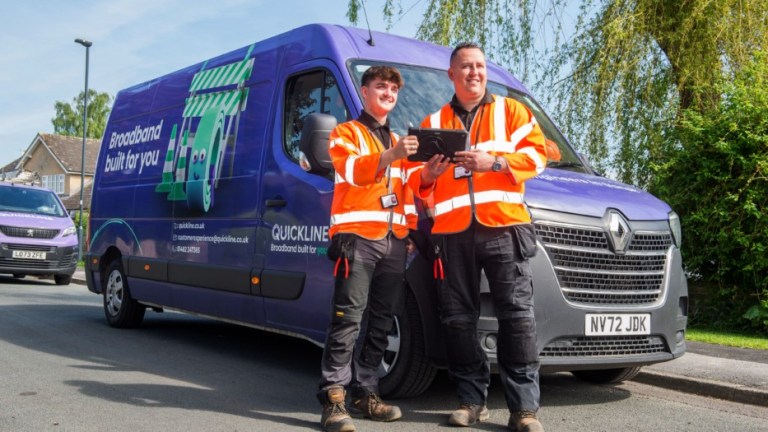
The Yorkshire and Lincolnshire-based altnet says the investment will allow them to expand their full fibre network to a further 190,000 homes and businesses

Today, the UK Infrastructure Bank (UKIB) has announced a £250 million debt package for full fibre network provider Quickline Communications.

The funding, which takes the form of a £125 million term loan, a £100 million debt guarantee, and a £25 million term loan provided by NatWest, will reportedly allow Quickline to expand its network to 190,000 additional locations.

“This financial backing marks a significant endorsement of Quickline’s robust business model, our mission to connect the unconnected and to help regenerate our northern rural communities. Furthermore, it demonstrates UKIB’s confidence in our strategic vision and operational capabilities. It also reflects a broader investor interest in tackling the digital divide that exists today and supporting sustainable and impactful business initiatives,” said Sean Royce, CEO at Quickline.

“This partnership will support our deployment of vital connectivity infrastructure, bringing essential digital services to even more rural communities in dire need of improved broadband and kickstart economic growth across rural Yorkshire and Lincolnshire.”

Quickline has already won four Project Gigabit contracts from the UK government, which combined will see it cover 170,000 homes and businesses with full fibre.

The altnet is currently aiming to expand its network to 500,000 premises across Yorkshire and Lincolnshire by 2025.

This investment marks the latest in a string of altnet investments from the UKIB over the past month, having also committed £35 million to Cornish altnet Wildanet and £150 million to Hyperoptic.

Join the operators in discussion at this year’s Connected Britain, the UK’s largest digital economy event

Also in the news:
Australian Government and AWS Collaborate to Strengthen country’s Cybersecurity
Solving congestion challenges in FTTP deployment
Vodafone Invests £120m in AI Chatbot ‘SuperTOBi’

Vodafone: 5G-powered public buildings could save UK £580m a year


News

The operator says incorporating 5G tech could generate huge cost and energy savings for the public sector

According to a new ‘Connected Spaces’ report, written by WPI Strategy on behalf of Vodafone UK, installing 5G-enabled technology like digital twins, IoT, and smart sensors to public buildings could save the UK £580 million.

The report models the current energy spend of various public sector buildings and estimates how much money could be saved via the integration of new technology. These technologies, says the report, provide a wealth of additional information about the buildings’ energy consumption, helping to drive efficiencies and limit energy use.

In total, the report found that digital twins, IoT, and smart sensors could generate an average 17% reduction in public building energy consumption, saving the average 40,000-person town up to £350,000 a year. Extrapolating this data across the UK leads us to the figure of £580 million per year.

Perhaps unsurprisingly, the biggest savings could be made my incorporating these technologies in council/civil service buildings and hospitals, which could save on average £85,000 and £153,612, respectively.

Of course, installing these new technologies in the buildings in question would not be cheap, but the study estimates that their deployment would pay for themselves in 2–3 years.

Beyond pure cost savings, the new technology would also save roughly 1.43 million tonnes of CO2 emissions, helping the UK meet it sustainability goals.

Vodafone’s argument is that all of these new technologies will need standalone 5G (SA 5G) to function effectively.

“We believe that a best-in-class 5G network would provide a much-needed economic boost to the public purse, saving £580 million of taxpayer money, while also helping to decarbonise the public estate,” said Andrea Dona, Chief Network Officer of Vodafone UK.

“Public buildings are critical to communities, and we want to propel them into the future – which is why, as part of our proposed combination with Three UK, we have committed to rolling out 5G Standalone to every school and hospital across the nation by 2030.”

That these technologies can only be delivered with SA 5G is not strictly true – 4G and other alternative wireless technologies would likely be suitable for at least some of these deployments. Nonetheless, SA 5G would undoubtedly provide the best performance, delivering faster speeds and far greater capacities, able to handle thousands of devices and sensors operating simultaneously.

As has become tradition for Vodafone publications over the past year, the company took this announcement as an opportunity to promote the company’s planned merger with Three UK, with the report concluding that the tie-up would “create necessary market conditions to secure a nationwide standalone 5G network”.

It also reiterated that the combined company would invest £11 billion into its network over the next decade, if the merger is allowed to proceed.

“The combined network will reach more than 99% population coverage with 5G standalone by 2034, and over 95% population coverage by 2030, as well as ensuring coverage in every school and hospital across the country helping to deliver on Labour’s manifesto commitment to reach national 5G coverage by 2030,” reads the report. “The combined business will invest over £6 billion in the first five years, and more than £11 billion for the overall ten-year plan, to create the UK’s biggest 5G network, bringing significant emissions and productivity savings to businesses and buildings across the country; safeguarding the lifeblood of communities for future generations.”

The merger is currently under investigation by the UK’s Competition and Markets Authority (CMA), which is exploring if the deal will result in a significant loss of competition and drive-up prices for consumers.

It is surely no coincidence that the timing of this study’s publication coincides with an article in The Guardian this week, in which Vodafone CEO Margherita Della Valle argues that the new Labour government must approve the company’s merger with Three for the good of the nation.

The CMA is set to announce its decision on October 12.

How is the UK telecoms landscape changing in 2024? Join the discussion at Connected Britain 2024, the UK’s largest digital economy event

Also in the news:
AST SpaceMobile prepares to launch first commercial satellites
nexfibre passes almost 1.3m homes with full fibre
Telstra joins UNESCO’s Business Council to promote ethical AI